Business
Fuel prices may fall as FEC renews naira-for-crude deal

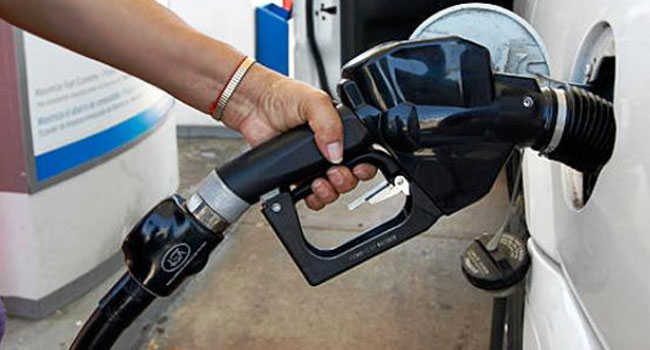
Oil marketers have stated that Nigerians will soon heave a sigh of relief as the pump price of Premium Motor Spirit, popularly called petrol, will drastically reduce due to the continuation of crude and refined product sales in the naira initiative by the Federal Government.
They also stated that a major player in the sector, Dangote Refinery, is anticipated to lower its petrol loading costs by the end of this week, further contributing to the reduction in fuel prices.
The National Publicity Secretary of the Independent Petroleum Marketers Association of Nigeria, Chinedu Ukadike, reassured the public of the forthcoming price drop while commenting on the Federal Executive Council’s directive regarding the naira-for-crude agreement, announced on Wednesday.
The official, however, couldn’t project the expected amount as the price at which the government will sell its products remains unclear.
This was as the National Publicity Secretary of Crude Oil Refinery-owners Association of Nigeria, Eche Idoko, emphasised the need for greater involvement of other local refiners in the initiative, stressing that broader participation would enhance the economic benefits and strengthen the impact of the deal.
On Wednesday, the Federal Executive Council, after an initial delay, directed the full implementation of the suspended Naira-for-Crude agreement with local refiners.
It said the initiative with local refineries is not a temporary measure but a “key policy directive designed to support sustainable local refining.”
The Ministry of Finance disclosed this in a statement published on its official X handle titled, “Update on the Crude and Refined Product Sales in Naira Initiative.”
The statement was released following a meeting on Tuesday between the Minister of Finance, Wale Edun, and representatives from Dangote Refinery, a major beneficiary of the agreement, to review progress and address ongoing implementation matters.
The meeting was attended by Edun, the Chairman of the Implementation Committee; the Chairman of the Technical Sub-Committee and Chairman of the Federal Inland Revenue Service, Zacch Adedeji; the Chief Financial Officer of Nigerian National Petroleum Company Limited, Dapo Segun; the Coordinator of NNPC Refineries; Management of NNPC Trading; representatives of Dangote Petroleum Refinery and Petrochemicals.
Also present were representatives of Dangote Petroleum Refinery and Petrochemicals, the Nigerian Upstream Petroleum Regulatory Commission, Nigerian Midstream and Downstream Petroleum Regulatory Authority, Central Bank of Nigeria, Nigerian Ports Authority, Afreximbank, and the Secretary of the Committee, Hauwa Ibrahim.
As part of moves to reduce the strain on the US dollar and guarantee price stability of petroleum products, the FEC in July 2024 directed the national oil company to sell crude oil to Dangote Refinery in naira and not in United States’ greenback for an initial phase of six months.
The sale of crude oil and refined petroleum products in naira to local refineries commenced on October 1, 2024 to improve supply, save the country millions of dollars in petroleum products imports, and ultimately reduce pump prices.
However, in March, Dangote refinery said it had temporarily halted the sale of petroleum products in naira. The refinery said the decision to halt sales in naira was “necessary to avoid a mismatch between our sales proceeds and our crude oil purchase obligations, which are currently denominated in U.S. dollars”.
Immediately after the announcement, private depot owners effected an increase in loading cost and effectively raised pump price from around N860 to about N960 per litre, making consumers pay at least N70 more than what it used to cost them to buy a litre of the premium commodity days earlier.
But in a fresh update on Wednesday, the committee said the policy is not temporary but a long-term plan to cut Nigeria’s dependence on foreign exchange for petroleum.
It added that the initiative is not a temporary or time-bound intervention but a key policy directive designed to support sustainable local refining and bolster energy security.
The statement read, “The Technical Sub-Committee on the Crude and Refined Product Sales in Naira initiative convened an update meeting on Tuesday to review progress and address ongoing implementation matters.
“The stakeholders reaffirmed the government’s continued commitment to the full implementation of this strategic initiative, as directed by the Federal Executive Council.“
Thus, the Crude and Refined Product Sales in Naira initiative is not a temporary or time-bound intervention, but a key policy directive designed to support sustainable local refining, bolster energy security, and reduce reliance on foreign exchange in the domestic petroleum market.”
The policy, which mandates the transaction of crude oil and refined petroleum products in Naira, is aimed at strengthening the country’s economic sovereignty, enhancing local refining capacity, and stabilising the foreign exchange market by reducing the demand for dollars in domestic petroleum transactions.
The ministry explained that this policy is structured to foster energy security and encourage investment in domestic refining infrastructure.
While acknowledging that the transition involves complexities, the government admitted that existing challenges are being systematically addressed.
“As with any major policy shift, the committee acknowledges that implementation challenges may arise from time to time.“
However, such issues are being actively addressed through coordinated efforts among all parties. The initiative remains in effect and will continue for as long as it aligns with the public interest and supports national economic objectives,” the statement concluded.
Commenting, industry players said the resumption of Naira-denominated crude sales would reduce the strain on the US dollar and guarantee the price stability of petroleum products.
The IPMAN national publicity secretary, in his expert opinion, welcomed the recent development, noting that it reflects the President’s willingness to listen to stakeholders, which is a positive sign for the country’s energy sector. He said the deal was always expected to be implemented.
Ukadike said, “We have always mentioned that the deal was definitely going to be implemented. We don’t know the details of the new agreement.
IPMAN welcomes the latest development and it shows Mr. President has listening ears with this kind of output from the government. It shows that inputs from individuals and stakeholders matter a lot.
The policy doesn’t deter anyone who wants to import petroleum products. But the most important thing is that they should go ahead and ensure that the conclusion affects prices in the market.
“With this new decision taken by the government, I also believe earnestly that just with the complaint of marketers crying of huge losses caused by a sudden drop in price. Their plea is also yielding fruit.”
He added that with the positive development and recent fall in the price of crude, the 650,000 is poised to reduce its loading price downward before the end of the current week.
“I believe that from now till the end of the week, the Dangote refinery will come up with a new price. They can’t complain of having old stock because that is not the best practice internationally.”








BLACK/ PARALLEL MARKET RATES
₦1370 DOLLAR (USD)
₦1800 POUND (GBP)
₦1510 EURO (EUR)
₦970 CANADIAN DOLLAR (CAD)
₦65 SOUTH AFRICAN RAND (ZAR)
₦350 UAE DIRHAM (AED)
₦190 CHINESE YUAN (CNY)
₦100 GHANAIAN CEDI (GHS)
₦2300 WEST AFRICAN CFA F.(XOF)
₦2200 CENTRAL AFRICAN CFA F.(XAF)
₦850 AUSTRALIAN DOLLAR AUSSIE (AUD)
CBN OFFICIAL RATES
DOLLAR (USD)₦1331.61
POUND (GBP)₦1764.26
EURO (EUR)₦1490.48
SWISS FRANC (CHF)₦1608.23
JAPANESE YEN (JPN)₦8.4
CFA FRANC (XOF)₦2.27
WEST AFRICAN UNIT OF ACCOUNT (WAUA)₦1802.33
CHINESE YUAN (CNY)₦199.01
SAUDI RIYAL (SAR)₦354.83
SOUTH AFRICAN RAND (ZAR)₦80.49
Business
WEF could appoint Lagarde as its next chair, sources say
The WEF’s Board of Trustees, which includes Lagarde herself, was due to meet on November 2 and could elect her as its next chair, said the people close to the organisation, who spoke on condition of anonymity due to the sensitivity of the matter.

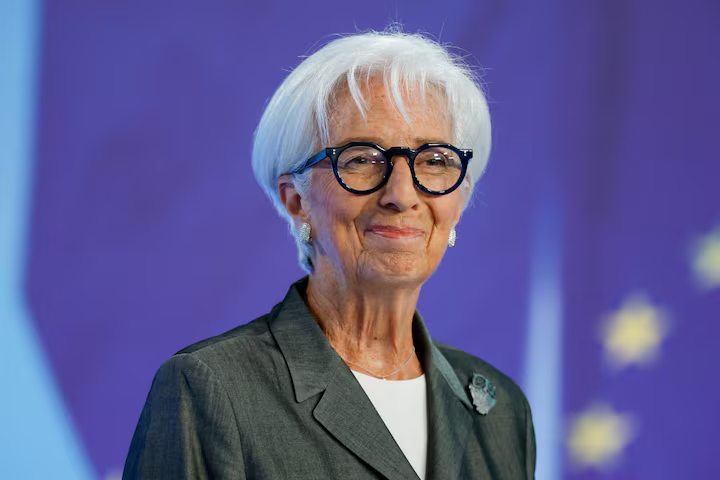
•European Central Bank President Christine Lagarde
The World Economic Forum could appoint Christine Lagarde as its next chair as soon as next month, four people close to the organisation told Reuters, meaning she would step down early as European Central Bank chief and trigger a wider reshuffle at the top of the ECB.Lagarde’s ECB term is scheduled to end in October 2027.
Leaving early would give European Union leaders a chance to pick a new ECB President before France’s spring presidential election, which opinion polls suggest the far-right could win, and could pave the way for a deal involving two other senior ECB roles.
The WEF’s Board of Trustees, which includes Lagarde herself, was due to meet on November 2 and could elect her as its next chair, said the people close to the organisation, who spoke on condition of anonymity due to the sensitivity of the matter.
No final decision has been taken yet, they said.
A spokesperson for the WEF said the forum could not confirm when the next full Board of Trustees meeting would take place, but that the aim was to hold one before the end of the year.
Business
Germany plans tax on sugary drinks
The tax is expected to generate additional revenue for the federal government of €690 million in 2027 and €925 million in 2028.
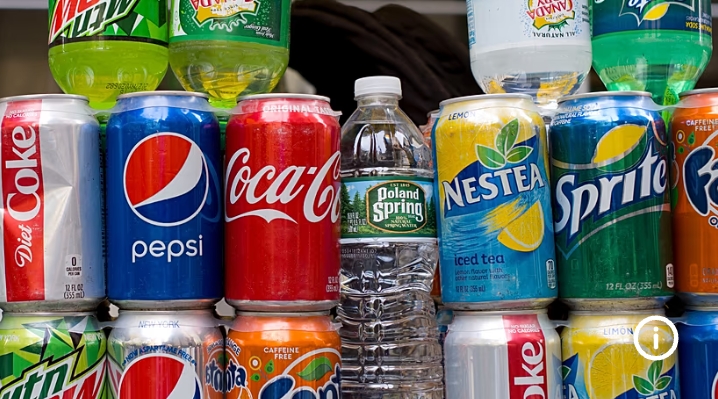
The German cabinet has approved draft legislation to tax sugary drinks in Europe’s biggest economy.
If passed by the German Bundestag, the tax will take effect on 1 July 2027.
The coalition aims to raise revenue for the federal budget while encouraging manufacturers to reduce sugar content and offer healthier products.
The levy is intended to ease pressure on the healthcare system, which faces costs of more than €2 billion every year linked to the high consumption of sugary drinks, which contributes to obesity, diabetes and tooth decay.
According to the federal government, Berlin is using the tax to implement “what associations from the fields of health, science, child protection, and consumer protection have long been demanding.”
The tax is expected to generate additional revenue for the federal government of €690 million in 2027 and €925 million in 2028.


Mbappé wins Onze d’Or award for 2025/26 season

Ronaldo Gets 30-Day Suspension For Portugal Camp Walkout

JUST IN: Ex-Delta Gov Uduaghan Dies at 71, Oborevwori Mourns

BREAKING: Lagos Govt Declares Today, Thursday Work-Free to Mark 2026 Ìṣẹ̀ṣe Day

Tech Expert, Zuckerberg trains with UFC champions, Adesanya, Alexander