News
BREAKING: FEC Takes Universities, Polytechnics, Colleges Of Education Off IPPIS

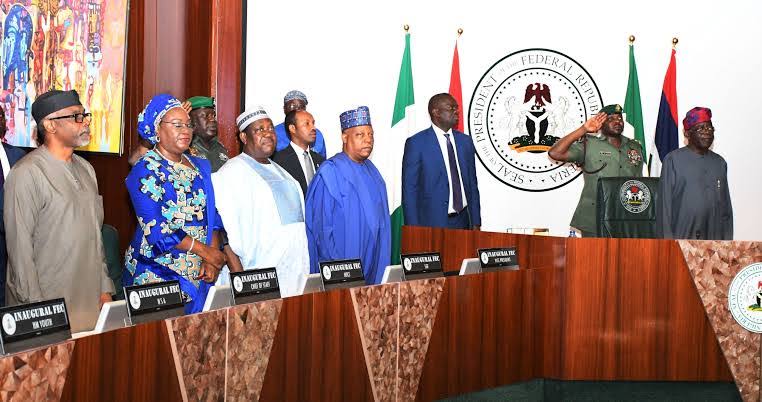
Federal Universities, Polytechnics and Colleges of Education have been taken off from the Integrated Personnel Payment System (IPPIS).
The approval for the exemption was given by the Federal Executive Council at its meeting on Wednesday at the Presidential Villa Abuja.
The Minister of Education, Prof. Tahir Mamman disclosed this while briefing State House Correspondents alongside other ministers on the outcome of the FEC meeting, and said this takes immediate effect.
According to him, FEC also observed that Vice Chancellors of Universities didn’t need to abandon their work to come to Abuja to process the salaries of their personnel.
The Federal Government introduced the IPPIS in 2006 as one of its reform initiatives for the effective storage of personnel records, saying the move would improve transparency and accountability.
The IPPIS initiative was also be expanded to include all ministries, departments and agencies that draw personnel costs from the Consolidated Revenue Fund.
The Academic Staff Union of Universities (ASUU) would reject the reform and would have a continual tussle with the Federal Government over the continuous use of IPPIS for the payment of university lecturers’ entitlements.
ASUU’s Vice President, Chris Piwuna, a strong proponent for the rejection of IPPIS would cite the autonomy of universities as a key factor, accusing the Office of the Head of Service of meddling in the affairs of the universities.
“We are not accepting that IPPIS is in any shape or form. ASUU will never accept IPPIS on our campuses,” he said.
“Autonomy of Nigerian university is our problem, not the peculiarities in IPPIS…The Office of the Head of Service of the Federation has taken over the work of the university governing councils and vice-chancellors.
“We are asking that they take their hands off the universities.”
ASUU opted for the University Transparency and Accountability Solution (UTAS) as its desired platform for payment.
According to the body, the “benefits of UTAS to the university system (both public and private) cannot be found in any other software in Nigeria today.“
Yielding to pressure the government granted concessions to ASUU, stating it would work with the union to modify IPPIS to recognise the peculiarities of universities and the features of the lecturer’s preferred platform of payment – the UTAS.
ASUU has held its resolve in rejecting attempts at the FG’s enforcement of IPPIS with industrial actions that disrupted educational activities in 2022
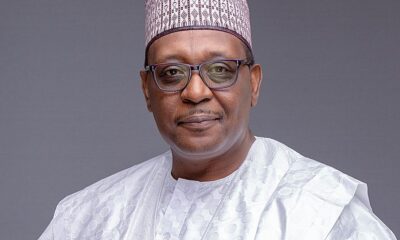

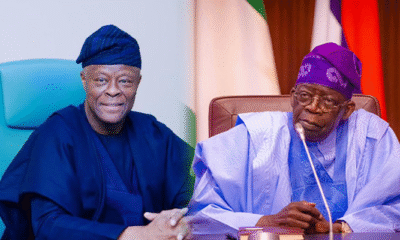


Former Delta State Governor Dr. Emmanuel Eweta Uduaghan is dead. He passed away on the morning of Monday, October 19, 2026, at the age of 71, after a period of illness.
A family statement announced his death, describing it as a devastating loss. Uduaghan, a medical doctor, served as Delta State Commissioner for Health (1999–2003) and Secretary to the State Government (2003–2007) before becoming governor from 2007 to 2015. He was known for contributions to infrastructure and human capital development in the state.
Delta State Governor Sheriff Oborevwori has expressed deep sadness over the passing. In a condolence message, he described Uduaghan as a detribalised leader whose service left a lasting mark on Delta State.
Oborevwori extended heartfelt condolences to Uduaghan’s wife, Roli, his children, the Uduaghan family, the Itsekiri nation, and the people of Delta State, praying for the peaceful repose of his soul.
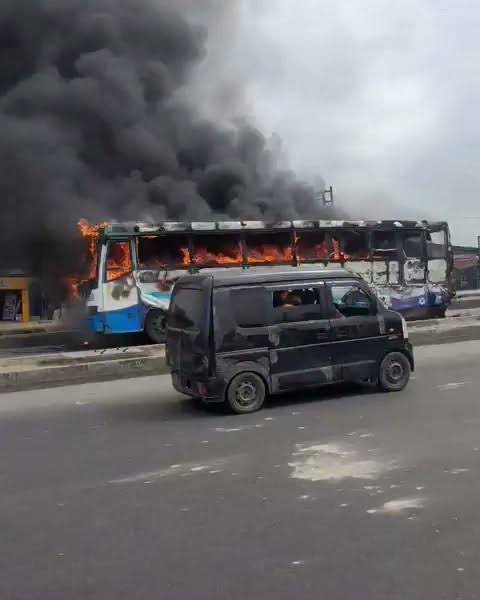
An angry mob has set a Bus Rapid Transit (BRT) bus on fire after it reportedly crushed a commercial motorcyclist to death at Ogolonto Bus Stop along Ikorodu Road in Lagos State.
The incident occurred on Friday, October 16, 2026. Eyewitness accounts and social media reports indicate that the motorcyclist was riding alone along the restricted BRT lane when the collision happened. He died at the scene.
Enraged residents and youths then attacked the bus driver and set the vehicle ablaze. Police officers and officials of the Lagos Neighbourhood Safety Corps (LNSC), who were nearby, intervened promptly and rescued the driver unharmed.
The identity of the deceased motorcyclist and the exact circumstances of the crash had not been officially confirmed at the time of filing this report. It was also unclear whether any arrests had been made in connection with the burning of the bus.
News
ARISE News Wins Seven Honours At Nigerian Broadcasters Merit Awards
The awards recognised the network’s achievements in television journalism and programming, with ARISE News winning the Best TV Channel (Viewer’s Choice) category.


• ARISE News Anchor and host of What’s Trending Ojy Okpe was named Best Newscaster (TV – Female)
ARISE News has emerged as one of the major winners at the just ended Nigerian Broadcasters Merit Awards (NBMA).
ARISE News won seven honours across television broadcasting, news reporting, presentation and production during the ceremony.
The awards recognised the network’s achievements in television journalism and programming, with ARISE News winning the Best TV Channel (Viewer’s Choice) category.
The network’s flagship breakfast programme, The Morning Show, also won the Best TV Talk Show award, further strengthening its recognition in television broadcasting.
ARISE News Anchor and host of What’s Trending Ojy Okpe was named Best Newscaster (TV – Female).
Rufai Oseni was named Nigerian Broadcaster of the Year (Male), while Vimbai Mutinhiri-Ekpeyong received the Nigerian Broadcaster of the Year (Female) award.
The recognition extended to the network’s newsroom, with Ovieteme George winning Best TV News Reporter (Male) for his contributions to television news reporting.
Behind the camera, Sam Adeyemi received the Best Camera Operator/Cinematographer award, recognising his work in television production and visual storytelling.


BREAKING: Nigeria Confirms First Ebola Case

Mbappé wins Onze d’Or award for 2025/26 season

Ronaldo Gets 30-Day Suspension For Portugal Camp Walkout

BREAKING: Lagos Govt Declares Today, Thursday Work-Free to Mark 2026 Ìṣẹ̀ṣe Day

Tech Expert, Zuckerberg trains with UFC champions, Adesanya, Alexander