
Business
FMDQ Projects N50bn Earnings from Cybercrime levy by CBN


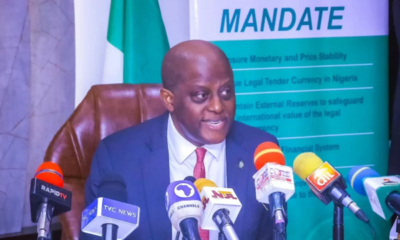
The Head of Research, FMDQ Group Plc, Vincent Nwani, has projected that the Central Bank of Nigeria will generate approximately N50 billion by the end of 2024 from the newly introduced 0.005 per cent cybersecurity levy on electronic transactions this year.
He said that the data from the Nigeria Inter-Bank Settlement System reveals that electronic payments reached a combined total of N987 trillion between 2022 and 2023.
” Applying the 0.005 per cent levy to this total results in an estimated revenue of approximately N49.35bn,” he said .
He added that in 2022, electronic payments totalled N387tn, generating N19.35bn from the levy, while in 2023, with transactions soaring to N600tn, the revenue from the levy reached N30bn.
“For instance, we saw a remarkable 55 per cent surge in the total electronic payments, from N387tn in 2022 to N600tn in 2023 and the 2024 figure is projected at N999.9tn.
At 0.005 per cent cyber security fees, the Nigerian government will earn N19.5bn for 2022, N30bn for 2023; 2024 will be equivalent to N50bn [projected figure] from its citizens,” he expounded.
Nwani also highlighted an increase in point-of-sale transactions, which surged by 27.85 per cent from N8.39tn in 2022 to N10.73tn in 2023, noting that PoS transactions cost Nigerians N214.6bn in 2023 due to the N100 fee on every N5,000 withdrawal.
On the other hand, in 2023, the total value of PoS transactions surged to N10.73tn, up from N8.39tn in 2022, marking a notable 27.85 per cent increase. Additionally, a fee of N100 is charged for every N5,000 withdrawn via PoS, equating to two per cent of the withdrawal amount.
“POS transactions cost Nigerians a total of N214.6bn in 2023 and N167.8bn in 2022. This growing reliance on PoS and the associated charges reflect the broader economic effects of the cashless policy on the population,” the economist stated.





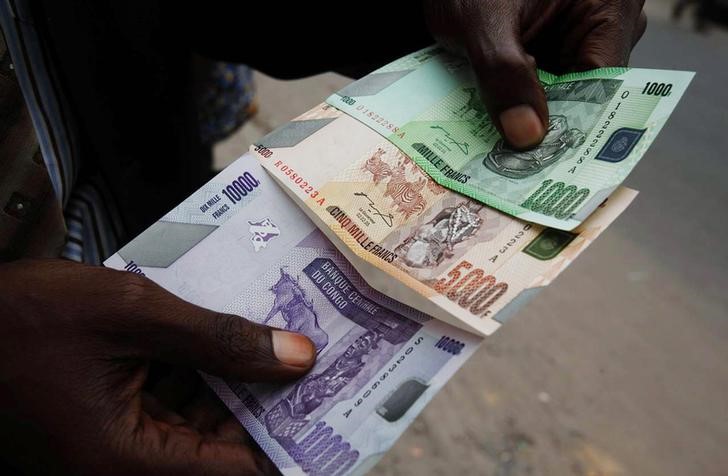
Black Market Exchange Rates
₦1365DOLLAR (USD)
₦1820POUND (GBP)
₦1535EURO (EUR)
₦970 CANADIAN DOLLAR (CAD)
₦65 SOUTH AFRICAN RAND (ZAR)
₦350 UAE DIRHAM (AED)
₦190 CHINESE YUAN (CNY)
₦100 GHANAIAN CEDI (GHS)
West African CFA ₦2300CFA
Central African CFA ₦2200
Australian Dollar currency ₦850AUSSIE (AUD)
Official CBN Exchange Rates
DOLLAR (USD)₦1330.10
POUND (GBP)₦1759.58
EURO (EUR)₦1496.76
SWISS FRANC (CHF)₦1605.62
JAPANESE YEN (JPN)₦8.45
CFA FRANC (XOF)₦2.29
WEST AFRICAN UNIT OF ACCOUNT (WAUA)₦1801.60
CHINESE YUAN (CNY) ₦198.39
SAUDI RIYAL (SAR)₦354.25
SOUTH AFRICAN RAND (ZAR)₦79.91
Business
Diesel Costs Bite: LAMATA Accelerates Shift To CNG, Electric Buses
The move comes as diesel prices have more than doubled, rising from about N950 per litre at the beginning of the year to between N1,950 and N2,100 per litre, depending on the source.

Lagos is accelerating its transition away from diesel-powered public transport as the Lagos Metropolitan Area Transport Authority (LAMATA) begins phasing out diesel buses from its regulated fleet, amid a surge in diesel prices that has pushed operating costs sharply higher.
LAMATA is targeting clean-energy propulsion for 52 per cent of its Bus Rapid Transit (BRT) fleet by 2050, with compressed natural gas (CNG) and electric vehicles (EVs) taking the place of conventional diesel buses under a policy that took effect at the beginning of 2026.
The Managing Director and Chief Executive Officer of LAMATA, Mrs. Abimbola Akinajo, disclosed this weekend, during the handover of 20 additional high-capacity CNG buses under the Presidential Initiative on CNG and EVs.
The latest delivery brings LAMATA’s CNG fleet to about 170 buses, following the deployment of approximately 150 CNG buses before the new vehicles were received.
The authority also operates high-capacity and medium-capacity electric buses.
Akinajo said some of the new CNG buses would be deployed on the busy Ikorodu–Tafawa Balewa Square corridor, where passenger demand remains high.
“We will only work with CNG or EV buses, and this has been the policy since the beginning of the year,” she said.
The move comes as diesel prices have more than doubled, rising from about N950 per litre at the beginning of the year to between N1,950 and N2,100 per litre, depending on the source.
For LAMATA, the shift is therefore not only an environmental policy but also a cost-management strategy aimed at shielding commuters and transport operators from the impact of rising fuel expenses.
Akinajo said regulated public transport fares had not been increased, partly because the lower operating costs of CNG and electric buses were helping to contain the pressure on operators.
“Regulated public transport fares have not increased, and these buses have helped us achieve that,” she said.
Diesel phase-outUnder the new policy, existing diesel-powered buses in the regulated system will be progressively replaced with CNG and electric alternatives.
Akinajo said the long-term direction was for the regulated system to ultimately operate an entirely electric fleet, while the broader clean-energy target provides a pathway towards reducing emissions from Lagos’ transportation sector.
Transportation remains a major source of emissions in the megacity, making the switch to cleaner buses a key component of Lagos State’s long-term ambition of achieving net-zero emissions by 2050.
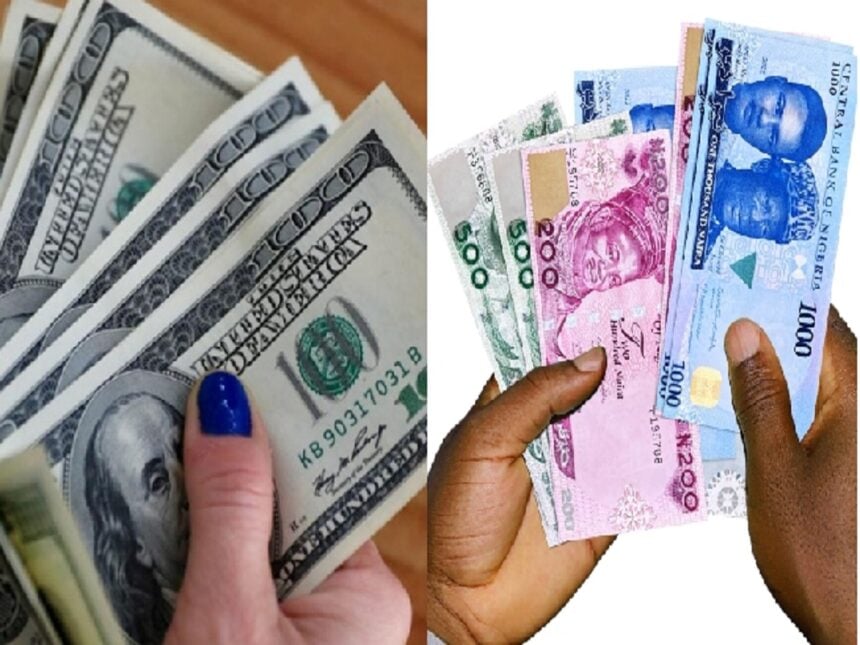
BLACK MARKET RATES
₦1375DOLLAR (USD)
₦1845 POUND (GBP)
EURO (EUR) ₦1550
₦1000 CANADIAN DOLLAR (CAD)
₦70 SOUTH AFRICAN RAND (ZAR)
₦370 UAE DIRHAM
₦190 CHINESE YUAN (CNY)
₦100 GHANA CEDI (GHS)
₦2350 CFA F.(XOF)
₦2250 CFA F.(XAF)
₦850 AUSTRALIAN DOLLAR (AUSSIE)
Official CBN Exchange Rates
DOLLAR (USD)₦1329.16
POUND (GBP)₦1766.59
EURO (EUR) ₦1510.06
SWISS FRANC (CHF) ₦1593.91
JAPANESE YEN (JPN)₦8.47
CFA FRANC (XOF) ₦2.30
WEST AFRICAN UNIT OF ACCOUNT (WAUA) ₦1807.23
CHINESE YUAN (CNY) ₦198.25
SAUDI RIYAL (SAR) ₦353.97
SOUTH AFRICAN RAND (ZAR) ₦81.18


BREAKING: New Iranian Leader Killed Today -Waiting on Statement From Putin

Naira Rates To Dollar , Pound, EURO… Monday, October 5

BBNaija season 11: “And The Winner is Temi Nkem”

Tech Expert, Zuckerberg trains with UFC champions, Adesanya, Alexander

Organ Trafficking: Ekweremadu bags 10 years in UK prison

SAINT OBI: Between his marriage and his death
-
 Business16 hours ago
Diesel Costs Bite: LAMATA Accelerates Shift To CNG, Electric Buses
-

 International15 hours ago
US’s Gullah Geechee communities celebrate historic cultural festival rooted in West Africa
-

 International14 hours ago
Italy marks 800 years since death of Saint Francis of Assisi
-
 Sports3 hours ago
FIFA to decide 2030 World Cup final venue in 2028 as Morocco, Spain wait
-

 News14 hours ago
Nigerian-Born Former Texas Professor Gets 78 Months For $921,000 Student Aid Fraud
-

 International13 hours ago
Ethiopian woman says she hasn’t eaten or drunk water since age 10
-

 News3 hours ago
NGE Tasks Newsrooms, INEC on Must-Do Measures for Credible 2027 Polls
-
 Entertainment3 hours ago
BBNaija season 11: “And The Winner is Temi Nkem”