
International
ECOWAS Leaders Meet In Abuja As Region Struggles With Coups

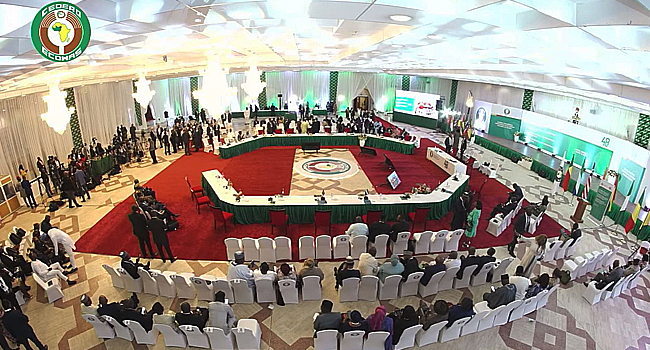
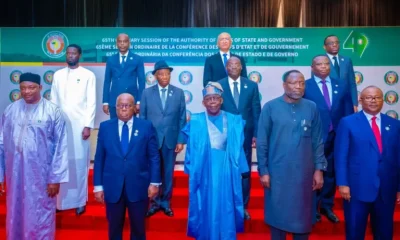
West African leaders meet on Sunday for talks with the region in deepening crisis, after four countries fell under military rule and with risks growing from Sahel jihadist conflicts.
After coups in Mali, Burkina Faso, Guinea and Niger since 2020, the Economic Community of West African States (ECOWAS) bloc also saw member states Sierra Leone and Guinea-Bissau claim attempted coups in recent weeks.
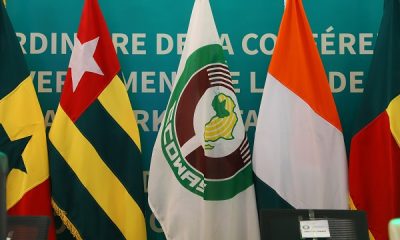
A French military withdrawal from the Sahel — the region along the Sahara desert across Africa — is increasing concerns over conflicts spreading south to Gulf of Guinea states Ghana, Togo, Benin and Ivory Coast.
“These military coups are not only based on fake narrative and false justifications; they are also a driver of insecurity in the region,” ECOWAS commission president Omar Touray said in a meeting before the summit.
ECOWAS leaders will meet in Nigeria’s capital Abuja for an ordinary summit where they will discuss delayed transitions back to civilian rule for Mali, Burkina Faso, Guinea and Niger.
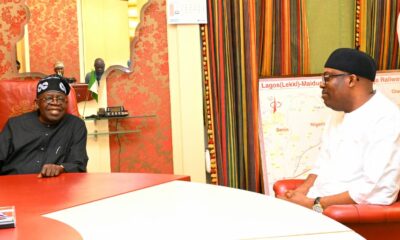
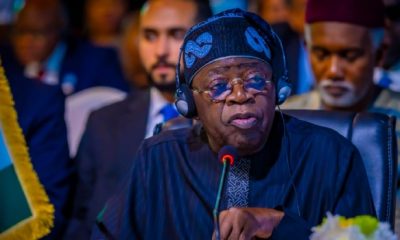
Nigeria’s President Bola Ahmed Tinubu is current chair of ECOWAS and US Assistant Secretary of State for African Affairs Molly Phee will also be at the meeting to discuss how to support Niger’s return to democratic rule and Sahel security.
Niger — a key Western partner in the fight against Sahel militants — has demanded French troops based there leave, while the US still has military personnel in the country.
ECOWAS members have imposed tough economic sanctions on the military regime in Niger, whose troops ousted President Mohamed Bazoum in July.
Mediator
ECOWAS has demanded Bazoum’s immediate return to the presidency, but the military junta has kept him in detention and says it may need up to three years for a return to civilian rule.
Earlier this month, Nigeria said it was asking the Niger regime to free Bazoum and allow him to fly to a third country, as a step to opening talks on lifting sanctions.
But Niger’s military leaders rejected that option and have asked Togo’s President Faure Gnassingbe to act as a mediator.
Before Sunday’s ECOWAS meeting, Niger’s military leader General Abdourahamane Tiani visited Togo on Friday with some of his ministers.
ECOWAS has also left on the table the last option of a military intervention in Niger though analysts say that appears increasingly unlikely.
Transitions back to democracy and elections have also been stalled or left uncertain in Mali, Burkina Faso and Guinea.
After French troops began leaving the region, military regimes in Niger, Mali and Burkina, struggling with jihadist violence, hardened their positions and joined forces in an Alliance of Sahel States.
Last month, armed attackers stormed military posts, prisons and police stations in another ECOWAS member Sierra Leone, in what the government called a coup attempt that killed 21 people.
A week later Guinea-Bissau also denounced an attempted coup, with fighting between the national guard and special forces of the presidential guard.
AFP






International
Child marriage in southern Germany: Over 350 cases recorded, some brides as young as 11
The most recent entries in the overview relate to 2026. They include, among other things, marriages of 16- and 17-year-old girls to adult men.


• Child marriage / UNICEF
In the southwestern German state of Baden-Württemberg, a total of 358 so-called child marriages have been officially recorded since 2012.
Euro News reported that only eight of these forced marriages have so far been legally annulled.
According to authorities, the other 350 cases were brought to an end in other ways.
This alarming finding comes from a response by the Baden-Württemberg state government to a minor inquiry submitted by AfD state parliament members Nikolaos Boutakoglou and Emely Knorr.
The Tübingen regional authority is responsible for recording the data, the answer came from the Ministry of the Interior.
The eight final annulments took place between 2018 and 2024. Among the documented cases was the marriage of an 11-year-old girl from Iraq to a 17-year-old Iraqi, which was annulled in 2020.
As early as 2018, the marriage of a 14-year-old Afghan girl to a 30-year-old man had been ended.
In 2024 two further annulments were added: they concerned a 16-year-old German girl and a 25-year-old Pakistani man and a 16-year-old Syrian girl and a 27-year-old man from the same country.State parliament member Nikolaos Boutakoglou wrote on Facebook that the issue was “really awful” but was being treated as a taboo.
According to its own account, the ministry deals exclusively with such marriages entered into abroad.
Since summer 2017, the Act to Combat Child Marriages has been in force in Germany.
In 2024, the Bundestag adopted new rules to protect minors in marriages concluded abroad.
Hundreds of cases without state intervention
The significantly higher number of cases concluded in other ways raises questions about how these marriages continued.
For the period from 2015 to 2026, the regional authority lists a total of 350 proceedings under the heading “other disposals.”But what became of the other child marriages?
The state government cites, among other things, the death of a spouse, reaching adulthood, a decision not to seek annulment or a new marriage concluded abroad.
In these cases, there was therefore no legally binding annulment.
For 2023, the records include the case of a 12-year-old Afghan girl who was married to a 21-year-old Afghan man. Girls aged 13 and 14 also appear several times in the statistics.
The most recent entries in the overview relate to 2026. They include, among other things, marriages of 16- and 17-year-old girls to adult men.
The statistics record the age of the spouses at the time of marriage and their respective nationalities.
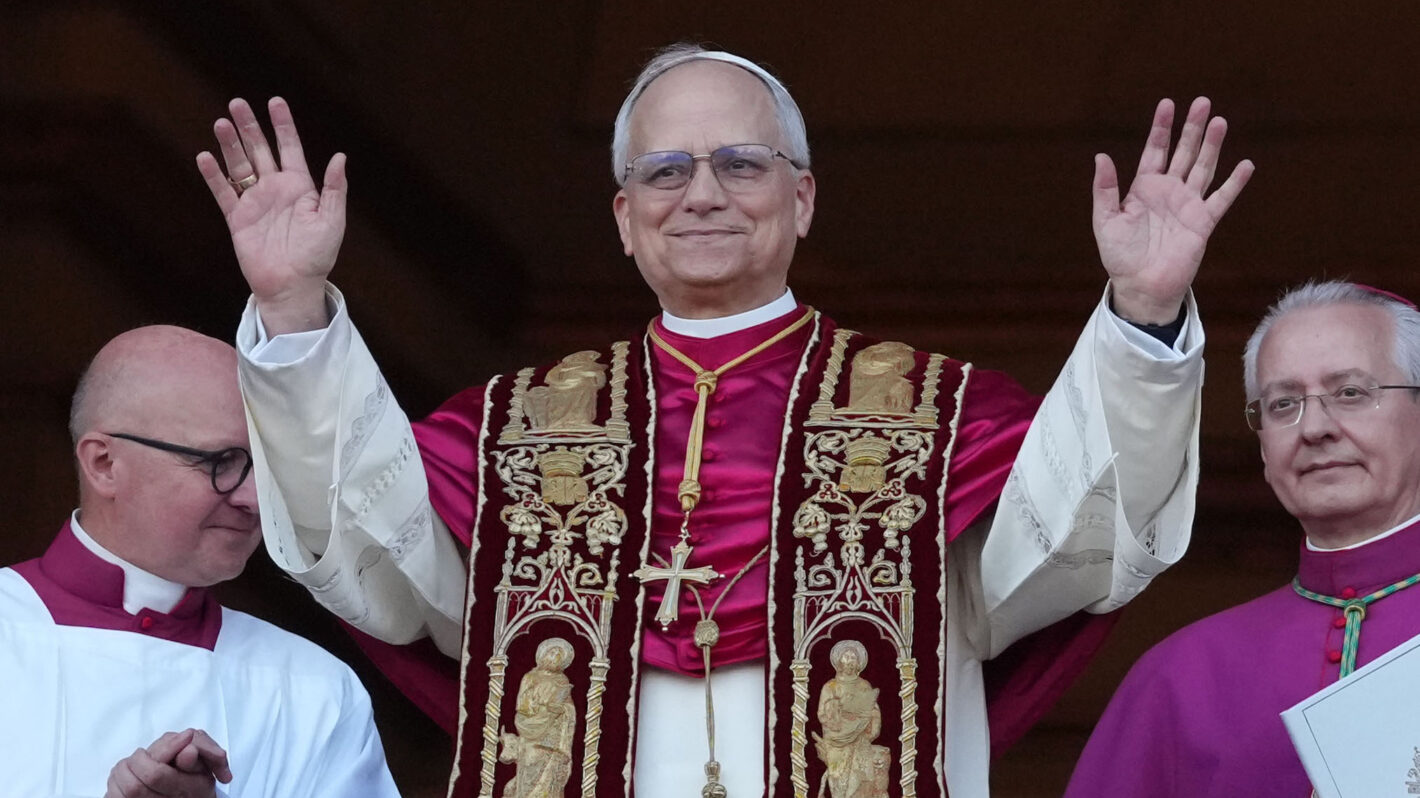
Pope Leo XIV has announced that he will undergo surgery in the coming days to remove a small, localized nodule found on his lung during a recent routine medical checkup.
The 71-year-old pontiff made the disclosure himself during his weekly Angelus prayer in St. Peter’s Square. “Doctors found a localized nodule in my lung,” he said. “It was detected at a very early stage and is well-contained.
The doctors believe it is advisable to intervene, so, following their advice, I have decided to undergo surgery to remove it.”
The Vatican confirmed the operation is scheduled for the first days of this week at Rome’s Gemelli Hospital, which has a dedicated papal suite. Holy See spokesman Matteo Bruni said the Pope is expected to need about a week to recover. On Monday, the Vatican added that Leo will be admitted Tuesday morning.
The nodule’s nature—whether benign or malignant—has not been specified. Medical experts note that most lung nodules are non-cancerous, and early detection generally carries a favorable outlook.
This marks the first significant health issue of Leo’s papacy since his election in May 2025. The American-born pope, known for remaining physically active, has continued his full schedule of audiences and is still expected to proceed with a planned trip to Latin America next month.
International
‘Up to our people’ to pick leader, Zelenskyy responds to Trump’s pledge for new elections in Ukraine
Russia and Ukraine are locked in a long-range aerial war while their armies remain largely deadlocked on the front line, more than four and a half years after Moscow’s full-scale invasion.

• Ukrainian President Volodymyr Zelenskyy
Ukrainian President Volodymyr Zelenskyy said Sunday his country could hold elections if Russia agreed to a 60-day total ceasefire, pushing back against US counterpart Donald Trump’s call for Ukraine to pick a new leader.
“First of all, with all respect to President Trump, it’s up to our society, up to our people to choose one or another leader”, Zelenskyy told ABC News in a televised interview, a day after Trump said Ukraine needed a new president who would agree to end the war.
Zelenskyy said he told Trump’s team that if they really wanted Ukraine to hold elections, “please tell Putin to give us two months, 60 days of total ceasefire, 60 days, and we will organise elections”.
“We want peace, we are ready for a ceasefire, we are ready to begin with any kind of steps of de-escalation”, Zelenskyy told ABC in a TV interview.
“And if the Russians want us not to attack their diesel, their refineries, etc., we are asking President Trump to give them a signal not to attack the energy infrastructure of Ukraine”.
Russia and Ukraine are locked in a long-range aerial war while their armies remain largely deadlocked on the front line, more than four and a half years after Moscow’s full-scale invasion.
Euro News


Germany plans tax on sugary drinks

ASCON To Be Rebranded “National School Of Government”

CAF Increases Annual Funding for Member Federations to $700,000

Tech Expert, Zuckerberg trains with UFC champions, Adesanya, Alexander

BREAKING: Lagos Govt Declares Today, Thursday Work-Free to Mark 2026 Ìṣẹ̀ṣe Day

Organ Trafficking: Ekweremadu bags 10 years in UK prison
-

 Business2 days ago
Dangote Refinery IPO Attracts N8.61trn in Subscriptions, Four Times Offer
-
Business2 days ago
Top 10 Highest-Paid CEOs in Nigeria
-

 Business3 days ago
AI to eliminate 40% of global jobs – IMF boss
-

 Business2 days ago
Naira Exchange Rates To Dollar , Pound ,Euro, … Tuesday, October 13
-

 Business2 days ago
Global smartphone shipments fall 20% in Q3 2026, lowest in 14 years
-

 International2 days ago
Child marriage in southern Germany: Over 350 cases recorded, some brides as young as 11
-
Sports2 days ago
Rwanda to host F1’s first race in Africa since 1993
-

 International3 days ago
JUST IN: Pope Leo XIV to Undergo Surgery for Early-Stage Lung Nodule