
International
UN Security Council ‘Paralysed’ Over Gaza, Says Guterres

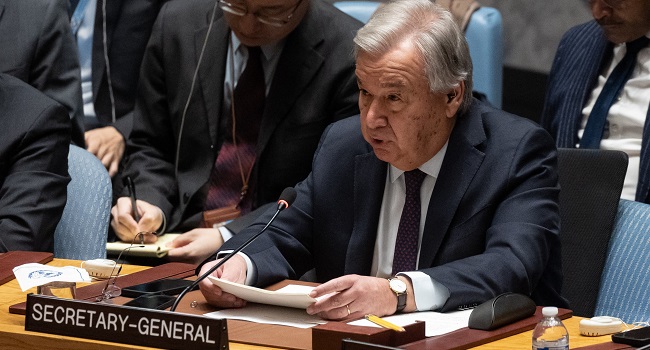
UN Secretary-General Antonio Guterres Sunday said he regrets the Security Council’s failure to demand a ceasefire in the Gaza Strip, condemning the divisions that have “paralysed” the world body.
Addressing Qatar’s Doha Forum, Guterres said the council was “paralysed by geostrategic divisions” that were undermining solutions to the Israel-Hamas war which started on October 7.
The body’s “authority and credibility were severely undermined” by its delayed response to the conflict, he said two days after a US veto prevented a resolution calling for a Gaza ceasefire.
“I reiterated my appeal for a humanitarian ceasefire to be declared,” he told the forum.
“Regrettably, the Security Council failed to do it,” he added.
“I can promise, I will not give up.”
Guterres had convened an emergency meeting of the UN Security Council after two months of fighting that have left more than 17,700 people dead in Gaza, most of them women and children, according to the territory’s Hamas-run health ministry.
The secretary-general deployed the rarely-used Article 99 of the United Nations Charter to bring to the council’s attention “any matter which in his opinion may threaten the maintenance of international peace and security”.
The rule had not previously been invoked by a UN chief in decades.
“We are facing a severe risk of collapse of the humanitarian system,” Guterres told the Doha Forum.
“The situation is fast deteriorating into a catastrophe with potentially irreversible implications for Palestinians as a whole and for peace and security in the region.”
The Israel-Hamas war was triggered by deadly attacks by Palestinian militant group Hamas on Israel.
The militants poured over the border into Israel on October 7, killing 1,200 people, mostly civilians, and kidnapping about 240 others, according to Israeli officials.
AFP




Four Philippine Air Force pilots died Friday after two SF-260 trainer aircraft collided mid-air during a training flight and crashed at Fernando Air Base in Lipa City, Batangas, south of Manila, the air force confirmed Saturday.
The accident occurred at about 3:51 p.m. local time on October 23, 2026. Both single-propeller planes went down within the base perimeter. No other casualties were reported on the ground.
Philippine Air Force spokesman Colonel Alvin Capinguian (also referred to as Alvin Jay Capinguian) said the aircraft were involved in a training flight. Officials with knowledge of the incident, speaking anonymously, and local reports confirmed the planes collided while flying at low altitude. Some accounts noted they were part of a larger formation or flyby rehearsal, with other aircraft landing safely.
The air force described it as an “aviation accident” and said an investigation is underway to determine the cause. As a precaution, the entire fleet of SF-260 aircraft has been temporarily grounded. The air force is coordinating assistance with the families of the deceased and asked the public to respect their privacy. One of the pilots was later identified in some reports as 1st Lt. Angeleo Adrian Peñaflor.
The SF-260 is a light Italian-designed trainer used by the Philippine Air Force. The incident is the latest fatal crash involving the type; two pilots were killed in a similar SF-260 training accident in Benguet province in May.
International
“Mother of all bombs,” Trump Plans To Hit Iran
The 21,600-pound airburst weapon is designed to affect surface targets over a wide area and has so far not been deployed by the U.S. in previous strikes on targets inside Iran. It was used in Afghanistan in 2017 during the previous Trump administration.

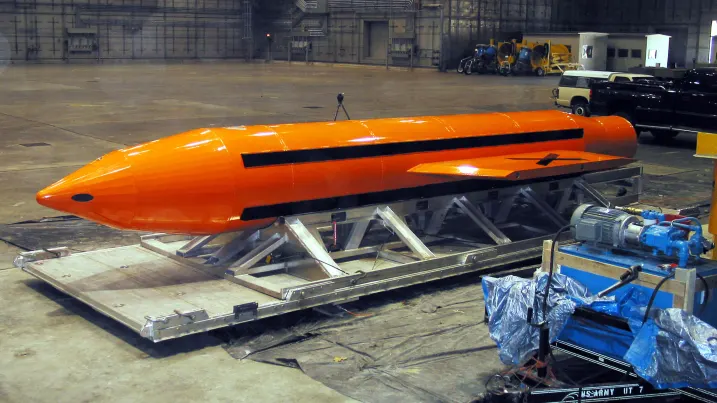
The U.S. military is considering use of the GBU-43/B Massive Ordnance Air Blast (MOAB) bomb if it resumes strikes inside Iran, CNN reported Thursday, citing U.S. officials.
The 21,600-pound airburst weapon is designed to affect surface targets over a wide area and has so far not been deployed by the U.S. in previous strikes on targets inside Iran. It was used in Afghanistan in 2017 during the previous Trump administration.
Trump said Oct. 8 that he would not resume U.S. strikes on Iran before the Nov. 3 midterm elections, while attacks on shipping near the Strait of Hormuz and deadly Houthi strikes in Saudi Arabia have raised regional tensions.
Iranian Parliament Speaker Mohammad Bagher Ghalibaf said Tehran will combine military capabilities and negotiations to press its demands.
International
Child marriage in southern Germany: Over 350 cases recorded, some brides as young as 11
The most recent entries in the overview relate to 2026. They include, among other things, marriages of 16- and 17-year-old girls to adult men.

• Child marriage / UNICEF
In the southwestern German state of Baden-Württemberg, a total of 358 so-called child marriages have been officially recorded since 2012.
Euro News reported that only eight of these forced marriages have so far been legally annulled.
According to authorities, the other 350 cases were brought to an end in other ways.
This alarming finding comes from a response by the Baden-Württemberg state government to a minor inquiry submitted by AfD state parliament members Nikolaos Boutakoglou and Emely Knorr.
The Tübingen regional authority is responsible for recording the data, the answer came from the Ministry of the Interior.
The eight final annulments took place between 2018 and 2024. Among the documented cases was the marriage of an 11-year-old girl from Iraq to a 17-year-old Iraqi, which was annulled in 2020.
As early as 2018, the marriage of a 14-year-old Afghan girl to a 30-year-old man had been ended.
In 2024 two further annulments were added: they concerned a 16-year-old German girl and a 25-year-old Pakistani man and a 16-year-old Syrian girl and a 27-year-old man from the same country.State parliament member Nikolaos Boutakoglou wrote on Facebook that the issue was “really awful” but was being treated as a taboo.
According to its own account, the ministry deals exclusively with such marriages entered into abroad.
Since summer 2017, the Act to Combat Child Marriages has been in force in Germany.
In 2024, the Bundestag adopted new rules to protect minors in marriages concluded abroad.
Hundreds of cases without state intervention
The significantly higher number of cases concluded in other ways raises questions about how these marriages continued.
For the period from 2015 to 2026, the regional authority lists a total of 350 proceedings under the heading “other disposals.”But what became of the other child marriages?
The state government cites, among other things, the death of a spouse, reaching adulthood, a decision not to seek annulment or a new marriage concluded abroad.
In these cases, there was therefore no legally binding annulment.
For 2023, the records include the case of a 12-year-old Afghan girl who was married to a 21-year-old Afghan man. Girls aged 13 and 14 also appear several times in the statistics.
The most recent entries in the overview relate to 2026. They include, among other things, marriages of 16- and 17-year-old girls to adult men.
The statistics record the age of the spouses at the time of marriage and their respective nationalities.


History of Naira Revaluation and Devaluation (1973–2026) (Part 2)

EBOLA: Lagos Heightens Watch at Airports After Abuja Case

JUST IN: Four Pilots Die After Mid-Air Collision of Military Planes in Philippine

BREAKING: Lagos Govt Declares Today, Thursday Work-Free to Mark 2026 Ìṣẹ̀ṣe Day

Tech Expert, Zuckerberg trains with UFC champions, Adesanya, Alexander

Organ Trafficking: Ekweremadu bags 10 years in UK prison
-

 Business3 days ago
Naira To Dollar, Pound, Euro… Today October 23
-

 Business3 days ago
Obasanjo Accuses Tinubu : “You Made Every Nigerian Poor By 300% Naira Devaluation”
-

 Entertainment3 days ago
JUST IN: Nollywood Veteran Francis Duru Dies at 57 After Brief Illness
-
 News3 days ago
JUST IN: 1 Dead, 3 Rescued in Fadeyi Building Collapse, Lagos
-
 Business3 days ago
History of Naira Revaluation and Devaluation (1973–2026)
-

 Business3 days ago
CBN Licences Abbey Bank to Start Full Commercial Banking in November 2026
-

 Politics2 days ago
2027 presidential election: Tinubu’s Northern test begins today
-

 Health2 days ago
Ebola patient in Abuja showing signs of recovery – FG