Business
Dangote Forecasts Major Naira Appreciation to ₦1,100 per Dollar in 2026

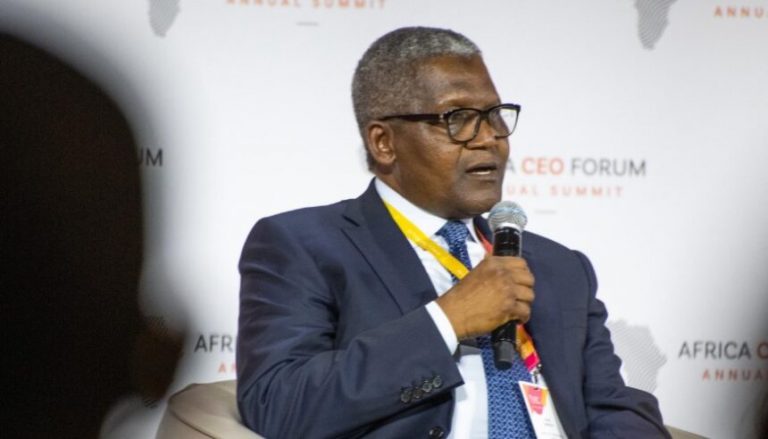
Africa’s richest man and Chairman of the Dangote Group, Aliko Dangote, on Tuesday projected a significant strengthening of the Nigerian naira, forecasting it could rally to as low as ₦1,100 per US dollar within 2026, driven by government reforms, import restrictions, and increased local production.
Speaking at the official launch of the National Industrial Policy 2025 in Abuja, attended by Vice President Kashim Shettima and other dignitaries, Dangote expressed optimism about the currency’s trajectory amid ongoing economic measures.
“Today, the dollar is N1,340. Mr Vice-President, I can assure you that, with what I know, by blocking all this importation and so on, the naira this year will be as low as N1,100 if we are lucky,” Dangote stated, according to multiple reports from the event.
He attributed the potential appreciation to reduced foreign exchange demand from imports, as local manufacturing ramps up including contributions from his own Dangote Petroleum Refinery, which is scaling toward full capacity. Dangote praised recent policy directions for beginning to yield positive results, noting that manufacturers are increasingly optimistic.
The forecast comes as the naira has shown signs of stabilization in recent weeks, trading around ₦1,300–₦1,340 to the dollar in official and parallel markets, a marked improvement from higher levels earlier in the year.
Dangote suggested that sustained import controls and industrial growth could push the currency even further, potentially toward ₦1,000 per dollar under ideal conditions, though he cautioned that policy consistency would be key.
The remarks align with broader optimism in some quarters, including from billionaire Femi Otedola, who recently projected the naira could trade below ₦1,000/$ before year-end, largely crediting the Dangote Refinery’s role in cutting dollar outflows for fuel imports.
Dangote also highlighted challenges, emphasizing the need for reliable power supply and continued government incentives to support industrial expansion and sustain the projected currency rally.
Analysts view the prediction as bullish but contingent on factors like forex policy enforcement, oil revenues, and global commodity prices.
The naira’s performance has been volatile in recent years due to external pressures and domestic structural issues, but recent CBN interventions and refinery developments have fueled renewed confidence among investors.
The statement has sparked discussions on social media and economic forums, with many welcoming the positive outlook while others call for concrete actions to realize such gains for everyday Nigerians facing inflation and import costs.
Business
CBN Pledges Policy Consistency Into 2027
The single-digit inflation target remains the anchor.


The Central Bank of Nigeria says that it will keep a consistent monetary policy direction in 2027, as it pursues the single-digit inflation target.
The stance puts policy continuity at the centre of the CBN’s inflation fight.
The bank is tying its inflation goal to consistency in monetary policy rather than a change in direction.
The single-digit inflation target remains the anchor.
The CBN’s message is that the target still stands and that policy will stay consistent in 2027.
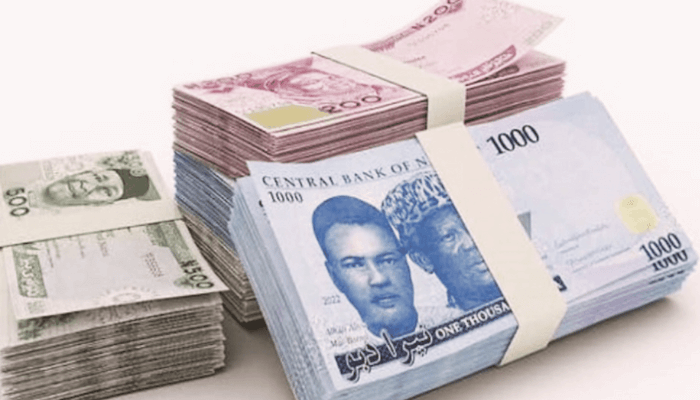
₦1450 DOLLAR (USD)
₦1875POUND (GBP)
₦1575EURO (EUR)
₦950 CANADIAN DOLLAR (CAD)
₦70 SOUTH AFRICAN RAND (ZAR)
₦350 UAE DIRHAM (AED)
₦190 CHINESE YUAN (CNY)
₦100 GHANAIAN CEDI (GHS)
₦2240 WEST AFRICAN CFA F.(XOF)
₦2180 CENTRAL AFRICAN CFA F.(XAF)
₦820 AUSTRALIAN DOLLAR (AUD)
Business
MAN Seeks Tobacco Exclusion From NAFDAC Bills Over Regulatory Overlap
The association further maintained that the existing regulatory framework, administered through the Federal Ministry of Health and Social Welfare and the Federal Ministry of Industry, Trade and Investment, already provides for the regulation of the legal tobacco sector.
The Manufacturers Association of Nigeria (MAN) has called on the National Assembly for explicit tobacco products exclusion from two proposed bills seeking to repeal and reenact the laws establishing the National Agency for Food and Drug Administration and Control (NAFDAC), warning that their passage could create overlapping regulatory responsibilities and increase compliance costs for manufacturers.
The bills are the National Agency for Food and Drug Administration and Control (Repeal and Enactment) Bill, 2026 (SB. 940) and the Food, Medical Products and Related Products (Registration, Etc.) Bill, 2026 (SB. 952).
The Director-General of MAN, Segun Ajayi-Kadir, therefore urged the lawmakers to remove all references to tobacco from both bills, including relevant definitions, schedules and consequential provisions.
It also called for an explicit exclusion clause to prevent tobacco products from subsequently being brought under the proposed legislation through administrative instruments.
According to the association, such a provision would preserve clarity in institutional mandates and regulatory responsibilities while preventing unnecessary regulatory overlaps.
MAN maintained that regulatory reforms should strengthen public-health protection, address demonstrable regulatory gaps and improve compliance without creating additional administrative burdens for legitimate businesses.
It argued that clear institutional mandates, proportionate enforcement and effective inter-agency coordination were essential to achieving these objectives while supporting manufacturing, employment and investment.
The association further maintained that the existing regulatory framework, administered through the Federal Ministry of Health and Social Welfare and the Federal Ministry of Industry, Trade and Investment, already provides for the regulation of the legal tobacco sector.
MAN reaffirmed its readiness to engage constructively with the National Assembly and relevant government institutions, particularly the two federal ministries, to ensure that the proposed legislation delivers effective regulation without unnecessary duplication, conflicting institutional mandates or regulatory uncertainty.


Senator Idiat Oluranti Adebule Dies at 56

JUST IN: Obi-Kwankwaso Movement Suspends DG with Immediate Effect

CBN Pledges Policy Consistency Into 2027

BREAKING: Lagos Govt Declares Today, Thursday Work-Free to Mark 2026 Ìṣẹ̀ṣe Day

Tech Expert, Zuckerberg trains with UFC champions, Adesanya, Alexander