
Business
Complete List of Documents You Need to Buy Land in Lagos by Dennis Isong
And if you’re serious about doing it right, reach out to someone who knows the Lagos real estate landscape like the back of his hand. Someone like, well… me.

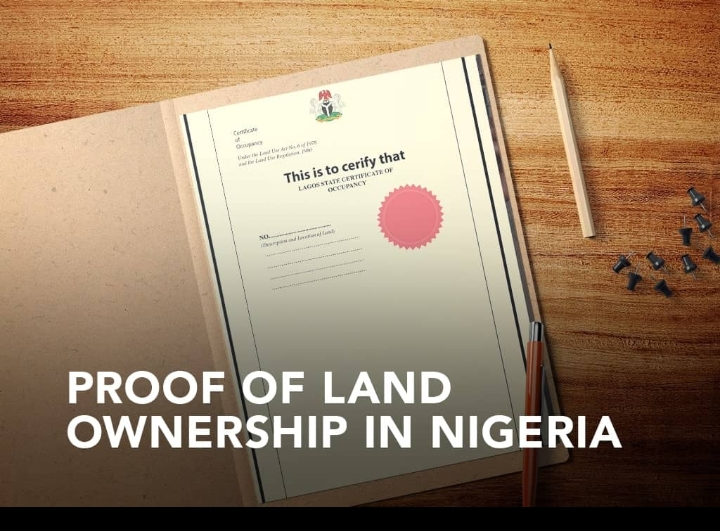
Always confirm documents from the Lagos State Land Registry and avoid cash-only deals without paperwork.
Buying land in Lagos can be a rewarding move—whether you’re planning to build a home, invest for the future, or start a commercial project.
But while the opportunities are exciting, the process isn’t as straightforward as just paying and getting a receipt.
Lagos, like many parts of Nigeria, has its peculiar legal and property documentation system, and understanding this system can be the difference between owning your land and losing your hard-earned money.
If you’re thinking about land ownership in this dynamic city, then knowing the documents you need to buy land in Lagos is not just helpful—it’s essential.
These documents are your only legal shield in a city where land disputes and multiple claims are far too common.
Let’s break it all down in a way that’s easy to understand.
First Things First: Why Documentation Matters
In Lagos, land ownership is often a maze.
There’s family land, government-acquired land, excised land, and committed land. Many buyers have found themselves entangled in court cases or financial loss simply because they didn’t know what papers to ask for.
Documents give your land transaction structure and legality. Without them, your ownership is shaky at best and fraudulent at worst.
Now let’s walk through the key documents you must check for—and get—before buying land in Lagos.
The Survey Plan
This is the starting point. A survey plan shows the exact location and measurements of the land. It tells you where the land is and how big it is.
More importantly, it helps confirm if the land falls within a government-acquired or committed area.
Government-acquired lands are off-limits unless the land has been officially released (excised).
A verified survey plan will also tell you whether the land has been registered before.
To be on the safe side, always take the survey plan to a registered surveyor or the Lagos State Surveyor General’s office for charting.
That way, you know you’re not buying into trouble.
The Deed of Assignment
when land changes hands—from seller to buyer—a Deed of Assignment is what captures that transfer.
This document states the details of the transaction: who sold it, who bought it, the size of the land, the location, and the terms of sale.
It must also indicate the history of ownership—how the seller came to own the land in the first place.
This document is legally powerful and must be prepared by a property lawyer. After signing, it should be submitted for Governor’s Consent, which we’ll explain shortly.
A Deed of Assignment without proper registration is like buying a car and not transferring the papers—ownership can easily be disputed.
The Certificate of Occupancy (C of O)
Now, this is one of the most talked-about property documents in Lagos.
The Certificate of Occupancy, often called the “C of O,” is proof that the government officially recognizes someone’s right to occupy a piece of land for 99 years.
If a land has a C of O, it means the land has been titled and recognized by the Lagos State Government.
Not all lands have this document, and that doesn’t always mean it’s illegal—but buying land with a valid C of O is the safest route.
It reduces the risk of future government interference and makes getting loans or building approvals easier. However, it’s important to confirm that the C of O truly belongs to the land you’re buying. Cross-check with the Ministry of Lands to be sure.
The Governor’s Consent
This one often confuses people. If a land already has a C of O and is being sold to someone else, the new buyer must obtain the Governor’s Consent.
Why? Because under Nigerian land law, no land transaction is considered fully legal without the consent of the Governor of the state.
The Governor’s Consent is not a casual formality—it’s a legal requirement. Without it, the sale remains incomplete in the eyes of the law. It’s part of what turns your Deed of Assignment into a fully recognized document.
The Gazette
Now, not all lands in Lagos are initially free from government acquisition. Some are acquired by the government but later released to the original landowners—often communities—through a formal process.
When this happens, the release is published in an official record called a Gazette.
A Gazette shows that the land has been excised, meaning it is no longer under government acquisition and can now be owned and sold legally. If the land you’re planning to buy falls under this category, ask for the Gazette and verify it.
Buying land with a valid Gazette is better than buying land with nothing at all, but still not as solid as a C of O.
The Receipt
Yes, it sounds basic, but the purchase receipt is also important. It shows that money has exchanged hands and helps to track the financial side of the transaction.
It includes the date of purchase, the amount paid, the names of both parties, and the description of the land.
While a receipt alone doesn’t mean you now own land, it complements your other documents—especially the Deed of Assignment.
The Contract of Sale
This is sometimes prepared before the Deed of Assignment. It outlines the agreement between both parties before the land is officially transferred. Think of it as a promise-to-sell document.
It usually spells out payment terms (e.g., installments), timelines, and other conditions of the sale.
It’s useful in cases where payment is staggered over time or where the buyer needs a few months to perfect documents.
However, it is not a substitute for the Deed of Assignment.
Family or Community Consent (if it’s family land)
If you’re buying land from a family or community—which is still common in Lagos—you must get the consent of all principal family members or the land-owning community heads.
This is very important. If just one person signs and others later disagree, your ownership could be challenged.
Many people have found themselves battling “omo onile” (land touts or family claimants) simply because they didn’t get proper family or community consent.
Ensure a family resolution or legal confirmation is obtained.
Government Allocation Letter (for government schemes)
If you’re buying land from a government housing scheme or state-owned development, you’ll receive a Government Allocation Letter. This letter assigns the land to you and states the terms under which you can occupy it.
This letter usually comes before the C of O is issued, and it’s your first legal evidence of land allocation.
It is very common in places like Lekki and other government-developed areas in Lagos.
Conclusion: Don’t Just Buy Land—Buy Peace of Mind
Buying land in Lagos is a serious investment. And while the market is full of promises, it’s also full of pitfalls. Knowing the documents you need to buy land in Lagos can help you avoid heartache and financial loss.
Whether you’re buying land with a C of O, a Gazette, or through a Deed of Assignment, make sure everything is checked, verified, and registered properly.
Don’t just depend on what the seller says. Involve professionals—real estate lawyers, surveyors, and agents who understand Lagos terrain.
Always confirm documents from the Lagos State Land Registry and avoid cash-only deals without paperwork.
The right documents protect your ownership today and into the future.
If you’re ever in doubt, ask questions.
And if you’re serious about doing it right, reach out to someone who knows the Lagos real estate landscape like the back of his hand. Someone like, well… me.

Business
History of Naira Revaluation and Devaluation (1973–2026) (Part 1)
Why was the naira devalued?

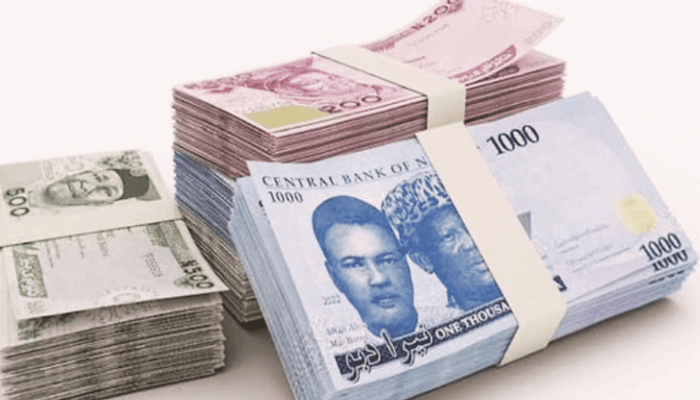
The history of the Nigerian naira is marked by two major developments: periods when the currency gained value or was officially strengthened, and prolonged periods when it lost value against major international currencies, particularly the US dollar.
Since its introduction in 1973, the naira has undergone several exchange-rate policy changes, including fixed exchange rates, currency devaluations, foreign-exchange market liberalisation, attempts to unify exchange rates and market-driven depreciation.
The Central Bank of Nigeria (CBN) has played a central role in managing these changes.
- Introduction of the Naira in 1973
Nigeria introduced the naira on January 1, 1973, replacing the Nigerian pound.
The conversion rate was:
£1 Nigerian pound = ₦2.
₦1 = 10 shillings under the old currency system.
₦1 = 100 kobo.
The new currency was introduced during a period of expanding oil revenues and economic growth.
Nigeria initially maintained a relatively strong, managed exchange rate, supported by foreign-exchange controls and the country’s oil earnings.
The introduction of the naira was a currency change, not a devaluation.- The 1970s: A Relatively Strong Naira
During the 1970s, rising oil revenues strengthened Nigeria’s foreign-exchange position.
The government maintained a controlled exchange-rate system, initially linking the naira to the US dollar before moving to a basket of currencies representing major trading partners in 1978.
The oil boom provided foreign exchange for imports, infrastructure and public expenditure.
However, Nigeria’s dependence on crude oil revenues left the economy vulnerable to fluctuations in international oil prices.
Key development: The naira benefited from a relatively strong external position, although its exchange rate was managed by the authorities rather than determined by an unrestricted market.- The Early 1980s: Mounting Pressure on the Naira
The economic situation deteriorated in the early 1980s as oil revenues weakened and foreign-exchange shortages intensified.
Nigeria faced several economic challenges:
• Declining oil receipts.
• Rising import bills.
• Pressure on foreign reserves.
• Growing external debt and trade arrears.
• Increasing demand for foreign currency.
The government maintained controls on foreign exchange, but the official rate became increasingly disconnected from the rate at which foreign currency could be obtained in the parallel market.
This created pressure for exchange-rate reform.
The crisis set the stage for the introduction of the Structural Adjustment Programme (SAP) in 1986.- 1986: Major Naira Devaluation Under SAP
September 26, 1986, marked a turning point in the history of the naira.
Under the military government of General Ibrahim Babangida, Nigeria introduced the Second-Tier Foreign Exchange Market (SFEM) as part of the Structural Adjustment Programme.
The objective was to allow market forces to play a greater role in determining the naira’s exchange rate.
According to an International Monetary Fund account, the naira’s value was discounted by approximately 66 per cent at the inaugural SFEM auction.
The exchange rate moved from about ₦1.60 per US dollar under the previous administered rate to approximately ₦4.60 per dollar at the initial auction.
Why was the naira devalued?
The policy was intended to:
•Reduce the overvaluation of the naira.
•Improve the allocation of scarce foreign exchange.
•Encourage non-oil exports.
•Improve the competitiveness of Nigerian products.
•Reduce distortions in the foreign-exchange market.
However, the weaker currency also increased the naira cost of imported goods and production inputs.
The 1986 reform began a prolonged period of exchange-rate adjustments.- …To be continued
Business
Obasanjo Accuses Tinubu : “You Made Every Nigerian Poor By 300% Naira Devaluation”
The former President also rejected the argument that Tinubu needed more time to complete his reforms, saying he did not see the economy improving.

Image: AI generated
Former President Olusegun Obasanjo has accused President Bola Tinubu of making every Nigerian poor by 300 per cent through the devaluation of the naira.
Obasanjo spoke on Wednesday during the Financial Times Africa Summit 2026 in London, United Kingdom.
He said that the naira lost its value overnight due to economic reforms undertaken by the Tinubu administration in 2023.
“We do not live in isolation as a country. We interact with the rest of the world. And overnight, you devalue the currency by 300 per cent. The naira went from N500 to a dollar to N1,500 to a dollar. What that meant was that every Nigerian is made poor by 300 per cent.”
Obasanjo said that had made Nigeria “the poverty capital of the world,” which he said meant the country had the largest number of poor people in the world.
“You cannot say to me that that is good for Nigeria. You cannot say to me that that is good for us in any sense,” he noted.
The former President also rejected the argument that Tinubu needed more time to complete his reforms, saying he did not see the economy improving.
Business
CBN Licences Abbey Bank to Start Full Commercial Banking in November 2026
Adewumi said: “The year 2026 represents a defining moment in the history of Abbey. Our approval to transition to commercial banking is a testament to the work invested in building this institution and the confidence placed in us by our regulators, shareholders, customers and employees.”

The Central Bank of Nigeria (CBN) has approved Abbey Bank Plc to begin operation as a regional commercial bank, effectively from November 2026.
The licence opens retail banking, small and medium-sized enterprise lending, trade finance and corporate banking to the lender.
Abbey Bank had operated as a mortgage bank for more than three decades.
The commercial banking licence was issued in June 2026 after the bank completed its capital-raising process.
Managing Director and Chief Executive Officer Mobolaji Adewumi said the bank began internal discussions on the transition in 2023 and submitted a formal application in 2024.
He said regulatory approval arrived in October 2024.
Adewumi said: “The year 2026 represents a defining moment in the history of Abbey. Our approval to transition to commercial banking is a testament to the work invested in building this institution and the confidence placed in us by our regulators, shareholders, customers and employees.”


History of Naira Revaluation and Devaluation (1973–2026) (Part 1)

JUST IN: 1 Dead, 3 Rescued in Fadeyi Building Collapse, Lagos

Obasanjo Accuses Tinubu : “You Made Every Nigerian Poor By 300% Naira Devaluation”

BREAKING: Lagos Govt Declares Today, Thursday Work-Free to Mark 2026 Ìṣẹ̀ṣe Day

Tech Expert, Zuckerberg trains with UFC champions, Adesanya, Alexander

Organ Trafficking: Ekweremadu bags 10 years in UK prison
-
 Business2 days ago
Naira Exchange Rates Wednesday, October 21, 2026
-
 Business2 days ago
Currency Words You Should Know
-

 Business2 days ago
NCC, CBN To Warn Companies By Flagging Fraudulent Phone Numbers
-
 Business2 days ago
JPMorgan Eyeing Entry Into Nigeria’s Banking Industry
-

 Business2 days ago
RMRDC Taking 2027 Africa Raw Materials Summit To Kenya
-

 Politics2 days ago
NDC Plans Fresh Congresses To Replace Defector Members
-

 Health2 days ago
Ebola In Nigeria: Symptoms, Spread and How To Protect Yourself
-
 News2 days ago
JUST IN: Gas Emissions Hit Ogun Schools, Hundreds of Pupils Hospitalised