
Business
CBN Shores up foreign reserves to $40bn., why it’s Important
He made the disclosure on the sideline of the just-concluded inaugural Conference on Emerging Markets Economies organised by the Ministry of Finance, Saudi Arabia, and the International Monetary Fund (IMF) Regional Office in Riyadh.

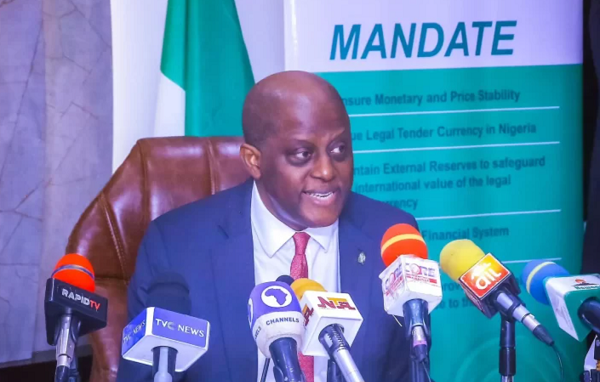
The Governor of the Central Bank of Nigeria (CBN), Mr. Olayemi Cardoso, says that the country’s foreign reserves had exceeded $40 billion .
Foreign reserves play a vital role in maintaining economic stability, supporting monetary policy, and ensuring a country’s ability to participate in international trade and finance.
Governor Cardoso attributes the growth in the foreign reserves to the adoption of an electronic matching system to improve transparency in the market and the introduction of a foreign exchange code of ethics, which all Nigerian banks signed to ensure adherence to market rules.
He made the disclosure on the sideline of the just-concluded inaugural Conference on Emerging Markets Economies organised by the Ministry of Finance, Saudi Arabia, and the International Monetary Fund (IMF) Regional Office in Riyadh.
Cardoso acknowledged that Nigeria had faced significant economic challenges, including capital flow exits, multiple exchange rate regimes, currency depreciation, high inflation, and a backlog of foreign exchange transactions, which led to a loss of confidence in the country’s currency.
The CBN Governor cited reforms in the financial markets that addressed distortions in the Nigerian foreign exchange market, which had previously experienced a gap of up to 60% between the official and parallel market exchange rates.
He noted that due to consistent policy direction, improved market confidence, and enhanced transparency in forex trading, the gap has significantly narrowed to approximately 4-5%.
Importance of Foreign Reserves
Foreign reserves, also known as foreign exchange reserves, are a crucial component of a country’s economic stability and financial security.
Here are the key importance of foreign reserves:
1. Maintains Exchange Rate StabilityForeign reserves help maintain a stable exchange rate by providing a buffer against fluctuations in the foreign exchange market.
2. Ensures Import PaymentsForeign reserves enable a country to pay for imports, ensuring a steady supply of essential goods and services.
3. Supports Monetary PolicyCentral banks use foreign reserves to implement monetary policy, such as managing interest rates and regulating money supply.
4. Enhances CreditworthinessAdequate foreign reserves can improve a country’s creditworthiness, making it easier to borrow from international lenders.
5. Provides LiquidityForeign reserves serve as a liquidity buffer, allowing a country to meet its short-term foreign exchange obligations.
6. Supports Economic GrowthForeign reserves can be used to support economic growth by providing financing for development projects and investments.
7. Reduces Vulnerability to External ShocksAdequate foreign reserves can reduce a country’s vulnerability to external shocks, such as global economic downturns or trade wars.
8. Facilitates International TradeForeign reserves enable countries to participate in international trade by providing the necessary foreign exchange to settle trade transactions.
9. Supports National SecurityIn some cases, foreign reserves can be used to support national security by providing financing for defense-related expenditures.
10. Enhances Investor ConfidenceAdequate foreign reserves can enhance investor confidence, attracting foreign investment and promoting economic growth.

Business
Dangote Refinery’s IPO Ends Tomorrow
“The level of investor interest reflects growing confidence in our business and in the strong financial results we have delivered,” the company said.
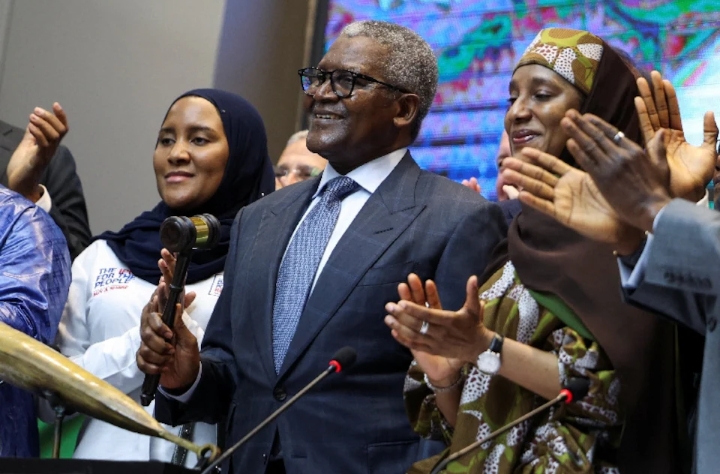
[File photo] Opening ceremony of Dangote Refinery’s IPO on the NGX, September 14,2026
Dangote Petroleum Refinery & Petrochemicals has confirmed that its Initial Public Offering (IPO) will close on Tuesday, 27 October 2026 as scheduled, with no extension.
In a statement, the management said that the IPO has become a historic ownership moment, an opportunity for Africans at home and abroad to own a stake in one of the continent’s most strategic industrial assets.
“Investors recognise that this refinery is not merely an energy asset. It is a platform for industrial growth, foreign-exchange generation, regional trade, energy security and economic development across Africa,” management said.
The offer was structured to ensure ordinary investors participate alongside institutions, broadening ownership of the world-class asset.
“The level of investor interest reflects growing confidence in our business and in the strong financial results we have delivered,” the company said.
Business
Dangote Visit London Stock Exchange Ahead of November Cement Listing
Unlike an initial public offering, a secondary listing would let Dangote Cement, already listed on the Nigerian Exchange, set up an additional presence in London.
Aliko Dangote visited the London Stock Exchange on Friday, October 23, 2026, as Dangote Cement Plc prepares a proposed $1 billion share sale and a secondary listing in the United Kingdom.
The company is reportedly targeting November 2026 for the listing, subject to market conditions and regulatory approval.
A video circulating on social media captured the visit, with exchange officials and attendees welcoming Africa’s richest man.
The trip is part of efforts to pull international investment into his business empire.
The proposed deal could see Dangote Cement offer about 10% of its equity to international investors, potentially raising roughly $1 billion.
The final timetable is not fixed and remains subject to market conditions and regulatory requirements.
Unlike an initial public offering, a secondary listing would let Dangote Cement, already listed on the Nigerian Exchange, set up an additional presence in London.
That could raise the company’s visibility with international institutional investors, including pension funds, asset managers and other investment firms.
The share sale has not been completed. Its final structure, valuation and pricing are still subject to confirmation.
Business
Olagunju to head JPMorgan’s Proposed Nigerian Merchant Bank
The proposed bank would expand JPMorgan’s presence beyond its representative office in Lagos. It could undertake a broader range of regulated banking activities after securing a final licence.

The Central Bank of Nigeria has granted JPMorgan approval-in-principle to establish a merchant bank in Nigeria.
The regulator also approved Adedapo Adedayo Olagunju as Managing Director of the proposed JPMorgan Merchant Bank Nigeria Limited.
The approval came on Friday, October 23, 2026. The bank has not received its final operating licence.
Olagunju has led JPMorgan’s West African operations since 2018.
He is an Oxford-trained banker with more than two decades of experience in treasury management, financial markets, institutional banking and structured finance.
His appointment puts him in line to head the American bank’s proposed Nigerian merchant bank once final licensing is completed.
The CBN also approved four non-executive directors and three independent non-executive directors for the proposed institution.
The proposed bank would expand JPMorgan’s presence beyond its representative office in Lagos. It could undertake a broader range of regulated banking activities after securing a final licence.


FG Approves ₦70k Transport Allowance for Civil Servants

Suffocation, Overcrowding Kill 37 Niger Miners – Panel

Nigeria’s First Imported Ebola Patient Moved to Switzerland

BREAKING: Lagos Govt Declares Today, Thursday Work-Free to Mark 2026 Ìṣẹ̀ṣe Day

Tech Expert, Zuckerberg trains with UFC champions, Adesanya, Alexander

Organ Trafficking: Ekweremadu bags 10 years in UK prison
-

 News2 days ago
BREAKING: Former Arise News Anchor, Constance Ikokwu Appointed NDC National Campaign Council Spokesperson
-
 Business2 days ago
Dangote Visit London Stock Exchange Ahead of November Cement Listing
-

 International2 days ago
Brazil’s Lula Wins Fourth Term In Presidential Runoff
-
 Health2 days ago
EBOLA: Lagos Heightens Watch at Airports After Abuja Case
-
 Business2 days ago
Naira To Dollar, Pound, Euro…Rate Monday, October 26
-

 Health2 days ago
Ebola: Nigeria Sends Back Swiss Woman Via Medivac Plane
-
 Business2 days ago
History of Naira Revaluation and Devaluation (1973–2026) (Part 2)
-
News2 days ago
Sanwo-Olu: Opebi-Ojota Link Bridge Will Open Before Christmas