News
Cash Crisis Fuels Loan App Nightmare in Nigeria

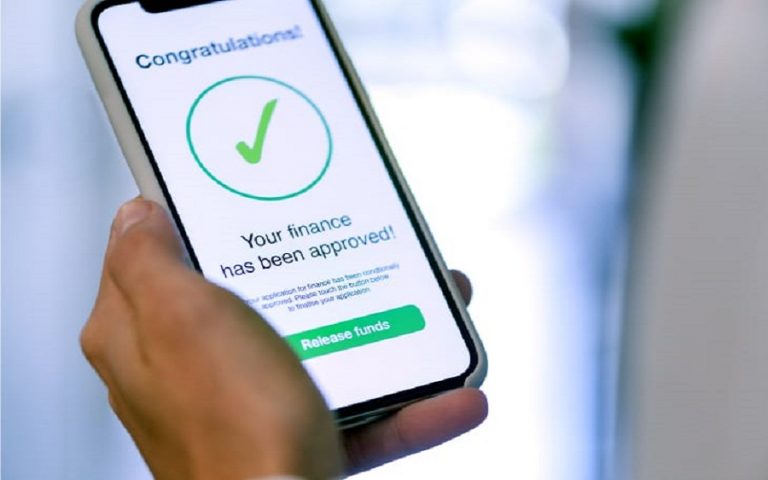
Cash-strapped and in dire need of N30,000 (about $20), Mariam Ogundairo turned to a loan app, downloading it and registering her phone number.
The money was quickly sent over but came with a 21.6 percent interest rate, due in two weeks.
Like many in Nigeria, battered by inflation, Ogundairo was too broke to pay back what she owed.
Then came a deluge of harassment — a tactic that has become the hallmark of many loan apps in Africa’s fourth-largest economy.
“They started calling my phone contacts when I couldn’t pay back on time, saying I owed them. “I lost my security, and it makes me so sad and scared,” Ogundairo told AFP.
Such loan apps in Nigeria, branded “predatory” by campaigners, are texting threats and leaking sensitive photos to their mobile phone contacts when people squeezed by the country’s ongoing economic crisis cannot pay up.
Often enticed by false promises of low interest rates, thousands of Nigerians have turned to personal finance apps seeking quick access to short-term loans as galloping prices put pressure on incomes, with inflation standing at 21.8 percent at the end of July.
Ogundairo struggled through the embarrassment for weeks until she was able to pay off her balance.
– ‘Quick fix’ gone wrong –
“A friend recommended it because I needed a quick fix,” another victim, a 24-year-old who took out a loan two years ago as a university student and asked his name not be used, told AFP.
After spending more than N300,000 conducting laboratory investigations for his final thesis and still needing more funds to complete his research and beat submission deadlines, the money seemed like a lifesaver.
He took out N70,000 when he was a final-year student in 2023. He was meant to pay back about N110,000 within a month, but was too broke.
The loan app then began sending messages to his phone contacts that he was a “ritualist killer”. He said he was not aware he had given the app access to his contacts.
“A couple of my coursemates got the messages.
“It wasn’t the case of unwillingness to pay; it was just a case of impossibility,” he told AFP.
An increasing number of Nigerians have turned to personal loans following reforms by President Bola Tinubu to shock the country’s moribund economy and remove costly subsidies.
Though some economists have voiced approval for the measures, Tinubu’s policies have sent inflation skyrocketing and the value of the naira plunging, hitting many ordinary Nigerians in their pockets.
Even when apps mislead people on interest rates, they can often provide better rates than traditional banks — with the benchmark interest rate at 27.5 percent, conventional loans can come with interest rates at 27 to 48 percent.
While there was no breakdown for so-called fintech apps, lenders in the country handed out about 470 billion naira in personal loans in the last quarter of 2024.
By December, outstanding personal loans jumped “by 21.27 percent to 3.82 trillion naira compared with the level at end-September 2024”, the Central Bank of Nigeria (CBN) said in March.
As of the same month, the Federal Competition and Consumer Protection Commission (FCCPC) approved 408 loan apps, up from 269 in September 2024, with 42 receiving conditional clearance.
The CBN approved 23 apps, up from 14 in the third quarter of last year.
Forty-seven were delisted and 88 placed on watchlists for various offences, including harassment.
The watchdog had said in the past that some loan apps were operating in the country illegally.
– Loan sharks ‘thrive’ –
Many of the loan apps’ ease of access and swift processing create a trap, said Funmi Oderinde, a lawyer at Citizens’ Gavel, a civil society organisation that has been pushing back against the lenders.
The organisation has so far received at least 1,300 complaints over “predatory digital loan apps”.
“These promises are deceptive, and borrowers soon face unethical recovery practices such as defamation, harassment, threats, breaches of data privacy, arbitrary fines, and excessively high interest rates aimed at pressuring them into repayment,” Oderinde said.
Some victims of the harassment have formed different support groups on Facebook. One such group has more than 21,000 members.
A victim told Citizens’ Gavel that, after her phone was accessed remotely, a fake obituary and a real nude photo were shared with her contacts by a loan app.
According to Oderinde, two of the people who approached the organisation for legal help “could have died” due to harassment from loan app agents.
The FCCPC, in a note sent to lenders in August, said it would “periodically monitor interest rates for services of consumer lending, and ensure rates are not exploitative”.
But despite regulatory moves, dozens of apps continue to operate under new names, and desperate borrowers often do not check approval lists before applying.
The result is that loan sharks “thrive”, Oderinde said, “because of weak sanctions and poor enforcement”.
AFP
News
UK court jails Nigerian man for masturbating in front of a woman
British Transport Police said Odutola approached a woman on the train, looked her up and down and became aggressive when she refused to engage with him. He then exposed himself while sitting in a wheelchair and began masturbating while staring at the woman and telling her to “come over”


•A Nigerian man and registered sex offender, Babatunde Odutola
A Nigerian man and registered sex offender, Babatunde Odutola has been jailed in the UK after exposing himself and masturbating in front of a woman on a train travelling towards Manchester.
Odutola, 36, of no fixed address, was sentenced to 44 weeks in prison at Manchester Magistrates’ Court on Monday, September 14, after pleading guilty to outraging public decency and breaching a suspended sentence order.
The incident occurred around 7pm on Friday, September 11, on a train travelling through Cheshire towards Manchester Piccadilly railway station.
British Transport Police said Odutola approached a woman on the train, looked her up and down and became aggressive when she refused to engage with him. He then exposed himself while sitting in a wheelchair and began masturbating while staring at the woman and telling her to “come over”.
A fellow passenger intervened and escorted the distressed woman from the carriage.
According to police, CCTV footage showed Odutola continued masturbating as other passengers walked through the carriage.
British Transport Police officers arrested him after the train arrived at Manchester Piccadilly. He was subsequently prosecuted and jailed within 72 hours of the incident
News
Digital Economy Minister Says NDPC Now Properly Functional With New HQ
” An asset recovered on behalf of the Nigerian people has now been returned to productive use for the Nigerian people. That is reform made tangible,” he said .


Abuja| NDPC new headquarters commission , Tuesday, 15 September,2026.
An EFCC-recovered property allocated to the Ministry of Communications, Innovation & Digital Economy, has been transformed to the new headquarters of the Nigeria Data Protection Commission (NDPC) in Abuja, as its headquarters.
Speaking during the commissioned ceremony of the building, the Honourable Minister incharge of the ministry, Dr. ‘Bosun Tijani, described the facility as a tangible demonstration of the visionary leadership of President Bola Ahmed Tinubu, and his commitment to building strong institutions that can support Nigeria’s growing digital economy.
The Minister emphasised that said the occasion represented more than the opening of a new office, but a reflection of the administration’s commitment to strengthening the institutions required to protect Nigerians and build trust in the country’s digital economy.
Dr. Tijani said, “Shortly after assuming office in 2023, President Tinubu signed the Nigeria Data Protection Act into law, giving the NDPC the appropriate legal foundation and authority to protect the data and privacy rights of Nigerians.
The President also directed Ministries, Departments and Agencies of the Federal Government to comply with established data protection laws and frameworks, demonstrating that government must lead by example in upholding the standards it expects from citizens and businesses.”
He added, “In the early days of the Commission, it was difficult to ask an institution to protect the data of over 200 million Nigerians and support one of Africa’s largest digital economies without the institutional resources to do so.
President Tinubu recognised this challenge and moved to solve it, approving the resources required for the NDPC to become properly operational and functional, while building towards becoming a sustainable institution in its own right.
He also directed that an EFCC-recovered property be allocated to the Commission as its headquarters.
“An asset recovered on behalf of the Nigerian people has now been returned to productive use for the Nigerian people. That is reform made tangible,” he said .

Boko Haram has strongly denied reports of a ceasefire agreement with the Federal Government and insisted that it will continue its campaign of attacks.
In a statement released by the group, the militants dismissed claims of any truce or negotiated pause in hostilities, describing such reports as false and misleading.
The group reaffirmed its commitment to ongoing operations against government forces and other targets, vowing that its attacks will persist without interruption.
The denial comes against the backdrop of persistent insecurity in the northeast and other affected regions, where the group has maintained a long-standing insurgency.
Security sources note that the latest statement appears aimed at clarifying the group’s position and rejecting any suggestion of dialogue or de-escalation with the authorities.
Military and government officials have not issued an immediate detailed response to the claim, though security operations against the militants remain active. Authorities continue to urge vigilance as the group signals its intention to sustain violence.


Macron Hosts Tinubu for Private Dinner at Élysée Palace (Photos)

Madonna Returns To MTV Video Music Awards, After 23 years

Emir Sanusi mobilises Kano People “Buy Dangote Refinery’s Shares Now”

Tech Expert, Zuckerberg trains with UFC champions, Adesanya, Alexander

Organ Trafficking: Ekweremadu bags 10 years in UK prison