Business
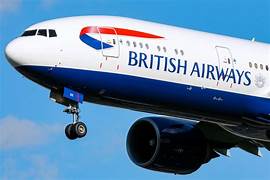
British Airways Agrees To 13% Staff Pay Raise – FT
The British Airways Union Unite has announced on Friday that about 24,000 workers have accepted a deal that will increase their pay by 13.1 per cent.
Employees at the airline will receive the rise over a period of 18 months alongside a one-off payment of £1,000, Unite said in a statement about the deal, which came after several months of negotiations.
The agreement, which excludes pilots and management, included the potential for pay to increase further if inflation remains high.
Business
Dangote says waiting for President Ruto to begin work on $17bn Kenyan refinery
Dangote said, he would need Ruto to offer land, some east African finance and, most important, protection from what he called dumping of cheap fuel from the likes of Russia or India.
Aliko Dangote, Africa’s wealthiest industrialist, has stated that he is eyeing Kenya as the site of a huge $17 billion 650,000-barrel-a-day oil refinery he plans to build in east Africa, after questions over a previous push to build the facility in Tanzania.
Tanzanian President Samia Suluhu Hassan last week complained angrily to her Kenyan counterpart William Ruto that she had not been consulted over the earlier plan to build it on her country’s coastline, which was announced in her absence last month at an infrastructure summit.
“I’m leaning more towards Mombasa because Mombasa has a much larger, deeper port,” he told Financial Times in an interview.
He compared Kenya’s port to Tanga, the proposed Tanzanian site for the refinery to process oil from Uganda and the open market.
Dangote estimated it would cost $15 billion to $17 billion to build.“Kenyans consume more.
It’s a bigger economy,” he said, adding that crude oil for the refinery could be transported by ship and need not be located near a pipeline that will carry oil nearly 1,500 kilometres from Ugandan oilfields to the Tanzanian coast at Tanga.“The ball is in the hands of President Ruto,” he said.
“Whatever President Ruto says is what I’ll do,” the Nigerian billionaire added. For the east African refinery to get off the ground, Dangote said, he would need Ruto to offer land, some east African finance and, most important, protection from what he called dumping of cheap fuel from the likes of Russia or India.
“There is no refinery in the world that can survive without that protection,” he said. “If we have an agreement, we can start this year,” he explained. He told the FT he could still build the refinery in Tanzania “if they are able to sort themselves out”.
Business
The companies making billions from the Iran war – BBC
Here are some of the sectors and companies making billions while the Middle East conflict continues.
As households across the globe count the costs of the US-Israel war in Iran, some companies have been counting bumper profits instead.
The uncertainty sparked by the conflict, and Iran’s effective closure of the Strait of Hormuz, is driving up the cost of living and hitting the budgets of firms, families and governments.
But while some have been pushed to the brink, others, whose core businesses are more profitable in a war or who benefit from volatile energy prices, have seen record earnings.
Here are some of the sectors and companies making billions while the Middle East conflict continues.
1. Oil and gas
The biggest economic impact of the war so far has been a surge in energy prices. Around a fifth of the world’s oil and gas is transported through the Strait of Hormuz, but those shipments effectively ground to a halt at the end of February.
The result has been a rollercoaster of price movements on energy markets, with some of the world’s biggest oil and gas companies benefiting.
The main beneficiaries have been European oil giants, who have trading arms so have been able to gain from sharp price movements boosting profits.
BP’s profits more than doubled to $3.2bn (£2.4bn) for the first three months of the year, after what it called an “exceptional” performance in its trading division.
Shell also beat analysts’ expectations when it reported a rise in first-quarter profits to $6.92bn.
Another international giant, TotalEnergies, saw its profits jump by almost a third, to $5.4bn in the first quarter of 2026, driven by volatility in oil and energy markets.
US giants ExxonMobil and Chevron saw their earnings fall compared with the same period last year, due to supply disruption from the Middle East, but both beat analysts’ forecasts and expect their profits to grow further as the year goes on, with the price of oil still significantly higher than when the war broke out.
2. Big banks
Some of the biggest banks have also seen their profits boosted during the war in Iran.
JP Morgan’s trading arm made a record $11.6bn of revenue in the first three months of 2026, helping the bank overall to its second biggest ever quarterly profit.
Across the rest of the “Big Six” banks – which includes Bank of America, Morgan Stanley, Citigroup, Goldman Sachs and Wells Fargo, as well as JP Morgan – profits all rose substantially in the first quarter of the year.
Overall, the banks reported $47.7bn in profits for the first three months of 2026.
“Heavy trading volumes have benefited investment banks, in particular Morgan Stanley and Goldman Sachs,” Susannah Streeter, chief investment strategist at Wealth Club, said.
The major Wall Street lenders have been boosted by a surge in demand for trading, with investors rushing to drop riskier stocks and bonds and pile their cash into assets that are seen as safer. Trading volumes have also been lifted by investors seeking to capitalise on the volatility in financial markets.
3. Defence
One of the most immediate beneficiaries in any conflict is the defence sector, according to Emily Sawicz, senior analyst at RSM UK.
“The conflict has reinforced gaps in air defence capability, accelerating investment in missile defence, counter drone systems and military hardware across Europe and the US,” she told the BBC.
As well as highlighting the importance of defence firms, the war creates a need for governments to replenish weapons stocks, boosting demand.
BAE Systems, which makes products including F35 fighter jet components, said in a trading update on Thursday it expects strong growth in sales and profits this year.
It cited growing “security threats” around the world pushing up government defence spending, which has in turn created a “supportive backdrop” for the company.
4. Renewables
The conflict has also highlighted the need to diversify away from reliance on fossil fuels, Streeter said.
This has “supercharged interest in the renewable sector” even in the US, she said, where the Trump administration has popularised the “drill, baby, drill” slogan encouraging greater fossil fuel usage.
Streeter said the war has led to renewable investment being seen as increasingly important to stability and resilience to shocks.One firm that has been boosted is Florida-based NextEra Energy, which has seen shares surge by 17% so far this year as investors pile in on its mission.
Danish wind power giants Vestas and Orsted have also reported surging profits, highlighting how the fallout from the Iran war is also boosting renewable energy firms.
In the UK, Octopus Energy recently told the BBC the war had caused a “huge jolt” in solar panel and heat pump sales, with solar panel sales rising by 50% since the end of February.
The surge in petrol prices has also boosted demand for electric vehicles, with Chinese manufacturers in particular making the most of the opportunity.
Business
For stable electricity, should Nigeria invite China to manage Power Sector for 20 years ?
Goje was reacting to the new Minister of Power, Joseph Olasunkanmi Tegbe ‘s comment that he cannot promise Nigerians uninterrupted electricity immediately but pledged to deliver noticeable improvements in the sector within a short period.
Image: collage of power grid/ Minister of Power, Joseph Tegbe
Senator Muhammed Danjuma Goje thinks so.
Goje was a former minister of state for power and steel between 1999-2001; former governor of Gombe State 2003-2011, and now a senator representing Gombe Central.
He emphasised the need this week during the screening of minister -designates at the National Assembly.
Goje told fellow lawmakers that the federal government had better handover Nigeria’s power sector to China or another advanced country for 20 years to achieve stable electricity.
Goje was reacting to the new Minister of Power, Joseph Olasunkanmi Tegbe ‘s comment that he cannot promise Nigerians uninterrupted electricity immediately but pledged to deliver noticeable improvements in the sector within a short period.
Addressing lawmakers, the minister-designate said he would rather focus on realistic and measurable progress than make promises he cannot keep.
“If I am confirmed, the Senate President, Distinguished Senators, I will not stand here and say tomorrow I will give you 24-hour electricity.
” But what I will tell you about the very honest approach, I will ensure that visible improvement is seen across the country in the shortest time possible. I will commit that we will replace uncertainties for Nigerians with clarity”,Tegbe said.
Tegbe identified distribution challenges as one of the major issues affecting the power sector, noting that inefficiencies remain across the electricity value chain.
-
News3 days agoNECO Expands Global Reach as FG Moves to Computer-Based Exams by 2027.
-
Entertainment3 days agoDavido to be inducted into Black Music Walk of Fame
-
Business3 days agoNigeria missing among top four African economies sustaining industrialisation – Report
-
Politics3 days agoJUST IN: Federal High Court adjourns ADC leadership suit indefinitely
-
Business3 days agoFor stable electricity, should Nigeria invite China to manage Power Sector for 20 years ?
-
News3 days agoKogi Road Crash: 16 People Feared Dead in Ghastly Accident
-
Politics3 days agoJonathan challenges suit seeking his disqualification from 2027 race
-
Business2 days agoThe companies making billions from the Iran war – BBC