
News
BREAKING: NECO Announces 2025 SSCE Results, Achieves 60% Pass Rate

The National Examinations Council (NECO) announced on Wednesday the release of the 2025 Senior School Certificate Examination (SSCE) results at its headquarters in Minna, Niger State.
Professor Dantani Wushishi, NECO Registrar, revealed that 1,367,210 candidates registered for the exams, comprising 685,514 males and 681,696 females. Of these, 1,358,339 candidates—680,292 males and 678,047 females—actually sat for the examination.
On performance, the registrar stated that 818,492 candidates, representing 60.26%, obtained credit passes in at least five subjects including English Language and Mathematics. These credits are essential for admission into tertiary institutions in Nigeria.
This year’s pass rate aligns closely with recent trends, with 60% recorded in 2022, 61.60% in 2023, and 60.55% in 2024.
NECO also disclosed that 1,622 candidates with special needs participated in the exams. This included 941 with hearing impairment, 191 with visual impairment, 100 with albinism, 95 with autism, 110 with low vision, and 185 with Adermatoglyphia.
Regarding examination malpractice, the council reported a significant decrease, with 3,878 candidates caught cheating this year—a 61.5% reduction from the 10,094 cases recorded in 2024. In comparison, malpractice cases were 12,030 in 2023 and 13,595 in 2022.
Professor Wushishi commended NECO officials, supervisors, school owners, and education ministries across Nigeria’s 36 states and the Federal Capital Territory for their support and cooperation throughout the examination process.
See brief below:
NATIONAL EXAMINATIONS COUNCIL (NECO) PRESS BRIEFING ON THE RELEASE OF 2025 SENIOR SCHOOL CERTIFICATE EXAMINATION (SSCE) INTERNAL RESULTS, HELD ON WEDNESDAY 17TH SEPTEMBER, 2025 AT THE CONFERENCE HALL, NECO HEADQUARTERS, MINNA, NIGER STATE.
BY
PROFESSOR DANTANI IBRAHIM WUSHISHI
REGISTRAR/CHIEF EXECUTIVE
PROTOCOL
1.0 It is with immense gratitude and a deep sense of duty that I address you today on the occasion of the release of the 2025 Senior School Certificate Examination (SSCE) Internal results. This milestone not only marks the culmination of a rigorous assessment process, but also a reaffirmation of our collective commitment to quality education, merit, integrity, and national development. I feel highly honoured to welcome you all to this briefing, on behalf of the Management and Staff of the National Examinations Council (NECO).
2.0 I wish to begin by extending my profound gratitude to His Excellency, the President and Commander-in-Chief of the Federal Republic, Chief Bola Ahmed Tinubu, GCFR. Your leadership, vision and unwavering commitment to educational excellence have created the enabling environment in which institutions like NECO can strive for higher standards, transparency, and accountability. Your support fuels our drive to deliver fair, credible, and timely results for our nation’s students. This is a demonstration of the renewed hope for Nigeria’s education system.
3.0 I also wish to extend our sincere appreciation to the Honourable Minister of Education, Dr. Maruf Tunji Alausa, the Honourable Minister of State for Education, Prof. Suwaiba Said Ahmad, as well as the Permanent Secretary, Federal Ministry of Education, Dr. Abel Olumuyiwa Enitan. We are indeed grateful for your steadfast collaboration and decisive leadership in policy direction, resource mobilisation, and the successful implementation of reforms that underpin our assessment systems. Your efforts ensure that our examinations reflect accurately the learning outcomes we seek to certify and that they remain aligned with national aspirations. We want to assure you of our readiness to always key in to your noble objectives.
4.0 To the esteemed members of the National Assembly, particularly the Chairman, Senate Committee on Education (Basic and Secondary), Distinguished Senator Lawal Adamu Usman and other members, the Chairman House Committee on Basic Examination Bodies, Honourable Oboku A. Oforji and other members, as well as the Chairman, Basic Education Services. Honourable Mark Bako Useni and other Members – we say a big thank you for your oversight, guidance and unwavering commitment to the advancement of Nigeria’s educational Sector.
5.0 Our sincere gratitude and appreciation also go to the Independent National Electoral Commission (INEC) – Niger, Kwara, Ogun, Nasarawa, Kano, Sokoto and Zamfara States, the State Universal Basic Education Board in Nigeria (SUBEB) – Niger, Kaduna and Gombe States, the Yobe State Ministry of Education and the Nigerian Union of Local Government Employees (NULGE) –Plateau and Borno States, for logistical support.
6.0 We also recognize the essential role of our Security Operatives – the Nigeria Security and Civil Defence Corps (NSCDC) and those of the Department of State Services (DSS) – whose vigilance protects the sanctity of the examination process. Your tireless work in securing venues, preventing malpractices, and ensuring a safe environment for both candidates and staff is invaluable.
7.0 To our friends from the fourth estate of the realm, we thank you for your collaborative effort and for your commitment to highlighting the importance of education in our Society, and the extensive coverage of NECO activities. Specifically, we want to extend our special appreciation to Verbatim Magazine, The Sun Newspaper and other reputable media organizations for the special award and recognition to NECO.
8.0 Special appreciation goes to our exceptional Staff. The smooth release of the 2025 SSCE (Internal) results is a testament to your professionalism, discipline and relentless pursuit of excellence.
Your intellectual rigour, meticulous attention to quality, and commitment to ethical standards have ensured that we deliver results that are credible and trusted by students, institutions, and the public. You have performed admirably under challenging circumstances where hope is almost dashed by Stakeholders in the education sector on examination bodies, and you should take pride in this achievement. Your collective effort was what led to the conduct of the most successful examination in recent times, which drew the admiration and commendation of the Honourable Minister of Education, Members of the National Assembly, as well as many other Stakeholders.
9.0 To our dear students who have achieved such great feats: you represent the bright future of our nation. Your perseverance, curiosity, and dedication to learning are the reasons we exist as an institution. While some results reflect outstanding performance, others highlight opportunities for growth. We congratulate you all.
10.0 The 2025 Senior School Certificate Examination (SSCE) was conducted from Monday 16th June to Friday 25th July, 2025, while the Marking Exercise took place from Thursday 14th to Sunday 31st August, 2025. Today makes it exactly 54 days after the last written paper, which signifies that all the processes leading to the successful release of the 2025 SSCE (Internal) results have been concluded. It is instructive to note that effort was made to reach out to all Universities and other Higher Institutions to ensure that they wait until the results from all examination bodies are released before releasing their admissions, so as not to exclude a very large number of candidates from gaining admission into their institutions of choice. We therefore want to call on all regulating bodies, such as JAMB, to ensure that all institutions comply with their directives.
11.0 Distinguished guests, gentlemen of the Press, my dear colleagues, may I, at this juncture, crave your indulgence to release the highlights of the results, as follows:
- a) Number of candidates that registered for the examination is 1,367,210 representing 685,514 Males and 681,696 Females.
- b) Number of candidates that sat is 1,358,339 representing 680,292 Males and 678,047 females.
- c) Number of candidates with five Credits and above, including Mathematics and English is 818,492 representing 60.26%.
- d) Number of candidates with five Credits and above, irrespective of Mathematics and English is 1,144,496 representing 84.26%.
- e) Number of candidates with special needs is 1,622 with the breakdown as follows:
(i) Candidates with hearing impairment – 586 Males and 355 Females
(ii) Candidates with visual impairment – 111 Males and 80 Females
(iii) Candidates with Albinism – 47 Males and 53 Females
(iv) Candidates with Autism – 62 Males and 33 Females
(v) Candidates with low vision – 55 Males and 55 Females
(vi) Candidates with Adermatoglyphia – 89 Males and 96 Females
(vii) Number of candidates involved in various forms of malpractice in 2025 is 3,878, as against 10,094 in 2024, which shows a reduction of 61.58%
12.0 For more details about the results please see the following tables (attached).
- Tables 1 and 2 – performance of candidates by subject.
- Tables 3 A and B – Analysis of candidates’ performance by States (Five
Credits and above, including Mathematics and English and Five Credits and above, irrespective of Mathematics and English
- Table 4 – Standard Educational Performance ranking of States (Males and Females) 5 Credits and above, including Mathematics and English
- Table 5 – Male Standard Educational performance ranking of States, 5 Credits and above, including Mathematics and English.
- Table 6 – Female Standard Educational Performance ranking of States, 5 Credits and above, including Mathematics and English.
- Table 7 – Standard Educational Performance Ranking of States, 5 Credits and above, irrespective of Mathematics and English.
- Table 8 – Male Standard Educational Performance ranking of States, 5 Credits and above, irrespective of Mathematics and English.
- Table 9 – Female Standard Educational Performance ranking of States, 5 Credits and above irrespective of Mathematics and English.
- Table 10 – Standard Educational Performance ranking by Geo-political Zone, 5 Credits and above, including Mathematics and English.
- Table 11 – Male Standard Educational Performance ranking by Geo-political Zone, 5 Credits and above, including Mathematics and English
- Table 12 – Female Standard Educational Performance ranking by Geo-political zone, 5 Credits and above including Mathematics and English
- Table 13 – Standard Educational Performance ranking (North Central Zone), 5 Credits and above, including English and Mathematics.
- Table 14 – Male Standard Educational Performance ranking (North Central Zone), 5 Credits and above, including Mathematics and English.
- Table 15 – Female Standard Educational Performance ranking (North Central Zone), 5 Credits and above, including Mathematics and English.
- Table 16 – Standard Educational Performance ranking (North East Zone), 5 Credits and above, including Mathematics and English.
- Table 17 – Male Standard Educational Performance ranking (North East Zone), 5 Credits and above, including Mathematics and English.
- Table 18 – Female Standard Educational Performance ranking (North East Zone), 5 Credits and above, including Mathematics and English.
- Table 19 – Standard Educational Performance ranking (North West Zone), 5 Credits and above, including Mathematics and English.
- Table 20 – Male Standard Educational Performance ranking (North West Zone), 5 Credits and above, including Mathematics and English.
- Table 21 – Female Standard Educational Performance ranking (North West Zone), 5 Credits and above, including Mathematics and English.
- Table 22 – Standard Educational Performance ranking (South East Zone), 5 Credits and above, including Mathematics and English.
- Table 23 – Male Standard Educational Performance ranking (South East Zone), 5 Credits and above, including Mathematics and English.
- Table 24 – Female Standard Educational Performance ranking (South East Zone), 5 Credits and above, including Mathematics and English.
- Table 25 – Standard Educational Performance ranking (South South Zone), 5 Credits and above, including Mathematics and English.
- Table 26 – Male Standard Educational Performance ranking (South South Zone), 5 Credits and above, including Mathematics and English.
- Table 27 – Female Standard Educational Performance ranking (South South Zone), 5 Credits and above, including Mathematics and English.
- Table 28 – Standard Educational Performance ranking (South West Zone), 5 Credits and above, including Mathematics and English.
- Table 29 – Male Standard Educational Performance ranking (South West Zone), 5 Credits and above, including Mathematics and English.
- Table 30 – Female Standard Educational Performance ranking (South West Zone), 5 Credits and above, including Mathematics and English.
- Table 31 – Comparison of malpractice by Type, 2024 and 2025 SSCE (Internal).
- Table 32 – Analysis of Malpractice cases by Subject by Type, 2025 SSCE (Internal).
- Table 33 – Malpractice by Type, 2025 SSCE (Internal).
During the conduct of the 2025 Senior School Certificate Examination (SSCE), 38 schools were found to have been involved in whole school (Mass) cheating in 13 States. They will be invited to the Council for discussion, after which appropriate sanctions will be applied.
Similarly, nine (9) Supervisors: 03 in Rivers, 01 in Niger, 03 in FCT, 01 in Kano and 01 in Osun States were recommended for blacklisting due to poor Supervision, Aiding and Abetting, Lateness, Unruly behavior, Assault, and Insubordination.
13.0 I wish to also draw your attention to a case in Lamorde Local Government, Adamawa State involving eight (08) Schools which were affected by a communal clash resulting in the disruption of our examinations from 7th to 25th July, 2025. A total of thirteen (13) Subjects and twenty-nine (29) Papers were involved.
We have since commenced talks with the State Government with a view to conducting the examinations for the affected Schools. This means that the results of the eight affected Schools cannot be released now, because they are incomplete.
At this juncture, Ladies and Gentlemen, I wish to formally declare that the 2025 Senior School Certificate Examination (SSCE) Internal results are hereby released to the public. By this release, candidates can access their results on NECO website: www.neco.gov.ng, using their examination registration numbers.
I thank you all for your attention.
Prof. DANTANI IBRAHIM WUSHISHI
REGISTRAR/CHIEF EXECUTIVE
News
FG Withdraw Charges Against PFIPC DG Adeyemi
When the matter was called on Monday, the DPPF notified the court that the AGF, after a proper review of the case file, had found some loopholes that informed his decision to withdraw the charge.

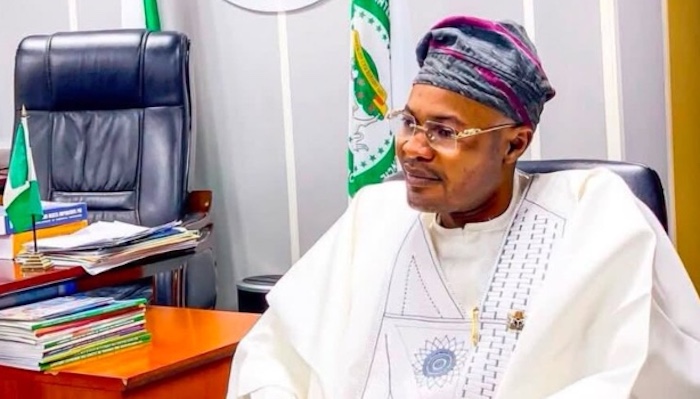
The Federal High Court in Abuja on Monday struck out the eight-count forgery charge brought against the self-styled Director-General (DG) of the alleged “non-existent” Presidential Foreign Investment Promotion Council (PFIPC), Prince Adeniyi Adeyemi.
Justice Mohammed Umar terminated further proceedings in the case following an application by the Federal Government, which was represented by the Director of Public Prosecutions of the Federation (DPPF), Mr. Rotimi Oyedepo, SAN.
It will be recalled that although the charge was originally brought before the court by the police, the office of the Attorney-General of the Federation (AGF) took over the prosecution at the last adjourned date.
When the matter was called on Monday, the DPPF notified the court that the AGF, after a proper review of the case file, had found some loopholes that informed his decision to withdraw the charge.
He told the court that the government had concluded plans to move the case to the High Court of the Federal Capital Territory (FCT) for a fresh arraignment of the defendant.
News
CJN Kekere-Ekun swears in 68 new SANs
During her address at the Supreme Court Complex in Abuja, Kekere-Ekun urged judicial officers to embrace reforms aimed at accelerating the administration of justice, citing the increasing number of cases before the courts.
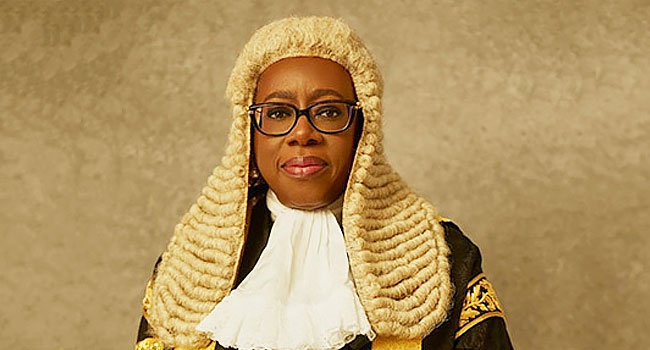
Chief Justice of Nigeria, Justice Kudirat Kekere-Ekun, has sworn in 68 new Senior Advocates of Nigeria (SANs) at the ceremony marking the 2026/2027 legal year.
The Nigerian Television Authority (NTA) reported the development accompanied by a video and photographs shared on its official X handle, on Monday.
During her address at the Supreme Court Complex in Abuja, Kekere-Ekun urged judicial officers to embrace reforms aimed at accelerating the administration of justice, citing the increasing number of cases before the courts.
She also encouraged judges to leverage technology to improve the adjudication of cases.
Reviewing the judiciary’s performance in the year under review, the CJN disclosed that more than 2,000 cases were filed at the Supreme Court, with civil matters accounting for the majority.
Kekere-Ekun also cautioned legal practitioners against discrediting court judgments in the media.

A fire has broken out at a First Bank of Nigeria branch along the busy Abuja-Keffi Road, with thick black smoke billowing from the building this afternoon.
Videos circulating on social media show flames and heavy smoke rising from the structure, identified by multiple eyewitnesses as the First Bank location in the Mararaba/Karu area of the expressway. Bystanders can be seen attempting to douse the blaze with buckets of water amid reports that fire service response was delayed or absent in the initial moments.
The exact cause of the fire remains unconfirmed at this time. There are no immediate reports of casualties, though the full extent of damage to the bank building and any impact on surrounding properties or traffic along the heavily congested Abuja-Keffi corridor is still being assessed.
Emergency responders, including fire service personnel, are expected on the scene. Commuters and residents in the Nyanya-Mararaba-Karu axis are advised to exercise caution as the incident may cause further traffic disruptions on the already busy route.
Further updates will follow as more details emerge from official sources.


AI to eliminate 40% of global jobs – IMF boss

JUST IN: Pope Leo XIV to Undergo Surgery for Early-Stage Lung Nodule

FG Withdraw Charges Against PFIPC DG Adeyemi

Tech Expert, Zuckerberg trains with UFC champions, Adesanya, Alexander

Organ Trafficking: Ekweremadu bags 10 years in UK prison

SAINT OBI: Between his marriage and his death
-
 Business21 hours ago
Nigeria’s ₦33bn Fruit Import Bill Exposes Missed Opportunities in Jos
-

 Business22 hours ago
Naira To Dollar, Pound ,Euro …Rates For Monday, October 12
-

 International1 day ago
‘Up to our people’ to pick leader, Zelenskyy responds to Trump’s pledge for new elections in Ukraine
-

 Opinions1 day ago
Human Capital Africa Statement For International Day of the Girl Child 2026
-

 News21 hours ago
Forbes Scores GTBank Best Employers 2026
-

 Politics20 hours ago
2027: 119 Women Jostle For State’s Governors
-
 Politics15 hours ago
BEWARE: Fake 2027 Gov’ Candidates List Circulating Online — INEC Raises Alarm
-

 International1 day ago
Time for Ukraine to get a new president’, says Trump