
Business
Airtel Nigeria Renews Spectrum Licence for another 15 years


Airtel Networks Limited (Airtel Nigeria), a subsidiary of Airtel Africa has renewed its 2×10 MHz 2100 MHz spectrum licence for another 15 years.
The licence is issued by the Nigerian Communications Commission (NCC) for NGN58.7 billion.
In a statement, Airtel stated that the previous licence on the spectrum expired on April 31, 2022.
“This investment to renew the licence reflects our continued confidence in the opportunity inherent across the Nigerian market, supporting the local communities and economies through furthering digital inclusion and connectivity,” the telecom company added.
Business
Emir Sanusi mobilises Kano People “Buy Dangote Refinery’s Shares Now”
“I speak as the Emir of Kano; I would like my people to be owners of this company . I do not want us to be left behind in the capital markets. I do not want us to be left behind in financial inclusion. So this is the time and this is the opportunity,” said Sanusi.

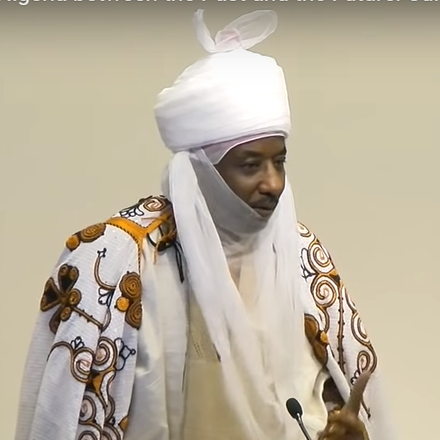
The Emir of Kano, Muhammadu Sanusi II, has praised Kano-born businessman Aliko Dangote and encouraged residents to secure a stake in the Dangote Refinery and Petrochemical Plc before the public offering closes.
“I speak as the Emir of Kano; I would like my people to be owners of this company . I do not want us to be left behind in the capital markets. I do not want us to be left behind in financial inclusion. So this is the time and this is the opportunity,” said Sanusi.
The royal father made the call on Thursday during the Dangote Refinery IPO investor roadshow in Kano, urging residents to invest only disposable income they can afford to lock away for the long term.
His words, “Do not take your children’s school fees and put in shares. Do not sell the house that you live in and put in shares.
“Buy what you can afford, 10,000, 20,000, 30,000 – what you can afford to set aside for some time, set it aside.
And if you look at the fundamentals of the economy, over time you can be assured that this investment will grow, and you will not regret it.
He also advised prospective investors to choose a long-term approach rather than buying shares in anticipation of quick profits.
“And I’m not talking about someone who will buy 5,000 shares and want to sell tomorrow and believe he will get 10,000. No, I’m talking about you have some money, put it in, leave it there for some time, and just watch your money grow.
Forget about it for some time. You’ll be surprised in five years the 10,000 Naira you invest today, what it will be,” Sanusi said.
Business
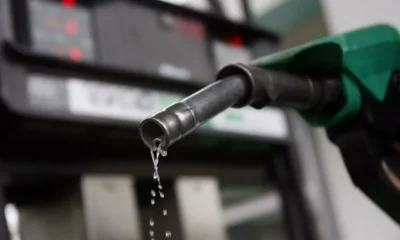
Nigerians Speak As Petrol sells N1,500/litre
A visit to filling stations showed that motorists were purchasing the commodity for between N1,450 and N1,500 per litre, against the former price of N1,350.
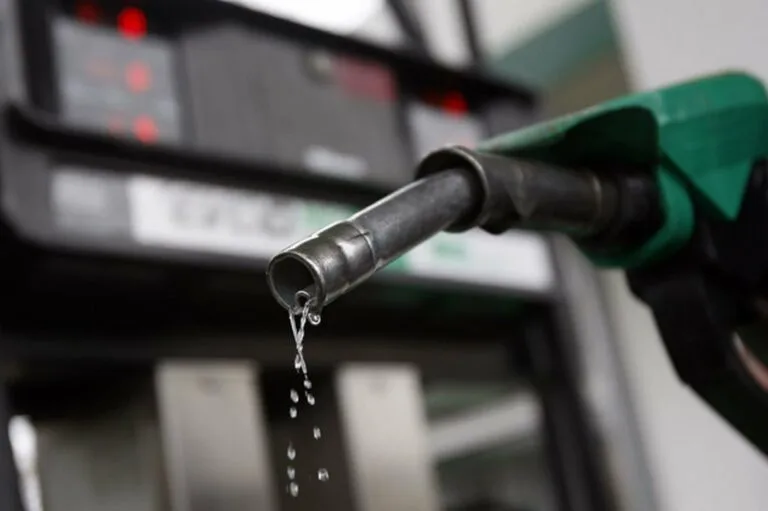
NIGERIANS across the 36 states and the Federal Capital Territory – Abuja, are complaining bitterly as the pump prices of Premium Motor Spirit, popularly known as petrol, is selling for as much as N1,500 per litre nationwide .
According to the Prices across states tracked by the PUNCH, the cost of the commodity has continued to rise nationwide, selling for as high as N1,500 in many states.
In Yobe State, residents reported that petrol was selling for between N1,500 and N1,520 per litre at some filling stations in Damaturu, the state capital.
Similarly, a tricycle rider in the state capital, Musa Ibrahim, said he buys the commodity for about N1,500 per litre at some Nigerian National Petroleum Company filling stations.
Also speaking, a civil servant, Lawan Garba, said some filling stations were selling petrol at an even higher price.
“I am buying petrol at N1,520 per litre in some petrol stations,” Garba said.
In Kano State, petrol was selling for between N1,460 and N1,500 per litre at most filling stations in the metropolis. The increase has forced some vehicle owners to park their vehicles, while commercial tricycle operators, popularly known as “yan’ adaidaita sahu”, have also increased their fares by about 50 per cent, depending on the distance.
The operators who used to charge N200 for a short distance now collect N300, while they charge between N500 and N700 for longer distances.In Sokoto State, petrol prices rose to between N1,465 and N1,500 per litre in the metropolis.
Checks by our correspondent showed that the product had risen from the previous price of N1,365 per litre.
At some filling stations, including AA Rano, Shafa and Total, petrol was sold for N1,465 per litre, while major marketers sold it for between N1,470 and N1,500 per litre.
In Borno State, a litre of petrol was selling for N1,500 at filling stations in Maiduguri, the state capital.
A motorist, Ishaku Curutsi, confirmed to our correspondent that he bought petrol from Matrix filling station for N1,500 per litre on Wednesday. “I bought it this morning, and a litre at Matrix cost 1,500,” he said.
In Taraba State, the price of petrol had risen to N1,500 per litre, with motorists and commuters reporting prices of between N1,500 and N1,700 per litre at some filling stations.
The development is expected to further increase the cost of transportation and movement of goods within the state.In Zamfara State, a litre of petrol was selling for N1,500 in Gusau, the state capital, and its environs.
A visit to filling stations showed that motorists were purchasing the commodity for between N1,450 and N1,500 per litre, against the former price of N1,350.
At Danmarina filling station, motorists were seen purchasing the commodity amid complaints about the increase. One of the motorists, who gave his name as Musa Idris, said the current price was putting pressure on consumers.
• Culled from the PUNCH
Business
Naira Exchange Rates To Dollar, Pound, Euro…Wednesday, 16 September 2026
How much is 100 pounds in naira today?
At the current black market rate of 1880 per pound, 100 British Pounds = 188,000 Naira
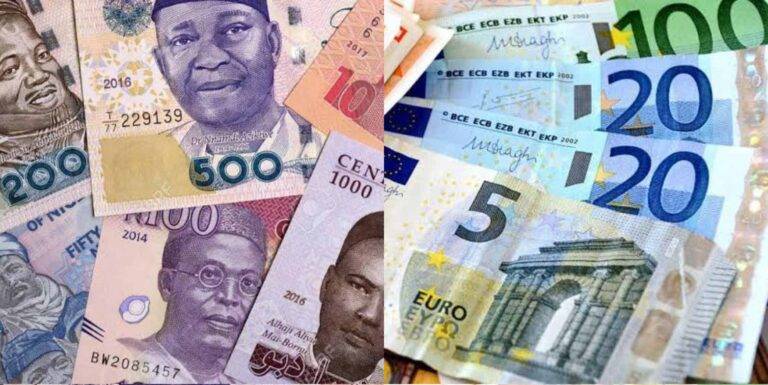
BLACK MARKET RATE
1 US Dollar is 1380 Naira.
1 Great British Pound (GBP) is 1880 Naira.
1 Euro (EUR) is 1575 Naira.
1 Canadian Dollar (CAD) is 1000 Naira.
1 Chinese Yuan is 190 Naira.
1 Ghanaian Cedi is 100 Naira.
1 South African Currency, Rand (ZAR) is 70 Naira.
1 UAE Dirham is 370 Naira.
1 CFA Franc (XOF) is 2350 Naira.
1 CFA Franc (XAF) is 2250 Naira.
1 Australian Dollar (AUD) is 850 Naira.
CBN Exchange Rate
DOLLAR (USD) ₦1329.15
POUND (GBP) ₦1793.69
EURO (EUR) ₦1534.77
SWISS FRANC (CHF) ₦1622.69
JAPANESE YEN (JPN) ₦8.5
CFA FRANC (XOF) ₦2.33
WEST AFRICAN UNIT OF ACCOUNT (WAUA) ₦1811.58
CHINESE YUAN (CNY)₦198.03
SAUDI RIYAL (SAR)₦353.85
SOUTH AFRICAN RAND (ZAR)₦81.79


Macron Hosts Tinubu for Private Dinner at Élysée Palace (Photos)

Madonna Returns To MTV Video Music Awards, After 23 years

Emir Sanusi mobilises Kano People “Buy Dangote Refinery’s Shares Now”

Tech Expert, Zuckerberg trains with UFC champions, Adesanya, Alexander

Organ Trafficking: Ekweremadu bags 10 years in UK prison

SAINT OBI: Between his marriage and his death
-
 Business3 days ago
Naira Exchange Rates To Dollar, Pound, Euro…Wednesday, 16 September 2026
-
 Entertainment3 days ago
EXCLUSIVE: Veteran Nollywood Actor, Olu Jacobs Dies at 84
-
Entertainment3 days ago
Olu Jacobs: His Life and Times
-
 Health2 days ago
Ondo ‘Monkey Tail’ herbal drink kills 49
-
 Business1 day ago
Emir Sanusi mobilises Kano People “Buy Dangote Refinery’s Shares Now”
-
 Business2 days ago
Nigerians Speak As Petrol sells N1,500/litre
-
 News2 days ago
Digital Economy Minister Says NDPC Now Properly Functional With New HQ
-

 News2 days ago
UK court jails Nigerian man for masturbating in front of a woman