
News
Plane Crash Averted as Arik Air Flight to Port Harcourt Diverts Safely After Engine Issue Mid-Air

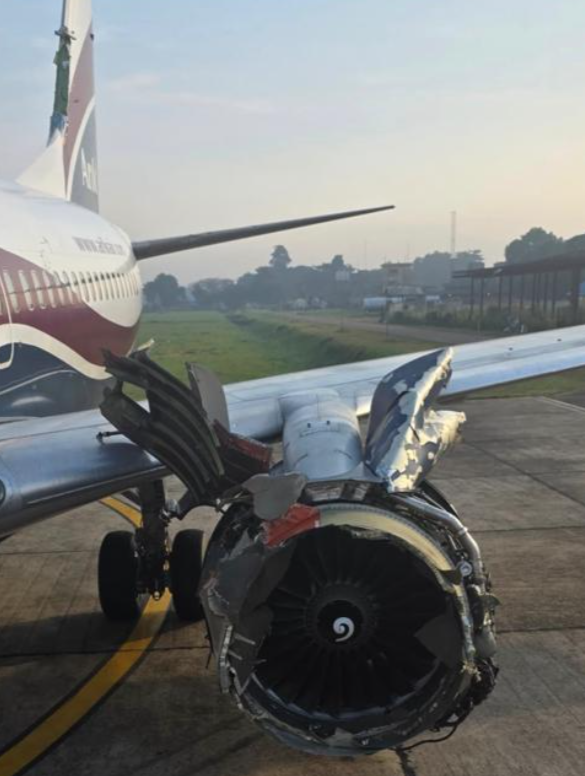
A potential aviation disaster was narrowly avoided today when an Arik Air Boeing 737-700 aircraft, en route from Lagos to Port Harcourt, experienced a serious engine problem mid-flight and made an emergency diversion to Benin Airport.
The aircraft, registration number 5N-MJF and operating as Flight W3 740, was descending toward Port Harcourt International Airport when the crew heard a loud bang from the left engine.
The incident occurred during the cruise or descent phase, prompting the pilots to declare an emergency and divert the plane as a precautionary measure.
According to statements from the Nigerian Safety Investigation Bureau (NSIB) and Arik Air, the flight crew detected abnormal indications on one of the engines.
The plane landed safely at Benin Airport without further incident, and all passengers and crew approximately 80 people onboard disembarked normally with no injuries reported.
The NSIB has launched an investigation into the engine anomaly, with preliminary observations indicating significant damage to the affected engine based on initial visual assessments at Benin Airport.
Arik Air confirmed the safe handling of the situation, emphasizing that the diversion was carried out following standard safety protocols. Arrangements were made for the affected passengers to continue their journey.
The incident underscores the critical importance of crew training and aircraft maintenance in Nigeria’s aviation sector, where quick decision-making by pilots has once again prevented a potential tragedy.
Authorities are expected to provide further updates as the probe continues.


Former Delta State Governor Dr. Emmanuel Eweta Uduaghan is dead. He passed away on the morning of Monday, October 19, 2026, at the age of 71, after a period of illness.
A family statement announced his death, describing it as a devastating loss. Uduaghan, a medical doctor, served as Delta State Commissioner for Health (1999–2003) and Secretary to the State Government (2003–2007) before becoming governor from 2007 to 2015. He was known for contributions to infrastructure and human capital development in the state.
Delta State Governor Sheriff Oborevwori has expressed deep sadness over the passing. In a condolence message, he described Uduaghan as a detribalised leader whose service left a lasting mark on Delta State.
Oborevwori extended heartfelt condolences to Uduaghan’s wife, Roli, his children, the Uduaghan family, the Itsekiri nation, and the people of Delta State, praying for the peaceful repose of his soul.
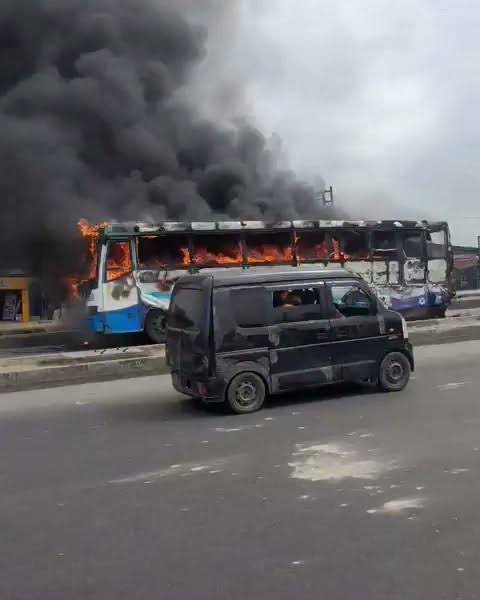
An angry mob has set a Bus Rapid Transit (BRT) bus on fire after it reportedly crushed a commercial motorcyclist to death at Ogolonto Bus Stop along Ikorodu Road in Lagos State.
The incident occurred on Friday, October 16, 2026. Eyewitness accounts and social media reports indicate that the motorcyclist was riding alone along the restricted BRT lane when the collision happened. He died at the scene.
Enraged residents and youths then attacked the bus driver and set the vehicle ablaze. Police officers and officials of the Lagos Neighbourhood Safety Corps (LNSC), who were nearby, intervened promptly and rescued the driver unharmed.
The identity of the deceased motorcyclist and the exact circumstances of the crash had not been officially confirmed at the time of filing this report. It was also unclear whether any arrests had been made in connection with the burning of the bus.
News
ARISE News Wins Seven Honours At Nigerian Broadcasters Merit Awards
The awards recognised the network’s achievements in television journalism and programming, with ARISE News winning the Best TV Channel (Viewer’s Choice) category.


• ARISE News Anchor and host of What’s Trending Ojy Okpe was named Best Newscaster (TV – Female)
ARISE News has emerged as one of the major winners at the just ended Nigerian Broadcasters Merit Awards (NBMA).
ARISE News won seven honours across television broadcasting, news reporting, presentation and production during the ceremony.
The awards recognised the network’s achievements in television journalism and programming, with ARISE News winning the Best TV Channel (Viewer’s Choice) category.
The network’s flagship breakfast programme, The Morning Show, also won the Best TV Talk Show award, further strengthening its recognition in television broadcasting.
ARISE News Anchor and host of What’s Trending Ojy Okpe was named Best Newscaster (TV – Female).
Rufai Oseni was named Nigerian Broadcaster of the Year (Male), while Vimbai Mutinhiri-Ekpeyong received the Nigerian Broadcaster of the Year (Female) award.
The recognition extended to the network’s newsroom, with Ovieteme George winning Best TV News Reporter (Male) for his contributions to television news reporting.
Behind the camera, Sam Adeyemi received the Best Camera Operator/Cinematographer award, recognising his work in television production and visual storytelling.


Ebola In Nigeria: Symptoms, Spread and How To Protect Yourself

NDC Plans Fresh Congresses To Replace Defector Members

RMRDC Taking 2027 Africa Raw Materials Summit To Kenya

BREAKING: Lagos Govt Declares Today, Thursday Work-Free to Mark 2026 Ìṣẹ̀ṣe Day

Tech Expert, Zuckerberg trains with UFC champions, Adesanya, Alexander

Organ Trafficking: Ekweremadu bags 10 years in UK prison
-

 Business4 hours ago
Naira Exchange Rates Wednesday, October 21, 2026
-
 Business4 hours ago
Currency Words You Should Know
-

 News2 days ago
JUST IN: Ex-Delta Gov Uduaghan Dies at 71, Oborevwori Mourns
-

 Sports2 days ago
Ronaldo Gets 30-Day Suspension For Portugal Camp Walkout
-

 Sports2 days ago
Mbappé wins Onze d’Or award for 2025/26 season
-

 Business3 hours ago
NCC, CBN To Warn Companies By Flagging Fraudulent Phone Numbers
-
 Business2 hours ago
JPMorgan Eyeing Entry Into Nigeria’s Banking Industry
-
 Health17 hours ago
BREAKING: Nigeria Confirms First Ebola Case