
News
BREAKING: Senate OKs Electronic & Manual Election Result Transmission

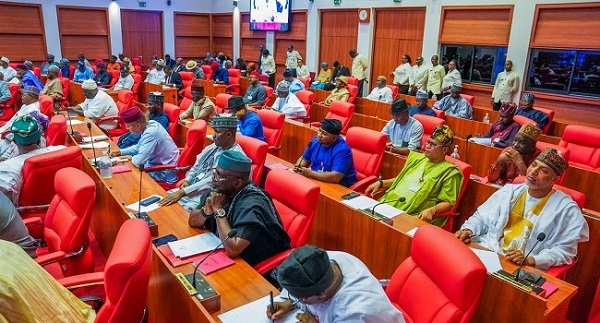
The Nigerian Senate has passed the Electoral Act 2022 (Repeal and Reenactment) Amendment Bill 2026, retaining provisions that allow for the transmission of election results in a manner prescribed by the Independent National Electoral Commission (INEC), effectively permitting both electronic and manual methods without mandating real-time electronic upload.
In a key decision during the bill’s third reading earlier this month, senators rejected a proposed amendment to Clause 60(3) that would have required presiding officers to transmit polling unit results to INEC’s Result Viewing (IReV) portal in real time via electronic means after results are announced and forms are signed. Instead, the chamber adopted the existing language from the 2022 Electoral Act, which states that the presiding officer shall “transfer the results… in a manner as prescribed by the Commission.”
Senate leadership, including President Godswill Akpabio, has clarified that the decision does not outright reject electronic transmission, as the law already accommodates it at INEC’s discretion. They described reports of a complete ban on electronic methods as misleading, emphasizing that the amendment retains flexibility for the electoral body to use technology where feasible, while allowing manual processes as a fallback.
The move has sparked widespread controversy and public backlash, with critics—including opposition figures like former Vice President Atiku Abubakar, Labour Party’s Peter Obi, civil society organizations, the Nigerian Bar Association, and the Nigerian Society of Engineers—arguing that removing the mandatory real-time electronic requirement weakens transparency, opens the door to manipulation during collation, and represents a setback for electoral integrity ahead of the 2027 general elections.
Protests erupted at the National Assembly complex, with demonstrators demanding the restoration of compulsory real-time e-transmission to curb fraud and build public trust. An emergency plenary session was convened amid mounting pressure, though the core provision on result transmission remained unchanged in the passed version.
The bill, which also includes other changes such as adjustments to election timelines, voter accreditation technology, and penalties for electoral offenses, now awaits harmonization with the House of Representatives’ version—where some reports indicate support for stronger electronic provisions—before heading to the president for assent. The outcome has intensified national debate over the future of credible elections in Nigeria.









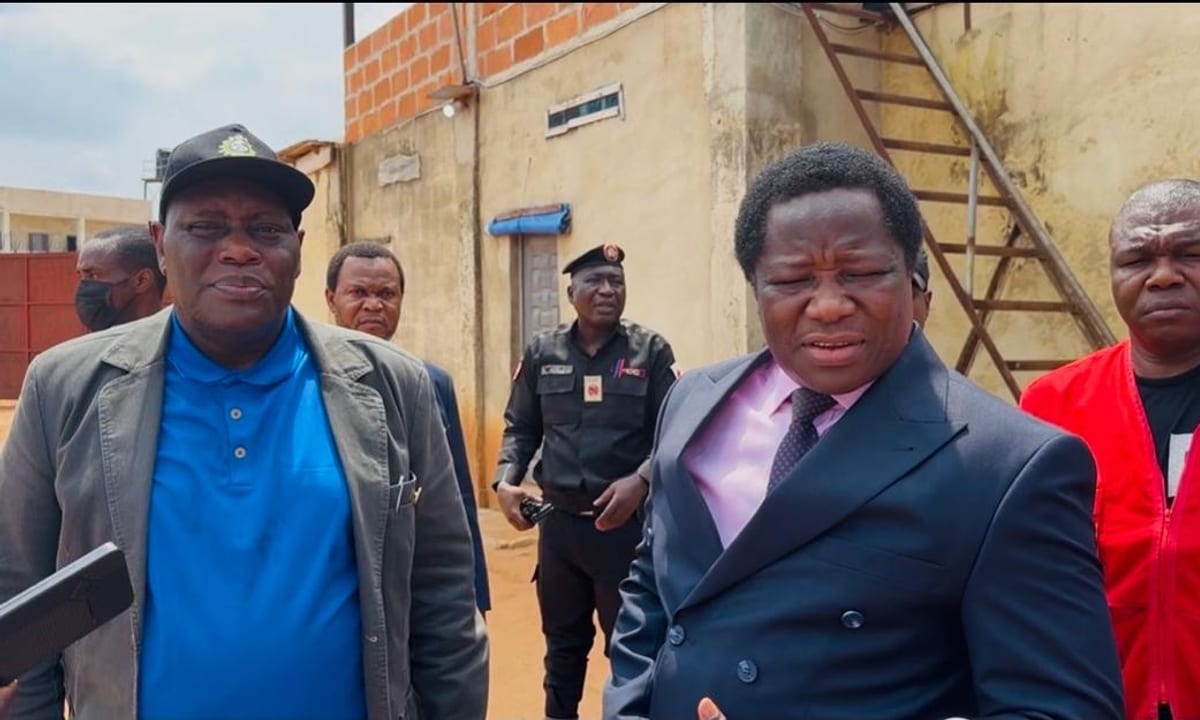
The Nigerian Midstream and Downstream Petroleum Regulatory Authority (NMDPRA) and operatives of the Economic and Financial Crimes Commission (EFCC) on Tuesday stormed an illegal Chinese-operated refinery in Ogere-Remo, Ikenne Local Government Area of Ogun State.
The joint operation followed intelligence reports that revealed a well-fenced but crude yet technically sophisticated facility occupying more than three hectares of land.
During the inspection, officials observed underground tanks believed to have been used for heating and processing sludge oil, refining waste products, and substances suspected to be Automotive Gas Oil (AGO), popularly known as diesel. NMDPRA officials immediately sealed the facility.
Ogun State Coordinator of NMDPRA, Dr. Atilola Akinyemi, described the plant as a complete illegality operating without any permit from regulatory authorities.
“The underground storage facility behind the site has an estimated capacity of more than 90,000 litres, complete with underground heating systems, water hydrants for cooling, locally fabricated tanks and silos for separation,” Akinyemi told journalists.
He warned that if such adulterated products entered the market, they would pose serious risks to vehicles and engines. All recovered products have been confiscated by the Federal Government.
Director of the Department of Proceeds of Crime Management at the EFCC, Gbolahan Latona, stressed the need for collective patriotism in tackling economic crimes.
“Upon conclusion of investigation, the suspects will have their day in court and the proceeds of crime will be put to meaningful use,” Latona said.
Watch video below:
News
Sanusi: Critics Are Not Enemies Of The Govt
” It’s not every time people talk about poverty or talk about difficulty that they’re just enemies of the government or making an attack on the president. That is not how to respond to economic distress,” he said.

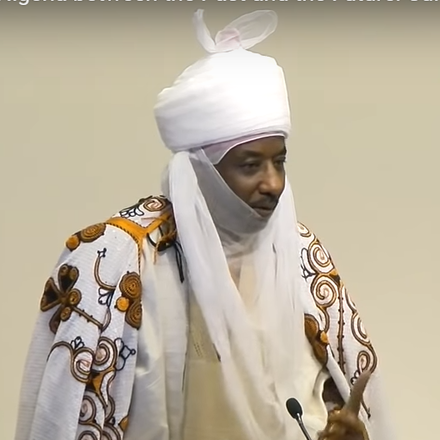
The Emir of Kano, Alhaji Muhammadu Sanusi II, has advised the Federal Government against treating every comment about the administration as an attack on President Bola Tinubu.
The royal father gave the advise on the occasion of the Oxford Global Think Tank Leadership Conference, organised by the Oxford Global Think Tan.
Speaking virtually to the audience at the event, on Tuesday, Sanusi advised the government to tolerate constructive criticism.
“It’s not every time people talk about poverty or talk about difficulty that they’re just enemies of the government or making an attack on the president. That is not how to respond to economic distress,” he said.
News
Urbanisation: Lagos To Fall Behind Luanda as sub-Saharan Africa’s biggest city by 2050
The report titled ‘Sub-Saharan Africa’s Urban Awakening: Catalyzing Economic Growth and Job Creation’, also calculated that sub-Saharan Africa’s urban population will increase by 748 million between 2025 and 2050, reaching about 1.7 billion.

A report conducted by the World Bank and the European Commission’s Joint Research Centre, has projected that Angola’s capital, Luanda,will overtake Lagos as sub-Saharan Africa’s most populous city by 2050, rising by 78 percent from 11.4 million to 20.3 million.
The report titled ‘Sub-Saharan Africa’s Urban Awakening: Catalyzing Economic Growth and Job Creation’, also calculated that sub-Saharan Africa’s urban population will increase by 748 million between 2025 and 2050, reaching about 1.7 billion.
The report estimated that Luanda’s population would increase from 11.4 million in 2025 to 20.3 million in 2050, adding 8.9 million residents over the period.
Lagos, the region’s most populous city in 2025 with an estimated 12.8 million residents, is projected to grow to 16.2 million by 2050, an increase of more than 25 percent.
Despite the growth, Lagos is expected to fall behind Luanda, whose population is projected to exceed that of Nigeria’s commercial hub by 4.1 million.
“Over this period, the population of Angola’s capital city, Luanda, is projected to increase by 78 percent from 11.4 million to 20.3 million.
In doing so, Luanda will overtake Lagos as SSA’s most populous city,” the report said.


NMDPRA, EFCC Storm Illegal Chinese Refinery in Ogun (Video)

2027 Elections Campaign: NDC Reacts To Today’s Attack On Peter Obi in Cross River

Democrats Win US midterm elections

BREAKING: Lagos Govt Declares Today, Thursday Work-Free to Mark 2026 Ìṣẹ̀ṣe Day

Tech Expert, Zuckerberg trains with UFC champions, Adesanya, Alexander

Organ Trafficking: Ekweremadu bags 10 years in UK prison
-

 Business3 days ago
Naira Exchange Rates Today, Monday November 2,2026
-

 Business20 hours ago
Naira Exchange Rates Wednesday, 4 Nov 2026
-
 Business20 hours ago
NNPCL wants to sell 10% equity via IPO on NGX, LSE
-

 Business2 days ago
Naira Exchange Rates 3 November,2026
-
 Business2 days ago
MTN migrates MoMo Customers to Alipay+ platform
-

 News18 hours ago
Sanusi: Critics Are Not Enemies Of The Govt
-

 International3 days ago
Tens of thousands protest against Narendra Modi regime in Delhi
-

 News2 days ago
Urbanisation: Lagos To Fall Behind Luanda as sub-Saharan Africa’s biggest city by 2050