
Business
Dangote Partners Honeywell International to Boost Refinery Capacity to 1.4 million barrels per day

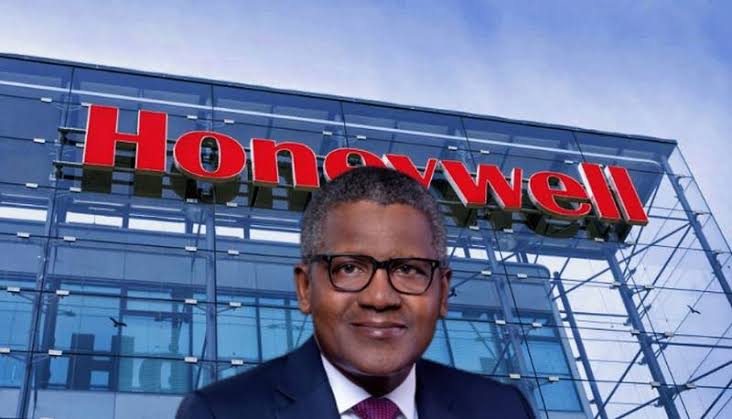
Dangote Refinery, Africa’s largest single-train petroleum refinery, has signed a landmark contract with U.S. industrial giant Honeywell International to execute a significant capacity upgrade that will boost the facility’s crude processing capability from the current 650,000 barrels per day to an ambitious 1.4 million barrels per day.
The multi-billion-dollar project, described by sources close to the deal as one of the largest refinery expansion initiatives globally in recent years, will involve the installation of advanced process units, automation systems, and energy-efficiency technologies supplied and integrated by Honeywell UOP and Honeywell Process Solutions.
Aliko Dangote, President and CEO of Dangote Industries Limited, confirmed the partnership, stating: “This strategic collaboration with Honeywell will position the Dangote Refinery as one of the top five largest refineries in the world by capacity.
The upgrade will not only enhance our ability to meet Nigeria’s complete refined products demand but also establish the refinery as a major export hub for gasoline, diesel, jet fuel, and petrochemicals across Africa and beyond.
”The expansion is expected to be implemented in phases, with key units including additional crude distillation, hydrocracking, and catalytic reforming modules.
Honeywell’s proprietary technologies are anticipated to improve yield of high-value products while reducing energy consumption and emissions.Upon completion, the 1.4 million bpd Dangote Refinery will surpass the current global top-tier facilities such as Reliance Industries’ Jamnagar Refinery (1.24 million bpd) and Paraguay’s planned 1.2 million bpd project, cementing its status as the world’s largest single-train refinery.
The project is expected to create thousands of direct and indirect jobs during the construction and commissioning phases and further reduce Nigeria’s dependence on imported refined petroleum products.
A spokesperson for Honeywell confirmed the award, saying the company was “honored to partner with Dangote on this transformative project that will reshape the African downstream landscape.
”Detailed timelines and the exact value of the contract were not disclosed, but industry analysts estimate the expansion could exceed $5–7 billion in total investment.
The statement said: Dangote Group is pleased to announce that it has entered into a strategic partnership with Honeywell International Inc to support the next phase of expansion of the Dangote Petroleum Refinery.
This collaboration will provide advanced technology and services that will enable the refinery to increase its processing capacity to 1.4 million barrels per day by 2028, marking a major milestone in our long-term vision to build the world’s largest petroleum refining complex.
Through this agreement, Honeywell will supply specialised catalysts, equipment, and process technologies that will allow the refinery to process a broader slate of crude grades efficiently and to further enhance product quality and operational reliability.
Honeywell, a global Fortune 100 industrial and technology company, offers a wide portfolio of solutions across aviation, automotive, industrial automation, and advanced materials.
Honeywell’s division UOP has been a technology partner to Dangote since 2017, providing proprietary refining systems, catalyst regeneration equipment, high performance column trays, and heat exchanger technologies that support our best-in-class operations.
Dangote Group is also advancing its petrochemical footprint. As part of the wider collaboration, we are scaling our polypropylene capacity to 2.4 million metric tons annually using Honeywell’s Oleflex technology.
Polypropylene is a key industrial material widely used across packaging, manufacturing, and automotive applications.In addition to refining expansion, Dangote Group is progressing with the next phase of its fertiliser growth plan in Nigeria. We will increase our urea production capacity from 3 million metric tons to 9 million metric tons annually.
The existing plant consists of two trains of 1.5 million metric tons each. The expansion will add four additional trains to meet growing demand for high-quality fertiliser across Africa and global markets.
Dangote Group remains fully committed to delivering world-class industrial capacity, strengthening Nigeria’s energy security, and driving sustainable economic growth through long-term investment, innovation, and strategic global partnerships.
Business
Dangote Refinery Signs IPO Document Today
The proposed offering comprises 4.1 billion ordinary shares at N525 per share, with the potential to raise approximately N2.15 trillion if fully subscribed.


Dangote Petroleum Refinery is expected to sign its Initial Public Offer (IPO) Monday 7th September.
Ohibaba.com learned that the signing ceremony will take place at 11am, at Eko Hotels, Lagos.
The founder and Africa’s richest person, Aliko Dangote, is targeting a $50 billion valuation for the 650,000 barrels per day (bpd) refinery.
The company plans to sell up to a 10 per cent stake, potentially raising around $5 billion in one of Nigeria’s biggest capital market deals.
It was further learned that the Securities and Exchange Commission (SEC) weekend, approved the IPO of Dangote Petroleum Refinery and Petrochemicals FZE, with the company offering 4.1 billion ordinary shares at N525 each.
The offer could raise approximately N2.15 trillion if fully subscribed, according to a statement issued by the Dangote Group on Sunday.
The SEC’s approval cleared the way for the next stages of the offering.
According to the Commission, the proposed offering comprises 4.1 billion ordinary shares at N525 per share, with the potential to raise approximately N2.15 trillion if fully subscribed.
Business
Dangote Foundation Takes Over Aliko Dangote Skills Acquisition Centre Kano
Under the agreement, the Foundation will manage the multi-million naira facility for a number of years and operate programmes aimed at equipping young people with technical, digital and industrial skills.
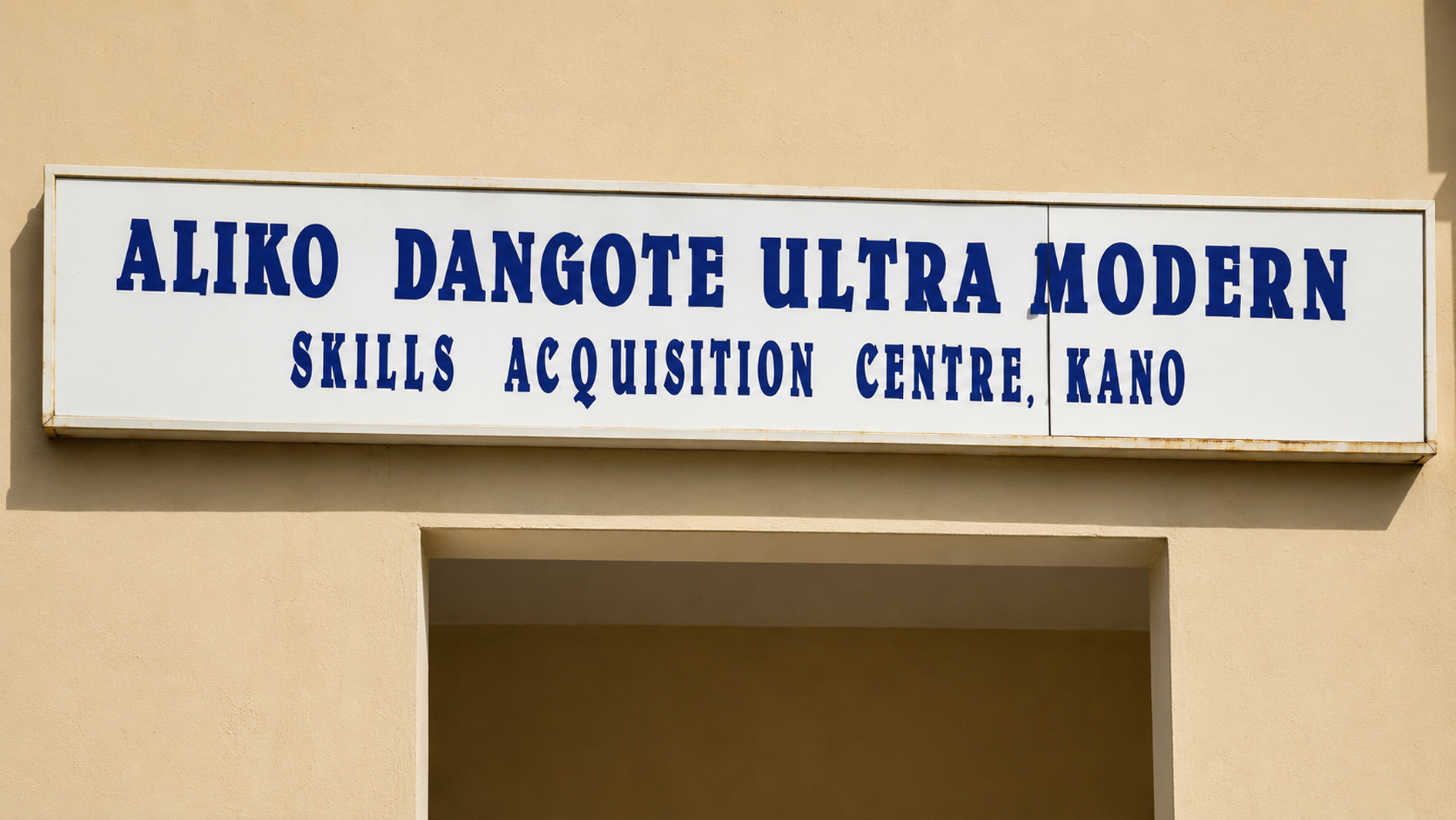
The Aliko Dangote Foundation has taken over the management of the Aliko Dangote Skills Acquisition Centre in Kano state.
The Memorandum of Understanding was signed between the Foundation and the Kano State Government, on Friday.
Under the agreement, the Foundation will manage the multi-million naira facility for a number of years and operate programmes aimed at equipping young people with technical, digital and industrial skills.
Chairman of the Manufacturers Association of Nigeria (MAN), Kano-Jigawa Branch, Muhammad Bello Isyaku Umar, described the intervention as “far-reaching and impactful,” saying skills acquisition remained one of the most effective ways of addressing youth unemployment in Nigeria..
“Programmes such as the Aliko Dangote Skill Acquisition Centre can equip young people with practical skills that enable them to become entrepreneurs, artisans or employees. The emphasis should increasingly be on modern technical, digital and industrial skills,” Umar said.
He described Kano as the economic and commercial hub of northern Nigeria and said the Foundation’s interventions across the region had extended to several sectors.
Business
Okin Biscuits Set For Comeback After 17 Years, Targets Revival Of Jobs, Local Manufacturing
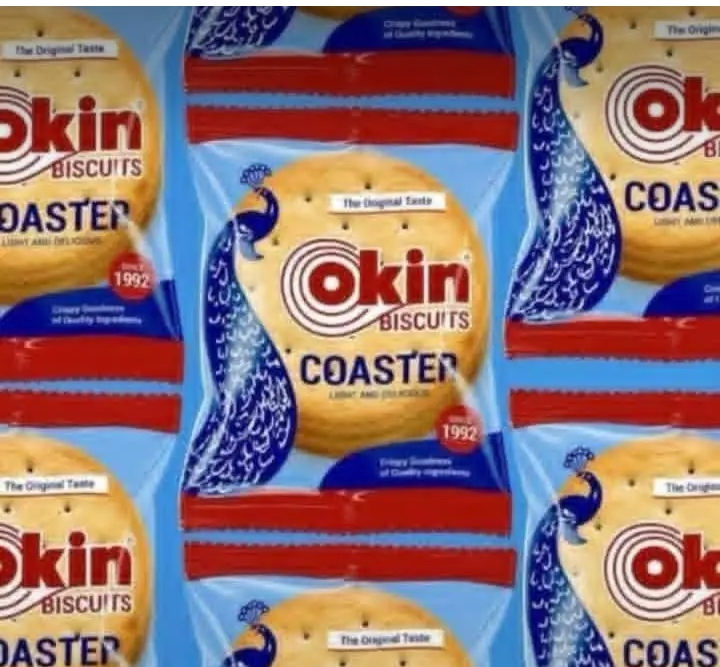
Founded in the 1980s by the late Chief Emmanuel Olatunji Adesoye, an illustrious son of Offa, Okin Biscuits grew into a household name with products including Okin Coasters, Shortcake and Okin Cabin Biscuits.
By Ochefa
After 17 years off the shelves, Okin Biscuits, one of Nigeria’s once-popular indigenous biscuit brands, is set to return to production as efforts intensify to revive the Ijagbo, Kwara State-based factory.
The planned comeback marks a significant attempt to restore one of the country’s old manufacturing brands while potentially reopening a major source of employment and economic activity in the community.
Founded in the 1980s by the late Chief Emmanuel Olatunji Adesoye, an illustrious son of Offa, Okin Biscuits grew into a household name with products including Okin Coasters, Shortcake and Okin Cabin Biscuits.
At its peak, the company provided direct and indirect employment to more than 2,000 people before production was eventually halted in 2009.
The shutdown reflected some of the structural problems that have continued to undermine Nigeria’s manufacturing sector, including harsh operating conditions, intense competition, inadequate infrastructure, vandalism and the theft of critical production equipment.
With the factory no longer producing, its products gradually disappeared from retail outlets and homes in Kwara, Lagos and other parts of the country.
Factory Undergoing Major Rehabilitation
However, the industrial facility is now showing signs of renewed activity.
A visit to the factory in Ijagbo showed that extensive rehabilitation work is underway across the complex.
The main factory building, which houses the production machinery, as well as the administrative block and other facilities, are undergoing comprehensive renovation.
The premises have already assumed a significantly different appearance, suggesting that the revival project has moved beyond plans and into physical reconstruction.
The management recently announced through its official Facebook page that production machinery was being test-run.
It said biscuits rolled off one of the rehabilitated production lines on August 25, 2026, marking the first production from the factory in 17 years.
The development is significant not merely as the return of a nostalgic consumer brand, but as an example of how the rehabilitation of abandoned industrial assets could contribute to renewed domestic production and employment.
For Nigeria, where manufacturers continue to contend with high energy and logistics costs, infrastructure constraints, foreign exchange pressures and strong competition from imported products, the reopening of an existing manufacturing facility could offer a potentially faster route to industrial capacity expansion than building an entirely new factory.
Community Backs Revival
…biscuits rolled off one of the rehabilitated production lines on August 25, 2026, marking the first production from the factory in 17 years.
The planned resuscitation has also attracted strong support from the Offa community.
The Aare Bobaselu of Offa, Chief Abdulatif Adekunle Ajeigbe, described the development as “heartwarming,” linking it to the broader Offa Mega City project championed by the Olora of Offa, Oba Muftau Mohammed Gbadamisi, Esuwoye II.
According to him, members of the community had made several efforts to revive the moribund factory, including exploring the possibility of group financing.
“We did our best to see that the factory came back to life, but it was the children of the late Asiwaju of Offa and the founder of the factory, Chief Emmanuel Olatunji Adesoye, who insisted on carrying on their father’s legacy through the factory,” he said.
Ajeigbe commended the founder’s children for their determination to preserve the family’s industrial legacy and bring the factory back into operation.
More Than A Brand Revival
The return of Okin Biscuits also highlights the wider economic value embedded in Nigeria’s abandoned industrial assets.
The company’s earlier success created employment not only within the factory but across its supply and distribution networks, including raw-material suppliers, transporters, distributors, retailers and other service providers.
A successful reopening could therefore have an economic impact extending beyond the factory gates, particularly if production eventually returns to significant capacity.
The bigger test, however, will be whether the revived company can operate sustainably in an increasingly competitive Nigerian consumer market.
The new investors will have to contend with production costs, energy supply, distribution challenges, consumer purchasing power and competition from both established domestic manufacturers and imported brands.
For Okin, the challenge is therefore not simply to restart the machines, but to build a commercially viable manufacturing operation capable of sustaining production, protecting jobs and reclaiming market share.
If successful, the return of Okin Biscuits could become more than a nostalgic homecoming for Nigerian consumers.
It could provide a practical demonstration that some of the country’s dormant industrial assets can be rehabilitated, modernised and returned to productive use.
After 17 years of silence, the sound of Okin’s production lines running again may therefore signal the beginning of a new chapter for one of Nigeria’s forgotten manufacturing brands.


Nigerians better off under military than democracy – Duke

Infantino To Seek Re-Election As FIFA President In 2027

Dangote Refinery Signs IPO Document Today

Tech Expert, Zuckerberg trains with UFC champions, Adesanya, Alexander

Organ Trafficking: Ekweremadu bags 10 years in UK prison

SAINT OBI: Between his marriage and his death
-

 News2 days ago
Arise TV Deputy Head of News Ohi Odiai and Wife Celebrate 17th Wedding Anniversary
-
 Politics3 days ago
ADC unveils 28 governorship candidates for 2027 election
-

 News3 days ago
BBC Appoints Kakangi Editor Hausa Service
-
 Business3 days ago
Dangote Foundation Takes Over Aliko Dangote Skills Acquisition Centre Kano
-
 News3 days ago
UN approves new world map replacing 16th century Mercator map
-

 International2 days ago
Trump sends envoys to Russia, Ukraine with new peace plan
-

 Politics8 hours ago
Obidient Connect Texas Plans Grand Rally for Obi-kwakwanso October 10
-

 News2 days ago
MKO Abiola’s Documentary to hit Cinemas in October