
News
ADC Responds to Trump Over Designation of Nigeria as a Country of Particular Concern


In response to the action taken by U.S. President Donald Trump on October 31, 2025, designating Nigeria as a country of particular concern, the ADC has released its statement.
According to the statement signed by Bolaji Abdullahi, the National Publicity Secretary African Democratic Congress (ADC), the party stated as follows:
1. We are guided by the painful reality that what is really at stake on this issue are the thousands of human lives that have been lost to insecurity in Nigeria, irrespective of their tribe, religion or region.
We therefore seize this moment to pay tribute to the memory of all the victims and express our deepest sympathies to their families.
2. The statement by President Trump reminds us of the greater global concern about the sanctity of human life and the cardinal responsibility of national governments to protect the lives of people who live within their borders.
It reminds us that in the modern world, concern for human rights, for which right to life is the most fundamental, transcends national boundaries and that the dignity and respect of nations are no longer measured by their economic strength alone, but also by their willingness and capacity to protect their own citizens.
3. It is sad to note that it is in this most sacred mandate of government that this administration of President Bola Ahmed Tinubu has failed most. Available reports indicate that nearly 15,000 lives have been lost to sundry violent activities since this administration assumed office in 2023.
These deaths have occurred across regions and religions, underlining a national crisis that cuts across all divides and still endangers us all, regardless of tribe, region or religion.
Entire communities have been sacked, worshippers have been slaughtered in religious spaces, and bandits now control large territories in our country, waging war at will and levying taxes on citizens with impunity.
Boko Haram, once declared as “technically degraded,” is once again growing in strength, while another international terror group make open claims of carrying out successful attacks on Nigerian soil.
4. Under this administration, terror and violence have expanded their reach, from the extreme east and west of the north to its central part.
On October 31, 2025, the very day that President Trump announces his concern about Nigeria, another terror group, JNIM, an Al-Qaeda affiliate which had been active in the Sahel region, announced a successful attack in Kwara State, which serves as a gateway to the southern part of the country.
The crisis that we face is therefore not about any ethnic or religious group being targeted for killing; it is an existential crisis that imperils all Nigerians.
Quite significantly, it is also not about which region or religion has lost more lives; it is about every individual’s right to life. Life and death are absolutes and they must never be reduced to statistics.
The ADC believes that one life lost that could have been saved, is one death too many. 5. The problem of insecurity in Nigeria did not start with President Tinubu.
The problem is that President Tinubu has refused to acknowledge that the crisis has got worse under his watch and has refused to accept responsibility.
Instead, Nigerians have been met with excuses, cruel silence or utter indifference, and political posturing that mocks the tragedy of victims and their families.
7. The ADC will also like to draw attention to the structural and diplomatic failures that continue to deepen Nigeria’s vulnerability on the international stage.
We would like to ask, why has the Nigerian government failed to appoint ambassadors to key countries, more than two years into its term?
How can a government that has been boasting of unprecedented revenue success continue to give lack of fund as excuse for not appointing ambassadors?
Why has our foreign policy become so deeply personalised, focused on the image of the president and his interests, rather than the image of Nigeria and the interests of the Nigerian people?
Why are there still no unified national security strategy, no regional coordination, and no meaningful engagement with the communities most affected?
8. Under President Tinubu, Nigeria has declined both as a continental and a regional leader. Nothing underlines this decline more than the fracturing of the ECOWAS under his watch.
A region that once looked up to us for direction and leadership on issues of democratization and security now doesn’t think we matter anymore as smaller countries watch us fumble aimlessly with our own domestic crisis. These failures are not isolated.
They are all connected, pointing to a government that is so incompetent, so narrow-minded, and yet so blindly arrogant.
9. If this government had been less obsessed with politics, propaganda and self-celebration, it would have taken every single violent attack seriously.
It would have documented every single one of them, and in every single case, it would have demonstrated to Nigerians and to the world what it was doing to bring perpetrators to justice, it would have acknowledged its weaknesses, it would have asked for help; it would rallied Nigerians for the great challenge and it would have showed the world that it truly cared about every Nigerian life.
And perhaps, this situation would have been averted.
10. In conclusion, the African Democratic Congress would like to recommend the following:
i. A full overhaul of the national security apparatus, including an independent audit of operations, leadership, and strategy.
ii. Immediate appointment of qualified ambassadors, to restore Nigeria’s diplomatic presence and strategic influence.
iii. A reset of foreign policy, grounded in national interest, not personal promotion, with renewed engagement across ECOWAS, the AU, and the UN.
iv. Urgent economic reforms, focused on price stability, a credible plan to ease inflation, and verifiable social welfare system to ease the suffering of the poor across the country.
v. An end to the personalization of public institutions, and a return to accountable, citizen-focused governance.
11. We appreciate the American president and other world leaders for their concern about the security situation in our country.
We will however urge that such concerns should be translated into supporting Nigeria to grow her democracy and develop its capacity to solve its own problems.
We believe that mobilizing armed troops or even a mere threat of doing so would do more harm than good and ultimately prove counter-productive to our democratic aspiration and the long-term unity and stability of our country.
Nigeria is not beyond saving, but time is running out. We must act now, with courage, clarity, and a commitment to protect the lives and dignity of every Nigerian. Certainly, Nigeria can not continue like this.






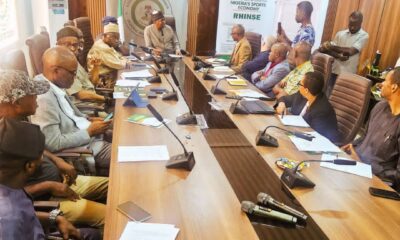

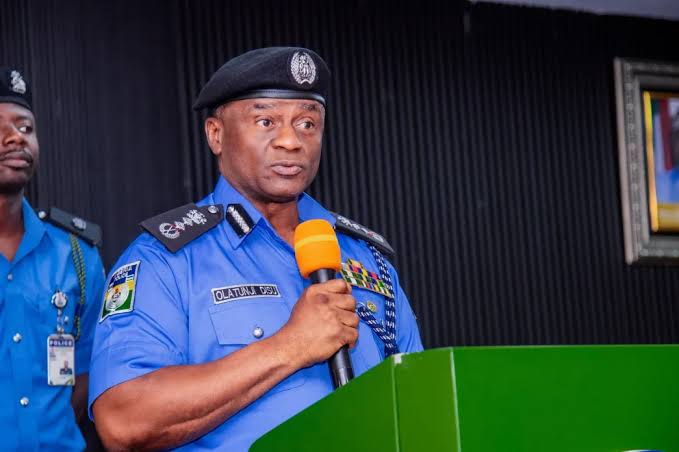
The Inspector-General of Police (IGP), Olatunji Ridwan Disu, has expressed strong support for a complete nationwide ban on tinted vehicles, stating he would implement one immediately if the decision rested solely with him.
Speaking in Abuja while responding to concerns raised by the Nigerian Bar Association (NBA) President, Afam Osigwe (SAN), the IGP highlighted the serious security risks posed by heavily tinted vehicles. He noted that such vehicles are frequently used by criminals, including kidnappers, armed robbers, and operators of the notorious “one-chance” scams.
“I have a different view about it entirely. We have a security situation in the country now. If I have my way, there would be no vehicle that would be tinted in the country. And we are moving towards it,” Disu said.
The IGP drew from his experience as Commissioner of Police in the Federal Capital Territory (FCT), where investigations into “one-chance” syndicates showed that most vehicles used in these crimes had fully tinted windows. Out of 27 vehicles recovered from such operations, a large proportion featured darkened windows, making it difficult for security operatives to identify occupants during stop-and-search exercises.
Disu criticised the trend of extremely dark tints on windscreens and rear windows, describing it as unacceptable and dangerous. He stressed that only individuals with genuine security or medical reasons should be allowed tinted glass — and even then, not to a level that completely obscures visibility.
The remarks come amid ongoing debates over the administration of tinted glass permits, which the NBA has opposed on grounds of commercialisation and repeated renewals. While the association supports police regulation of tinted vehicles for security reasons, it objects to turning the permit process into a revenue-generating venture outsourced to private firms.
The IGP assured that enforcement against illegally tinted vehicles would be intensified nationwide soon, adding, “We are not going to accept fully tinted vehicles in this country, and we are going to come out at a particular time to start enforcement of it.”
This development aligns with recent police actions in various commands, including the FCT, where enforcement against tinted vehicles — regardless of permits — has already begun in a bid to curb crime.
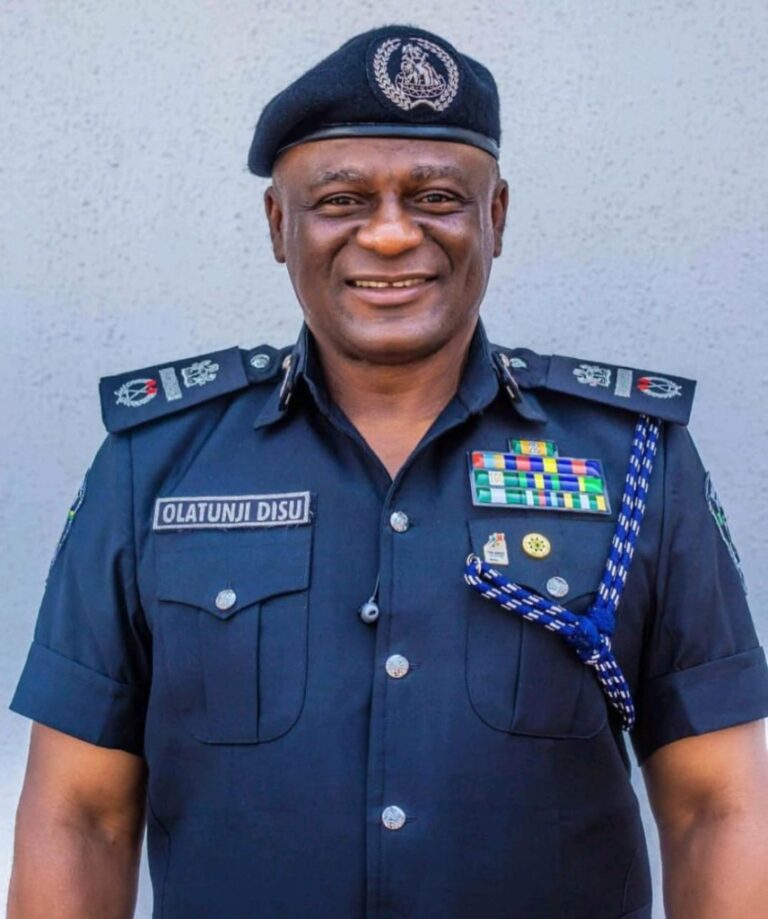
The Inspector-General of Police (IGP), Olatunji Disu, has issued a strict directive prohibiting serving officers and men of the Nigeria Police Force from engaging in unauthorized social media activities, including creating videos, live streaming, posting skits, and monetizing content on platforms such as Instagram, TikTok, Facebook, YouTube, and others.
In a circular dated June 22, 2026, and signed by his Principal Staff Officer, the IGP highlighted concerns over officers producing and posting videos while in police uniform or identifying themselves as members of the force. These activities—often for entertainment, personal promotion, or financial gain—have been deemed capable of bringing the Nigeria Police Force into disrepute.
The directive specifically targets officers operating accounts under real names or pseudonyms, publicly commenting on official operations, disciplinary matters, internal affairs, or national security issues without approval, and aspiring to become full-time content creators while still in service.
Violators face severe consequences, including immediate suspension, forfeiture of salary, demotion, dismissal from the force, and possible criminal prosecution. Officers are also barred from creating, publishing, or sharing videos, photographs, skits, live streams, or other content in police uniforms or on police premises without written approval from the IGP or an authorized representative.
This move comes amid a growing trend of police personnel using social media for personal visibility, which authorities say undermines public confidence in the force. The circular has been circulated to all commands, formations, departments, and units.
No further comments were immediately available from the police spokesperson as of press time.
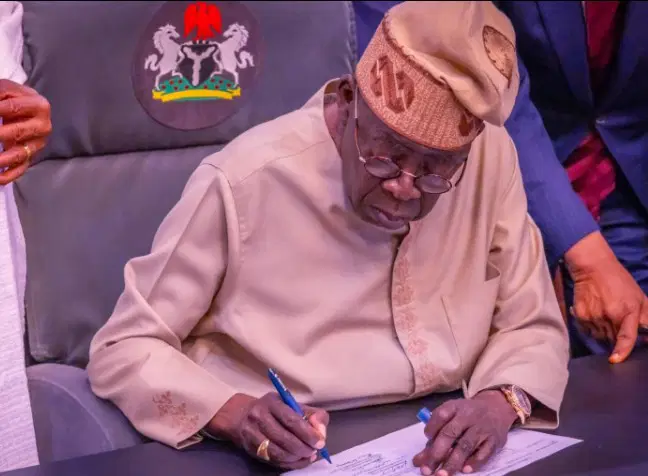
President Bola Ahmed Tinubu has formally written to the Senate, urging lawmakers to amend the 1999 Constitution to establish State Police across the country as part of efforts to tackle rising insecurity.
In a direct appeal during an interfaith breakfast meeting with senators at the Presidential Villa in Abuja, President Tinubu described the move as urgent and necessary to strengthen grassroots security, improve intelligence gathering, and enable faster responses to threats at the state level.
“What I will ask for tonight is for you (Senators) to start thinking how best to amend the constitution to incorporate the State Police for us to secure our country, take over our forests from marauders, and free our children from fear,” the President said.
The request aligns with ongoing legislative efforts. The National Assembly is fast-tracking a constitutional alteration bill that would decentralize policing, allowing states to establish and manage their own police formations while maintaining coordination with the federal Nigeria Police Force.
Senate Leader Opeyemi Bamidele has indicated strong support for the initiative, noting broad consensus among President Tinubu, state governors, and other stakeholders. The Senate is expected to prioritize the amendment in its sessions.
If passed by both chambers of the National Assembly, the bill would require approval by at least two-thirds of Nigeria’s state assemblies before it can be transmitted to the President for assent.
The push for State Police has been a long-debated reform aimed at addressing the limitations of the centralized policing system, which many critics argue is overstretched and ill-equipped to handle region-specific security challenges such as banditry, kidnapping, and insurgency.
This development marks a significant step in President Tinubu’s administration’s security architecture overhaul.


US Releases Full List, Identities of Nigerian, Firms Designated as Terrorist Financiers

I’d Ban All Tinted Vehicles If I Had My Way – IGP Olatunji Disu

IGP Bans Officers from Unauthorized Social Media Content Creation and Live Streaming

Tech Expert, Zuckerberg trains with UFC champions, Adesanya, Alexander

Organ Trafficking: Ekweremadu bags 10 years in UK prison

SAINT OBI: Between his marriage and his death
-
 News3 days ago
LAAF Honours Sanwo-Olu, Ohi Odiai, Aproko Doctor, 39 Others For Championing Men’s Wellbeing
-

 Business2 days ago
Naira Today Rates To Foreign currencies Monday, 22 June 2026
-

 Business2 days ago
Nigeria Customs Service to retire 1,516 officers
-

 Sports23 hours ago
Lionel Messi becomes FIFA World Cup top goalscorer
-
 International2 days ago
Three killed in Philippines school shootings
-

 News2 days ago
JAMB Ends Degree Admissions Through Colleges of Education, Makes NCE Mandatory
-

 Entertainment22 hours ago
Michelle hosts Tems at new Obama presidential centre
-

 International2 days ago
US Announces Non-refundable $750 Visa Fee to Enable Travellers Skip Queues