
Health
Overworked RSUTH Resident Doctor Slump, Dies on Duty
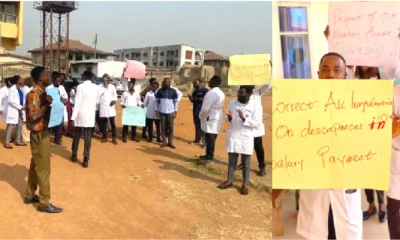
What happened is that he was on call in the Emergency Room. Afterward, he went to the call room to rest, and it was there that he died. Unfortunately, he was the only one attending to the patients.


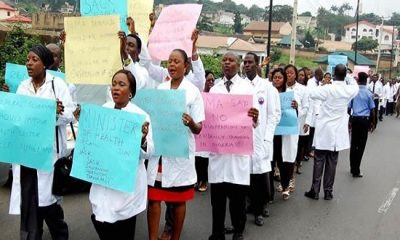
Dr Oluwafemi Rotifa, a young resident doctor at the Rivers State University Teaching Hospital (RSUTH) collapsed and died after a gruelling 72-hour call duty.
Ohibaba.com reliably gathered that the deceased doctor, fondly called Femoski by colleagues, was a former President of the Port Harcourt University Medical Students’ Association, PUMSA, and was registered with the United Kingdom’s General Medical Council, awaiting placement abroad.
The President of the Nigerian Association of Resident Doctors, NARD, Dr. Tope Osundara, who confirmed Rotifa’s death, said that the deceased doctor had been on continuous call duty for three days in the Emergency Room before he retreated to the call room to rest.
It was there that he slumped and later died, despite efforts to resuscitate him in the Intensive Care Unit.
“What happened is that he was on call in the Emergency Room. Afterward, he went to the call room to rest, and it was there that he died. Unfortunately, he was the only one attending to the patients.
“The overuse of manpower strained his health and led to this painful death. It was a death on duty,” Osundara lamented.




Health
Gov Mbah Invest in world-class Enugu International Hospital
The hospital, equipped with state-of-the-art medical equipment and advanced digital and electronic systems, is expected to attract top medical professionals from Nigeria and around the world.

Enugu State Governor, Peter Mbah, says the Enugu International Hospital is designed to provide world-class healthcare services to people across all socioeconomic classes.
The Enugu International Hospital is located at Rangers Avenue, Independence Layout, Enugu.
Mbah stated this during a pre-launch tour of the facility ahead of its official commissioning.
The hospital, equipped with state-of-the-art medical equipment and advanced digital and electronic systems, is expected to attract top medical professionals from Nigeria and around the world.
The governor expressed satisfaction with the quality of the equipment installed at the facility, saying the investment would help position Enugu as a medical tourism hub in Nigeria.
He said the hospital would also help reduce the number of Nigerians travelling abroad for specialist medical treatment while creating an environment that would encourage Enugu-trained medical professionals to return home.
According to Mbah, several Enugu-qualified medical practitioners based abroad have already reached out to express interest in working at the international hospital and contributing to the development of the state’s health sector.
The governor further said the facility would create job opportunities for medical graduates, healthcare professionals and other workers, with the potential to boost economic activity in the state.
During the tour, Mbah inspected several specialist units, including the Precision Oncology and Nuclear Medicine Unit, specialised surgery theatres, intensive care units, advanced diagnostics and imaging, and renal care and dialysis facilities.
He also toured the cancer, heart and vascular, nuclear medicine and molecular imaging, neuroscience, and renal centres.
Accompanied by the Director of the facility, Professor Sam Agwu, and other specialists, the governor received briefings on the various services and specialist care the hospital is expected to provide.
The Enugu International Hospital operates as a comprehensive quaternary care facility with more than 300 beds and was established to provide world-class specialist healthcare.
The facility is expected to strengthen access to advanced medical care, support medical professionals, create employment and contribute to Enugu State’s emergence as a destination for medical tourism.
Health
Bayer to establish reproductive health commodities plant in Nigeria
The plant is expected to manufacture family planning commodities locally, reducing Nigeria’s dependence on imported products, creating jobs and contributing to economic growth.
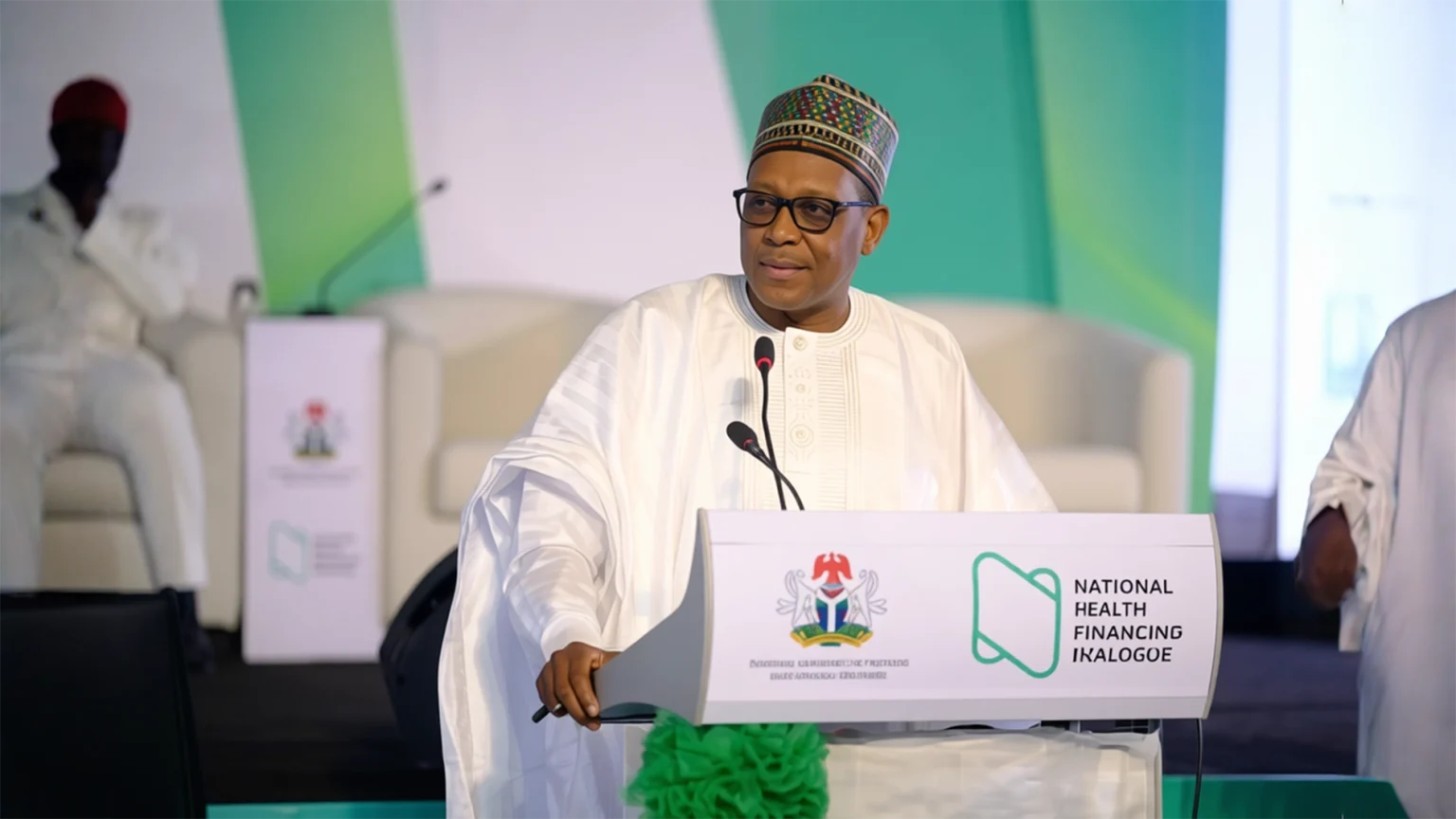
•The Minister of Health and Social Welfare, Prof. Muhammad Pate
Global pharmaceutical company, Bayer, is to establish a reproductive health commodities manufacturing plant in Nigeria, with the facility currently under construction in Anambra State.
The plant is expected to manufacture family planning commodities locally, reducing Nigeria’s dependence on imported products, creating jobs and contributing to economic growth.
The Minister of Health and Social Welfare, Prof. Muhammad Pate, disclosed this in Abuja at the inauguration of the High-Level Inter-Ministerial Platform (IMP) on Family Planning, Health, Human Capital and Sustainable National Development.
Pate described the investment as evidence that President Bola Tinubu’s Executive Order on the pharmaceutical sector was beginning to attract significant investments in local pharmaceutical manufacturing, diagnostics and health technology.
Also speaking, the Managing Director of FP2030 West and Central Africa Office, Dr Alain Damiba, described the initiative as a major step towards strengthening cross-sector collaboration to improve health outcomes and accelerate Nigeria’s socio-economic development.
Damiba commended the Federal Government for adopting a whole-of-government approach, noting that the new platform demonstrated that health and family planning were national development priorities and not issues that should be left to the health sector alone.
“Health, including family planning, is a smart investment in human capital and Nigeria’s future,” Damiba said.
Source: The Guardian Nigeria
Health
Medical Oxygen Killing More Than 600,000 Nigerians Annually
The project started its first phase by carrying out intervention work in three industrial areas of the state: quarry industrial site in Onueke, rice mill in Abakaliki, and timber market

•Professor Jesse Uneke
The Vice Chancellor of David Umahi Federal University of Health Sciences (DUFUS), Ebonyi State, Professor Jesse Uneke, has estimated that more than 600,000 Nigerians died yearly due to issues relating to the administration of medical oxygen.
Uneke, who is the Nigerian and State Lead/Principal Investigator for the EQUI-RESP Africa Research Project, disclosed this in Abakaliki, during the First Stakeholders’ Engagement Event/Co-Creation Workshop on Medical Oxygen Economy organised by the university in conjunction with the University of Edinburgh, UK, supported by the National Institute for Health and Research (NIHR), UK.
He explained that the administration of medical oxygen issues was happening because there was no platform where stakeholders in the medical oxygen space could come together to discuss the research-policy interface and see how to contextualise some of the strategies against the problems for the country.
“That is why, in this phase of this project, we have decided to start with this kind of stakeholders’ engagement. I am excited that we have every key stakeholder in the medical oxygen space represented here,” Uneke said.
He opined that the project started its first phase by carrying out intervention work in three industrial areas of the state: quarry industrial site in Onueke, rice mill in Abakaliki, and timber market.
This project has to do with respiratory health, and the idea is to come up with strategies that will lead to interventions that will improve health outcomes as far as respiratory health is concerned.


Police confirm Kogi APC Chairman’s Murder by Bandits

President Tinubu Orders Comprehensive Forensic Audits of MDAs, IPPIS

Wushishi, National Population Commission’s Chairman, Dies

Tech Expert, Zuckerberg trains with UFC champions, Adesanya, Alexander

Organ Trafficking: Ekweremadu bags 10 years in UK prison

SAINT OBI: Between his marriage and his death
-

 Business2 days ago
Meta U.S. agrees to pay $18bn lawsuits over children’s social media addiction
-

 Business2 days ago
Naira Exchange Rates Thursday, August 27
-

 News2 days ago
NIGCOMSAT To Procure Two New Communication Satellites
-

 Business3 days ago
Naira Exchange Rates Wednesday, August 26
-

 Sports2 days ago
NFF President Gusau, other board members resign Over DSS Probe
-
 News2 days ago
Gunmen abduct Dangote Cement senior driver in Ogun
-

 News2 days ago
Troops Resist Terrorists At Sokoto Barracks
-
 News2 days ago
FG commissions 37 electric buses for civil servants