
Crime
World’s police in technological arms race with Nigerian mafia
Nigeria is… major recruitment ground for Black Axe


BBC)
Police units around the world have joined forces in a series of covert operations targeting one of West Africa’s most feared criminal networks – Black Axe.
Operation Jackal III saw officers in body armour carry out raids in 21 countries between April and July 2024.
The mission, co-ordinated by global policing agency Interpol, led to the arrest of 300 people with links to Black Axe and other affiliated groups.
Interpol called the operation a “major blow” to the Nigerian crime network, but warned that its international reach and technological sophistication mean it remains a global threat.
In one notorious example, Canadian authorities said they had busted a money-laundering scheme linked to Black Axe worth more than $5bn (£3.8bn) in 2017.
“They are very organised and very structured,” Tomonobu Kaya, a senior official at Interpol’s Financial Crime and Anti-Corruption Centre, told the BBC.
According to a 2022 report by Interpol, “Black Axe and similar groups are responsible for the majority of the world’s cyber-enabled financial fraud as well as many other serious crimes”.
Mr Kaya said innovations in money-transfer software and cryptocurrency have played into the hands of group, which are renowned for multi-million dollar online scams.
“These criminal syndicates are early adopters of new technologies… A lot of fintech developments make it really easy to illegally move money around the world,” he said.
Operation Jackal III was years in the making and led to the seizure of $3m of illegal assets and more than 700 bank accounts being frozen.
Many Black Axe members are university educated and are recruited during their schooling.
The organisation is a secretive criminal network with trafficking, prostitution and killing operations around the world.
Cyber-crime, targeting individuals and businesses, is the organisation’s largest source of revenue.
Multiple so-called “Jackal” police operations have taken place since 2022.
Dozens of Black Axe and other gang members have been arrested and their electronic devices seized during these transnational raids.
This work has enabled Interpol to create a vast intelligence database, which is now shared with officers throughout its 196 member countries.
“We need to have data and to collate our findings from these countries to help build a picture of their modus operandi,” said Mr Kaya.
Despite multiple international arrests, some experts feel not enough is being done to address the root of these crime syndicates in West Africa.
“The emphasis must actually be on prevention not on outright operations against these criminal groups,” said Dr Oluwole Ojewale, West Africa Regional Co-ordinator from the Institute for Security Studies.
Nigeria, which has witnessed widespread anti-corruption protests in recent weeks, is one of Africa’s largest economies, but has as many as 87 million people living below the poverty line, according to the World Bank. It is also the main recruitment ground for Black Axe.
Interpol said it was carrying out training exercises with key Nigerian stakeholders and police officials. But corruption, and allegations of collusion between Black Axe and local authorities, remain major obstacles.
“It is the politicians who are actually arming these boys,” said Dr Ojewale. “The general failure of governance in the country has made pressures for people to be initiated [into Black Axe].”
Despite its current global reach, Interpol’s Jackal Operations have their origins in Ireland.
Following a series of police raids by the Garda National Economic Crime Bureau (GNECB) in 2020, a handful of Black Axe members were arrested, paving the way for the exposure of a far wider network.
“They were very under the radar, very low-key,” said Michael Cryan, detective superintendent at the GNECB, which led the operation.
“The amount of money being laundered through Ireland was astronomical,” he added.
The police subsequently identified 1,000 people with links to Black Axe in Ireland and have made hundreds of arrests for fraud and cyber-crime.
“Bank robberies are now done with laptops – they’re far more sophisticated,” said Det Supt Cryan.
He estimates €200m ($220m; £170m) have been stolen online in Ireland in the past five years, and that only accounts for the 20% of cyber-crimes that are believed to be reported.
“This is not typical or ordinary crime… People who make decisions need to know how serious this is,” he said.
Irish police operations in November 2023 revealed that cryptocurrency – which can be sent rapidly between digital wallets around the world – is becoming an integral element in Black Axe’s money-laundering operations.
More than €1m in crypto-assets were seized during one operation.
Interpol has deployed its own new technology in an attempt to tackle these innovations, launching the Global Rapid Intervention of Payments system (I-GRIP).
The mechanism, which enables the authorities in member countries to freeze bank accounts around the world with unprecedented speed, was used to halt a $40m scam targeting a Singaporean business last month.
Interpol’s Mr Kaya said technology like this would make it harder for criminals to move money across borders with impunity.
A major effort is under way to gather and share intelligence on Black Axe and other West African syndicates by police around the world.
“If we can gather this data we can take action,” he said.








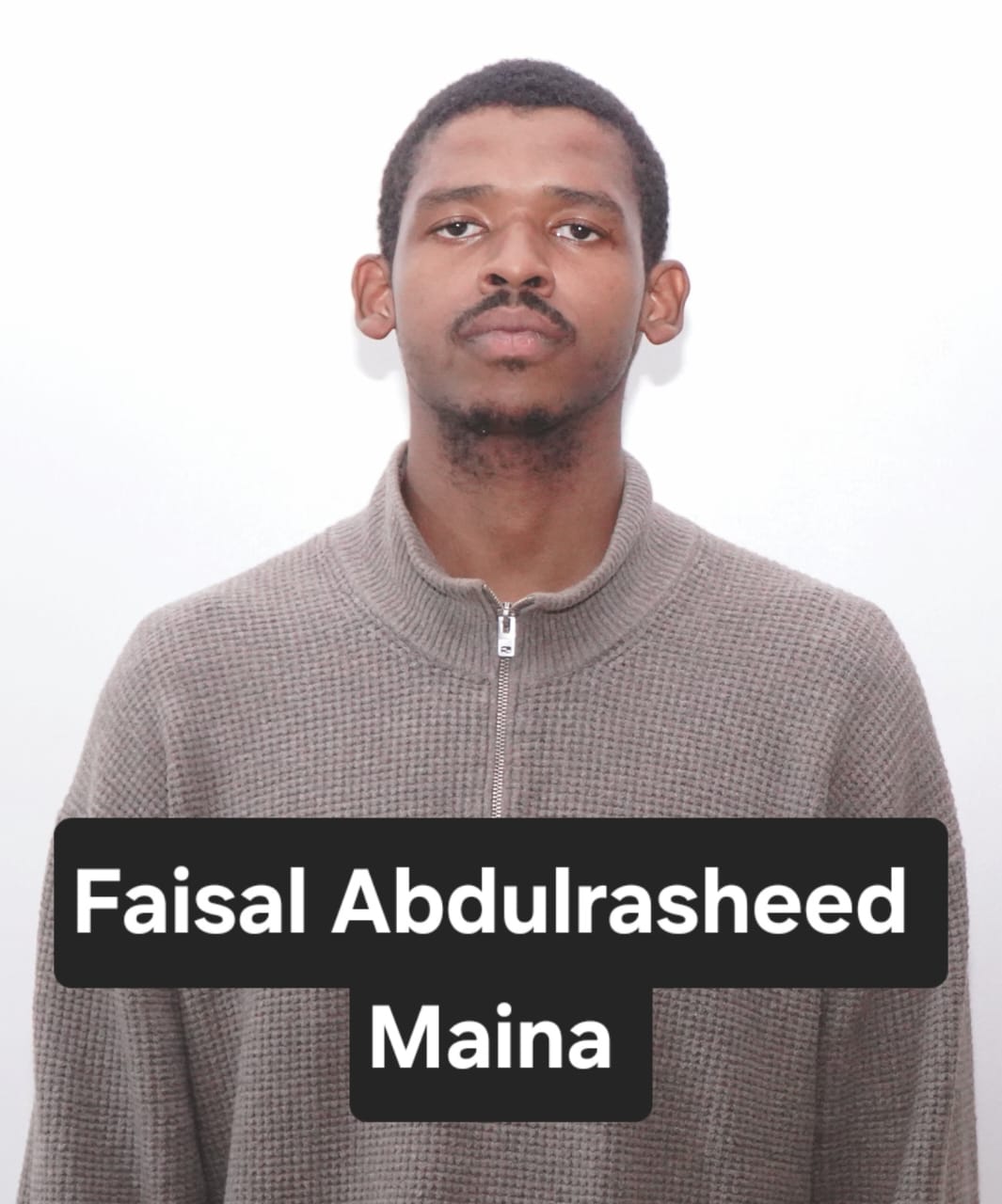
The Department of State Services (DSS) has arrested Faisal Abdulrasheed Maina, the fugitive son of former Pension Reform Task Team chairman Abdulrasheed Maina, and handed him over to the Economic and Financial Crimes Commission (EFCC).
Security sources said Faisal, who had been on the run since 2020, was trailed and apprehended by DSS operatives in the Karsana area of Abuja after intelligence indicated he had secretly returned to the country.
Faisal was earlier prosecuted by the EFCC on a three-count charge of money laundering and conspiracy. He jumped bail and fled the country. His trial continued in his absence, and in 2021 Justice Okon Abang convicted and sentenced him to 14 years’ imprisonment.
The court ordered that he be arrested wherever found in Nigeria and remanded in a correctional centre to serve his sentence. It also directed that, if located abroad, the Federal Government should take lawful steps to secure his extradition.
A source said the handover to the EFCC would facilitate enforcement of the court’s judgment and ensure Faisal serves his prison term.
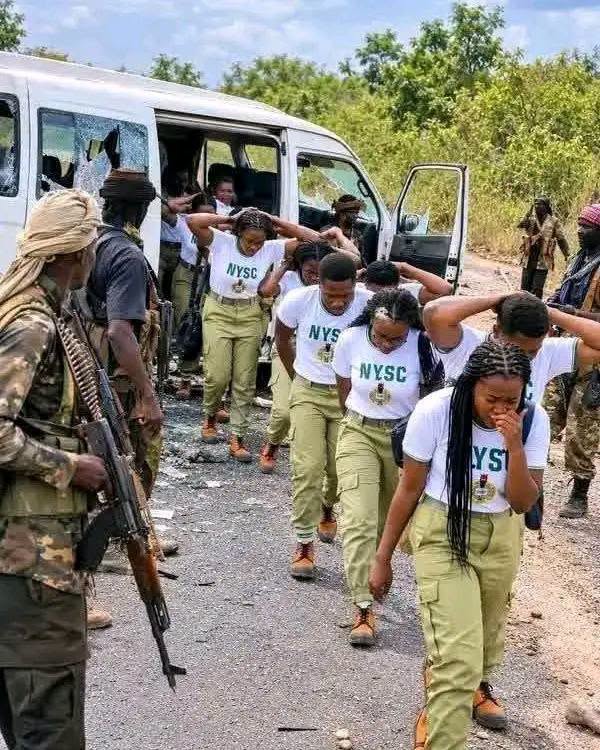
Three others escape with gunshot injuries…..
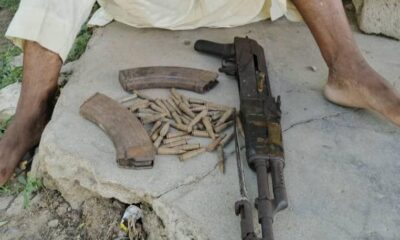
Operatives of the Department of State Services (DSS), the military and the police have arrested five suspected members of a criminal gang allegedly responsible for the abduction of 20 National Youth Service Corps (NYSC) members in Imo State.
The suspects were apprehended during a series of intelligence-led operations carried out between October 10 and 14 in Port Harcourt, Rivers State, and Aba South Local Government Area of Abia State. Three other suspects escaped during the raids with varying degrees of gunshot injuries.
The 20 corps members were abducted by armed men along the Owerri–Onitsha Expressway in Imo State on October 1, 2026 — Nigeria’s 66th Independence Day — while travelling to their orientation camps in Abia and Akwa Ibom states. They were rescued on October 7 during a joint security operation at Amakohia Ubi Village.
Security sources described the latest arrests as a major breakthrough in the effort to dismantle the network behind the abduction and bring the perpetrators to justice.
“This is a huge sigh of relief. Security agencies have been on a sustained manhunt for the abductors, and we are elated that they have been captured. We strongly believe they will be charged to court by the DSS and the corps members will get justice,” a security source said.
Crime
‘Stop Giving Testimony In Church, And Why’ – Police IRT Commander
The commander cautioned against assuming that everyone attending church had good intentions, urging worshippers to exercise discretion when sharing sensitive personal information in public gatherings.
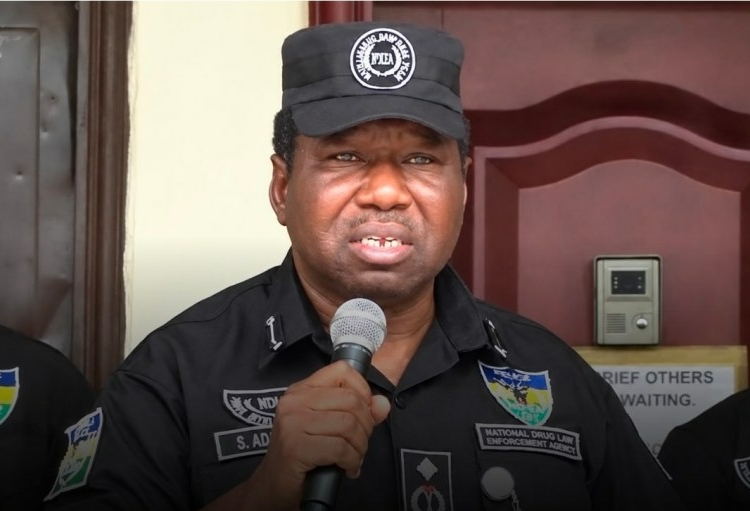
A commander of the Nigeria Police Force Intelligence Response Team (IRT) has cautioned churchgoers against publicly disclosing details of their personal lives and achievements during church services.
The commander gave the warning during an IRT briefing on TV Platinum on Thursday, particularly cautioning worshippers attending evening services at churches on the outskirts of towns.
He said publicly sharing personal achievements before a congregation whose intentions were unknown could make worshippers vulnerable to criminal attacks, particularly when returning home after night services.
“After closing from evening service, such act that they plan will be implemented. You can’t go to a church located on the outskirts, and you go to evening prayer, and close in the evening, coming down to your home, after making testimony of what you have achieved in life,” he said.
The commander cautioned against assuming that everyone attending church had good intentions, urging worshippers to exercise discretion when sharing sensitive personal information in public gatherings.
“It doesn’t conform with common sense and rationality in the midst of gathering of people watching you, thinking that they are all men of God. No. Everybody has his own motive of going to the church,” he said.
The commander further called on churches that hold evening services to strengthen their security arrangements, particularly by monitoring access routes and exits to protect congregants before and after worship.


Nigeria’s First Imported Ebola Patient Moved to Switzerland

Dangote Refinery’s IPO Ends Tomorrow

Ebola: Nigeria Sends Back Swiss Woman Via Medivac Plane

BREAKING: Lagos Govt Declares Today, Thursday Work-Free to Mark 2026 Ìṣẹ̀ṣe Day

Tech Expert, Zuckerberg trains with UFC champions, Adesanya, Alexander

Organ Trafficking: Ekweremadu bags 10 years in UK prison
-

 News1 day ago
BREAKING: Former Arise News Anchor, Constance Ikokwu Appointed NDC National Campaign Council Spokesperson
-

 International3 days ago
JUST IN: Four Pilots Die After Mid-Air Collision of Military Planes in Philippine
-

 Business1 day ago
Dangote Visit London Stock Exchange Ahead of November Cement Listing
-

 International1 day ago
Brazil’s Lula Wins Fourth Term In Presidential Runoff
-

 Health2 days ago
EBOLA: Lagos Heightens Watch at Airports After Abuja Case
-

 Business1 day ago
Naira To Dollar, Pound, Euro…Rate Monday, October 26
-
 Business2 days ago
History of Naira Revaluation and Devaluation (1973–2026) (Part 2)
-
News1 day ago
Sanwo-Olu: Opebi-Ojota Link Bridge Will Open Before Christmas