
Business
Will Trump Renew AGOA in September?
Talking about Nigeria’s participation and utilisation of AGOA preferences since the year 2000, the Nigerian-American Chamber of Commerce said in the past that Nigerian companies had not taken advantage of AGOA.

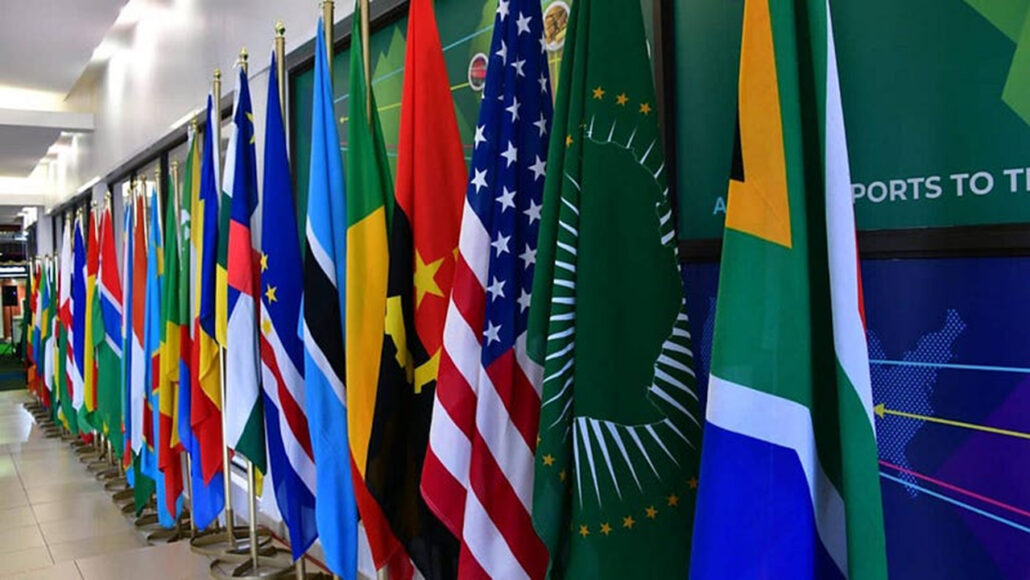
The African Growth and Opportunity Act (AGOA) expires in September 2025, raising questions on the possibility of its renewal.
AGOA is a programme that allows eligible countries in sub-Saharan Africa to export 6,800 different products to the United States without paying tariffs or facing limits on the amount they can export.
It came into existence in the year 2000 when President Bill Clinton’s administration passed some specific trade laws, which included AGOA.
Its purpose is to assist the SSA economy to promote a free market system, stimulate economic growth and integrate into the global economy. AGOA was modernised and extended from 2015 to 2025.
However, a concerted effort was made last December to renew AGOA. American Senator James Ritch introduced a bipartisan Bill that would renew the trade pact for 16 years, extending it to 2041. John James also introduced legislation that would extend AGOA for 12 years.
Apart from differences over the time frames, the two bills were aligned in their support for an enhanced AGOA.
Talking about Nigeria’s participation and utilisation of AGOA preferences since the year 2000, the Nigerian-American Chamber of Commerce said in the past that Nigerian companies had not taken advantage of AGOA.
In 2023, Nigerian-born US Deputy Secretary of the Treasury, Wally Adeyemo, noted that Nigeria has not taken advantage of AGOA and urged entrepreneurs and start-ups to seize opportunity by selling their products and exploring ‘duty-free access’ to the US markets.
Analysts who spoke to The Guardian agreed that Nigeria has not benefited by not taking full advantage of the window.
A capital market analyst, Ola Adeyanju said that despite Nigeria’s strong fundamentals, lack of basic infrastructures has rendered the citizens powerless against exportation.
“Cost of production and lack of basic infrastructures are seriously working against exporters in this country,” he said.
Source: The Guardian
Business
Investors Rush For Airtel Money IPO on LSE
Airtel Money is proving popular among retail investors ahead of full admission next week.


Airtel Money began conditional trading on the London Stock Exchange this morning in a £5.3 billion market debut, dubbed Africa’s Revolut.
Shares, which were open only to investors allocated stock in the offer, were trading flat at around 194p.
But armchair investors are rushing to sign up to the City’s largest IPO in five years ahead of full admission on October 14.
It is the ninth most popular initial public offering on AJ Bell’s investment platform based on the number of customers applying to take part in the offer, it said.
Airtel Money is proving popular among retail investors ahead of full admission next week
Airtel Money, a subsidiary of Airtel Africa, which offers mobile payment services in 13 countries across Africa, is a subsidiary of FTSE 100 telecoms group Airtel Africa, whose shares have trebled in less than two years.

The Nigerian National Petroleum Company Limited (NNPC Ltd) has clarified that its ongoing petrol discount is a temporary customer relief measure and does not amount to a restoration of the petroleum subsidy abolished in 2023.
In a statement issued on Friday by Chief Corporate Communications Officer Andy Odeh, the company said the N66-per-litre sales discount, first introduced on 1 October 2026 to mark Nigeria’s 66th Independence Anniversary, will continue until 31 October 2026 at NNPC Retail stations nationwide.
NNPC stressed that the initiative is designed to ease the burden of rising fuel prices linked to elevated global crude oil costs and the Middle East conflict. It applies only to NNPC Retail outlets and does not set a uniform national pump price or change the market-based pricing framework for petroleum products.
“This discount is a customer relief initiative and does not represent the reintroduction of petroleum subsidy,” the statement said. The company urged the public to disregard any interpretation of the measure as a return to the subsidy regime.
The clarification followed comments by Finance Minister and Coordinating Minister of the Economy Taiwo Oyedele, who explained that the discount is funded solely from NNPC Retail’s own profit margin and involves no public funds from the federal budget or Federation Account.
Business
Manufacturers sitting on N40trn untapped opportunities, says report
The Nigerian Manufacturing Opportunity Report 2026 provides decision-makers with the insights on opportunities that are most immediate, where Nigeria is already making progress and what needs to be done better to unlock greater value.
SEID, a marketing communications and market intelligence firm in Lagos, has estimated that the Manufacturing industries in Nigeria is sitting on more than N40 trillion in untapped manufacturing opportunities.
The Managing Partner at SEID, Tubosun Akeju, disclosed this in a report -The Nigerian Manufacturing Opportunity Report 2026 launched by the during the 54th Annual General Meeting of the Manufacturers Association of Nigeria, held at the Oriental Hotel.
Akeju emphasised that the report provides decision-makers with the insights on opportunities that are most immediate, where Nigeria is already making progress and what needs to be done better to unlock greater value.
“The opportunity is to understand where those strengths exist, deepen them, and build the competitiveness required to capture more value locally and compete beyond our borders,” he said .
The report examines manufacturing opportunities across Nigeria’s subsectors, states, value chains and industrial clusters, while identifying areas where existing strengths can be deepened and competitiveness improved.
It said that Nigeria’s manufacturing landscape was shaped by distinct areas of industrial strength, with different states, regions and value chains demonstrating varying levels of scale, specialisation and competitiveness.
The report noted that this created an opportunity to build on existing capabilities rather than adopt a one-size-fits-all approach to industrial development.
Manufacturing activity is spread across states with different levels of scale, specialisation and growth.
The South-West remains the country’s largest manufacturing zone, while other regions are developing strengths in areas ranging from food and agro-processing to textiles, chemicals, pharmaceuticals, cement, steel and light manufacturing.
The report maps these differences to show where investment and industrial development can build on existing capabilities.


Investors Rush For Airtel Money IPO on LSE

JUST IN: NNPC Clarifies Petrol Discount: Relief Initiative, Not Subsidy Restoration

JUST IN: A’Court Stalls SERAP, Oluwadare Defamation Appeals Over Late Briefs

Tech Expert, Zuckerberg trains with UFC champions, Adesanya, Alexander

Organ Trafficking: Ekweremadu bags 10 years in UK prison

SAINT OBI: Between his marriage and his death
-

 News2 days ago
NAF Helicopter Makes Precautionary Landing In Makurdi
-

 News3 days ago
Military Chiefs Visit Ondo Crash Site As Underwater Search Intensifies
-

 Business2 days ago
Naira Today Exchange Rates, Thursday October 8
-

 News1 day ago
Tears, Embraces as Rescued NYSC Members Reunite with Families in Ibadan
-
 Business3 days ago
African Union launch continent’s first credit rating agency
-

 Business2 days ago
Obi advocates policy support for manufacturers
-

 Business1 day ago
Naira Exchange Rates Friday, October 9
-

 International2 days ago
Belgian Students Protest Over Rising Education Costs