
Business
Why People Like to Live in Ojo, Lagos by Dennis Isong
People are renting rooms, apartments, self-cons, and even shared spaces. If you’re an investor reading this, take note. The rental demand in Ojo, especially near LASU and major roads, is not child’s play.

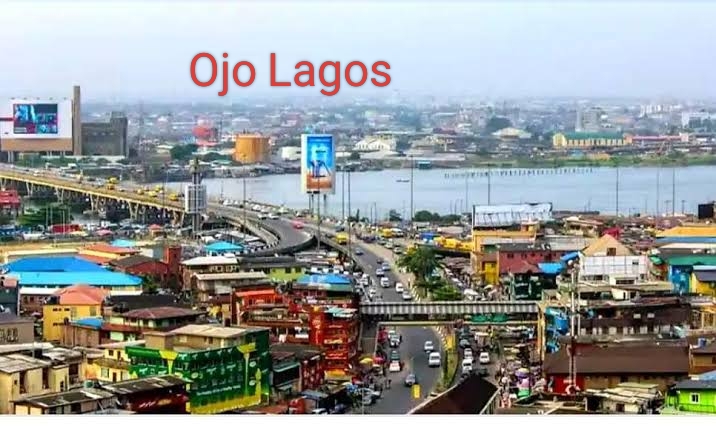
Ojo. That name rings a certain kind of Lagos bell — the kind that echoes both old-time charm and present-day promise.
Located on the western flank of Lagos State, Ojo has quietly but consistently won the hearts of many Lagosians looking for a place to call home.
In fact, when people say they’re relocating to the Lagos mainland but don’t want to “suffer,” Ojo is often their silent dream.
But what exactly makes this place tick? Why is it that people from different walks of life — from the everyday hustler to the savvy investor — are drawn to Ojo, like suya, to charcoal? It’s not just about the affordability, even though that’s a major sugar in the garri. It’s something deeper. Something a little emotional.
Ojo may not always be the loudest name on the Lagos real estate radar, but those who know… know. And trust me, many know.
Let’s start with the vibe. Ojo has a rhythm of life that somehow balances the Lagos bustle with a bit of hometown calm.
You see people moving, markets booming, buses shouting destinations in that dramatic conductor voice — yet you don’t feel overwhelmed. There’s room to breathe. Room to plan. Room to build.
That alone is gold in a city like Lagos where everything feels like a race. And speaking of building, the Ojo Lagos real estate scene has been buzzing, slowly but steadily.
The land here still gives you that hope — the hope that you can buy now, build small, and grow big without selling your grandfather’s inheritance. While some parts of Lagos make you feel like you need to be Dangote’s nephew to afford anything decent, Ojo gently whispers, “Relax, you can afford me.”
Ojo may not always be the loudest name on the Lagos real estate radar, but those who know… know. And trust me, many know.
Now, let’s not pretend that Ojo is some fantasy land where all your problems vanish. No, Lagos will be still Lagos. But Ojo gives you a softer landing.
It’s the kind of place where your Naira stretches just a little further. You buy a piece of land and still have money for block, cement, and maybe even a small naming ceremony afterward. That’s the subtle magic of Ojo Lagos real estate — it feels within reach.
Of course, we can’t talk about Ojo without mentioning its iconic market — Alaba International Market. It’s not just a market, it’s a city on its own. Electronics, appliances, gadgets, and goods of all kinds — if it plugs, charges, lights up or plays music, Alaba probably has it.
For many residents, living close to Alaba is not just convenient, it’s smart business. Imagine saving transport fare daily while your shop is booming.
That’s not just living, that’s strategic living. And then there’s the presence of Lagos State University — LASU.
The campus draws students, lecturers, and business people from across Nigeria. This means two things: First, it adds to the vibrant life of the community, and second, it feeds the rental economy like well-cooked jollof.
People are renting rooms, apartments, self-cons, and even shared spaces. If you’re an investor reading this, take note. The rental demand in Ojo, especially near LASU and major roads, is not child’s play.
Transport is another thing Ojo handles with surprising ease. From here, you can connect to FESTAC, Mile 2, Badagry, and even the Lagos-Badagry Expressway, which is slowly transforming into a world-class express corridor.
When that road fully hits its prime, let’s just say those who bought land in Ojo early will be smiling like politicians during campaign season. Ojo is also home to a rich mix of people.
There’s the core Lagos crowd, the business-savvy Igbo families, the student population, and a sprinkle of other tribes just doing their thing. It’s a cultural pot that simmers nicely, and somehow, people coexist. If you’re the kind of person who enjoys knowing your neighbor and greeting “Good morning, sir” with a smile, Ojo will feel at home.
Security?
It’s Lagos — we’re always watching our back. But Ojo holds its own. There are community vigilantes, police presence, and a population that looks out for itself. It’s not paradise, but it’s not chaos either.
With more estates springing up and more people investing in fencing, lighting, and organized structures, the environment is gradually evolving into a neater, safer version of itself.Let’s talk environment.
Ojo has water views. Not the fancy Lekki kind, but real water — the kind that reminds you of riverside childhoods, of fresh fish, and simple joys. Places like Iba and Iyana School have a mix of urban and rural beauty that makes for interesting real estate development.
You can literally build a bungalow beside a stream and still get Uber rides to your gate. Where else does that happen?
Then there’s something else — something less tangible but deeply felt. A spirit of growth. Ojo gives people the feeling that life can move forward. That a house isn’t just a roof over your head, but a sign that you’re progressing.
People don’t just live here; they thrive. They build. They plan weddings. They raise children. They retire in homes they built brick by brick.
The Ojo Lagos real estate market is not screaming headlines every day, but the smart ones are paying attention.
Plots of land are getting picked up quietly. Developers are carving out estates. New roads are being graded.
And one day soon, Ojo might just surprise everyone and become the new goldmine people wished they had entered early.
So yes, people like to live in Ojo. And it’s not just because of affordability, accessibility, or community.
It’s also because Ojo allows dreams to grow without choking them. In a city like Lagos where many live in survival mode, Ojo offers the rare chance to actually plan a life.
And if you ask me — or any of the sharp agents that roam that axis with their rolled-up trousers and unbeatable gist — they’ll tell you: If you miss Ojo now, you might be buying back in a few years at twice the price, with half the peace of mind.
Ojo is not just a place. It’s an opportunity. And in Lagos, opportunities like this don’t wait forever.
STOP LOSING MONEY IN LAGOS REAL ESTATE!
Learn How to Protect Your Investment Today. => LandProperty.ng/free.
Your future deserves the assurance of due diligence.
Business
History of Naira Revaluation and Devaluation (1973–2026) (Part 1)
Why was the naira devalued?

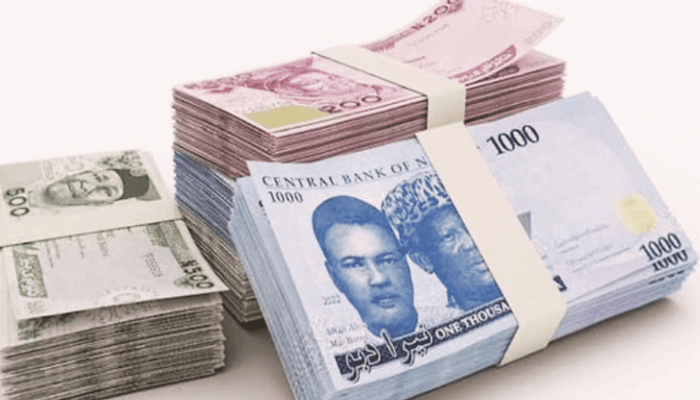
The history of the Nigerian naira is marked by two major developments: periods when the currency gained value or was officially strengthened, and prolonged periods when it lost value against major international currencies, particularly the US dollar.
Since its introduction in 1973, the naira has undergone several exchange-rate policy changes, including fixed exchange rates, currency devaluations, foreign-exchange market liberalisation, attempts to unify exchange rates and market-driven depreciation.
The Central Bank of Nigeria (CBN) has played a central role in managing these changes.
- Introduction of the Naira in 1973
Nigeria introduced the naira on January 1, 1973, replacing the Nigerian pound.
The conversion rate was:
£1 Nigerian pound = ₦2.
₦1 = 10 shillings under the old currency system.
₦1 = 100 kobo.
The new currency was introduced during a period of expanding oil revenues and economic growth.
Nigeria initially maintained a relatively strong, managed exchange rate, supported by foreign-exchange controls and the country’s oil earnings.
The introduction of the naira was a currency change, not a devaluation.- The 1970s: A Relatively Strong Naira
During the 1970s, rising oil revenues strengthened Nigeria’s foreign-exchange position.
The government maintained a controlled exchange-rate system, initially linking the naira to the US dollar before moving to a basket of currencies representing major trading partners in 1978.
The oil boom provided foreign exchange for imports, infrastructure and public expenditure.
However, Nigeria’s dependence on crude oil revenues left the economy vulnerable to fluctuations in international oil prices.
Key development: The naira benefited from a relatively strong external position, although its exchange rate was managed by the authorities rather than determined by an unrestricted market.- The Early 1980s: Mounting Pressure on the Naira
The economic situation deteriorated in the early 1980s as oil revenues weakened and foreign-exchange shortages intensified.
Nigeria faced several economic challenges:
• Declining oil receipts.
• Rising import bills.
• Pressure on foreign reserves.
• Growing external debt and trade arrears.
• Increasing demand for foreign currency.
The government maintained controls on foreign exchange, but the official rate became increasingly disconnected from the rate at which foreign currency could be obtained in the parallel market.
This created pressure for exchange-rate reform.
The crisis set the stage for the introduction of the Structural Adjustment Programme (SAP) in 1986.- 1986: Major Naira Devaluation Under SAP
September 26, 1986, marked a turning point in the history of the naira.
Under the military government of General Ibrahim Babangida, Nigeria introduced the Second-Tier Foreign Exchange Market (SFEM) as part of the Structural Adjustment Programme.
The objective was to allow market forces to play a greater role in determining the naira’s exchange rate.
According to an International Monetary Fund account, the naira’s value was discounted by approximately 66 per cent at the inaugural SFEM auction.
The exchange rate moved from about ₦1.60 per US dollar under the previous administered rate to approximately ₦4.60 per dollar at the initial auction.
Why was the naira devalued?
The policy was intended to:
•Reduce the overvaluation of the naira.
•Improve the allocation of scarce foreign exchange.
•Encourage non-oil exports.
•Improve the competitiveness of Nigerian products.
•Reduce distortions in the foreign-exchange market.
However, the weaker currency also increased the naira cost of imported goods and production inputs.
The 1986 reform began a prolonged period of exchange-rate adjustments.- …To be continued
Business
Obasanjo Accuses Tinubu : “You Made Every Nigerian Poor By 300% Naira Devaluation”
The former President also rejected the argument that Tinubu needed more time to complete his reforms, saying he did not see the economy improving.

Image: AI generated
Former President Olusegun Obasanjo has accused President Bola Tinubu of making every Nigerian poor by 300 per cent through the devaluation of the naira.
Obasanjo spoke on Wednesday during the Financial Times Africa Summit 2026 in London, United Kingdom.
He said that the naira lost its value overnight due to economic reforms undertaken by the Tinubu administration in 2023.
“We do not live in isolation as a country. We interact with the rest of the world. And overnight, you devalue the currency by 300 per cent. The naira went from N500 to a dollar to N1,500 to a dollar. What that meant was that every Nigerian is made poor by 300 per cent.”
Obasanjo said that had made Nigeria “the poverty capital of the world,” which he said meant the country had the largest number of poor people in the world.
“You cannot say to me that that is good for Nigeria. You cannot say to me that that is good for us in any sense,” he noted.
The former President also rejected the argument that Tinubu needed more time to complete his reforms, saying he did not see the economy improving.
Business
CBN Licences Abbey Bank to Start Full Commercial Banking in November 2026
Adewumi said: “The year 2026 represents a defining moment in the history of Abbey. Our approval to transition to commercial banking is a testament to the work invested in building this institution and the confidence placed in us by our regulators, shareholders, customers and employees.”

The Central Bank of Nigeria (CBN) has approved Abbey Bank Plc to begin operation as a regional commercial bank, effectively from November 2026.
The licence opens retail banking, small and medium-sized enterprise lending, trade finance and corporate banking to the lender.
Abbey Bank had operated as a mortgage bank for more than three decades.
The commercial banking licence was issued in June 2026 after the bank completed its capital-raising process.
Managing Director and Chief Executive Officer Mobolaji Adewumi said the bank began internal discussions on the transition in 2023 and submitted a formal application in 2024.
He said regulatory approval arrived in October 2024.
Adewumi said: “The year 2026 represents a defining moment in the history of Abbey. Our approval to transition to commercial banking is a testament to the work invested in building this institution and the confidence placed in us by our regulators, shareholders, customers and employees.”


JUST IN: Four Pilots Die After Mid-Air Collision of Military Planes in Philippine

JUST IN: Another Nollywood Actor, Dies After Brief Illness

Ebola patient in Abuja showing signs of recovery – FG

BREAKING: Lagos Govt Declares Today, Thursday Work-Free to Mark 2026 Ìṣẹ̀ṣe Day

Tech Expert, Zuckerberg trains with UFC champions, Adesanya, Alexander

Organ Trafficking: Ekweremadu bags 10 years in UK prison
-

 Business2 days ago
Naira To Dollar, Pound, Euro… Today October 23
-

 Health3 days ago
UPDATE: Identity of Woman Who Flew into Nigeria with Ebola Virus Revealed
-

 Business2 days ago
Obasanjo Accuses Tinubu : “You Made Every Nigerian Poor By 300% Naira Devaluation”
-
Business3 days ago
Dollar to Naira Exchange Rate – Thursday, October 22, 2026
-

 News3 days ago
UNILAG School Teachers Begin Work-to-Rule Over Unpaid Arrears
-

 Entertainment2 days ago
JUST IN: Nollywood Veteran Francis Duru Dies at 57 After Brief Illness
-

 News2 days ago
JUST IN: 1 Dead, 3 Rescued in Fadeyi Building Collapse, Lagos
-
 Business2 days ago
CBN Licences Abbey Bank to Start Full Commercial Banking in November 2026