
News
Understanding Mortgage Options in Nigeria’s Real Estate Market by Dennis Isong


For Nigerians considering a mortgage, thorough research and preparation are essential.
As more Nigerians aspire to become homeowners, understanding the available mortgage options becomes essential.
This article discusses mortgage financing in Nigeria, exploring the various options available to prospective homeowners and investors..
The Nigerian MortgageNigeria’s mortgage industry, while still developing, has made considerable strides in recent years.
The Federal Mortgage Bank of Nigeria (FMBN) and the Nigeria Mortgage Refinance Company (NMRC) play pivotal roles in shaping the mortgage sector.
These institutions work alongside commercial banks and primary mortgage banks to provide various mortgage products to Nigerians.
The mortgage-to-GDP ratio in Nigeria remains relatively low compared to more developed economies, indicating significant room for growth.
However, challenges such as high interest rates, limited long-term funding, and stringent lending criteria have historically hindered widespread mortgage adoption.
Despite these obstacles, recent government initiatives and private sector innovations are gradually making mortgages more accessible to a broader segment of the population.
Types of Mortgage Options
Nigerian homebuyers and investors can choose from several mortgage options, each with its unique features and requirements.
The most common types include:Federal Mortgage Bank of Nigeria (FMBN) Loans:
These are government-backed mortgages designed to provide affordable housing finance to Nigerian workers.
The National Housing Fund (NHF) scheme, administered by the FMBN, allows contributors to access loans at favorable interest rates for home purchase or construction.
Commercial Bank Mortgages: Many commercial banks in Nigeria offer mortgage products to their customers.
These loans typically have higher interest rates compared to government-backed options but may offer more flexibility in terms of loan amounts and repayment periods.
Primary Mortgage Bank Loans: Specialized mortgage institutions provide various home financing options, often with more competitive rates than commercial banks.
These institutions focus exclusively on mortgage lending and may offer more tailored products to meet specific needs.
Rent-to-Own Schemes: Some developers and financial institutions offer rent-to-own arrangements, allowing tenants to gradually build equity in a property while paying rent.
This option can be particularly attractive for those who may not qualify for traditional mortgages.
Cooperative Society Loans: Many Nigerians participate in cooperative societies that pool resources to provide housing loans to members.
These loans often come with lower interest rates and more flexible terms compared to traditional banking options.Eligibility and Requirements
Securing a mortgage in Nigeria typically requires meeting certain eligibility criteria and fulfilling specific requirements. While these may vary depending on the lender and the type of mortgage, common factors include:
Income and Employment:
Lenders generally require proof of stable income and employment. The debt-to-income ratio is a crucial factor in determining loan eligibility and amount.Credit History:
Although Nigeria lacks a comprehensive credit scoring system, lenders may review an applicant’s credit history and repayment record on previous loans.
Down Payment: Most mortgage options in Nigeria require a significant down payment, typically ranging from 20% to 30% of the property’s value.
Some government-backed schemes may offer lower down payment requirements.Property Valuation: The property being purchased or used as collateral must undergo a professional valuation to determine its market value and ensure it meets the lender’s criteria.
Documentation: Applicants must provide various documents, including identification, proof of income, tax clearance certificates, and property-related documents.
Age Limit: Many lenders impose age restrictions, often requiring the mortgage to be fully repaid before the borrower reaches retirement age.
Challenges and Opportunities in Nigerian Mortgage Financing.
While the Nigerian mortgage market continues to evolve, several challenges persist. High interest rates, often in double digits, make mortgages unaffordable for many Nigerians.
The lack of long-term funding sources limits the ability of lenders to offer extended repayment periods, which could make monthly payments more manageable.Land tenure issues and the complexities of property registration in some parts of the country also pose significant hurdles.
The time and cost associated with perfecting property titles can add to the overall expense of obtaining a mortgage.
However, these challenges also present opportunities for innovation in the mortgage sector. Fintech companies are entering the market with digital solutions that streamline the mortgage application and approval process.
Some lenders are exploring alternative credit scoring methods to assess creditworthiness, potentially opening up mortgage access to a broader population.
The government’s ongoing efforts to address housing deficits through initiatives like the Family Homes Fund and the National Housing Programme are creating new opportunities for affordable mortgage financing.
Additionally, the gradual development of the secondary mortgage market through the Nigeria Mortgage Refinance Company (NMRC) is expected to increase liquidity in the sector and potentially lead to more competitive mortgage rates.
Navigating the Mortgage Process.
For Nigerians considering a mortgage, thorough research and preparation are essential.
Prospective borrowers should:
● Compare offerings from multiple lenders to find the best rates and terms.
● Understand all associated costs, including processing fees, insurance, and potential penalties for early repayment.
● Seek professional advice from financial advisors or real estate experts to make informed decisions.
● Consider the long-term implications of the mortgage, including how it aligns with future financial goals and career plans.
● Stay informed about government policies and initiatives that may affect the mortgage market or provide new opportunities for home financing.
As Nigeria’s real estate market continues to grow and evolve, so too will the mortgage options available to its citizens.
By understanding the current landscape and staying informed about new developments, prospective homeowners and investors can make the most of the opportunities presented by mortgage financing in Nigeria’s dynamic real estate sector.
For personalized assistance with your property needs, contact Dennis Isong, a top Lagos realtor specializing in helping Nigerians in the diaspora own property stress-free.Contact: +2348164741041


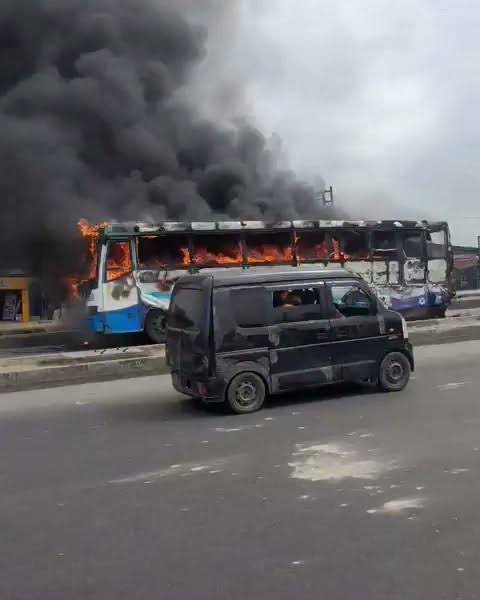
An angry mob has set a Bus Rapid Transit (BRT) bus on fire after it reportedly crushed a commercial motorcyclist to death at Ogolonto Bus Stop along Ikorodu Road in Lagos State.
The incident occurred on Friday, October 16, 2026. Eyewitness accounts and social media reports indicate that the motorcyclist was riding alone along the restricted BRT lane when the collision happened. He died at the scene.
Enraged residents and youths then attacked the bus driver and set the vehicle ablaze. Police officers and officials of the Lagos Neighbourhood Safety Corps (LNSC), who were nearby, intervened promptly and rescued the driver unharmed.
The identity of the deceased motorcyclist and the exact circumstances of the crash had not been officially confirmed at the time of filing this report. It was also unclear whether any arrests had been made in connection with the burning of the bus.
News
ARISE News Wins Seven Honours At Nigerian Broadcasters Merit Awards
The awards recognised the network’s achievements in television journalism and programming, with ARISE News winning the Best TV Channel (Viewer’s Choice) category.

• ARISE News Anchor and host of What’s Trending Ojy Okpe was named Best Newscaster (TV – Female)
ARISE News has emerged as one of the major winners at the just ended Nigerian Broadcasters Merit Awards (NBMA).
ARISE News won seven honours across television broadcasting, news reporting, presentation and production during the ceremony.
The awards recognised the network’s achievements in television journalism and programming, with ARISE News winning the Best TV Channel (Viewer’s Choice) category.
The network’s flagship breakfast programme, The Morning Show, also won the Best TV Talk Show award, further strengthening its recognition in television broadcasting.
ARISE News Anchor and host of What’s Trending Ojy Okpe was named Best Newscaster (TV – Female).
Rufai Oseni was named Nigerian Broadcaster of the Year (Male), while Vimbai Mutinhiri-Ekpeyong received the Nigerian Broadcaster of the Year (Female) award.
The recognition extended to the network’s newsroom, with Ovieteme George winning Best TV News Reporter (Male) for his contributions to television news reporting.
Behind the camera, Sam Adeyemi received the Best Camera Operator/Cinematographer award, recognising his work in television production and visual storytelling.
News
Meta removes 3.7 million accounts in West Africa scam crackdown
The joint operation led to 28 arrests, identified more than 30 suspected scam centres and rescued 117 people allegedly trafficked and forced to work in scam compounds in Ghana.
Meta, the parent company of Facebook and Instagram, has removed more than 3.7 million Facebook and Instagram accounts, pages and groups linked to suspected scam networks operating in West Africa.
The joint operation led to 28 arrests, identified more than 30 suspected scam centres and rescued 117 people allegedly trafficked and forced to work in scam compounds in Ghana.
The company announced the crackdown in a statement on Tuesday, October 13, 2026. It involved 14 technology companies and law enforcement agencies from 10 countries.
The United Kingdom’s National Crime Agency coordinated the operation with the US Department of Justice, the Federal Bureau of Investigation and other agencies. Nigerian authorities were involved.
Other countries included Ghana, Australia, Canada, New Zealand and India.Tech companies that took part included Google, Microsoft, OpenAI, Coinbase, Starlink and Adobe.
Meta said the partnership let participants share intelligence across digital platforms, countries and financial systems to identify criminal networks.


JUST IN: Mob Sets BRT Bus Ablaze After Motorcyclist’s Death in Lagos

BREAKING: DSS Arrests Fugitive Maina Son, Hands Him to EFCC

BREAKING: 5 Arrested Over Imo NYSC Abduction

BREAKING: Lagos Govt Declares Today, Thursday Work-Free to Mark 2026 Ìṣẹ̀ṣe Day

Tech Expert, Zuckerberg trains with UFC champions, Adesanya, Alexander

Organ Trafficking: Ekweremadu bags 10 years in UK prison
-

 Business3 days ago
NAFDAC scolds fake manufacturers: “You are killing Nigerians in order to make money”
-
 Business2 days ago
Naira Exchange Rates For Thursday, October 15
-

 Business3 days ago
Oyedele Chairs G-24 Call for Fairer Global Financial System, Affordable Development Financing
-
 Sports2 days ago
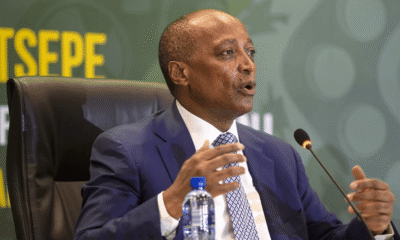
CAF Increases Annual Funding for Member Federations to $700,000
-
 News2 days ago
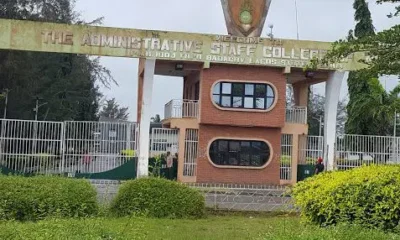
ASCON To Be Rebranded “National School Of Government”
-

 Business1 day ago
Germany plans tax on sugary drinks
-
 Politics3 days ago
Exclusion of candidates from INEC list: CD cautions INEC against manipulation by politicians
-
 Business1 day ago
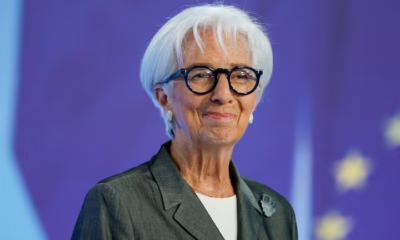
WEF could appoint Lagarde as its next chair, sources say