
News
Umahi’s Dance Around the Figures: The Secrecy and Swagger Behind the Lagos–Calabar Coastal Highway

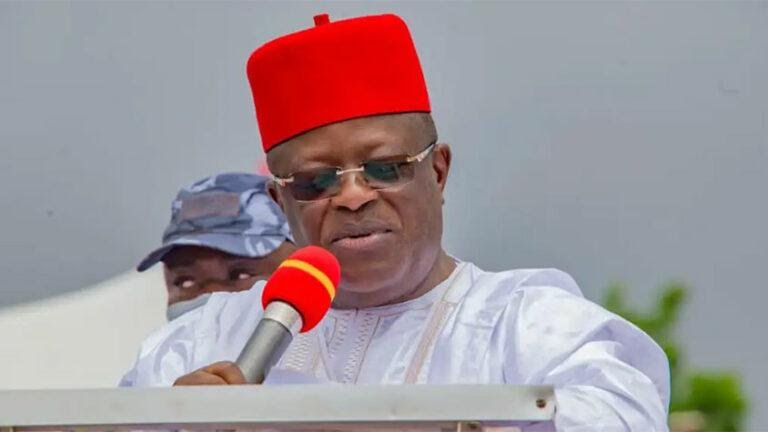
By Babs Daramola
In a democracy, public officials owe citizens not arrogance, but answers. Yet Nigeria’s Minister of Works, Dave Umahi, seems to prefer swagger to substance whenever questions arise about the Lagos–Calabar Coastal Highway -Nigeria’s costliest road project in history.
Again and again, the Minister is asked one simple question: “What is the actual cost per kilometre of the Lagos–Calabar Coastal Highway?” And again and again, he dances around it.
Twice, fiery journalist Rufai Oseni of Arise TV confronted him on The Morning Show. Instead of answers, the Minister chose lashing out, trading civility for condescension.
It takes bravery for a journalist to stand firm in the face of government intimidation, and Rufai, in his characteristic element, did just that, refusing to cower.
Most recently, Oyo State Governor Seyi Makinde asked the same questions in the interest of public accountability -a bold move, even knowing he would be accused of playing politics.
Rather than engage the queries, Umahi dismissed Governor Makinde as an “electrician” who supposedly knew nothing about roads.
The “jab” landed, but the figures remained missing.Umahi insists road projects have no “cost per kilometre,” only “average costs,” because terrain and design vary.
That’s technically true, but administratively false. Every serious infrastructure project anywhere in the world has a cost per kilometre figure.
That’s how budgets are drawn, contracts are monitored, and public accountability is ensured. To pretend the figure doesn’t exist is not engineering; it is evasion.
For context, consider some other major infrastructure projects where official costs per kilometre were publicly disclosed:
Iseyin–Ogbomoso Road (Nigeria): ₦43 billion for 76.7 km, giving an officially announced cost of about ₦500 million per kilometre.
T3 Road, Chingola–Kasumbalesa (Zambia): $1.2 billion for 320 km, about $3.7 million per kilometre, officially recorded.
Uganda–Kenya Standard Gauge Railway: 273 km at about $2.25 billion, giving $8.2 million per kilometre, officially published in planning documents.
If it can be done for roads and railways across Africa, why is the Lagos–Calabar Coastal Highway suddenly “mystical” in cost?
Cost is not the only cloud hanging over this coastal behemoth. In a press briefing last year, Arise TV correspondent Laila Johnson asked the Minister about the project’s Environmental Impact Assessment (EIA).
Instead of answering, Umahi claimed he could not understand the question because of her “foreign accent”, a staggering display of dishonesty and evasion.
Months later, on The Morning Show, Rufai Oseni pressed the Minister on the same EIA issue. Till today, neither he nor his ministry has been forthcoming, leaving serious questions about transparency unanswered.
Perhaps the most immediate source of public outrage was that the Lagos–Calabar Coastal Highway contract appears never to have gone through open, competitive tendering, as required by Nigeria’s Public Procurement Act.
Instead, it was quietly awarded to a favored consortium under terms shrouded in discretion, not disclosure.
Nigerians raised this issue, and in response, the Minister offered flimsy, dodgy, and ultimately controversial excuses.
That secrecy deepens suspicion that this is less about concrete and asphalt, and more about connections and access.
Let’s get this straight: the Lagos–Calabar Coastal Highway is as laudable as it is ambitious.
As the world’s largest black nation, Nigeria deserves infrastructure of this scale and vision.
The highway, which will stretch across nine states, reclaim swathes of shoreline, and transform communities and livelihoods, could be a game-changer for national connectivity and commerce.
Yet the timing raises concerns: embarking on such a massive project when the country’s economy is at one of its worst and citizens are struggling to survive fuels public anxiety.
Layered on top of this are serious issues of transparency and accountability, which must be addressed if the project is to earn the public’s trust.
When journalists like Rufai and governors like Makinde demand numbers, they are not playing politics; they are upholding the principles of integrity, service, and public stewardship.
Calling them ignorant or unqualified doesn’t strengthen the ministry’s case; it simply confirms Nigerians’ worst fear: that something is being hidden behind technical jargon and political theatrics.
From “it’s an EPC + F arrangement” to “we are still negotiating costs”, Umahi’s explanations have become an art form of avoidance: a choreography of ambiguity on the stage of public accountability.
You cannot spend trillions of public naira and claim not to know, or not to disclose, how much of it builds a single kilometre of road.
Whether it’s ₦5 billion or ₦25 billion per kilometre, the figure exists. Nigerians are footing the bill; they deserve the truth.
Dave Umahi may be a fine engineer, but governance is not civil engineering; it is public stewardship.
And stewardship without transparency is corruption by another name.If the Lagos–Calabar Coastal Highway is being built in good faith and at fair cost, the easiest way to prove it is simple: publish the numbers: cost per kilometre, EIA details, and procurement records.
Until then, the Minister’s performance remains what it looks like: a grand dance around the figures, choreographed to the rhythm of secrecy and arrogance, while the taxpayers pick up the tab.




Former Vice President Atiku Abubakar has demanded the immediate release of five men arrested in Borno State for wearing T-shirts bearing the slogan “Tinubu Must Go.”
In a statement issued on Wednesday, the African Democratic Congress (ADC) presidential candidate condemned the arrests, describing the slogan as a legitimate political expression rather than a crime. He argued that wearing a T-shirt with a political message should not lead to detention in a democracy.
The five men — identified as Baba Aji Gremami, Mustapha Abba Yemen, Abacha Mohammed Ali, Adam Umar Gubio and Abdulhamid Mohammed — were reportedly arrested by the Borno State Police Command in Maiduguri and charged with offences including criminal conspiracy and inciting disturbance.
Atiku recalled that President Bola Tinubu had previously protested against the fuel pricing policies of the Goodluck Jonathan administration. He insisted that Nigerians must equally be free to express dissatisfaction with current government policies.
“‘Tinubu Must Go’ is a demand for political change. It is not a weapon, a threat or a crime,” Atiku said. “Tinubu was free to tell Jonathan that his policies were hurting Nigerians. Nigerians must be free to tell Tinubu that his policies are hurting them. Release these five citizens now.”
He called on the authorities to disclose the detainees’ whereabouts, grant them access to their families and lawyers, and free them if the political slogan was the sole basis for their arrest.
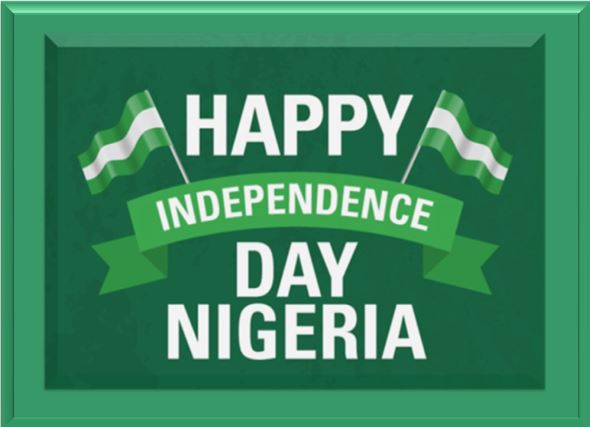
The Federal Government has officially declared Thursday, October 1, a public holiday across the country to commemorate Nigeria’s Independence Day anniversary.
In a statement released on Wednesday, the government directed all ministries, departments, and agencies of government, as well as private sector organisations, to observe the day as a work-free day. The declaration follows the long-standing tradition of marking October 1 as a national holiday in celebration of the nation’s independence from British colonial rule on October 1, 1960.
The announcement comes as Nigerians prepare to reflect on 66 years of nationhood. Independence Day remains one of the most significant dates on the national calendar, serving as a moment for citizens to honour the sacrifices of the founding fathers and to reaffirm commitment to unity, peace, and progress.
Government officials have urged Nigerians to use the holiday to engage in peaceful celebrations, community activities, and patriotic reflection. Security agencies have also been directed to maintain law and order throughout the period to ensure a peaceful observance of the anniversary.
As the nation marks another year of independence, the Federal Government called on all citizens to remain committed to the ideals of democracy, national cohesion, and sustainable development.
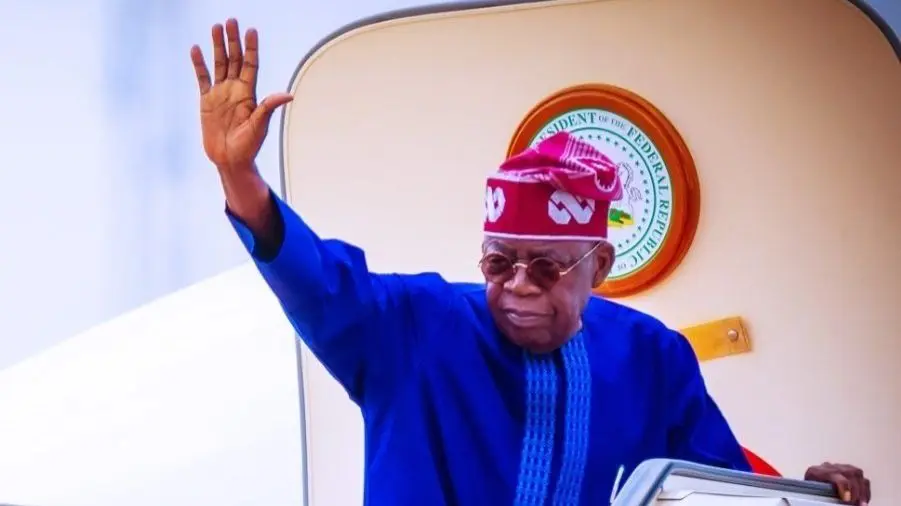
President Bola Tinubu has ended his working vacation in Europe and departed Paris for Nigeria on Tuesday, with his aircraft expected to land at Murtala Muhammed Airport in Lagos later in the evening.
The announcement was made by his Special Adviser on Information and Strategy, Bayo Onanuga. Tinubu left Abuja on August 30 for what was initially billed as a three-week working vacation.
He spent one week in London before proceeding to Paris. The trip was later extended, bringing his total time abroad to about 30 days.
The President chose to return through Lagos rather than Abuja to honour the memory of the late Chief MKO Abiola, the presumed winner of the June 12, 1993 presidential election.
On Independence Day, October 1, he is scheduled to attend the premiere of a movie celebrating Abiola at the Wole Soyinka National Theatre in Iganmu, Lagos.
While in Lagos, Tinubu will hold strategic meetings with political leaders and associates over several days as preparations for the 2027 general elections intensify. He is expected to return to Abuja after those engagements.
During his stay in Paris, the President attended a private dinner with French President Emmanuel Macron and held meetings with business leaders, including Vincent Bolloré of the Bolloré Group.
He also met with First Holdings Chairman Femi Otedola and witnessed the signing of a Memorandum of Understanding between the Ogun State Government and DP World for a deep seaport and Blue Marine Economic Zone.


Plane Makes Emergency Landing After Pilots Fight in Cockpit

Atiku Demands Release of 5 Arrested Over ‘Tinubu Must Go’ T-Shirts

ON-GOING: Dangote $16 billion refinery groundbreaking holds in Kenya (Images)

Tech Expert, Zuckerberg trains with UFC champions, Adesanya, Alexander

Organ Trafficking: Ekweremadu bags 10 years in UK prison

SAINT OBI: Between his marriage and his death
-
 Business2 days ago
NGX Debuts Invest WhatsApp Channel
-
 Business2 days ago
SEC Highlights Focus of National Capital Market Conference 2026
-
 Sports2 days ago
Flamingos win WAFU B U-17 women’s tournament
-

 Entertainment2 days ago
Madonna and Taylor Swift win big at the MTV VMAs
-
 News2 days ago
Nigeria is 66, Thursday October 1
-

 Business2 days ago
Naira To Dollar, Pound, Euro …Today, September 28
-
 Business2 days ago
Ghana Moves to Cut Domestic Airfares as Ticket Prices Stay High
-

 News2 days ago
JUST IN: Fire Engulfs Lagos Customs Command Office