
Business
UBA Shareholders To Get 150% Dividends Increase In FY2023 – Alawuba

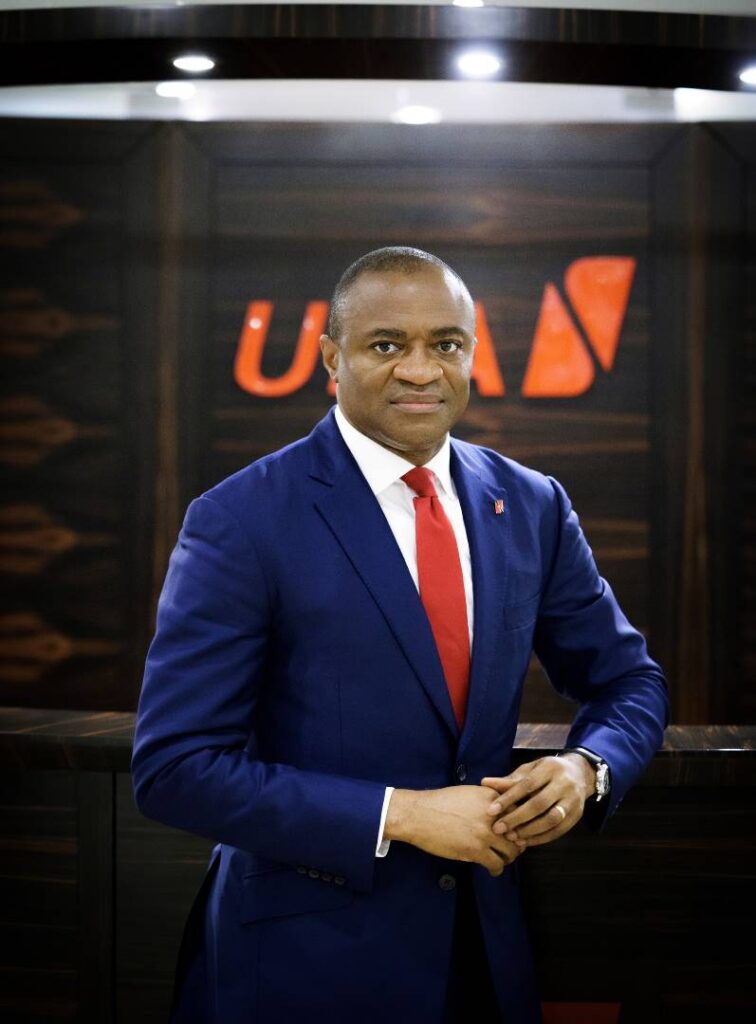
United Bank for Africa (UBA) Plc says that in line with the Group’s culture of paying both interim and final cash dividends, the Board has approved an interim dividend of 50k per share, which represents over 150 percent increase over the financial year 2022 .
UBA’s Group Managing Director/Chief Executive Officer, Mr. Oliver Alawuba, who made this known said, said that the dividends increase is as a result of the exceptional performance recorded by the bank during the first half year ended 2023.
Alawuba said: “The Group recorded strong double-digit growth in revenues and profits from its operations, and this underscored the Group’s commitment to consistently deliver value to its shareholders.”
A look at the bank’s financials showed that it recorded a profit before tax (PBT) of N404 billion for the half year ended June 30, 2023.
The PBT represents an extraordinary increase of 371 per cent, when compared to N85.75 billion recorded in the first half of 2022.
The increment translated to an annualised Return on Average Equity of 57.7 per cent as against 17.1 per cent a year earlier.
Profit After Tax N378.24bn
The results also showed a profit after tax (PAT) of N378.24 billion, representing a leap of 437.8 per cent over H1 2022.
Operating Income grew by 206.6 per cent to N783.96 billion in June 2023; higher than N255.67 billion reported a year earlier.
The Group delivered a 164 per cent growth in its Gross Earnings which rose to N981.78 billion as at June 2023, up from N372.36 billion recorded last year in June 2022.
Equally, the bank’s total assets continued a strong upward trajectory, rising above the N15 trillion mark, as it hits N15.38 trillion, representing a 41.7 per cent leap up from N10.86 trillion recorded at the end of last year.
Customer Deposits also rose by a sharp 42.4 per cent to N11.14 trillion in the period under consideration; as against N7.8 trillion recorded at the end of 2022.
N1.7 Trillion Shareholders Fund
The Group’s shareholders’ funds stood at N1.7 trillion, with a capital adequacy ratio of 36.4%”.
Alawuba added that the Group made progress in digital payments, retail penetration and also benefitted from the effect of revaluation gains, arising from the harmonization of foreign exchange rates at the different access windows in Nigeria.
Harmonization of Currency Exchange Rates
He said that the result also reflects the effect of sizeable revaluation gains, arising from the harmonization of currency exchange rates in Nigeria.
Our reporting currency found a new exchange level at about N756 to $1 as of 30 June 2023, compared to N465 at the beginning of the year.
The results again demonstrate the benefits of our long-held diversification strategy across Africa and globally.
The growth of our international business, most recently in the UAE, only reinforces this earnings quality.
UBA’s Executive Director, Finance and Risk, Ugo Nwaghodoh, said the half year 2023 financial numbers reflect an excellent performance across key metrics, as the bank diligently executes its strategic priorities.
Our Priorities For The Year
“Our HY2023 financial numbers reflect excellent performance across key metrics, as we diligently execute our priorities for the year.
Annualized return on average equity at 57.7% was bolstered by improved operating income and revaluation gains,” he explained.
Nwaghodoh also pointed out that the Group maintains robust capital buffers to support business growth and loss absorbency.



Business
Oil Rises As US Rejects Iran Proposal
Iran said it is waiting for a definitive US response to its seven-day proposal to reopen the strait and other demands, adding that it will not ease its conditions after Trump rejected Tehran’s latest plan.


Brent crude climbed above $106 per barrel on Monday, recovering losses from the previous session after President Donald Trump rejected Iran’s latest proposal to reopen the Strait of Hormuz, raising concerns that the restoration of oil flows through the critical waterway could face further delays.
Trump also said Tehran had overplayed its hand and expects negotiations to resume this week.
Meanwhile, Iran said it is waiting for a definitive US response to its seven-day proposal to reopen the strait and other demands, adding that it will not ease its conditions after Trump rejected Tehran’s latest plan.
Elsewhere in the Middle East, tensions remain high as Saudi Arabia intercepted Houthi drones heading toward Riyadh, along with a missile targeting Khamis Mushait in the south.
Alerts were also issued in Abha and Jazan, where Aramco operates energy facilities.
In the US, Trump is considering a ban on diesel exports as part of efforts to address elevated fuel prices.
Business
NGX Debuts Invest WhatsApp Channel
The channel provides investors with an additional, convenient way to participate in public offers.
Nigerian Exchange Group (NGX Group) has expanded access to its NGX Invest platform with the launch of a WhatsApp subscription channel.
The channel provides investors with an additional, convenient way to participate in public offers.
Investors can begin the subscription process by sending “Invest” to NGX Invest on WhatsApp at +234 812 731 9521.
They can then follow the prompts to view eligible offers and complete the required subscription steps without downloading a separate application.
As part of the process, investors will select a stockbroker through whom their application will be processed, ensuring that brokers remain an integral part of the investment journey.
(VANGUARD)
Business
SEC Highlights Focus of National Capital Market Conference 2026
The conference will be declared open by the Vice-President of the Federal Republic of Nigeria, Senator Kashim Shettima.
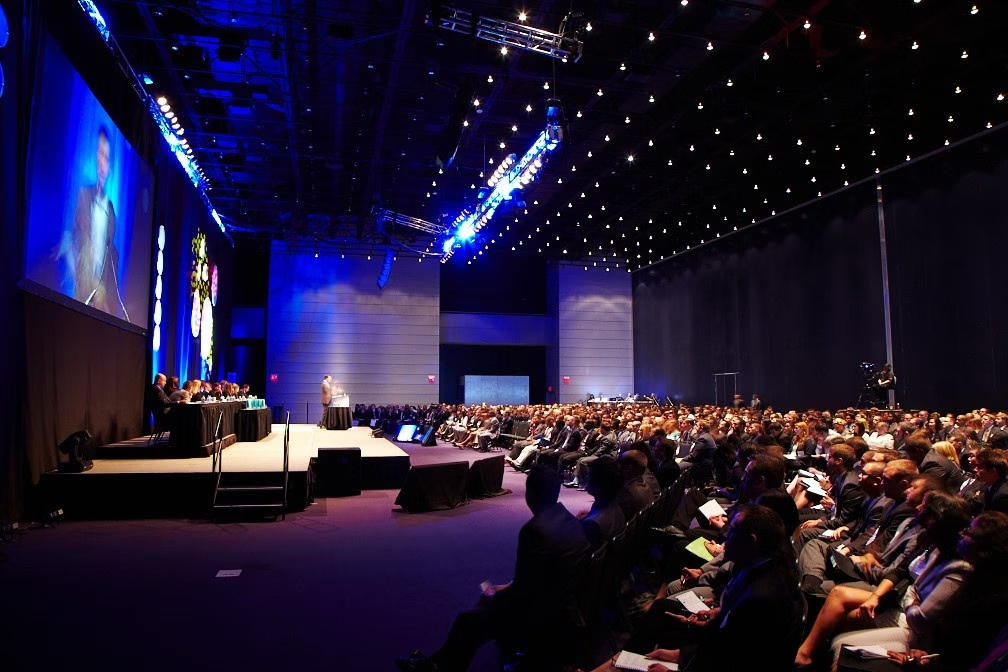
The Securities and Exchange Commission (SEC) says that its forthcoming National Capital Market Conference 2026 will be used to officially launch the Nigerian Capital Market Master Plan 2.0 (NCMMP), and the National Savings Scheme, among other activities.
The conference will be declared open by the Vice-President of the Federal Republic of Nigeria, Senator Kashim Shettima, and hosted by the Honourable Minister of Finance and Coordinating Minister of the Economy, Professor Taiwo Oyedele.
In a statement , SEC Director -General, Dr. Emomotimi Agama, disclosed that the conference scheduled for 19 October, in Abuja, will bring together key stakeholders from the public and private sectors to discuss strategic initiatives aimed at further deepening the Nigerian capital market, enhancing domestic resource mobilization, strengthening investor participation, and supporting sustainable economic growth and national development.


JUST IN: Tinubu Departs Paris for Nigeria After Extended Vacation

National Assembly Plans to Translate Laws into Igbo, Hausa, Yoruba

BREAKING: Court Order Threatens Dangote Kenya Refinery Launch

Tech Expert, Zuckerberg trains with UFC champions, Adesanya, Alexander

Organ Trafficking: Ekweremadu bags 10 years in UK prison

SAINT OBI: Between his marriage and his death
-
 Business1 day ago
SEC Highlights Focus of National Capital Market Conference 2026
-
 Business1 day ago
NGX Debuts Invest WhatsApp Channel
-

 Sports1 day ago
Flamingos win WAFU B U-17 women’s tournament
-
 Business1 day ago
Naira To Dollar, Pound, Euro …Today, September 28
-

 News1 day ago
Nigeria is 66, Thursday October 1
-

 Business1 day ago
Ghana Moves to Cut Domestic Airfares as Ticket Prices Stay High
-

 Entertainment1 day ago
Madonna and Taylor Swift win big at the MTV VMAs
-

 News1 day ago
JUST IN: Fire Engulfs Lagos Customs Command Office