
International
Trump pens executive order to get ‘transgender ideology’ out of military


President Trump signed multiple executive orders Monday night that could reshape the management and composition of the military, with provisions addressing diversity measures, transgender service members, and troops who were discharged for refusing COVID vaccinations.
He also signed an executive order to establish a process to develop what the administration is calling an American Iron Dome — a missile defense shield for the homeland.
(Iron Dome is the name often used for Israel’s system for intercepting rockets, which was developed with U.S. support.)
Mr. Trump signed the four orders aboard Air Force One as he flew back to Washington from a stop in Florida.
One of the orders would reinstate members of the military who were discharged for refusing to get the COVID-19 vaccine.
About 8,200 service members were discharged for refusing to comply with the Pentagon’s COVID-19 vaccine mandate, according to data provided by the service branches.
However, the mandate was rescinded in January 2023 by the Biden administration, and since then, about 110 service members have rejoined the military.
The president also signed an executive order directing the Pentagon to determine a policy for transgender service members based on readiness within 30 days.
The action does not immediately ban transgender service members, however, it does state that the Defense Department’s policy for troop readiness is “inconsistent with the medical, surgical, and mental health constraints on individuals with gender dysphoria.
“The order also states that identifying as a gender that is inconsistent with one’s biological sex “conflicts with a soldier’s commitment to an honorable, truthful, and disciplined lifestyle, even in one’s personal life” and that those doing so “cannot satisfy the rigorous standards necessary for military service.”
Speaking about his plans at a retreat with House Republicans Monday at his property in Doral, Florida, Mr. Trump said, “To ensure we have the most lethal fighting force in the world, we will get transgender ideology the hell out of our military.
It’s going to be gone.”Another order addresses diversity, equity and inclusion initiatives in the military, banning the use of race- or sex-based preferences in the armed forces, the Defense Department and the Homeland Security Department.
“I ordered the end to all of the lawless diversity, equity and inclusion nonsense policies across the government and all across the private sector and the military,” Mr. Trump said at the House GOP retreat.
“We’re getting it out and we’ve gotten it out pretty much. We did that in one week, and it wasn’t that easy, but everybody wanted it.
“Under this order, the defense secretary and homeland security secretary are to review the curriculum at the service academies and other academic institutions to ensure DEI and “gender ideologies” are eliminated.
The president announced plans last week to end DEI initiatives across the federal government, and the Office of Personnel Management ordered all federal DEI employees to be placed on leave.
International
Japan beer giants raided over alleged price-fixing cartel
Asahi, Kirin and Sapporo all saw their share price fall after news of the investigation broke on Wednesday. Suntory’s beer business is not publicly-listed.


Image credit: BBC| GETTY Images
Japanese officials have raided the country’s biggest beer makers over allegations they worked together to raise the price of their beverages.
Asahi, Sapporo, Kirin and Suntory Spirits confirmed to the BBC that their premises had been searched by the Japan Fair Trade Commission (JFTC), adding that they would fully cooperate with the regulator.
The four firms dominate Japan’s beer market, with their drinks a common sight in supermarkets and convenience stores across the country.
Asahi, Kirin and Sapporo all saw their share price fall after news of the investigation broke on Wednesday. Suntory’s beer business is not publicly-listed.
“I do not deny that an investigation is being conducted today, but I’d like to refrain from commenting on the details as a preliminary review is underway,” JFTC Secretary General Iwanari Hiroo said, according to local media.
International
Belgian Students Protest Over Rising Education Costs
Tuition fees for most students in Belgium’s French-speaking Community, was increased from €835 to €1,194.
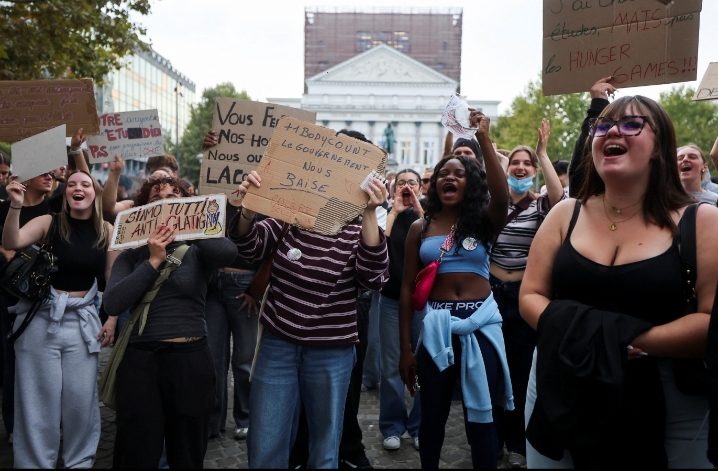
Hundreds of students in the Belgian city of Liège took to the streets protesting rising education costs, according to Belga news agency.
Tuition fees for most students in Belgium’s French-speaking Community, was increased from €835 to €1,194.
Local media reported that 107 people had been arrested in recent days, for offences linked to property damage and arson.
The protesters are challenging conditions in Belgium’s French-language education system, citing rising costs, overcrowded classrooms and difficulties accessing study materials.
Students carried placards expressing their frustration, including messages calling for education to be treated as a right rather than a privilege.
International
Ethiopian woman says she hasn’t eaten or drunk water since age 10
Despite claiming not to eat, Ambaw said she enjoys preparing meals for her family and visitors.

•Muluwork Ambaw
An Ethiopian woman, Muluwork Ambaw, has claimed that she has not eaten food or drunk water since she was 10 years old, saying she suddenly lost her appetite as a child.
Ambaw, who is now 26 and lives in Jimma, Ethiopia, said her last meal was lentil stew before she stopped eating and drinking.
Her extraordinary claim gained international attention after travel content creator Drew Binsky visited her in Ethiopia and documented her story and daily life.
According to Ambaw, the change began when her family would ask her to have breakfast before going to school.
Her extraordinary claim gained international attention after travel content creator Drew Binsky visited her in Ethiopia and documented her story and daily life.
According to Ambaw, the change began when her family would ask her to have breakfast before going to school.
“I used to live with my family, and they asked me to eat breakfast and go to school. I said I had eaten, but I was pretending,” she said, according to an account shared by Binsky.
Ambaw said she simply stopped feeling hungry or thirsty and has continued living without consuming food or water.
Despite claiming not to eat, Ambaw said she enjoys preparing meals for her family and visitors.
She reportedly grows vegetables in her garden so she can cook fresh food when her sister or guests visit.
“I cook as much as I want, but I have no appetite,” she said.


Investors Rush For Airtel Money IPO on LSE

JUST IN: NNPC Clarifies Petrol Discount: Relief Initiative, Not Subsidy Restoration

JUST IN: A’Court Stalls SERAP, Oluwadare Defamation Appeals Over Late Briefs

Tech Expert, Zuckerberg trains with UFC champions, Adesanya, Alexander

Organ Trafficking: Ekweremadu bags 10 years in UK prison

SAINT OBI: Between his marriage and his death
-

 News3 days ago
NAF Helicopter Makes Precautionary Landing In Makurdi
-

 Business3 days ago
Naira Today Exchange Rates, Thursday October 8
-

 News2 days ago
Tears, Embraces as Rescued NYSC Members Reunite with Families in Ibadan
-

 Business2 days ago
Naira Exchange Rates Friday, October 9
-

 Business3 days ago
Obi advocates policy support for manufacturers
-

 Business2 days ago
Manufacturers sitting on N40trn untapped opportunities, says report
-

 News2 days ago
Ahmadu Bello University Hikes Fees Across Programme
-

 International3 days ago
Belgian Students Protest Over Rising Education Costs