
News
Subsidy removal: Govs plan cash transfers to poor households, dump Buhari’s list

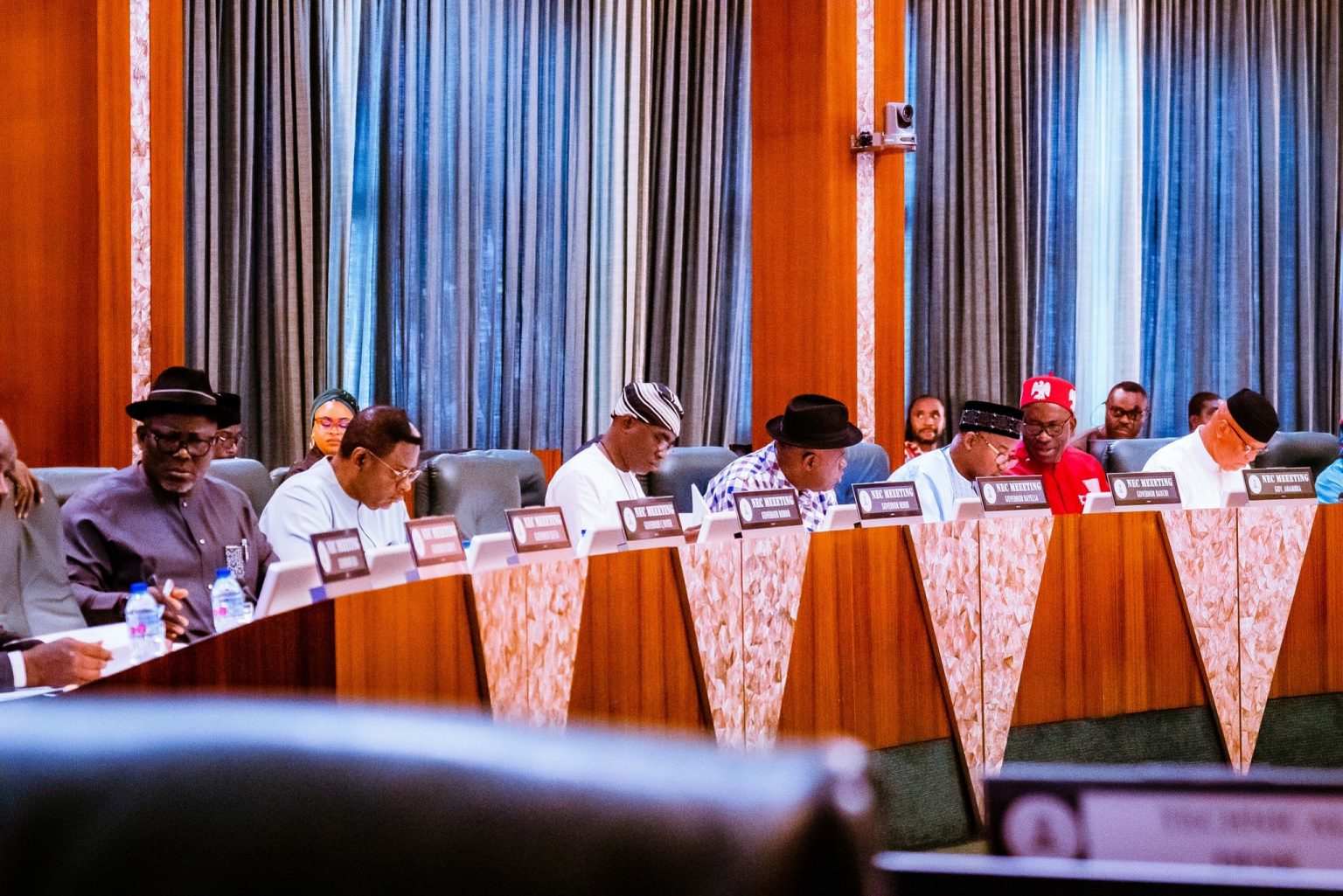
The National Economic Council comprising 36 state governors and Vice President Kashim Shettima has concluded a plan for state governments to implement cash transfer programmes using state-generated social registers.
It said states-generated social registers would better reflect the number of vulnerable Nigerians to be reached with such cash transfer or palliative scheme.
This came on the heels of the plan by the government to roll out its intervention measures to cushion the effects of the hardships facing Nigerians, following the removal of the controversial fuel subsidy.
At its last meeting, the NEC had set up a sub-committee, which was tasked with coming up with plans to reduce the harsh economic conditions trailing the removal of fuel subsidy and the unification of the exchange rates.
“It is states that are better positioned to do that enumeration to ensure the integrity of the social register,” the Governor of Ogun State, Dapo Abiodun, told State House correspondents after the NEC meeting chaired by vice president at the Aso Rock Villa, Abuja on Thursday.
Abiodun spoke alongside the governors of Anambra State, Prof. Charles Soludo; Bauchi State, Bala Mohammed; and Acting CBN Governor, Folashodun Shonubi.
He said states-generated register “is aimed at enhancing the integrity and reliability of the National Social Register and ensuring that resources go to the intended beneficiaries.”
However, the decision to adopt state-generated cash registers means the governors are dumping the existing National Social Register, which as of 2023, has captured over 61 million vulnerable Nigerians eligible for various government social programmes.
He explained, “We also proposed that each state begin to plan towards implementing a cash transfer programme based on their social register of the states.”
The NEC also proposed the implementation of a six-month cash award policy for all public servants.
The six-month cash award policy, Abiodun said would allow sub-national entities to pay their public servants a prescribed amount of cash monthly.
The implementation of the CAP would be based on the individual capacity and priority of various states, he said.
He said, “It was prescribed that it should be implemented for six months in the first instance. And you’ll be wondering why six months.
“The idea is that as much as we’re also particular about ameliorating the pains of our people immediately, a lot of sustainable measures are being put in place and it’s our hope that within now and the next six months, those sustainable measures would have begun to be visible. And then we can begin to taper down on these cash awards.
“These would be funds that will be placed in the hands of civil servants that will be tax exempt,” he explained.
Disclosing the feedback of the subcommittee from its last meeting to journalists, Abiodun said NEC explained the importance of the proposed Cash Award Policy for civil servants, payment of outstanding liabilities to civil servants, and providing Micro, Small and Medium Enterprises with single-digit interest rates to support business growth, amongst others.
Meanwhile, justifying the need for states-generated social registers, the Anambra Governor said the existing version compiled by the Buhari administration lacks the integrity to form the basis of the government’s intervention.
“There’s a big question mark about the integrity of the so-called National Social Register. We have questions about how those names in the register were brought about and I’m sure one question I hear asked is whether it is for the most vulnerable group.
“Now, in thinking through that, we felt that sitting in Abuja and calling on somebody in Anambra to compile a list and send it to you and then the person, depends on who he brings, and the registers are generated and people go to those villages and ask where those people are and they don’t show up,” Soludo said.
The former CBN governor, who called for stress testing as a means to generating a credible register said, “If you are delivering any such national or federal programme from Abuja, it needs to be delivered via the governments that are there using their format and mechanisms to generate the comprehensive register.
“That meets certain criteria, that you can stress test and you can call out the people in the village and everyone will confirm that these are the vulnerable people if you are targeting vulnerable people, as it were.”
“So the integrity test is what is missing with that register. Many have just described what is being counted as National Register as bogus; some describe it as a phantom, some in all manner of terms,” Soludo added.
On the amount to be doled out under the cash transfer programme, the Anambra State governor said there would be no uniform figure as it would depend on the capacity of respective states.
He said state governments with outstanding salaries and allowances to pay must prioritise clearing the backlog instead of implementing cash transfers.
Soludo explained, “There is quite some fiscal surplus that will come to the states, local governments, and federal government.
“And we’ve suggested that it will be nice that you can implement cash transfers, subject to your financial capacity. Some might be able to do one; some might be able to do 10; some might be able to do 20, as the case may be. It depends on their capacity.
“There may be states that are not even able to do that now. For example, suppose you have a state where salary arrears of workers have been owed for three years or four years. In that case, the priority now is to start paying down some of the salary arrears or where pensioners have been owed their pension and gratuity for several years.”
He added that the NEC proposed negotiating a new minimum wage as part of medium and long-term strategies.
Soludo also debunked notions that the Federation Account Allocation Committee would share N1.96tn to the three tiers of government in July 2023, saying the amount accrues to N900bn.
He said, “Contrary to the widely reported news item that FAAC was going to destroy about N1.9tn or N2tn and so on trending, I think it is one of the ways to moderate the possible impact of the shock on the system to distribute I think barely just N900bn of that. And so it’s not the N2tn that people have been saying.”
On his part, the Bauchi State governor, Bala Mohammed, said that the Federal Government would distribute 252,000 metric tons of grains to states at a subsidised rate. This is as the Council backed the planned distribution of grains, fertiliser starting July 24.
“In terms of the quantity of grains that will be distributed, I’ve just conferred with the Acting CBN governor. They have more than 252,000 metric tons of grains and almost an equivalent number of bags of fertilisers that will be distributed within the timeframe (of six months),” he said.
Mohammed explained that the National Emergency Management Agency made its package available to Nigerians.
Also speaking, the acting CBN governor, Folashodun Shonubi, said the Federal Inland Revenue Service briefed the council and announced that it had exceeded its half-year target and plans to generate N25tn in 2024.
Shonubi said, “The Chairman of the Federal Inland Revenue was making a presentation on what they have done so far, the level of collections. It was nice to know they are ahead of their target for half-year. And we expect that before or by the time the year ends, they would exceed.
“They also gave us some idea of what next year should be like from them. And from this year, we hope to make some N10tn.
“It is planning that next year, we should be able to, working with all the agencies, provide N25tn as their contribution to the national coffers.”
The council also proposed an immediate implementation of energy transition plants, converting mass transit buses to Compressed Natural Gas with a long-term vision to establish electric automobile plants
It urged all tiers of government to be responsive to the people’s sufferings and address the rising cost of governance while balancing investment and consumption.


Boko Haram has strongly denied reports of a ceasefire agreement with the Federal Government and insisted that it will continue its campaign of attacks.
In a statement released by the group, the militants dismissed claims of any truce or negotiated pause in hostilities, describing such reports as false and misleading.
The group reaffirmed its commitment to ongoing operations against government forces and other targets, vowing that its attacks will persist without interruption.
The denial comes against the backdrop of persistent insecurity in the northeast and other affected regions, where the group has maintained a long-standing insurgency.
Security sources note that the latest statement appears aimed at clarifying the group’s position and rejecting any suggestion of dialogue or de-escalation with the authorities.
Military and government officials have not issued an immediate detailed response to the claim, though security operations against the militants remain active. Authorities continue to urge vigilance as the group signals its intention to sustain violence.

Police authorities have raised a serious alarm over intelligence indicating that terrorists and their informants are actively spying on schools and other sensitive targets across the country.
According to security sources, the surveillance activities form part of a broader effort by extremist groups to gather information on soft targets, with educational institutions identified as particularly vulnerable. Officials warn that such reconnaissance could be a precursor to planned attacks and have called for immediate heightened vigilance by school administrators, security personnel, and the general public.
The police statement urges institutions to strengthen access controls, report suspicious individuals or activities promptly, and cooperate fully with security agencies. “We are treating these reports with the utmost seriousness,” a senior police official said, noting that the involvement of local informants makes the threat more difficult to detect.
The military has responded by confirming that it is closely monitoring the situation. In a brief statement, military authorities said relevant formations have been placed on alert and are working in coordination with the police and other security agencies to track and disrupt any potential threats.
Security experts note that schools and public gathering places have increasingly featured in the operational planning of terrorist groups in recent years, making continuous intelligence sharing and community awareness critical to prevention. Authorities continue to appeal for calm while stressing that proactive measures are already underway.
News
Dangote Refinery IPO: SEC Warns Investors, ‘Don’t Pay Into Wrong Hands’
The warning effectively places investors on notice that interest in the IPO should not override basic due diligence, particularly in verifying where subscription applications are submitted and where payments are made.

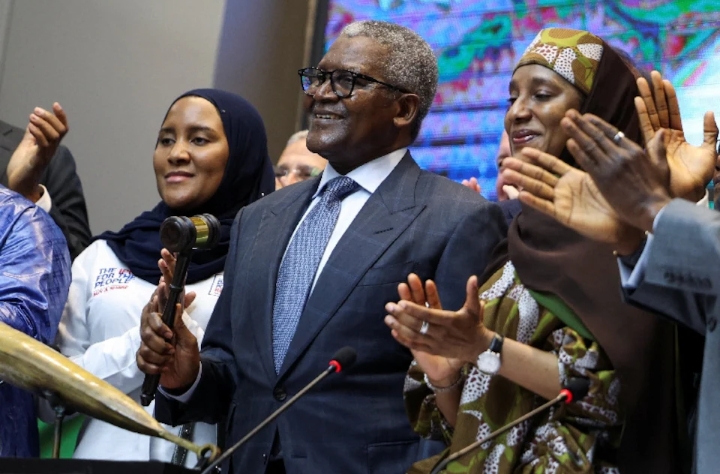
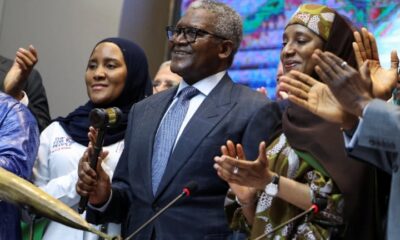
• Aliko Dangote , flanks by her daughters and capital market regulators, during the gong opening ceremony on the NGX, Monday September 14,2026
The Securities and Exchange Commission (SEC) has warned prospective investors in the Dangote Petroleum Refinery and Petrochemicals Initial Public Offering (IPO) against fraudsters and unauthorised platforms seeking to divert subscription funds.
The warning came as the refinery’s was quoted on the Nigerian Exchange Limited (NGX) on Monday, September 14, 2026, marking a major milestone in the company’s planned public offer.
With strong public interest expected around one of Nigeria’s largest capital-market offerings, the SEC urged investors to deal only with officially designated and approved receiving agents, subscription channels and platforms.
“The public is hereby advised to exercise caution and ensure that all applications and payments relating to the IPO are made only through the officially designated and approved receiving agents/subscription channels and platforms,” the Commission said.
The regulator’s alert highlights growing concerns over the possibility of fake investment websites, cloned platforms, fraudulent payment channels and individuals posing as authorised agents to exploit the huge interest generated by the Dangote Refinery offer.
The SEC therefore advised prospective investors to obtain information about the IPO only through the Commission’s official channels, the issuer’s official channels and other channels specifically established and approved for the offer.
The warning effectively places investors on notice that interest in the IPO should not override basic due diligence, particularly in verifying where subscription applications are submitted and where payments are made.


Olu Jacobs: His Life and Times
EXCLUSIVE: Veteran Nollywood Actor, Olu Jacobs Dies at 84

Naira Exchange Rates To Dollar, Pound, Euro…Wednesday, 16 September 2026

Tech Expert, Zuckerberg trains with UFC champions, Adesanya, Alexander

Organ Trafficking: Ekweremadu bags 10 years in UK prison

SAINT OBI: Between his marriage and his death
-

 Business2 days ago
Naira Exchange Rates To Dollar, Pound , Euro… September 14
-
 Politics2 days ago
Again, Desmond Elliot begs political mentor,Gbajabiamila , “I’m sorry, Daddy”
-

 News1 day ago
Boko Haram Denies Ceasefire with FG, Vows Continued Attacks
-
 Business3 days ago
Filling Stations Selling Petrol, Diesel Higher Driven By Global Crude Prices
-
 Business2 days ago
Dangote at IPO Listing, Charges Public,”I don’t want to be called richest man in Africa”
-

 Business2 days ago
Dangote Refinery’s IPO Officially Opens Today On NGX
-

 News1 day ago
Police Raise Alarm Over Terrorists and Informants Spying on Schools, Other Targets
-

 Crime1 day ago
Boko Haram Attacks Adamawa Community, Kills Residents