
News
Rising cost of living: Nigerians bemoan unbearable hardship under Tinubu govt

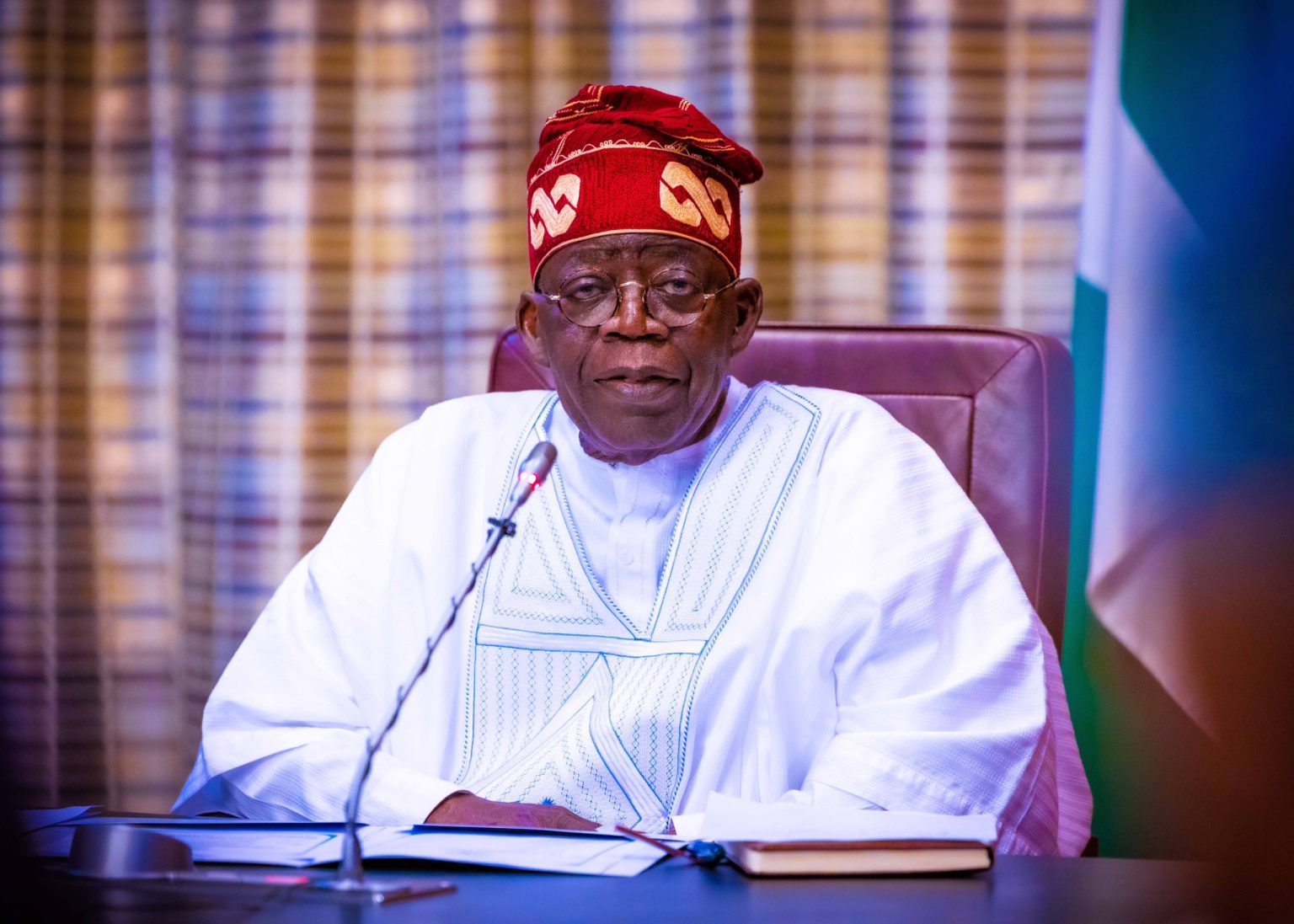
Nigerians face tougher days ahead as spiralling nationwide hunger resulting from untamed inflation, food insecurity and shrinking purchasing power worsen under the President Bola Ahmed Tinubu administration.
Tinubu’s economic team, namely the Minister of Finance, Olawale Edun, the Minister of Budget and National Planning, Atiku Bagudu, the Governor of Central Bank of Nigeria, Olayemi Cardoso, look overwhelmed by the country’s challenges, with current interventions yet to address the burgeoning hardship.
This is the situation in the last eight months as Nigerians suffer the hardship created by Tinubu’s policies of fuel subsidy removal and Naira floating at the foreign exchange market.
the Naira increased to N1,534.39 per US dollar at the FMDQ foreign market on Monday from N460.702, which it traded in May last year when President Tinubu took the oath of office.
This was further worsened with the removal of fuel subsidy, which saw the price of fuel rise to over N550 per litre from N238 in May 2023.
Also, the continued soaring inflation rate stood at 28.92 per cent in December, while food inflation increased to 33.93 per cent.
Consequently, since then, the daily increase in prices of foods, goods and services has been a common slogan in marketplaces in Nigeria, which is exacerbated by the fluctuation in the forex market in a country heavily dependent on imports.
It was gathered that prices of food items have skyrocketed above 100 per cent.
For instance, the price of a 50kg bag of rice increased to N65,000 from N35,000; beans rose to N1,600 per mudu from N800, 50kg bag of garri increased to N39,500 from 22,000; a carton of noodles super back size increased to N11,140 from N6,000, 25 litres of groundnut oil rose to N57,000 from N34,000, size 3 and 4 of 1kg pampers increased to N900 from N400, a crate of egg rose to N3,700 from N2,500, 50kg bag of sugar increased to N85,000 from N40,000, while 900g loaf of bread rose to N1,200 from N500; the list is endless.
Mrs Amina Jibrin, a small-scale trader in Dawaki, Abuja, said she may be forced to quit business because she no longer makes gains.
“Every day we go to the market, the prices of items always increase. We cannot afford to buy goods in the market.
“It will be as if you went to the market and misplaced your money. I may quit my business because I no longer make any money.
A Lagos resident, Mabel Rufus, lamented that the rising prices of food items was biting hard on her family.
“Fresh Tomatoes is a no-go area. In most places, onion is three for 300, for the little sizable one. Egg, a crate is almost N4,000, something in the range of N2000 a few months ago.
“The situation is affecting us seriously. Salary can no longer cater for food, let alone other needs. We are dying in this country under Tinubu”, she said.
The International Monetary Fund, IMF, in its recent report titled ‘Review of Nigeria’s Post Financing Assessment’ by the IMF Executive Board, warned that Nigeria is experiencing a deepening economic crisis amid the rising cost of living, amplifying the plights of the citizenry.
Little wonder, Nigerians protested in Minna, Niger State and Lokoja Kogi State recently against the rising cost of living a week ago.
However, as a quick action to deter the crisis, President Tinubu, five days ago, ordered the release of 102,000 metric tonnes of rice and maize to Nigerians.
Speaking on Monday, a renowned economist and former President and Chairman of the Council of Chartered Institute of Bankers, Prof Segun Ajibola, blamed the situation on the badly skewed structure of the Nigerian economy.
The economist said that beyond rhetoric, the economy managers should immediately drive import substitution strategies to address the Nigerian economy’s challenges.
“The genesis of the current spiral inflation rests in the badly skewed structure of the Nigerian economy. An economy that is monolithic and hangs its foreign exchange earnings on a primary gift of nature- oil, is susceptible to price instability as it may not have the buffer to mellow down prices, which are said to be sticky downwards.
“The insatiable appetite for imported consumables further compounds Nigeria’s situation. Basic needs such as food, medicine, raw materials, and spares are largely imported. The local currency, the Naira, depreciates rapidly for the reasons mentioned. All these put pressure on local prices daily.
“Beyond rhetoric, the managers of the economy should drive import substitution strategies effectively. The idea of devoting much attention to sharing the available foreign exchange among contending users amid the local currency’s dwindling fortunes can only worsen matters.
“The slogan: produce what you consume, consume what you produce should graduate from paper slogan to practicality. The list of importable items to Nigeria is unwinding and needs to be tamed. India, China, Malaysia, etc, have done it successfully recently.
“In the long run, the economy needs to be restructured via diversification. Agriculture needs total overhauling to ensure food security; a new industrial policy is long overdue, while new technological innovations should be introduced to redefine all segments of the national economy.
“In all these, infractions, economic sabotage, and rent-seeking syndrome should be chased out of this fledgling national economy.
“Where caught, heavy sanctions should be applied on the offending individuals and corporate bodies”.
On his part, the CEO of SD & D Capital Management, Mr Idakolo Gbolade, said the government must consider a price-fixing policy for some food items and monitor excessive profit by traders.
He noted that the country should look inwards in the long run and ensure the agricultural revolution plan is tailored towards self-sufficiency.
He added that staple food items such as rice, beans, and millet imports should be banned.
“The rising cost of food items can be attributed to the continued depreciation of the Naira. The US dollars are exchanged on the Nigeria customs portal for $1 – N1,380; the official rate is close to that. On the black market, it is exchanged for $1- N1,470.
“The cost of food prices is directly proportional to the strength of the Naira, and most government policies are taking too long to be formulated.
“The government had directed the release of 102 million Metric tonnes of grains from the strategic grains reserve, but that measure is not enough to bring down food prices.
“The government needs to immediately implement a price-fixing policy for some food items and monitor excessive profit by traders.
“In the long run, we must look inward and ensure the agricultural revolution plan of the government is tailored towards self-sufficiency, while major staples like rice, beans, millet, etc, should be banned from being imported into the country to strengthen local production and eventual export.
“The economy needs to be diversified from being import-dependent to export-oriented to make the country recover the lost opportunities over the years”, he said.







News
Sanwo-Olu Appoints Olatunbosun Ogunbanwo, 5 Others as Perm Secs
Ogunbanwo brings nearly three decades of experience in public service, strategic communication, public relations and information management.


•Mr. Olatunbosun Ogunbanwo
Lagos State Governor, Mr. Babajide Sanwo-Olu, has appointed Mr. Olatunbosun Ogunbanwo, Director of Public Affairs at the Lagos State Ministry of Health, as a Permanent Secretary in the State Public Service, alongside five other senior officers.
The five other senior officers appointed as Permanent Secretaries as conveyed by the Head of Service (HOS), Mr. Bode Agoro, in Circular Ref. No. CIR/HOS/’26/071, dated October 13, 2026, are Dr. Olawale Mahadiyu Adegbite, Director of Medical Services, Health Service Commission; Mrs. Folashade Aina Thomas-Orogan and Mr. Adebayo Mubashiru Haroun, both Directors, State Counsel at the Ministry of Justice.
The rest are Mrs. Olayinka Margret Oye-Bamgbose, Director of Administration and Human Resource at the Lagos State University Teaching Hospital (LASUTH) and Mrs. Bilquees Toyin Adekoya, Principal/Director of Education at Education District VI.
The appointments, which take effect from October 13, 2026, were aimed at reinvigorating the State’s policy implementation apparatus and strengthening public service delivery.
Mr. Olatunbosun Ogunbanwo
Ogunbanwo brings nearly three decades of experience in public service, strategic communication, public relations and information management.
Before his appointment, Ogunbanwo served as Director of Public Affairs at the Ministry of Health and previously held the same position at the Ministry of Agriculture.
He also played key communication roles in Lagos State’s responses to public health emergencies, including Ebola, COVID-19, Lassa fever and diphtheria.

Residents of Igbokoda in Ilaje Local Government Area of Ondo State are grappling with a severe public health and environmental crisis following the crash of a Nigerian Air Force (NAF) ATR-42 aircraft into a swamp near the community.
The aircraft, on a routine mission from Benin City to Lagos, crashed last Monday, killing all 25 people on board. Recovery efforts continue amid difficult swampy terrain, with large sections of the wreckage and human remains still unrecovered.
The traditional ruler of Igbokoda, Oba Afolabi Odidiomo, said residents have been battling an extremely offensive odour caused by decomposing human remains floating in the river. “The odour is extremely offensive. So many parts of the human body are floating around in the river. Some of the bodies have not been recovered. They have decomposed, and it is affecting everything,” he stated.
He warned that the river — the community’s main source of water for drinking, cooking and fishing — has been polluted by the remains and aviation fuel spillage. Residents can no longer safely use the water, raising fears of a disease outbreak.
Ondo State authorities confirmed they are assessing the environmental and public health impact, with plans for decontamination. Recovery teams, including the Navy, Air Force and emergency agencies, are intensifying efforts to retrieve remaining wreckage and remains.
News
UNCTAD Warns Debt Burden Threatens Future of 3.7bn People
UN Secretary-General António Guterres said developing economies were facing mounting pressures from geopolitical tensions, conflicts, trade disruptions, climate challenges, inadequate financing and high debt-servicing costs.

The future of 3.7 billion people is threatened by mounting government debt burdens, the United Nations Conference on Trade and Development (UNCTAD) has warned, urging developing countries to strengthen cooperation in tackling debt-related challenges.
The warning was delivered on Monday in Bangkok during the IMF–World Bank Annual Meetings, where the UN agency called on finance ministers, central bank governors and senior government officials from developing countries to unite under the Borrowers’ Platform to share knowledge, exchange experiences and coordinate their positions on debt issues.
UN Secretary-General António Guterres said developing economies were facing mounting pressures from geopolitical tensions, conflicts, trade disruptions, climate challenges, inadequate financing and high debt-servicing costs.
“Developing countries face a perfect storm with geopolitical tensions and conflicts, trade and climate pressures, a lack of adequate financing and high debt-service burdens,” Guterres said in his address to the platform’s new member states.
He added that the Borrowers’ Platform would provide members with an opportunity to navigate these challenges.
Guterres welcomed participating countries’ commitment to the initiative, stressing the importance of creating a common space where borrowers could exchange advice, share practical tools and approaches, and strengthen their collective advocacy on international debt issues.
According to UNCTAD, 31 developing countries have formally joined the platform, while several others have expressed interest in the initiative.
Since the platform’s launch in April, participating countries have operated through an interim process led by Egypt as interim chair, with UN Trade and Development serving as its secretariat.


Sanwo-Olu Appoints Olatunbosun Ogunbanwo, 5 Others as Perm Secs

Exclusion of candidates from INEC list: CD cautions INEC against manipulation by politicians

Oyedele Chairs G-24 Call for Fairer Global Financial System, Affordable Development Financing

Tech Expert, Zuckerberg trains with UFC champions, Adesanya, Alexander

BREAKING: Lagos Govt Declares Today, Thursday Work-Free to Mark 2026 Ìṣẹ̀ṣe Day

Organ Trafficking: Ekweremadu bags 10 years in UK prison
-
 Business3 days ago
Nigeria’s ₦33bn Fruit Import Bill Exposes Missed Opportunities in Jos
-

 Business3 days ago
Naira To Dollar, Pound ,Euro …Rates For Monday, October 12
-

 Politics3 days ago
BEWARE: Fake 2027 Gov’ Candidates List Circulating Online — INEC Raises Alarm
-

 News3 days ago
Forbes Scores GTBank Best Employers 2026
-

 Politics3 days ago
2027: 119 Women Jostle For State’s Governors
-

 Business2 days ago
Dangote Refinery IPO Attracts N8.61trn in Subscriptions, Four Times Offer
-
 News3 days ago
BREAKING: Fire Engulfs First Bank Branch Along Abuja-Keffi Road
-

 Business3 days ago
Afreximbank Hails Africa Credit Rating Agency