
Business
Real Estate Terms Every Nigerian Buyer Should Understand by Dennis Isong
When you know the meaning of words like Deed of Assignment, C of O, Governor’s Consent, Survey Plan, Excision, and Setback, you step into negotiations with confidence.


Buying property in Nigeria can feel like stepping into a marketplace where everyone speaks a language you don’t fully understand.
You hear people say “deed of assignment,” “survey plan,” or “C of O,” and if you’re not careful, you might nod in agreement even though you have no clue what those terms mean.
The truth is, real estate is a serious investment, and not understanding the key words can land you in avoidable trouble.I once met a young man named Chuka who worked in tech.
After saving for years, he proudly announced to his friends that he had “bought” land in Lagos.
But when the excitement settled, he realized he had only received a flimsy receipt.
No deed, no survey, no title document. Months later, someone else came forward with a proper deed showing they were the rightful owner. Chuka’s joy turned into shock.
That painful mistake cost him his savings.
Stories like Chuka’s are common. They show why it’s important to understand real estate terms before signing anything.
In this article, we’ll explore the Real Estate Terms Every Nigerian Buyer Should Understand.
We’ll break it down simply, so whether you’re in Nigeria or in the diaspora, you can approach property deals with confidence.
1. Why Understanding Real Estate Terms Matters
Imagine walking into a doctor’s office and the doctor starts throwing medical jargon at you—words like “myocardial infarction” instead of just saying “heart attack.” Confusing, right? Real estate works the same way.
Without the right knowledge, a buyer can easily get overwhelmed or even misled.In Nigeria, real estate transactions involve several players: landowners, agents, lawyers, surveyors, and government authorities.
Each of them uses words that have specific legal or professional meanings. If you misinterpret those words, you risk paying for land that doesn’t legally belong to the seller, or investing in property that you cannot develop.
Understanding real estate terms also empowers you during negotiations. Instead of looking lost, you can ask the right questions, challenge unclear documents, and avoid being manipulated.
It makes you more than just a buyer—you become an informed investor. That’s why grasping these Real Estate Terms Every Nigerian Buyer Should Understand is not optional, it’s essential.
2. Key Documents That Define Ownership
Ownership in real estate is not just about paying money and getting a receipt. It’s about holding documents that legally prove your rights.
Three of the most important terms Nigerian buyers encounter are the Certificate of Occupancy (C of O), the Deed of Assignment, and the Survey Plan.
The Certificate of Occupancy (C of O) is issued by the government and proves that you legally occupy a piece of land for 99 years. Without it or a recognized alternative, your claim to the land can be questioned.
Many Nigerians abroad mistakenly think a receipt or “family land agreement” is enough. It is not.Then there’s the Deed of Assignment, which records the transfer of ownership from the seller to the buyer.
It is a legal document that states the seller has handed over rights to the buyer.
Without a deed, you are like someone living in a rented house without a tenancy agreement—anything can happen.
The Survey Plan is another important document. It shows the exact location and boundaries of your property.
In Lagos, survey plans help you confirm whether the land is under government acquisition or free for private ownership. I’ve seen buyers purchase land only to discover later that it falls within a government reserved area.
That mistake is not just costly—it can be irreversible.When you hear these terms, don’t brush them aside as legal jargon. They are the backbone of your investment. They separate safe ownership from costly mistakes.
3. Common Terms Buyers Often Misunderstand
Beyond the major documents, there are everyday real estate terms that buyers often confuse.
There’s also the word Setback, which refers to the distance you must leave between your building and the road, drainage, or another boundary.
One of them is Excision.
This refers to land that the government has released from its control to be owned privately.
When land is excised, families or individuals can then sell it legally. Buyers who don’t understand excision risk paying for land the government still controls.
Another term is Governor’s Consent.
This is required when a property with a Certificate of Occupancy is being resold. Many people don’t realize that even with a C of O, if you buy from someone else, the transaction is not complete until the governor consents to the transfer.
There’s also the word Setback, which refers to the distance you must leave between your building and the road, drainage, or another boundary.
A buyer who ignores setbacks may build too close to the road and face demolition.
And then, Omonile—a word every Lagos buyer has heard. It refers to land-owning families or community representatives who often demand informal payments before construction starts.
Some buyers dismiss it as harassment, but understanding how to legally handle Omonile matters is part of navigating the Nigerian real estate terrain.
Each of these terms carries weight.
Misunderstanding them can create years of disputes. That’s why when we talk about Real Estate Terms Every Nigerian Buyer Should Understand, we’re not talking theory.
We’re talking about real-life survival in a market filled with opportunities and risks.
4. The Human Side of Real Estate Language
Sometimes, it’s not the technical meaning of the terms that trips buyers up, but the way they are used in conversations.
Agents might casually say, “This land has excision,” when in reality, it is only “in process.” The difference between “excision in process” and “excision granted” is huge.
One means you’re buying hope, the other means you’re buying legal reality.I recall meeting a couple from the UK who wanted to buy land in Ajah.
The agent kept repeating, “It’s excision in process.” Because the couple didn’t fully grasp the term, they nearly paid millions for land that wasn’t safe.
Thankfully, they sought advice and avoided the trap.The lesson is this: real estate terms are not just vocabulary. They carry stories, risks, and possibilities. When you understand them, you’re not just memorizing definitions—you’re protecting your hard-earned money.
5. Becoming a Confident Property Buyer
Buying property in Nigeria is not just about luck. It’s about preparation, patience, and knowledge.
When you know the meaning of words like Deed of Assignment, C of O, Governor’s Consent, Survey Plan, Excision, and Setback, you step into negotiations with confidence.
You don’t just sign documents blindly—you ask, confirm, and verify.
Think of it like driving in Lagos traffic. If you don’t know the meaning of road signs, you’ll get fined or even get into accidents.
But once you understand the rules, you navigate smoothly. Real estate is the same. Knowledge is your steering wheel.
The Nigerian property market is full of opportunities, but also full of pitfalls for the uninformed.
Whether you are in Lekki, Ikorodu, Magodo, or anywhere else, your success depends on how much you understand.
That’s why I always emphasize learning the Real Estate Terms Every Nigerian Buyer Should Understand.
It’s the difference between a safe investment and a painful regret.
Real estate in Nigeria does not forgive ignorance. Buyers who jump in without learning the language of property often end up with stories of loss.
But those who take time to understand the terms, documents, and processes stand on solid ground.If you are considering buying property, don’t just chase location or price.
Chase understanding.
Ask questions, verify documents, and ensure every term is clear to you before you pay.
Property is one of the biggest investments you will ever make. Protect it with knowledge.
And remember, you don’t have to do it alone.
That’s where professionals come in.
Dennis Isong is a TOP REALTOR IN LAGOS.
He helps Nigerians in the diaspora own property in Lagos, Nigeria, stress-free. For questions, WhatsApp/Call +2348164741041.
Business
History of Naira Revaluation and Devaluation (1973–2026) (Part 1)
Why was the naira devalued?

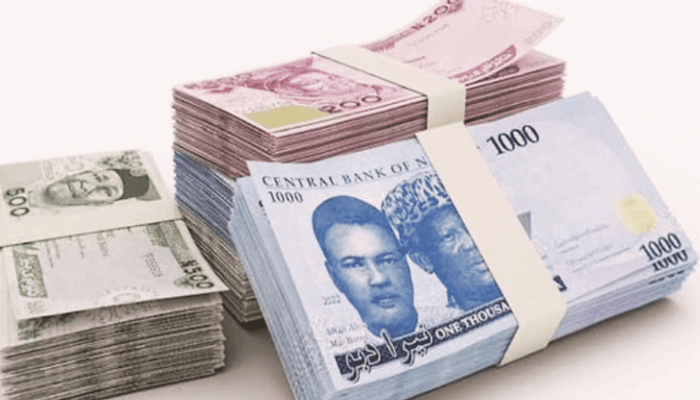
The history of the Nigerian naira is marked by two major developments: periods when the currency gained value or was officially strengthened, and prolonged periods when it lost value against major international currencies, particularly the US dollar.
Since its introduction in 1973, the naira has undergone several exchange-rate policy changes, including fixed exchange rates, currency devaluations, foreign-exchange market liberalisation, attempts to unify exchange rates and market-driven depreciation.
The Central Bank of Nigeria (CBN) has played a central role in managing these changes.
- Introduction of the Naira in 1973
Nigeria introduced the naira on January 1, 1973, replacing the Nigerian pound.
The conversion rate was:
£1 Nigerian pound = ₦2.
₦1 = 10 shillings under the old currency system.
₦1 = 100 kobo.
The new currency was introduced during a period of expanding oil revenues and economic growth.
Nigeria initially maintained a relatively strong, managed exchange rate, supported by foreign-exchange controls and the country’s oil earnings.
The introduction of the naira was a currency change, not a devaluation.- The 1970s: A Relatively Strong Naira
During the 1970s, rising oil revenues strengthened Nigeria’s foreign-exchange position.
The government maintained a controlled exchange-rate system, initially linking the naira to the US dollar before moving to a basket of currencies representing major trading partners in 1978.
The oil boom provided foreign exchange for imports, infrastructure and public expenditure.
However, Nigeria’s dependence on crude oil revenues left the economy vulnerable to fluctuations in international oil prices.
Key development: The naira benefited from a relatively strong external position, although its exchange rate was managed by the authorities rather than determined by an unrestricted market.- The Early 1980s: Mounting Pressure on the Naira
The economic situation deteriorated in the early 1980s as oil revenues weakened and foreign-exchange shortages intensified.
Nigeria faced several economic challenges:
• Declining oil receipts.
• Rising import bills.
• Pressure on foreign reserves.
• Growing external debt and trade arrears.
• Increasing demand for foreign currency.
The government maintained controls on foreign exchange, but the official rate became increasingly disconnected from the rate at which foreign currency could be obtained in the parallel market.
This created pressure for exchange-rate reform.
The crisis set the stage for the introduction of the Structural Adjustment Programme (SAP) in 1986.- 1986: Major Naira Devaluation Under SAP
September 26, 1986, marked a turning point in the history of the naira.
Under the military government of General Ibrahim Babangida, Nigeria introduced the Second-Tier Foreign Exchange Market (SFEM) as part of the Structural Adjustment Programme.
The objective was to allow market forces to play a greater role in determining the naira’s exchange rate.
According to an International Monetary Fund account, the naira’s value was discounted by approximately 66 per cent at the inaugural SFEM auction.
The exchange rate moved from about ₦1.60 per US dollar under the previous administered rate to approximately ₦4.60 per dollar at the initial auction.
Why was the naira devalued?
The policy was intended to:
•Reduce the overvaluation of the naira.
•Improve the allocation of scarce foreign exchange.
•Encourage non-oil exports.
•Improve the competitiveness of Nigerian products.
•Reduce distortions in the foreign-exchange market.
However, the weaker currency also increased the naira cost of imported goods and production inputs.
The 1986 reform began a prolonged period of exchange-rate adjustments.- …To be continued
Business
Obasanjo Accuses Tinubu : “You Made Every Nigerian Poor By 300% Naira Devaluation”
The former President also rejected the argument that Tinubu needed more time to complete his reforms, saying he did not see the economy improving.

Image: AI generated
Former President Olusegun Obasanjo has accused President Bola Tinubu of making every Nigerian poor by 300 per cent through the devaluation of the naira.
Obasanjo spoke on Wednesday during the Financial Times Africa Summit 2026 in London, United Kingdom.
He said that the naira lost its value overnight due to economic reforms undertaken by the Tinubu administration in 2023.
“We do not live in isolation as a country. We interact with the rest of the world. And overnight, you devalue the currency by 300 per cent. The naira went from N500 to a dollar to N1,500 to a dollar. What that meant was that every Nigerian is made poor by 300 per cent.”
Obasanjo said that had made Nigeria “the poverty capital of the world,” which he said meant the country had the largest number of poor people in the world.
“You cannot say to me that that is good for Nigeria. You cannot say to me that that is good for us in any sense,” he noted.
The former President also rejected the argument that Tinubu needed more time to complete his reforms, saying he did not see the economy improving.
Business
CBN Licences Abbey Bank to Start Full Commercial Banking in November 2026
Adewumi said: “The year 2026 represents a defining moment in the history of Abbey. Our approval to transition to commercial banking is a testament to the work invested in building this institution and the confidence placed in us by our regulators, shareholders, customers and employees.”

The Central Bank of Nigeria (CBN) has approved Abbey Bank Plc to begin operation as a regional commercial bank, effectively from November 2026.
The licence opens retail banking, small and medium-sized enterprise lending, trade finance and corporate banking to the lender.
Abbey Bank had operated as a mortgage bank for more than three decades.
The commercial banking licence was issued in June 2026 after the bank completed its capital-raising process.
Managing Director and Chief Executive Officer Mobolaji Adewumi said the bank began internal discussions on the transition in 2023 and submitted a formal application in 2024.
He said regulatory approval arrived in October 2024.
Adewumi said: “The year 2026 represents a defining moment in the history of Abbey. Our approval to transition to commercial banking is a testament to the work invested in building this institution and the confidence placed in us by our regulators, shareholders, customers and employees.”


History of Naira Revaluation and Devaluation (1973–2026) (Part 1)

JUST IN: 1 Dead, 3 Rescued in Fadeyi Building Collapse, Lagos

Obasanjo Accuses Tinubu : “You Made Every Nigerian Poor By 300% Naira Devaluation”

BREAKING: Lagos Govt Declares Today, Thursday Work-Free to Mark 2026 Ìṣẹ̀ṣe Day

Tech Expert, Zuckerberg trains with UFC champions, Adesanya, Alexander

Organ Trafficking: Ekweremadu bags 10 years in UK prison
-
 Business2 days ago
Currency Words You Should Know
-

 Business2 days ago
Naira Exchange Rates Wednesday, October 21, 2026
-

 Business2 days ago
NCC, CBN To Warn Companies By Flagging Fraudulent Phone Numbers
-
 Business2 days ago
JPMorgan Eyeing Entry Into Nigeria’s Banking Industry
-

 Business2 days ago
RMRDC Taking 2027 Africa Raw Materials Summit To Kenya
-

 Health2 days ago
Ebola In Nigeria: Symptoms, Spread and How To Protect Yourself
-

 Health3 days ago
BREAKING: Nigeria Confirms First Ebola Case
-

 Business2 days ago
How I steal ATM users’ PINs, defraud them