
Business
Pump Price Cuts Driven by Pricing, Not Tariff — Dangote


Dangote Petroleum Refinery has dismissed claims that the recent fall in petrol pump prices was triggered by the Federal Government’s suspension of a 15 per cent import tariff, insisting the adjustment was driven solely by its own downward review of Premium Motor Spirit prices.
In a statement on Monday, the company said downstream marketers reacted directly to its revised ex-depot prices, and that the tariff policy did not influence the decision.
“We lowered our PMS gantry price from N877 to N828 per litre, and our coastal price from N854 to N806. The downstream marketers adjusted their prices accordingly. This move was strictly market-driven and not connected to the tariff reversal,” the refinery stated.
Refinery Capacity & Strategic SignificanceSince starting production, Dangote Refinery has significantly reshaped Nigeria’s fuel market. With a nameplate capacity of 650,000 barrels per day (bpd), it has become a major force in reducing Nigeria’s dependence on imported petrol.
The refinery is in the process of upgrading: Dangote recently announced plans to raise capacity from 650,000 bpd to 700,000 bpd, and is also working on a longer‑term expansion to 1.4 million bpd. This expected scale-up would make it one of the largest single-site refineries globally.
Why the Price Cut MattersHistorically, petrol pricing in Nigeria has been highly exposed to global factors, international crude prices, freight costs, foreign-exchange swings, and import duties.
By cutting its own ex-depot price, Dangote is asserting more control over the domestic price structure, reducing volatility tied to imports.
“Dangote’s price cut is a landmark event. For the first time in decades, the pricing power in Nigeria’s fuel market is shifting from international dynamics to local production.
”A refinery executive (who requested not to be named) added that the November 6 adjustment is part of a longer-term plan to stabilise supply and build market trust: “We’re not just lowering prices.
We are building confidence in Nigeria’s refining capacity. Every adjustment is carefully made to balance sustainability for us and affordability for consumers.
”Market Impact: The price review immediately reset the industry pricing floor. Within 24 hours, several major marketers reduced their pump prices, a response that analysts describe as “pure market competition.
”Oil sector analyst Grace Onuoha said:
“Dangote effectively forced a realignment. Marketers naturally had to follow to stay competitive. This isn’t about policy shifts, it’s market dynamics.
”Countering the Tariff NarrativeDangote’s statement is a direct rebuttal to widespread speculation that the 15% import tariff reversal triggered the pump price drop.
The company insists its price cut came first and was the real catalyst. The temporary tariff waiver only applies to imported PMS, while Dangote’s product is refined locally.Boosting Fuel Security.
By leveraging its own refining capacity, Dangote says it is helping to shield Nigeria from global supply disruptions and foreign-exchange risks. The refinery frames its pricing policy as part of a broader strategy toward energy self-sufficiency.
“As more Nigeria households and businesses rely on locally refined fuel, the nation becomes less vulnerable to international shocks,” the company said in its statement.
Energy analyst Dr. Tunde Aluko agrees: “This is what Nigeria has needed for decades, a domestic refinery with real capacity and market influence. Dangote is filling that crucial role.”
What This Means for Consumers
Many industry observers view the November 6 price cut as a turning point.
For the first time, a local refiner, not global import dynamics, is visibly driving fuel prices in Nigeria.
Fuel station owner Uche Eze, who operates in Abuja, said, “This is a positive development. Local refining means more predictable prices, better supply, and a buffer against forex volatility.”




Business
Crude Oil Prices Drop Below $95 After US-Iran Ceasefire
Earlier, crude prices had surged above $110 per barrel amid fears of supply disruptions as tensions escalated in the Middle East.

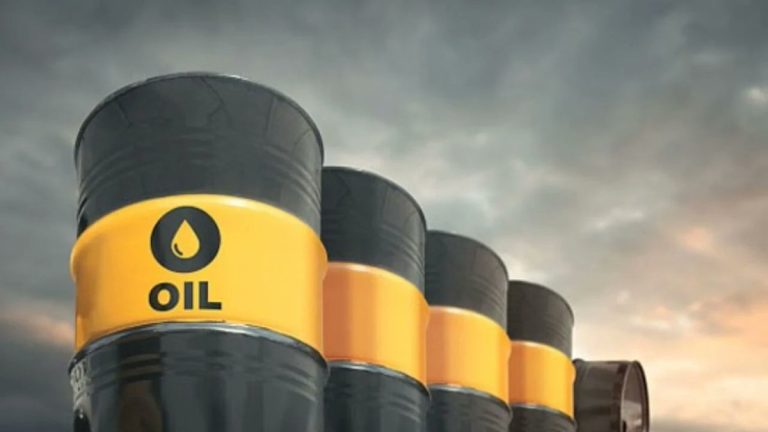
Crude oil prices fell below $95 per barrel in early trading on Wednesday following a ceasefire agreement between the United States and Iran.
The global oil benchmark fell by about 13% to around $94–$95 per barrel, marking one of the steepest single-day declines in recent years after weeks of war-driven price spikes.
The dramatic selloff came after U.S. President Donald Trump announced a conditional two-week ceasefire, pausing military operations in exchange for the reopening of the Strait of Hormuz—a critical route for global oil shipments.
West Texas Intermediate (WTI), the U.S. benchmark, also dropped significantly to around $95–$96 per barrel, reflecting a broad easing of geopolitical tensions and a rapid unwinding of the war risk premium in oil markets.
Earlier, crude prices had surged above $110 per barrel amid fears of supply disruptions as tensions escalated in the Middle East.
However, the ceasefire has restored some confidence that oil flows will resume, triggering a sharp correction in prices.
Business
Afreximbank Avails US$10 billion to insulate African Energy Producers , Exporters from Gulf Crisis
GCRP is designed to, among others sustain essential imports – including fuel, LNG, food, fertiliser, pharmaceuticals – by providing vital short-term Foreign Exchange (FX) and liquidity to support vulnerable member states.
Dr. George Elombi, President and Chairman of the Board of Directors at Afreximbank on Tuesday commended members of the Board for their approval of a US$10 billion Gulf Crisis Response Programme (GCRP) to insulate African and Caribbean economies.
” This crisis response programme is in tune with our DNA. We understand how our economies work and the pain points associated with these transitory crises,” said Elombi.
He emphasised that the intervention will support African countries in adjusting smoothly to the crisis while strengthening their resilience to future shocks through interventions that transform the structure of their economies.
The conflict, which escalated on 28 February 2026, has sent shockwaves through the global economy, with African and Caribbean economies bearing the largest share of the brunt.
Given the significance of the Gulf region as a primary global source of oil, Liquid Nitrogen Gas (LNG), fertilisers, as well as the critical role of the Strait of Hormuz, the outbreak has triggered wider repercussions at a global scale, including adversely affecting African and CARICOM economies.
These impacts specifically affect nations that heavily rely on fuel, fertiliser, and food imports, alongside those exposed to Gulf shipping corridors, investment flows, tourism and remittance inflows.
GCRP is designed to, among others sustain essential imports – including fuel, LNG, food, fertiliser, pharmaceuticals – by providing vital short-term Foreign Exchange (FX) and liquidity to support vulnerable member states.
It further aims to empower African energy and minerals exporters to capitalise on elevated prices and rerouted trade flows, by scaling productive capacity in strategic commodities, through pre-export finance, working capital, and inventory financing.
Additionally, it provides short term relief to African and Caribbean member states whose tourism and aviation industries have been adversely impacted by the crisis.
The programme is also designed to build the medium to long-term resilience of African and Caribbean economies against future shocks by scaling productive capacities for producers and exporters of energy, minerals while accelerating the completion of critical energy, port, and logistics infrastructure projects in African and Caribbean member states, delayed by the conflict.
Business
President Tinubu Approves N3.3Trn Payments Plan To Restore Reliable Electricity
Implementation has begun, with 15 power plants signing settlement agreements totalling ₦2.3 trillion.
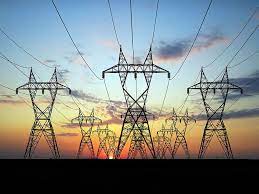
President Bola Tinubu has approved the payment plan to finally settle the outstanding debts under the Presidential Power Sector Financial Reforms Programme.
The debt repayment plan followed the final review of the legacy debts that have beset the power sector for more than a decade.
State House press release signed by Bayo Onanuga Special Adviser to the President(Information and Strategy), said that the long-standing debts accumulated between February 2015 and March 2025.
Following verification, ₦3.3 trillion has been agreed as a full and final settlement, ensuring a fair and transparent resolution.
Implementation has begun, with 15 power plants signing settlement agreements totalling ₦2.3 trillion.
The Federal Government has already raised ₦501 billion to fund these payments.
Out of the amount, N223 billion has been disbursed, with further payments underway.
What this means for Nigerians: With payments reaching the power value chain, generation will be more stable. With power plants supported, electricity reliability will improve.
And as the sector stabilises, more investment, more jobs, and better service will follow. “This programme is not just about settling legacy debts.
It is about restoring confidence across the power sector — ensuring gas suppliers are paid, power plants can keep running, and the system begins to work more reliably”, explained Olu Arowolo-Verheijen, Special Adviser on Energy to President Tinubu.
“It is part of a broader set of reforms already underway — including better metering and service-based tariffs that link what you pay to the quality of electricity you receive.
“The government is also prioritising power supply to businesses, industries, and small enterprises — because reliable electricity is critical to creating jobs, supporting livelihoods, and growing the economy.
“The goal is simple: more reliable power for homes, stronger support for businesses, and a system that works better for all Nigerians”, she added.
President Tinubu has commended all stakeholders who supported efforts to resolve the legacy issues in the power sector.
He has also confirmed that the next phase (Series II) will begin this quarter.


Rep Dasuki Joins ADC, says INEC Chair Becoming Threat to Nigeria’s Multi-party Democracy

Crude Oil Prices Drop Below $95 After US-Iran Ceasefire

Iran reopens Strait of Hormuz following two-week cease-fire agreement with Trump

Tech Expert, Zuckerberg trains with UFC champions, Adesanya, Alexander

Organ Trafficking: Ekweremadu bags 10 years in UK prison

SAINT OBI: Between his marriage and his death
-

 Sports2 days ago
CAF confirms 16 teams for U-17 AFCON 2026
-

 Sports2 days ago
Seven Eritrean players fail to return home after AFCON qualifier
-
 News2 days ago
Abiodun Presents Ceremonial Sword to Tinubu, Urges Sustained War on Crime
-

 Politics2 days ago
ADC youths give INEC 72-hour ultimatum to restore David Mark -led leadership
-
 International2 days ago
Oil Prices Rise, Stocks Fall as Trump’s Iran Deadline Looms
-
 Politics2 days ago
FG earmarks N135bn for 2027 post election disputes
-
 International2 days ago
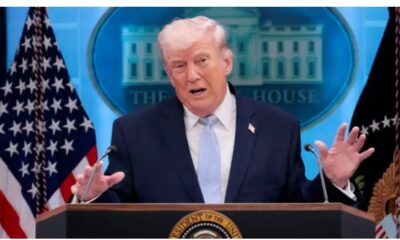
Trump warns Entire Iran could be ‘taken out’ Tuesday night
-

 News2 days ago
Benue Govt Confirms Total Evacuation of Benue Students From University of Jos