
Business
President Tinubu’s reform initiative will grow economy- CIBN


The Chartered Institute of Bankers of Nigeria (CIBN)has commended the reform initiatives of President Bola Tinubu’s renewed hope agenda, saying it will help grow the economy.
The President of CIBN, Ken Opara, said this during the16th Annual Banking and Finance Conference of the institute on Tuesday in Abuja.
Opara expressed hope that the reforms if followed through would not only unlock the full potentials of our economy but place the nation on a recovery trajectory to drive the prosperity of the continent.
The theme of the Conference is “Nigeria’s Economic Growth and Empowerment: The Role of the Financial Services Industry”.
According to Opara, the event is the largest gathering of banking and finance professionals in Africa.
`’It is a platform for stakeholders in the banking and finance ecosystem to come together to drive conversation on topical issues critical to the growth and stability of the country.
With a view to providing insightful solutions that will impact the entire system and the economy at large. According to the President, theme is very apt as it resonates with the context of our current realities in the country.
It amplifies the fact that agenda setting for the country must be a continuous exercise, especially now that we have a new government in place.
The topic also resonates with the current administration’s reforms agenda. He said the CIBN would continue to be a vanguard for capacity and skills development in the financial services industry. He also urged for more collaboration of critical stakeholders to drive the sector. The Chairman, Senate Committee on Capital Market, Sen. Osita Izunaso, pledged the continued support of the National Assembly to the CIBN and the country's financial sector. Izunaso, called for collaboration of critical stakeholders in the sector to help resolve the challenges before us which according to him is enormous. He also urged companies enjoying Nigeria patronage to ensure to be listed in the country's capital market. The Minister of Budget and Economic Planning, Sen. Abubakar Bagudu decried the low contribution of the sector to the GDP and challenged the financial sector to make wfforts to move from 3.6 to about nine per cent growth contribution to the GDP. Bagudu said to achieving this was possible as the financial sector was indeed well placed to contribute to economic growth. The minister then reiterated the present administration's commitment to ensure its renewed hope agenda for Nigerians was achieved.
The reforms are intended among others to give the private sector all the necessary confidence to mobilise and invest more resources in the economy.
We appreciate the contribution of the financial sector but expect more.
We appreciate that the challenges we are experiencing are those that other countries have experienced and surpassed.
We are in no doubt that the vision and boldness of our leaders, the renewed Hope Agenda will be pursued with vigor and Nigeria will have positive remarkable growth in the years ahead,"he said. The Acting Governor of the Central Bank of Nigeria(CBN), Folashodun Shonubi, said when we look at our economic contribution, we are fighting below our weight.
Can we promise them that instead of 3.6 per cent, we will be contributing a lot more than that. And we will sit down and find what the drivers are that we can influence and do.
I dont want to put a number infront of us but it is what I will like to see at the end of the conference.
I don’t think we contribute a lot of ourselves , we as bankers need to be more conscious, a bit more active on advocacies that are actionable,”Shonubi said.
Also, the Chairman, Body of Banks CEO, Mr Ebenezer Onyeagwu, also urged for a deliberate effort by stakeholders towards growing the country’s economy.
On balance of payment, he said we are importing more than we are exporting and to change the narrative we need to grow what we consumes and export what we consume.
We have enormous potential, the biggest potential we have is in our market. Our market is depleted by the number of people we have.
The time has come for our growth to focus on effectively realising the huge potential of our endowment.
“It is imperative therefore for us to encourage growth in our endeavours. Banks also have to be deliberate, determined to execute the mandate of growth in our economy,”Onyeagwu said.






BLACK (PARALLEL) MARKET RATES
₦1370 DOLLAR (USD
₦1800 POUND (GBP)
₦1500 EURO (EUR)
₦970 CANADIAN DOLLAR (CAD)
₦65 SOUTH AFRICAN RAND (ZAR)
₦350 UAE DIRHAM (AED)
₦190YUAN (CNY)
₦2300CFA F.(XOF)
₦2200CFA F.(XAF)
₦850AUSSIE (AUD)SELL₦1000
Official CBN Exchange Rates
DOLLAR (USD)₦1332.59
POUND (GBP)₦1765.55
EURO (EUR)₦1491.57
SWISS FRANC (CHF)₦1590.77
JAPANESE YEN (JPN)₦8.39
CFA FRANC (XOF)₦2.27
WEST AFRICAN UNIT OF ACCOUNT (WAUA)₦1802.33
CHINESE YUAN (CNY)₦199.10
SAUDI RIYAL (SAR)₦354.92
SOUTH AFRICAN RAND (ZAR)₦80.37
Business
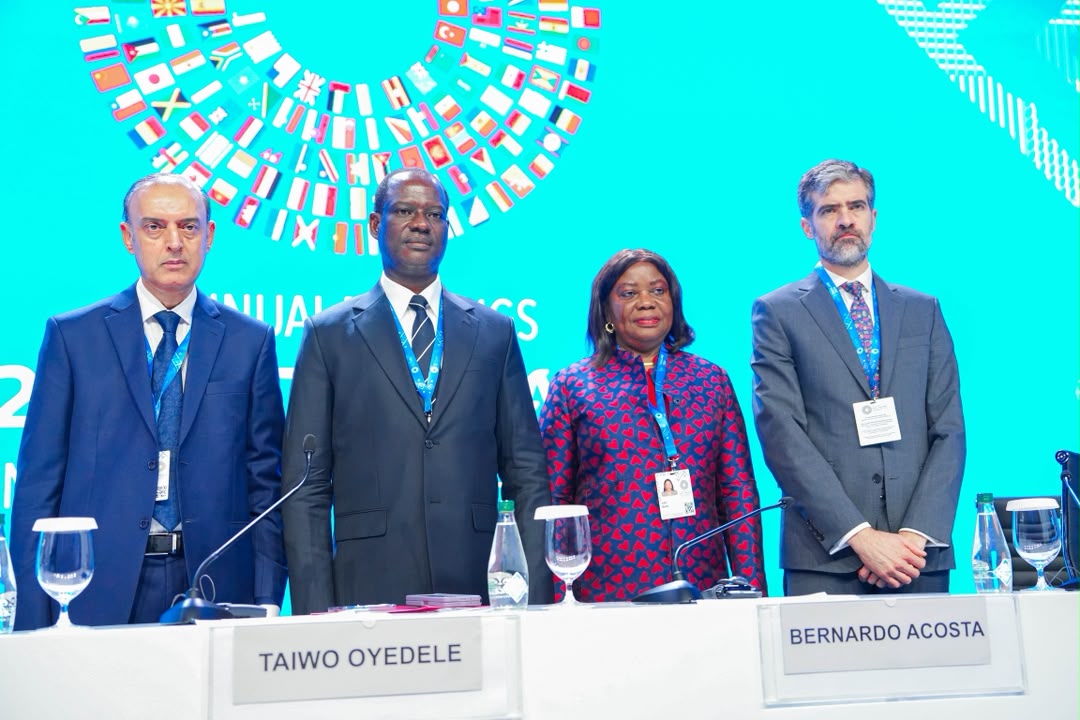
Oyedele Chairs G-24 Call for Fairer Global Financial System, Affordable Development Financing
The meeting concluded that domestic reform alone will not shield developing economies from external shocks — affordable finance, effective debt resolution, fairer representation in international institutions, and sustained cooperation are equally necessary.

Business
NAFDAC scolds fake manufacturers: “You are killing Nigerians in order to make money”
He warned that the circulation of counterfeit drinks posed a serious public health concern, urging suspected manufacturers to abandon the illegal trade.

“You are killing Nigerians in order to make money,which is not good.”
That’s the National Agency for Food and Drug Administration and Control (NAFDAC) scolding Nigerians caught in the act of counterfeiting drinks.
The occasion was at Zamfara Plaza, BBA Trade Fair Complex, along the Badagry Expressway, Ojo, Lagos State.
The Assistant Director of the Investigation and Enforcement Directorate of NAFDAC, Mr Kunle Ojo, who led the enforcement said the agency caught some of the suspects in the act and recovered drums, filters, packaging materials, a heating device and other equipment allegedly used in the illicit production process.
The suspects, identified as Okafor and John, were arrested during an enforcement operation in a two-storey building where equipment and materials allegedly used to repackage and produce counterfeit alcoholic and energy drinks where discovered.
The raid, according to NAFDAC, followed credible intelligence and surveillance on suspected counterfeiters operating within the Trade Fair International Market.
He warned that the circulation of counterfeit drinks posed a serious public health concern, urging suspected manufacturers to abandon the illegal trade.


CAF Increases Annual Funding for Member Federations to $700,000

Naira Exchange Rates For Thursday, October 15

Sanwo-Olu Appoints Olatunbosun Ogunbanwo, 5 Others as Perm Secs

Tech Expert, Zuckerberg trains with UFC champions, Adesanya, Alexander

BREAKING: Lagos Govt Declares Today, Thursday Work-Free to Mark 2026 Ìṣẹ̀ṣe Day

Organ Trafficking: Ekweremadu bags 10 years in UK prison
-
 Politics3 days ago
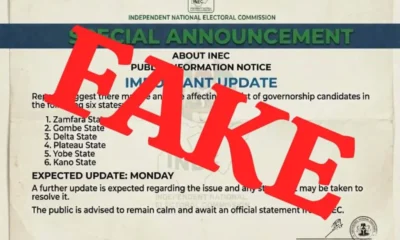
BEWARE: Fake 2027 Gov’ Candidates List Circulating Online — INEC Raises Alarm
-
 Business2 days ago
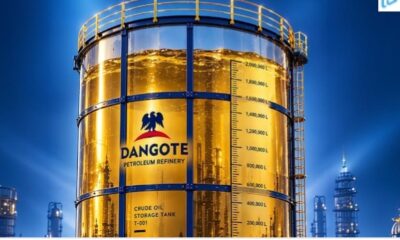
Dangote Refinery IPO Attracts N8.61trn in Subscriptions, Four Times Offer
-

 News3 days ago
BREAKING: Fire Engulfs First Bank Branch Along Abuja-Keffi Road
-
Business2 days ago
Top 10 Highest-Paid CEOs in Nigeria
-
 News3 days ago
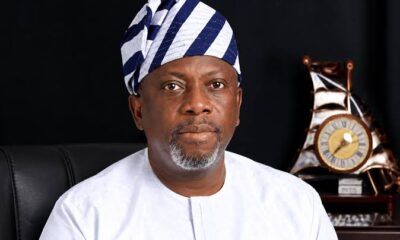
Governor Seyi Makinde’s Chief of Staff Resigns
-

 News3 days ago
CJN Kekere-Ekun swears in 68 new SANs
-

 Business3 days ago
AI to eliminate 40% of global jobs – IMF boss
-
 News3 days ago
FG Withdraw Charges Against PFIPC DG Adeyemi