
Business
Petrol Price Hike: Job Losses Top Private Sector’s Worry

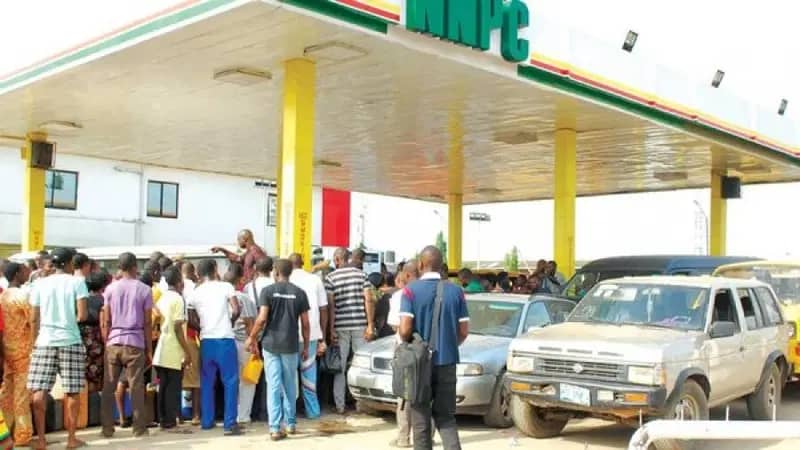
The Nigerian Association of Chambers of Commerce, Industry, Mines and Agriculture, NACCIMA, Lagos Chamber of Commerce and Industry, LCCI, and Nigerian Employers Consultative Association, NECA, among others, yesterday expressed concern over the impact of the latest petrol price increase on jobs and the economy.
Reacting to the latest price hike, the Nigerian Association of Chambers of Commerce, Industry, Mines and Agriculture, NACCIMA, and the Organized Private Sector, OPS, expressed concerns over it, decrying its potential impact on businesses and consumers across the country.
In a statement, the National President of NACCIMA, Dele Kelvin Oye, called on the Federal Government to engage in constructive dialogue with relevant stakeholders, including the organized private sector and labour unions to address the concerns raised about the price increase and its potential effects on the economy.
The statement reads: “The Nigerian Association of Chambers of Commerce, Industry, Mines and Agriculture, NACCIMA, expresses its concerns over the recent increase in the pump price of petrol to over N800 per litre at NNPC filling stations across the country.
“While we understand the complex factors that can influence fuel prices, such as global oil market dynamics and exchange rate fluctuations, we are troubled by the lack of prior notice and clear explanations provided by the government and the Nigerian National Petroleum Company Limited, NNPC, regarding this development.
“The timing of this price hike is particularly concerning as it has the potential to further exacerbate the impact on businesses and consumers, especially the vulnerable segments of the population and those on fixed incomes, who are still adjusting to the recent increase in the national minimum wage.”
According to Oye, “NACCIMA calls on government and NNPC to engage in constructive dialogue with relevant stakeholders, including the organized private sector and labour unions, to address concerns raised about this price increase and its potential effects on the economy.
“We are particularly interested in understanding the reported conditions that may have been agreed upon during the minimum wage negotiations, and how the current development aligns with those understandings. Maintaining trust and credibility in the government’s economic policies is crucial for fostering a conducive business environment and promoting inclusive growth.
The Director -General of LCCI, Dr Chinyere Almona, said: “The impact on businesses will be severe, with fuel prices affecting supply and logistics, power generation, transportation, and factory operations.
The cost of doing business will skyrocket, prices of goods will rise, and some firms may shut down due to low demand in the face of weakening consumer purchasing power. Of course, this will be followed by job losses.
LCCI advocates for a more sustainable approach. Supporting the development of additional local refineries to process our crude for local consumption and potential export across Africa is the way forward. This long-term strategy is crucial for the stability and growth of our economy.”
On its part, the Nigeria Employers Consultative Association, NECA, faulted the new price, saying it will inflict more pain on Nigerians and contribute to the increase in the cost of doing business.
The Director-General of NECA, Wale-Smatt Oyerinde, also reacted and pleaded with the government to rethink and do all that is necessary to address the continuous impoverishment of Nigerians and incapacitation of organized businesses.
He said “The new pump price of petrol is not only worrisome but also unfair. We had expected that the Government would leverage the momentum created by the completion of the Dangote refinery and the planned commencement of operation of the Port-Harcourt refinery to clear the obvious self-inflicted pain on Nigerians and progressively reduce the pump price of petrol. This seems not to be the case.
“This new pump price could be seen as making Nigerians pay for the crass inefficiency in the NNPC. Rather than address the fundamentals that have made Nigeria a net importer of petrol, even when we have four refineries, the Government continues to inflict pain on Nigerians and inadvertently, contributing to the increase in the cost of doing business.
“We urge that Government should have a rethink and do all that is necessary to address the continuous impoverishment of Nigerians and incapacitation of organized businesses.”





Business
TIME Names Moniepoint CTO Felix Ike Among 50 Global Executives of the Year
In its citation, TIME said Ike “has helped to establish the business as one of Africa’s leading financial platforms.


TIME magazine has named Felix Ike, co-founder and Chief Technology Officer of Nigerian fintech Moniepoint, to its inaugural Executives of the Year: Tech and Data list.
Ike is the only executive representing an African company among the 50 leaders selected for the 2026 list.
The list, unveiled on Tuesday, September 22, recognises chief information officers, chief technology officers, chief data officers and chief product officers whose decisions are shaping how major organisations deploy technology and use data.
Moniepoint is also the only African company represented on the inaugural list.
Ike was named alongside executives from Netflix, CrowdStrike, Dell, Duolingo, AT&T, OpenAI, Anthropic, Shopify and Reddit, among others.
In its citation, TIME said Ike “has helped to establish the business as one of Africa’s leading financial platforms.
“The recognition follows Moniepoint’s inclusion in TIME’s 2025 list of the 100 Most Influential Companies, giving the Lagos-founded fintech another global distinction.
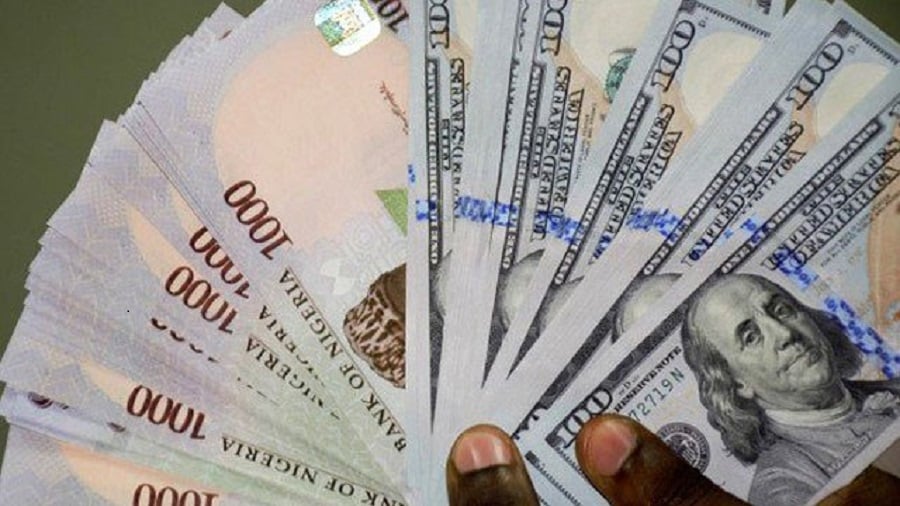
Black Market Rates
₦1382DOLLAR (USD)
₦1855POUND (GBP)
₦1545EURO (EUR)
1000 DOLLAR (CAD)
₦70 RAND (ZAR)
370DIRHAM (AED)
190YUAN (CNY)
₦100G.CEDI (GHS)
₦2350 CFA F.(XOF)
₦2250 CFA F.(XAF)
₦850 AUSSIE (AUD)
Official CBN Exchange Rates
DOLLAR (USD)₦1328.67
POUND (GBP)₦1758.36
EURO (EUR)₦1511.63
SWISS FRANC (CHF)₦1605.45
JAPANESE YEN (JPN)₦8.38
CFA FRANC (XOF)₦2.31
WEST AFRICAN UNIT OF ACCOUNT (WAUA)₦1808.03
CHINESE YUAN (CNY)₦197.92
SAUDI RIYAL (SAR)₦353.86
SOUTH AFRICAN RAND (ZAR)₦81.09
Business
Djibouti, Ethiopia and Dangote to build $660 million petroleum pipeline
In Kenya, Dangote and the government are due to break ground on a new 700,000-barrel-per-day crude oil refinery in Lamu next week.
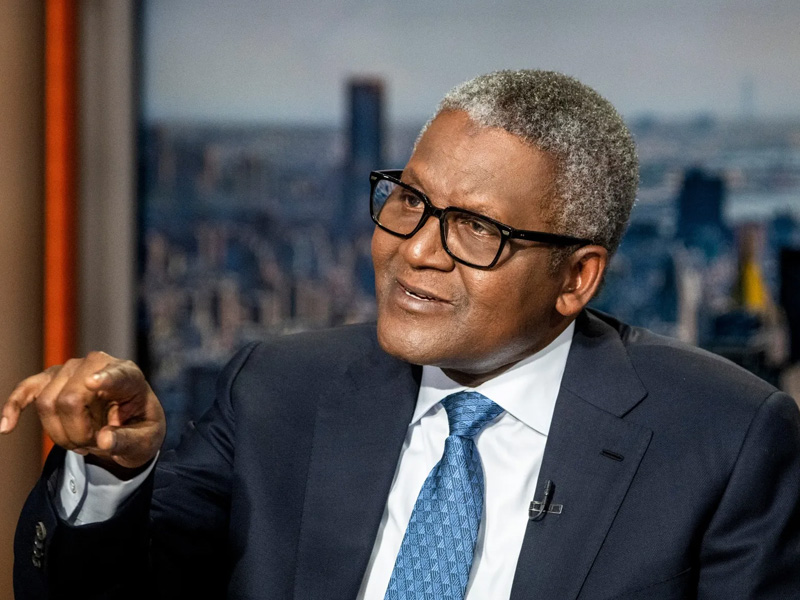
Ethiopia, Djibouti and Nigerian billionaire Aliko Dangote plan to build a $660 million refined petroleum pipeline that will connect Ethiopia and Djibouti, a spokesperson in Ethiopian Prime Minister Abiy Ahmed’s office said on Thursday.
The project will include a 120-km (75-mile) pipeline, as well as approximately 375,000 cubic metres of storage capacity at Damerjog in Djibouti and 800,000 cubic metres at Dewele in Ethiopia, the spokesperson told Reuters, adding it should become operational within 18 months.
Abiy said on his X account the project will be developed through a partnership between Ethiopian Investment Holdings and the Dangote Group, which separately is already building a $4 billion fertiliser pipeline and power plant, and a polypropylene packaging facility, in Ethiopia.
The project aims to reduce logistics costs and delays along the Ethiopia-Djibouti transport corridor, Abiy said.
Developers say the infrastructure will strengthen energy security and improve supply chain resilience for the two countries, he said.
Abiy is on a visit to Djibouti and made the announcement alongside its president, Ismail Omar Guelleh, and Dangote.
In Kenya, Dangote and the government are due to break ground on a new 700,000-barrel-per-day crude oil refinery in Lamu next week.


Congo military plane crash kills 13, including three officers

Manchester City Faces Expulsion For Breaching 114 EPL Financial Rules

TIME Names Moniepoint CTO Felix Ike Among 50 Global Executives of the Year

Tech Expert, Zuckerberg trains with UFC champions, Adesanya, Alexander

Organ Trafficking: Ekweremadu bags 10 years in UK prison

SAINT OBI: Between his marriage and his death
-

 Business2 days ago
MAN Urges CBN To Consider CRR Cut Next Phase of Monetary Easing
-

 Crime2 days ago
JUST IN: Zamfara LG Chairman Freed After 61 Days in Captivity
-

 Sports2 days ago
FIFA names Nigerian referee among 81 officials for U-17 World Cup
-

 News2 days ago
VP Shettima, Gov Mbah to address Over 500 editors on 2027 election issues
-

 Entertainment2 days ago
MultiChoice launches Wethu+ as DStv overhauls packages
-

 Business2 days ago
Naira To Dollar , Pound, Euro Rate, Thursday September 24
-

 Business2 days ago
Otedola bypasses seven African billionaires as fortune hits $2 billion
-
 News2 days ago
Works Minister Orders Tinubu’s Pictures On First Niger Bridge