
Business
Our Success not measured by Claims and Compensations alone – NSITF

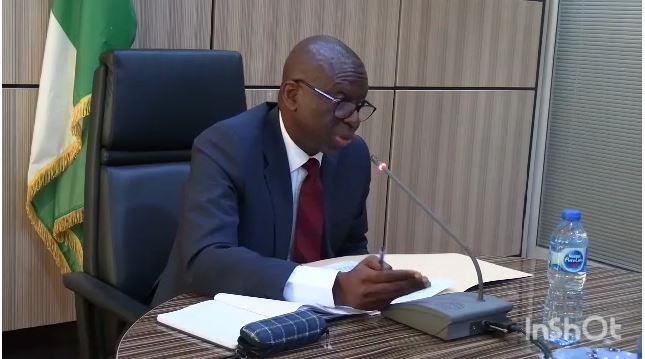
… Kano set to key in.
The Nigeria Social Insurance Trust Fund has explained that the payment of claims and compensations does not alone measure the success of the organization, as the prevention of accidents is the first process in Employees’ Compensation.
Adegoke Adedeji , Executive Director, Finance and Investment NSITF
“ The prevention of accidents through robust occupational safety and health(OSH) programmes is the first step in the processes of the Employees’ Compensation. The payment of claims and compensations is therefore inversely proportional to this.
The Fund offered the explanation through its Executive Director, Finance and Investment, Adegoke Adediji , while receiving members of the Nigeria Council of Registered Insurance Brokers (NCRIB) on behalf of the Managing Director of the NSITF, Maureen Allagoa Esq.
Adedeji who cleared the air over a recent misconception about the mandate of the NSITF in a section of the press, said, the successes of the Fund cannot alone be measured by the amount paid as claims and compensations because effective OSH programmes slow down workplace accidents.
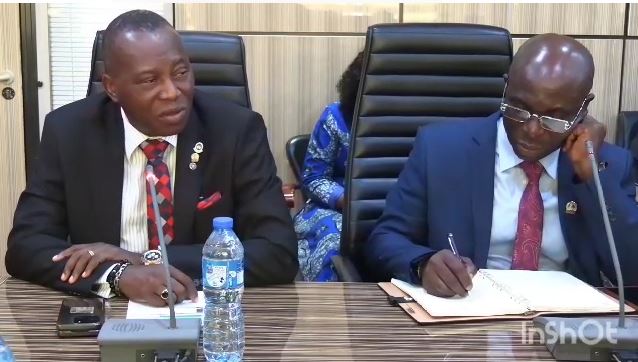
Adegoke Adedeji , Executive Director, Finance and Investment NSITF
“Measuring the progress of the NSITF by the number of claims and compensations paid is a very poor grasp of our mandate and operations. By ECA 2010, occupational safety and health is in inverse proportion to claims and compensations. When the occupational safety and health programmes (OSH) are top notch and producing results, the rate of workplace accidents that trigger claims and compensations declines. When OSH is not active, the reverse becomes the case.
“A well-managed NSITF primarily seeks the reduction of workplace accidents. This is the first step our management takes through a robust pursuit of occupational safety and health programmes. But if accident occurs, we follow up with rehabilitation. Then payment of claims and compensations, where necessary.
“And the NSITF has been discharging all obligations on the payment of compensations to employees and their dependents for death, injury, disability arising out of or in the course of employment. We rehabilitate those who suffer workplace disabilities.
“In fact, we have a case in hand where we’ve paid close to 70 million at N1.3 million every month and another where the Fund pays about 1.5 million every month and will continue paying till the last child is 21 years of age.
“But while we do this, we intensify accident prevention programmes, even collaborating with other agencies and relevant stakeholders to emplace occupational safety and health(OSH) standards in all workplaces enrolled with the Fund. This is the charge of our active OSH department in our 57 branches and 12 regions across the country.”
Adedeji also affirmed that the current management has a clear road map for the future of the Fund, stating that the NSITF is changing with the times in terms of rules and operations. He, however, insisted that the Fund’s tripartite stakeholders are involved in all major administrative decisions, including the recent introduction of fees for fresh registration and for compliance certificates.
He further assured the Council of Registered Insurance Brokers that the NSITF would consider its request for collaboration, adding that both organisations have similar roles in the world of work.
Earlier in his presentation, the President of the NCRIB, Babatunde Ogunlade, commended the Nigeria Social Insurance Trust Fund(NSITF) for expanding the reach of social security services in the country.
While stating that the visit was to seek areas of partnership and collaboration between the NSITF and a vibrant community of registered insurance brokers across the federation, Ogunlade said the two organizations have a common goal of securing the social security and well-being of all Nigerians.
He said, “We must mention that the NSITF has done very well. Your operations are getting noticed, and people are beginning to see the need to comply with you and understand the essence of the Employees’ compensation in the life of workers.”
“What we bring on board is collaboration. We are far reaching. We have over 600 corporate bodies. We have over 15,000 members. We can collaborate and bring more companies, more money. But you propose a certain percentage we can earn by helping to do the work.
“We can bring in an aggregate of 30 to 50,000 small corporates, they don’t have to be limited, everybody suffers the risk of disability once you have an employee, even if it is two-member employee.
“More SMEs are coming up. The large corporates are things of the past, they will continue to dwindle, except in government agencies. The small corporates are coming up. We will collaborate in this area. Bring brokers on board, and we help you straighten the rough edges and bring in more SMEs into the net.”
Also on hand to receive the visitors were the NSITF’s heads of departments, including the General Manager, General Administration and Services, Jonah Nedemaya, who himself has a vast knowledge of the insurance industry.
Meanwhile, the Kano State Government has declared that its zeal and commitment to the welfare of the Kano workforce and citizenry have similar intendments with the Employees’ Compensation Scheme of the NSITF.
The Kano State Head of Civil Service, Alhaji Abdullahi Musa, made the declaration while receiving an advocacy team from the Kano Branch of the NSITF led by Haruna Mohammed. Noting that the ECS would further strengthen a range of social security benefits which Kano extends to her people, Musa assured that the state would key into the scheme as well as make the ECS compliance certificate mandatory for contract bidders.
The Head of Service who received the NSITF team in the company of his Permanent Secretary Establishment, Mohammed Jalo, Permanent Secretary, Salaries and Wages, Ibrahim Boyi and Director Administration and General Services, Umma Dallat further requested a detailed proposition to enable the state government to take a position at the earliest date. Among the NSITF team to the Kano State Secretariat were Idi Audu, Ahmed Suka and Abudrahman Tafida.


Business
TIME Names Moniepoint CTO Felix Ike Among 50 Global Executives of the Year
In its citation, TIME said Ike “has helped to establish the business as one of Africa’s leading financial platforms.


TIME magazine has named Felix Ike, co-founder and Chief Technology Officer of Nigerian fintech Moniepoint, to its inaugural Executives of the Year: Tech and Data list.
Ike is the only executive representing an African company among the 50 leaders selected for the 2026 list.
The list, unveiled on Tuesday, September 22, recognises chief information officers, chief technology officers, chief data officers and chief product officers whose decisions are shaping how major organisations deploy technology and use data.
Moniepoint is also the only African company represented on the inaugural list.
Ike was named alongside executives from Netflix, CrowdStrike, Dell, Duolingo, AT&T, OpenAI, Anthropic, Shopify and Reddit, among others.
In its citation, TIME said Ike “has helped to establish the business as one of Africa’s leading financial platforms.
“The recognition follows Moniepoint’s inclusion in TIME’s 2025 list of the 100 Most Influential Companies, giving the Lagos-founded fintech another global distinction.
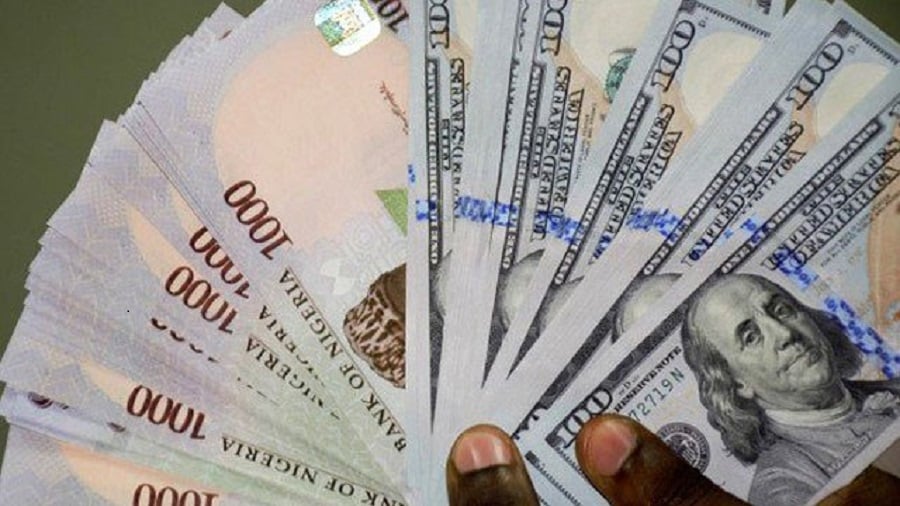
Black Market Rates
₦1382DOLLAR (USD)
₦1855POUND (GBP)
₦1545EURO (EUR)
1000 DOLLAR (CAD)
₦70 RAND (ZAR)
370DIRHAM (AED)
190YUAN (CNY)
₦100G.CEDI (GHS)
₦2350 CFA F.(XOF)
₦2250 CFA F.(XAF)
₦850 AUSSIE (AUD)
Official CBN Exchange Rates
DOLLAR (USD)₦1328.67
POUND (GBP)₦1758.36
EURO (EUR)₦1511.63
SWISS FRANC (CHF)₦1605.45
JAPANESE YEN (JPN)₦8.38
CFA FRANC (XOF)₦2.31
WEST AFRICAN UNIT OF ACCOUNT (WAUA)₦1808.03
CHINESE YUAN (CNY)₦197.92
SAUDI RIYAL (SAR)₦353.86
SOUTH AFRICAN RAND (ZAR)₦81.09
Business
Djibouti, Ethiopia and Dangote to build $660 million petroleum pipeline
In Kenya, Dangote and the government are due to break ground on a new 700,000-barrel-per-day crude oil refinery in Lamu next week.
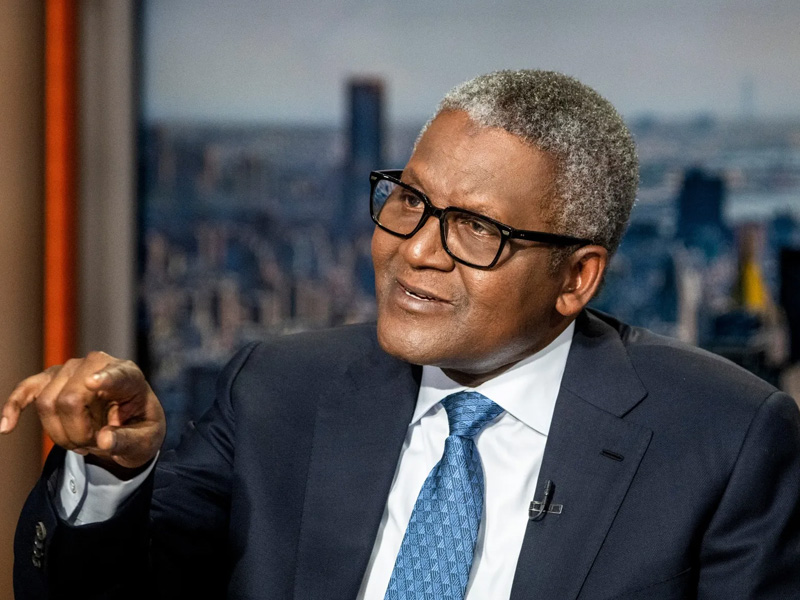
Ethiopia, Djibouti and Nigerian billionaire Aliko Dangote plan to build a $660 million refined petroleum pipeline that will connect Ethiopia and Djibouti, a spokesperson in Ethiopian Prime Minister Abiy Ahmed’s office said on Thursday.
The project will include a 120-km (75-mile) pipeline, as well as approximately 375,000 cubic metres of storage capacity at Damerjog in Djibouti and 800,000 cubic metres at Dewele in Ethiopia, the spokesperson told Reuters, adding it should become operational within 18 months.
Abiy said on his X account the project will be developed through a partnership between Ethiopian Investment Holdings and the Dangote Group, which separately is already building a $4 billion fertiliser pipeline and power plant, and a polypropylene packaging facility, in Ethiopia.
The project aims to reduce logistics costs and delays along the Ethiopia-Djibouti transport corridor, Abiy said.
Developers say the infrastructure will strengthen energy security and improve supply chain resilience for the two countries, he said.
Abiy is on a visit to Djibouti and made the announcement alongside its president, Ismail Omar Guelleh, and Dangote.
In Kenya, Dangote and the government are due to break ground on a new 700,000-barrel-per-day crude oil refinery in Lamu next week.


Congo military plane crash kills 13, including three officers

Manchester City Faces Expulsion For Breaching 114 EPL Financial Rules

TIME Names Moniepoint CTO Felix Ike Among 50 Global Executives of the Year

Tech Expert, Zuckerberg trains with UFC champions, Adesanya, Alexander

Organ Trafficking: Ekweremadu bags 10 years in UK prison

SAINT OBI: Between his marriage and his death
-
 Business3 days ago
FG Engages Stakeholders On Nigeria’s Rice Value Chain
-

 Business3 days ago
Naira To Dollar, Pound , Euro Rate Wednesday September 23
-
 Business3 days ago
Airtel Money Targets October Listing On London Stock Exchange
-
 Business2 days ago
MAN Urges CBN To Consider CRR Cut Next Phase of Monetary Easing
-

 Business3 days ago
Cardoso Says Multiple FX Windows Cost Nigeria 3% of GDP, Higher Than Fuel Subsidy
-
 Crime2 days ago
JUST IN: Zamfara LG Chairman Freed After 61 Days in Captivity
-

 News2 days ago
VP Shettima, Gov Mbah to address Over 500 editors on 2027 election issues
-

 Sports2 days ago
FIFA names Nigerian referee among 81 officials for U-17 World Cup