
Health
Obasanjo to champion Nigeria’s newborns health as 800 die Everyday
Speaking at a press conference in Abeokuta, Ogun State, ahead of the 57th Annual General Meeting and Scientific Conference of the association, Ekure lamented about Nigeria’s worsening child health indicators, warning that vaccine-preventable diseases, malnutrition and rising newborn deaths continue to claim thousands of young lives daily.


Image credit: Meta AI
The Paediatric Association of Nigeria (PAN) says that former President , Chief Olusegun Obasanjo, has accepted to be an advocate for children’s nutrition and healthcare in an efforts to reduce the high deaths rate amongst them.
“More than 800 Nigerian families lose a newborn everyday, despite the fact that most of the deaths are preventable,” said the PAN President, Dr Ekanem Ekure.
Speaking at a press conference in Abeokuta, Ogun State, ahead of the 57th Annual General Meeting and Scientific Conference of the association, Ekure lamented about Nigeria’s worsening child health indicators, warning that vaccine-preventable diseases, malnutrition and rising newborn deaths continue to claim thousands of young lives daily.
While visited former President Olusegun Obasanjo at his residential house in OOPL, the association demanded that he should an advocate for children’s nutrition. A tasked he greatly accepted.
He pledged to be an advocate of child healthcare and utilize his strength even though he doesn’t have children at hand anymore.
Ekure said Nigeria remained off track in achieving Sustainable Development Goal 3 (SDG-3), particularly in the areas of neonatal and under-five survival, describing the situation as a national emergency requiring urgent political, financial and technological intervention.
According to her, about 50 percent of child deaths in Nigeria are worsened by malnutrition, noting that poorly nourished children are far more likely to die from infections than healthy ones.
Ekure blamed vaccine hesitancy, misinformation, poverty, insecurity and weak health financing for Nigeria’s high burden of preventable child deaths, warning that the resurgence of diseases such as measles in some parts of the country mirrored global trends where immunisation rates have fallen.

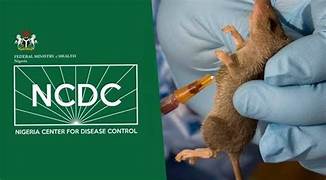
The Nigeria Centre for Disease Control and Prevention (NCDC) has confirmed that Lassa fever has claimed 259 lives and infected 1,086 people across 24 states and 118 local government areas so far in 2026.
In its latest Lassa Fever Situation Report for epidemiological week 36 (August 31 to September 6), the agency said the figures represent a case fatality rate of 23.9 percent — significantly higher than the 18.6 percent recorded during the same period in 2025.
Twelve new confirmed cases were recorded in week 36, a decline from the 18 cases reported the previous week. The fresh infections were detected in Ondo, Edo and Kogi states.
Five states continue to bear the heaviest burden, accounting for 87 percent of all confirmed cases this year: Bauchi, Ondo, Taraba, Benue and Edo. People aged 21 to 30 remain the most affected age group.
The NCDC noted that no new infections among healthcare workers were recorded during the latest reporting week. The agency continues to urge the public to maintain hygiene, avoid contact with rodents and their droppings, and seek early medical care if symptoms appear.
Health
Nigerian hospital successfully performs kidney cancer surgery via tele-robotic
The development could reduce the need for Nigerians to travel abroad for specialised medical treatment, thereby reducing expenditure on international travel, accommodation and medical services.
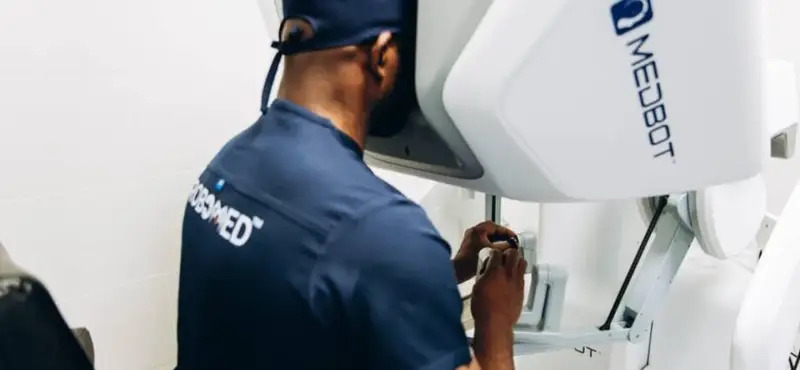
• A surgeon performing tele-robotic surgery.
Nisa Premier Hospital, Abuja, has partnered with RoboMed Global and The Redeemer’s Health Village (RHV) to successfully perform what the hospital described as the first tele-robotic surgery in Nigeria and West Africa.
The landmark kidney cancer surgery was performed on a patient at Nisa Premier Hospital, Abuja, while the surgeon, Professor Obi Ekwenna-Davis, remotely controlled the robotic surgical platform from Redeemer’s Health Village in Lagos.
The procedure, which lasted approximately three hours, was performed to remove a kidney affected by a cancerous tumour.
The hospital said the patient had been discharged following the successful procedure, although details about the patient’s identity and condition were withheld for privacy reasons.
Speaking during an event to mark the milestone, the Chief Executive Officer of Nisa Premier Hospital, Dr Ibrahim Wada, said the development demonstrated the potential of tele-robotic surgery to connect specialist surgical expertise with patients across Nigeria.
Wada said the procedure was carried out using the MicroPort robotic surgical platform installed at Nisa Premier Hospital, with the remote surgeon controlling the system from Lagos.
He said the development could reduce the need for Nigerians to travel abroad for specialised medical treatment, thereby reducing expenditure on international travel, accommodation and medical services.
According to him, the technology also creates an opportunity for Nigerians to access specialised expertise from doctors located in other parts of the world without requiring the doctors to travel physically to Nigeria.
Source: Daily Trust
Health
Ondo ‘Monkey Tail’ herbal drink kills 49
The Commissioner for Health in the State, Dr Banji Ajaka, who disclosed this on Wednesday night, said the number of affected persons has now climbed to 170.

A locally produced herbal concoctions known as ‘Monkey Tail’ in Ondo State has killed 49 people .
The Commissioner for Health in the State, Dr Banji Ajaka, who disclosed this on Wednesday night, said the number of affected persons has now climbed to 170.
He explained that the latest deaths were recorded in Irele Local Government Area of the state, where eight persons have died from suspected poisoning.
Ajaka disclosed that health authorities had deployed response teams to Irele LGA and other affected communities to conduct surveillance, manage cases and trace the source of the suspected toxic substance.


Cardoso Says Multiple FX Windows Cost Nigeria 3% of GDP, Higher Than Fuel Subsidy

Naira To Dollar, Pound , Euro Rate Wednesday September 23

FG Engages Stakeholders On Nigeria’s Rice Value Chain

Tech Expert, Zuckerberg trains with UFC champions, Adesanya, Alexander

Organ Trafficking: Ekweremadu bags 10 years in UK prison

SAINT OBI: Between his marriage and his death
-

 Business1 day ago
Gambia Orders Nigerian Banks To Replace Foreign Staff by December 2026
-

 International24 hours ago
Trump launches ‘Trump TV’ as US networks halt White House coverage
-

 News23 hours ago
Independent Panel Begins Probe into 37 Deaths in Civil Defence Custody
-

 Business2 days ago
CBN, MOF sign pact to align monetary, fiscal policies
-

 Business1 day ago
Dangote Whets Investors Appetite Ahead 2028 Fertiliser IPO
-
 Health1 day ago
Nigerian hospital successfully performs kidney cancer surgery via tele-robotic
-

 Business1 day ago
Naira To Dollar, Pound, Euro…Rate Today, September 22
-

 Sports22 hours ago
Mbappé Leaves Nike To Promote Swiss Sportswear Brand On