
Business
NRC suspends erring staff seen in viral video

The Nigerian Railway Corporation (NRC) has suspended members of staff who were seen in a viral video negotiating with passengers on the Lagos-Ibadan Train Service without obtaining tickets.
On Tuesday, the corporation promised to punish erring members of staff who are bent on tarnishing the image of the state-owned enterprise.
NRC issued this threat on Tuesday via a statement on X (formerly Twitter) following a complaint lodged by Daramola E. Adenike (@Dara4Enjoyment) about its official.
Adenike explained in details how several passengers in one of the coaches did not obtain tickets, but the NRC officials collected cash from them.
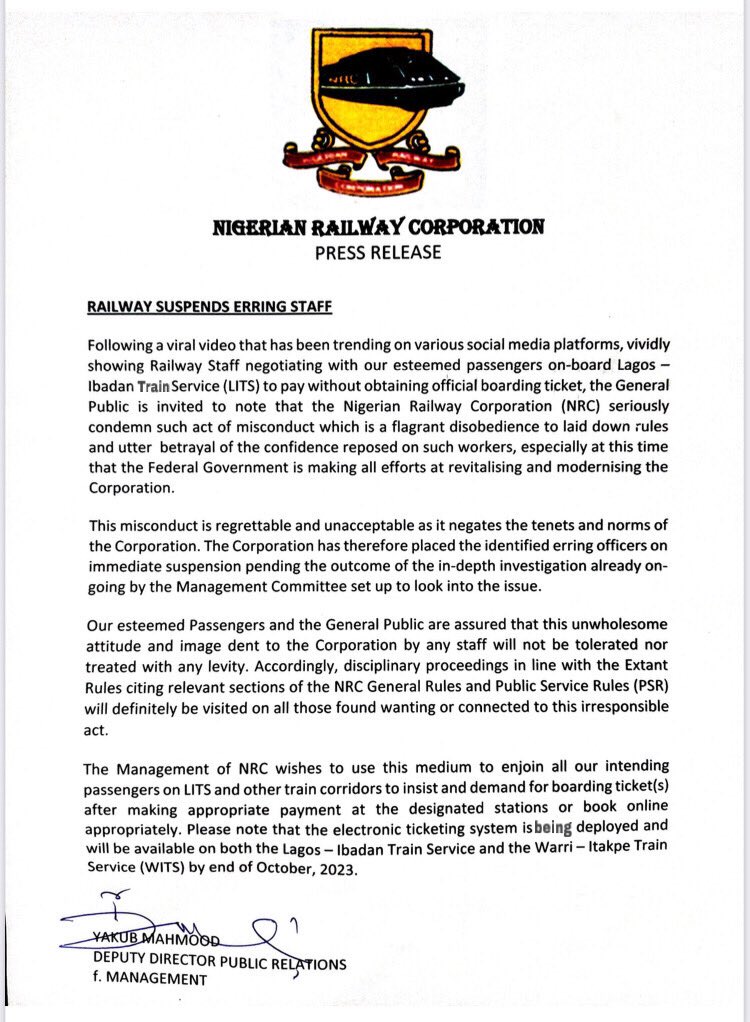
On Wednesday, the management of NRC swung into action by suspending the erring staff in the viral video through a statement signed by spokesman Yakub Mahmood.
“Following a viral video that has been trending on various social media platforms vividly showing Railway Staff negotiating with our esteemed passengers on-board Lagos-Ibadan Train Service (LITS) to pay without obtaining official boarding tickets, the general public is invited to note that the NRC seriously condemns such acts of misconduct, which is a flagrant disobedience to laid down rules and utter betrayal of the confidence reposed on such workers, especially at this time that the Federal Government is making all efforts to revitalizing and modernizing the Corporation,” Mahmood said.
“This misconduct is regrettable and unacceptable as it negates the tenets and norms of the corporation.
“The Corporation has therefore placed the identified erring officers on immediate suspension pending the outcome of the in-depth investigation already ongoing by the Management Committee set up to look into the issue.
“Our esteemed passengers and the general public are assured that this unwholesome attitude and image dent to the Corporation by any staff will not be tolerated nor treated with any levity.
“Accordingly, disciplinary proceedings in line with the extant rules citing relevant sections of the NRC General Rules and Public Service Rules (PSR) will definitely be visited on all those found wanting or connected to this irresponsible act.”
The Management of the NRC also used this medium to enjoin all its intending passengers on LITS and other train corridors to insist on and demand for boarding tickets after making appropriate payments at the designated stations or book online appropriately.
Mahmood also called on the public to please note that the electronic ticketing system is being deployed and will be available on both the Lagos-Ibadan Train Service and the Warri-Itakpe Train Service (WITS) by the end of October 2023.
Business
Dangote Refinery’s IPO Ends Tomorrow
“The level of investor interest reflects growing confidence in our business and in the strong financial results we have delivered,” the company said.

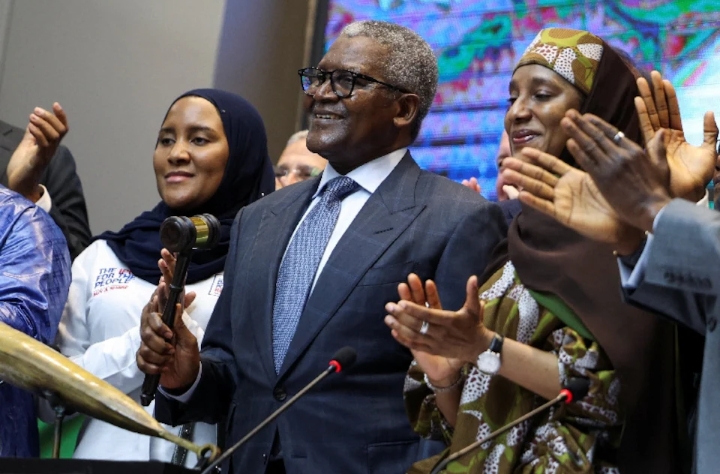
[File photo] Opening ceremony of Dangote Refinery’s IPO on the NGX, September 14,2026
Dangote Petroleum Refinery & Petrochemicals has confirmed that its Initial Public Offering (IPO) will close on Tuesday, 27 October 2026 as scheduled, with no extension.
In a statement, the management said that the IPO has become a historic ownership moment, an opportunity for Africans at home and abroad to own a stake in one of the continent’s most strategic industrial assets.
“Investors recognise that this refinery is not merely an energy asset. It is a platform for industrial growth, foreign-exchange generation, regional trade, energy security and economic development across Africa,” management said.
The offer was structured to ensure ordinary investors participate alongside institutions, broadening ownership of the world-class asset.
“The level of investor interest reflects growing confidence in our business and in the strong financial results we have delivered,” the company said.
Business
Dangote Visit London Stock Exchange Ahead of November Cement Listing
Unlike an initial public offering, a secondary listing would let Dangote Cement, already listed on the Nigerian Exchange, set up an additional presence in London.
Aliko Dangote visited the London Stock Exchange on Friday, October 23, 2026, as Dangote Cement Plc prepares a proposed $1 billion share sale and a secondary listing in the United Kingdom.
The company is reportedly targeting November 2026 for the listing, subject to market conditions and regulatory approval.
A video circulating on social media captured the visit, with exchange officials and attendees welcoming Africa’s richest man.
The trip is part of efforts to pull international investment into his business empire.
The proposed deal could see Dangote Cement offer about 10% of its equity to international investors, potentially raising roughly $1 billion.
The final timetable is not fixed and remains subject to market conditions and regulatory requirements.
Unlike an initial public offering, a secondary listing would let Dangote Cement, already listed on the Nigerian Exchange, set up an additional presence in London.
That could raise the company’s visibility with international institutional investors, including pension funds, asset managers and other investment firms.
The share sale has not been completed. Its final structure, valuation and pricing are still subject to confirmation.
Business
Olagunju to head JPMorgan’s Proposed Nigerian Merchant Bank
The proposed bank would expand JPMorgan’s presence beyond its representative office in Lagos. It could undertake a broader range of regulated banking activities after securing a final licence.

The Central Bank of Nigeria has granted JPMorgan approval-in-principle to establish a merchant bank in Nigeria.
The regulator also approved Adedapo Adedayo Olagunju as Managing Director of the proposed JPMorgan Merchant Bank Nigeria Limited.
The approval came on Friday, October 23, 2026. The bank has not received its final operating licence.
Olagunju has led JPMorgan’s West African operations since 2018.
He is an Oxford-trained banker with more than two decades of experience in treasury management, financial markets, institutional banking and structured finance.
His appointment puts him in line to head the American bank’s proposed Nigerian merchant bank once final licensing is completed.
The CBN also approved four non-executive directors and three independent non-executive directors for the proposed institution.
The proposed bank would expand JPMorgan’s presence beyond its representative office in Lagos. It could undertake a broader range of regulated banking activities after securing a final licence.


Nigeria’s First Imported Ebola Patient Moved to Switzerland

Dangote Refinery’s IPO Ends Tomorrow

Ebola: Nigeria Sends Back Swiss Woman Via Medivac Plane

BREAKING: Lagos Govt Declares Today, Thursday Work-Free to Mark 2026 Ìṣẹ̀ṣe Day

Tech Expert, Zuckerberg trains with UFC champions, Adesanya, Alexander

Organ Trafficking: Ekweremadu bags 10 years in UK prison
-

 Politics2 days ago
2027 presidential election: Tinubu’s Northern test begins today
-

 News12 hours ago
BREAKING: Former Arise News Anchor, Constance Ikokwu Appointed NDC National Campaign Council Spokesperson
-

 Health2 days ago
Ebola patient in Abuja showing signs of recovery – FG
-

 Business12 hours ago
Naira To Dollar, Pound, Euro…Rate Monday, October 26
-
 Business11 hours ago
Dangote Visit London Stock Exchange Ahead of November Cement Listing
-
 Health23 hours ago
EBOLA: Lagos Heightens Watch at Airports After Abuja Case
-
 Business22 hours ago
History of Naira Revaluation and Devaluation (1973–2026) (Part 2)
-
News12 hours ago
Sanwo-Olu: Opebi-Ojota Link Bridge Will Open Before Christmas