
Business
Nigeria Emits 57 million Tons of Plastic Waste To Ocean – Deloitte

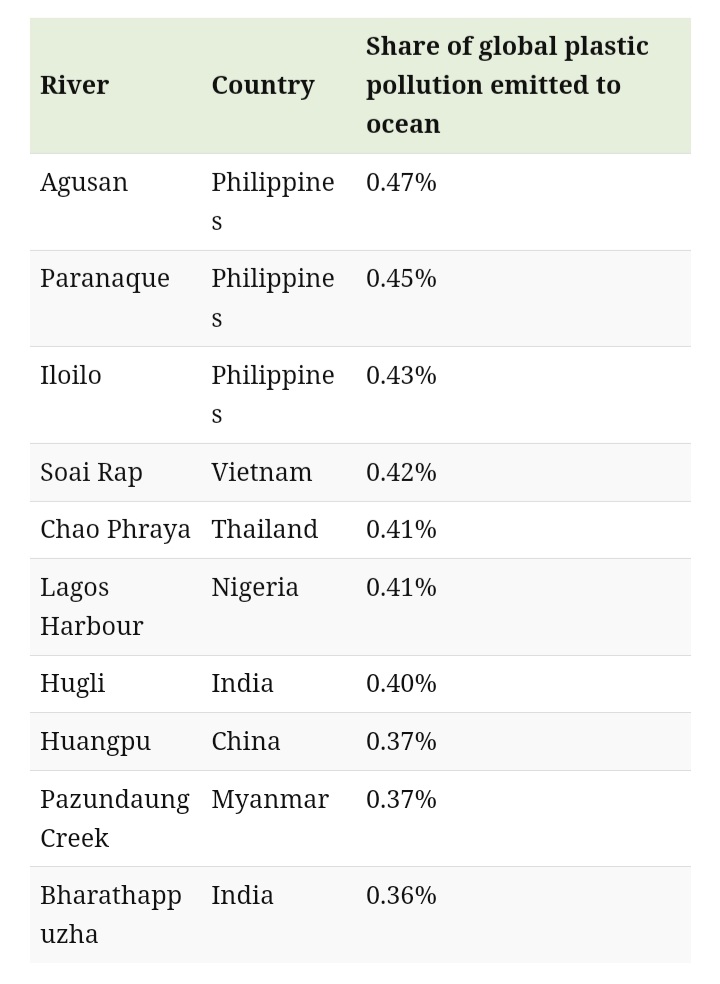
OUT of a combined 139 million tons of plastic pollution in the world’s oceans, Nigeria emmited 0.41 percent ( 56.9 million), through the Lagos Harbour.
This is even as 170 countries recently agreed to have a first draft of a global plastics treaty ready by November 2023.
Deloitte for The Ocean Cleanup, disclosed this in a plastic pollution study that profiles 87 countries.
” There is now a combined 139 million tons of plastic pollution in the world’s oceans, seas, and rivers, including the world’s number one most littered item: single-use cigarette filters,” said the report.
In the country by country reports, Nigeria’s share of global plastic pollution emitted to the ocean is estimated at 0.41 percent (or 56.9 million).
Philippines account for 0.47 percent; India 0.46 percent; Vietnam 0.36 percent; China 0.37 percent and Myanmar 0.37 percent.
The report, further notes that every year, plastic pollution costs coastal countries between $6.0 and $19.2 billion.
“If you take the UK, for example, the direct costs borne by the government were between $7.1 and $31.7 million, but the report estimated the total costs to be between $29.6 and $266.2 million,” it said.
The direct costs of cleaning coastlines, waterways, marinas, and ports make up the lion’s share, between $5.6 and $15.0 billion in government expenditures.
But clean-up costs aren’t the only impact. Polluted beaches and stranded debris also have an impact on tourism, estimated to be between $237.8 million and $2.4 billion.
And while the harm to marine ecosystems can’t be overstated, the cost to fisheries and aquaculture, and the communities that depend on them, is real. It adds up to between $114.4 million and $1.9 billion annually.




Business
Exchange Rates Today Friday, 12 June
Black Market Rates
US Dollar (USD) ₦1,397
Great British Pound (GBP) ₦1,850

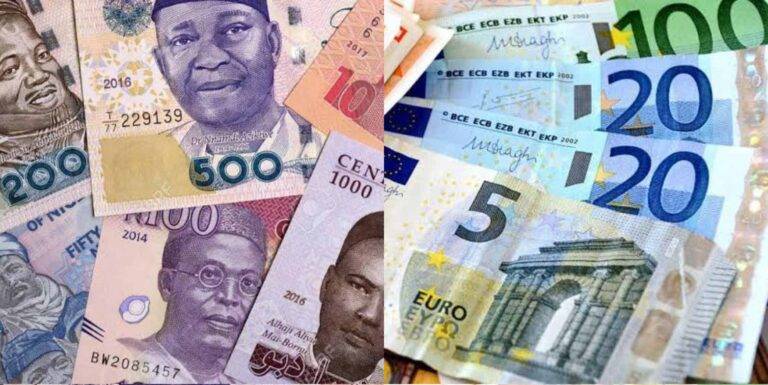
Official CBN Exchange Rates
US Dollar (USD) ₦1,363. 83
Great British Pound (GBP) ₦1,821. 25
EURO (EUR) ₦1,572. 90
SWISS FRANC (CHF) ₦1,706. 49
JAPANESE YEN (JPN) ₦8.50
CHINESE YUAN (CNY) ₦201.20
West African CFA (XOF) ₦2.40
West African Unit Account (WAUA) ₦1,857. 45
SAUDI RIYAL (SAR) ₦363. 29
SOUTH AFRICAN RAND (ZAR) ₦82.61
Black Market Rates
US Dollar (USD) Buy ₦1,397 Sell ₦1,405
Great British Pound (GBP) Buy ₦1,850 Sell: ₦1,870
EURO (EUR) Buy ₦1,587 Sell ₦1, 607
Canadian Dollar (CAD) Buy ₦1,030 Sell ₦1,100
South African Rand (ZAR) Buy ₦75 Sell ₦90
UAE Dirham Buy ₦350 Sell ₦370
Chinese Yuan Buy ₦180 Sell ₦200
Ghana Cedi (GHS) Buy ₦95 Sell ₦110
West African CFA Buy ₦2, 380 Sell ₦2, 460
Central African CFA Buy ₦2, 220 Sell 2,300
Australian Dollar Buy ₦800 Sell ₦900
Business
Airtel launches data calculator to counter depletion complaints
Commenting on the significance of the launch, Dinesh Balsingh, Chief Executive Officer, Airtel Nigeria, said that the company remains focused on building a network and customer experience ecosystem anchored on trust, transparency and continuous improvement.

Airtel Nigeria has launched the Airtel Web Data Calculator, a new digital tool designed to help customers estimate and better understand their internet data consumption based on real-life usage patterns.
Available through Airtel’s website, the calculator enables customers to estimate data usage across common digital activities such as video streaming, social media engagement, voice and video calls, and everyday web browsing.
Speaking on the launch, Oladokun Oye, Customer Experience Director, Airtel Nigeria, said that the initiative reflects Airtel’s commitment to customer empowerment and service transparency.
“As Nigerians become increasingly dependent on digital services for work, education, entertainment and communication, it is important that customers have clear visibility into how their data is consumed.
The Airtel Web Data Calculator was developed to help our customers understand their usage patterns better, make informed choices, and enjoy greater confidence in their digital experience,” he said.
Commenting on the significance of the launch, Dinesh Balsingh, Chief Executive Officer, Airtel Nigeria, said the company remains focused on building a network and customer experience ecosystem anchored on trust, transparency and continuous improvement.
“The future of telecommunications will be defined not only by network investments but also by how effectively operators help customers understand and manage their digital lives. The Airtel Web Data Calculator represents a practical innovation that places more information and control directly in the hands of our customers.” He said.
Business
Kingsley Moghalu chairs Bluecode Africa subsidiary in Nigeria
Moghalu served as Deputy Governor of the Central Bank of Nigeria from 2009 to 2014, heading the Financial System Stability and Operations Directorates at different periods.
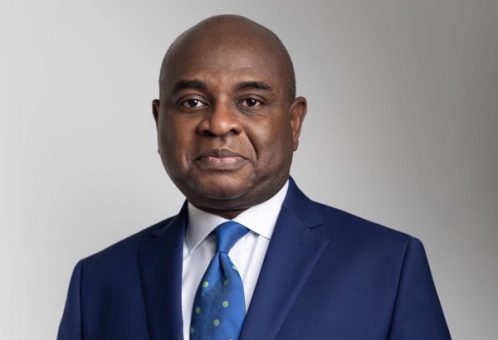
Bluecode Africa, the European payments infrastructure operator backed by leading US and European institutional investors, has named Prof Kingsley Chiedu Moghalu as Chairman of the Advisory Board of its Nigerian subsidiary, Bluecode Payments Nigeria Limited as the company formally enters the Nigerian market.
The appointment was jointly announced by Chris Pirkner, Founder of Bluecode, and Odin Krismayr, Managing Director of Bluecode Africa, who described it as a foundational governance decision for the company’s Nigerian and continental operations.
Moghalu served as Deputy Governor of the Central Bank of Nigeria from 2009 to 2014, heading the Financial System Stability and Operations Directorates at different periods.
He led the team that introduced the unique-identifier Bank Verification Number (BVN), enrolling 50 million banking users, simplifying Know Your Customer (KYC) procedures, and doubled Nigeria’s financial inclusion rate from 33 to 60 per cent.


FIFA World Cup Day 2: Canada holds 1-1 Bosnia-Herzegovina

Democracy Still Struggling 33 Years After June 12, PDP Laments by Comrade Ini Ememobong

JUNE 12: President Bola Ahmed Tinubu’s Democracy Day Address (Full Speech)

Tech Expert, Zuckerberg trains with UFC champions, Adesanya, Alexander

Organ Trafficking: Ekweremadu bags 10 years in UK prison

SAINT OBI: Between his marriage and his death
-
 Business3 days ago
UBA wins 2026 ‘Banker Technology’ award for AI innovation
-
 Business2 days ago
Exchange Rates Thursday,11June 2026
-
 Sports3 days ago
Olympic qualifier: Comoros to face Super Falcons following 30-0 victory over Sudan
-
 Business3 days ago
Invest in Lagos 3.0 Summit Attracts more than 600 delegates
-
 News2 days ago
JUST IN: Nigerians evacuated from South Africa arrives Lagos
-
 Health3 days ago
Ebola: President Tinubu approves N10bn to strengthen NCDC preparedness
-
 Politics3 days ago
Bamidele tasks 11th Senate to consider single term for President, govs
-

 News2 days ago
NLC President Joe Ajaero wins Arthur Svensson International award for worker’s rights