
International
Niger Generals Vow To Prosecute Ousted President For ‘High Treason’


Niger’s military regime vowed late Sunday to prosecute ousted President Mohamed Bazoum for “high treason” and slammed West African leaders for imposing sanctions on the country.
The Economic Community of West African States (ECOWAS) imposed sanctions on Niger in response to the coup and has not ruled out using force against the army officers who toppled the democratically elected Bazoum on July 26.
The West African bloc has approved the deployment of a “standby force to restore constitutional order” in Niger as soon as possible but remains committed to finding a diplomatic solution to the crisis.
Niger’s military leaders said they would prosecute Bazoum “for high treason and undermining the internal and external security of Niger”, according to a statement read out by Colonel-Major Amadou Abdramane on national television.
Bazoum, 63, and his family have been held at the president’s official Niamey residence since the coup, with international concern mounting over his conditions in detention.
A member of his entourage said he saw his doctor on Saturday.
“After this visit, the doctor raised no problems regarding the state of health of the deposed president and members of his family,” the military said.
They also said sanctions imposed on Niger had made it difficult for people to access medicines, food and electricity, and were “illegal, inhumane and humiliating”.
– ‘Open to diplomacy’ –
The comments came just hours after religious mediators met with coup leader General Abdourahamane Tiani, who indicated his regime was open to a diplomatic breakthrough.
Tiani “said their doors were open to explore diplomacy and peace in resolving the matter”, said Sheikh Bala Lau, a day after his Nigerian Muslim delegation held talks in the capital Niamey.
Tiani “claimed the coup was well intended” and that the plotters “struck to stave off an imminent threat that would have affected” Nigeria as well as Niger, according to Lau’s statement.
But Tiani said it was “painful” that ECOWAS had issued an ultimatum to restore Bazoum without hearing “their side of the matter”, the statement added.
The Muslim leaders visited Niamey with the blessing of Nigerian President Bola Tinubu, who is also head of ECOWAS.
Tinubu has adopted a firm stance against the coup, the sixth to hit an ECOWAS member state since 2020.
The bloc has severed financial transactions and electricity supplies and closed borders with landlocked Niger, blocking much-needed imports to one of the world’s poorest countries.
On July 30, it issued a seven-day ultimatum to restore Bazoum or face the potential use of force, but the deadline expired without the new rulers backing down.
The bloc scrapped a Saturday crisis meeting on the coup due to be held in Ghana’s capital Accra for “technical reasons”.
Demonstrations in favour of the new military rulers have become a common sight in Niamey.
Thousands of people attended concerts on Sunday at the Seyni Kountche Stadium in support of the National Council for the Safeguard of the Homeland (CNSP), the generals who have taken power. The crowd, mainly made up of young people, brandished the flags of Niger as well as those of Burkina Faso, Mali and Russia.
The prospect of a military intervention to reinstate Bazoum has divided ECOWAS members and drawn warnings from foreign powers including Russia and Algeria.
Niger’s neighbours Mali and Burkina Faso, also ruled by military governments who seized power in coups, have said an intervention would be tantamount to a declaration of war on them.
AFP


International
Brazil’s Lula Wins Fourth Term In Presidential Runoff
Flávio Bolsonaro rejected the runoff result, describing it as “inexplicable” and calling for the election to be annulled.


Brazil’s left-wing President Luiz Inácio Lula da Silva has won a fourth term in office after defeating right-wing challenger Flávio Bolsonaro in a closely fought presidential runoff.
The 80-year-old secured just under 52 per cent of the vote, overturning Bolsonaro’s first-round lead in a surprise victory that runs against a wider shift towards right-wing leadership across Latin America.
Addressing cheering supporters in São Paulo, Lula thanked voters for what he described as their defence of Brazilian democracy.
The victory follows a bitter election campaign between the veteran left-wing leader and Bolsonaro, whose father, former President Jair Bolsonaro, is serving a prison sentence under house arrest for plotting a coup after losing the previous presidential election.
Flávio Bolsonaro rejected the runoff result, describing it as “inexplicable” and calling for the election to be annulled.

Four Philippine Air Force pilots died Friday after two SF-260 trainer aircraft collided mid-air during a training flight and crashed at Fernando Air Base in Lipa City, Batangas, south of Manila, the air force confirmed Saturday.
The accident occurred at about 3:51 p.m. local time on October 23, 2026. Both single-propeller planes went down within the base perimeter. No other casualties were reported on the ground.
Philippine Air Force spokesman Colonel Alvin Capinguian (also referred to as Alvin Jay Capinguian) said the aircraft were involved in a training flight. Officials with knowledge of the incident, speaking anonymously, and local reports confirmed the planes collided while flying at low altitude. Some accounts noted they were part of a larger formation or flyby rehearsal, with other aircraft landing safely.
The air force described it as an “aviation accident” and said an investigation is underway to determine the cause. As a precaution, the entire fleet of SF-260 aircraft has been temporarily grounded. The air force is coordinating assistance with the families of the deceased and asked the public to respect their privacy. One of the pilots was later identified in some reports as 1st Lt. Angeleo Adrian Peñaflor.
The SF-260 is a light Italian-designed trainer used by the Philippine Air Force. The incident is the latest fatal crash involving the type; two pilots were killed in a similar SF-260 training accident in Benguet province in May.
International
“Mother of all bombs,” Trump Plans To Hit Iran
The 21,600-pound airburst weapon is designed to affect surface targets over a wide area and has so far not been deployed by the U.S. in previous strikes on targets inside Iran. It was used in Afghanistan in 2017 during the previous Trump administration.
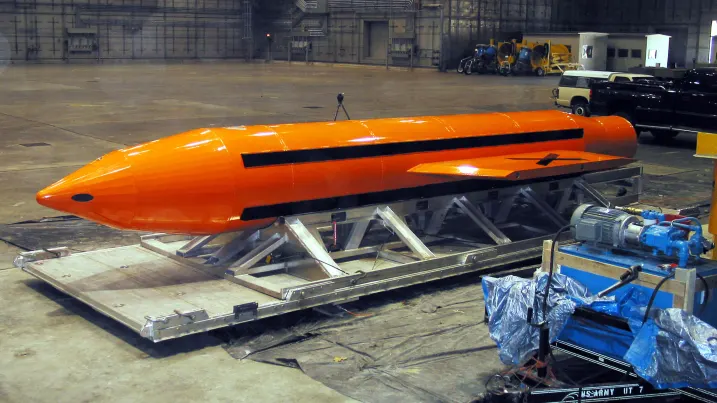
The U.S. military is considering use of the GBU-43/B Massive Ordnance Air Blast (MOAB) bomb if it resumes strikes inside Iran, CNN reported Thursday, citing U.S. officials.
The 21,600-pound airburst weapon is designed to affect surface targets over a wide area and has so far not been deployed by the U.S. in previous strikes on targets inside Iran. It was used in Afghanistan in 2017 during the previous Trump administration.
Trump said Oct. 8 that he would not resume U.S. strikes on Iran before the Nov. 3 midterm elections, while attacks on shipping near the Strait of Hormuz and deadly Houthi strikes in Saudi Arabia have raised regional tensions.
Iranian Parliament Speaker Mohammad Bagher Ghalibaf said Tehran will combine military capabilities and negotiations to press its demands.


Nigeria’s First Imported Ebola Patient Moved to Switzerland

Dangote Refinery’s IPO Ends Tomorrow

Ebola: Nigeria Sends Back Swiss Woman Via Medivac Plane

BREAKING: Lagos Govt Declares Today, Thursday Work-Free to Mark 2026 Ìṣẹ̀ṣe Day

Tech Expert, Zuckerberg trains with UFC champions, Adesanya, Alexander

Organ Trafficking: Ekweremadu bags 10 years in UK prison
-

 News1 day ago
BREAKING: Former Arise News Anchor, Constance Ikokwu Appointed NDC National Campaign Council Spokesperson
-
 Business1 day ago
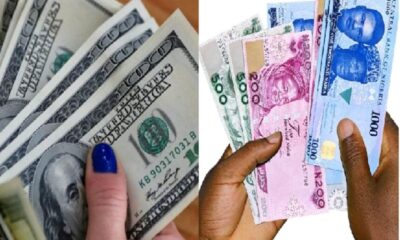
Naira To Dollar, Pound, Euro…Rate Monday, October 26
-
 Business1 day ago
Dangote Visit London Stock Exchange Ahead of November Cement Listing
-
 Health2 days ago
EBOLA: Lagos Heightens Watch at Airports After Abuja Case
-

 International3 days ago
JUST IN: Four Pilots Die After Mid-Air Collision of Military Planes in Philippine
-
 Business2 days ago
History of Naira Revaluation and Devaluation (1973–2026) (Part 2)
-
News1 day ago
Sanwo-Olu: Opebi-Ojota Link Bridge Will Open Before Christmas
-
 Business1 day ago
Olagunju to head JPMorgan’s Proposed Nigerian Merchant Bank