
News
NECA Urges Immediate Halt to NAFDAC’s Renewed Enforcement of Sachet Alcohol Ban

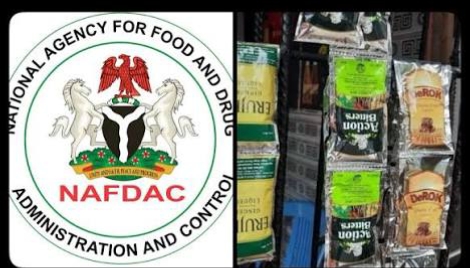
The Nigeria Employers’ Consultative Association (NECA) has strongly criticized the National Agency for Food and Drug Administration and Control (NAFDAC) for resuming enforcement of the ban on the production and sale of alcoholic beverages in sachets and small PET bottles, calling it a “serious regulatory misstep” that threatens jobs, investments, and Nigeria’s regulatory credibility.
In a statement signed by NECA Director General Wale-Smatt Oyerinde, the employers’ body highlighted that the ongoing crackdown contradicts a December 15, 2025, directive from the Office of the Secretary to the Government of the Federation (SGF) suspending all enforcement actions pending further consultations.
It also disregards a March 14, 2024, resolution by the House of Representatives urging restraint and inclusive stakeholder engagement.
NECA emphasized that the enforcement is already disrupting legitimate businesses, jeopardizing thousands of jobs across the wines and spirits value chain—including manufacturing, packaging, distribution, retail, and agriculture—and eroding investor confidence amid economic challenges such as high operating costs and currency pressures.
While affirming strong support for protecting minors, removing unsafe products, and advancing public health, NECA argued that the current blanket approach is flawed.
It disproportionately affects compliant, NAFDAC-registered manufacturers whose products underwent rigorous testing, registration, and revalidation processes. These products comply with international alcohol-by-volume (ABV) standards for spirits, with clear labeling and warnings restricting consumption to adults over 18.
Oyerinde stressed that underage access stems from enforcement gaps at the retail level—such as weak age verification and monitoring—rather than packaging formats. He advocated for smarter, evidence-based measures, including stricter retailer licensing, compliance checks, public education on responsible drinking, and intensified crackdowns on illicit narcotics and unregistered substances, which pose greater dangers to youth.
The statement noted that sachet and small-pack formats address affordability for low-income adult consumers in Nigeria’s economy, where daily small purchases are common.
Banning them risks shifting demand to unregulated, informal alternatives, potentially worsening public health risks while shrinking the formal economy and government revenue.
NECA also addressed environmental concerns over plastic waste, suggesting they be tackled through broader waste management, recycling, and extended producer responsibility policies across industries, rather than selective product bans that conflate environmental issues with product safety.
The association rejected any notion of opposing regulation, instead calling for science-driven, proportionate, and rule-of-law-based policies. It demanded an immediate suspension of enforcement in line with the SGF’s directive and a return to structured dialogue involving regulators, industry, public health experts, and consumers to develop balanced solutions.
“Nigeria deserves regulation that safeguards public health while preserving livelihoods, investment, and respect for due process,” Oyerinde concluded.
“Policies ignoring science, economic realities, and regulatory coherence risk causing more harm than good.
“NECA, established in 1957, serves as the umbrella body for organized private-sector employers in Nigeria, advocating for policies that foster a harmonious business environment, productivity, and prosperity.




News
200 Kaduna varsity lecturers resign over poor condition of service
Most of the lecturers who left the institution secured appointments in newer universities within and outside Kaduna State.


The Academic Staff Union of Universities (ASUU) has raised concern over the departure of more than 200 lecturers of Kaduna State University, (KASU).
Chairman of ASUU-KASU, Dr Abubakar Abdullahi, disclosed this at a press conference on Monday in Kaduna, lamenting that lecturers, including professors, left the institution due to poor conditions of service and non-implementation of the 2025 Federal Government- ASUU Agreement.
Abdullahi said that most of the lecturers who left the institution secured appointments in newer universities within and outside Kaduna State.
Consequently, the Union has issued a two-week ultimatum to the Kaduna State Government and university authorities to implement and domesticate the agreement.
The union warned that failure to act within the period could result in a total and indefinite strike at the university.
News
Edo House of Assembly Elect New Speaker Idiaye, Hints Why Agbebaku Resign
“Once the leadership is poor, it will drag the work of the governor backwards. So we decided to say no.”

•The new Speaker of the Edo House of Assembly, Mr Yekini Idiaye
The Edo House of Assembly has sworn in a newly elected Speaker , Yekini Idiaye, following the resignation of the former speaker, Blessing Agbebaku.
Speaking in an interview after his swearing-in ceremony in Benin, Idiaye pledged the full cooperation of the house to the state executive, describing Governor Monday Okpebholo as a performing leader who deserved legislative backings.
“He is doing a lot for the people of Edo, so we have to cooperate with him to move the state forward,” he added.
Fielding question on the exit of the former speaker, Idiaye cited the challenges of corruption and poor leadership.
Idiaye said: ” There’s corruption here and there. Every now and then it is adjournment — we resume tomorrow, adjournment for another 30 days, 20 days — and we were all not too happy with this leadership style.”
The new speaker pointed out that a weak legislature directly affected the executive, adding that the house had to act to protect the governor’s performance.
“Once the leadership is poor, it will drag the work of the governor backwards. So we decided to say no.”
News
Defence Headquarters say X Account Compromised
The Director of Defence Information, Major General Samaila Uba, disclosed this in a statement, describing the incident as a cybersecurity matter.

The Defence Headquarters (DHQ) has issued a notification to the public, media representatives, and relevant stakeholders regarding the compromise of its official account on X (formerly known as Twitter).
The Director of Defence Information, Major General Samaila Uba, disclosed this in a statement, describing the incident as a cybersecurity matter.
He said “appropriate technical measures had been activated to secure the account and prevent further unauthorised access.”
Uba assured the public that efforts were ongoing to fully restore control of the account, while advising members of the public to disregard any suspicious, unauthorised or misleading content posted from the account during the period.


Bayelsa Assembly Approves Removal Of Sagbama Council Chairman, Vice

Trump Annex Strait of Hormuz “New US Territory”

2Baba’s wife Natasha emerges Edo Assembly Minority Leader

Tech Expert, Zuckerberg trains with UFC champions, Adesanya, Alexander

Organ Trafficking: Ekweremadu bags 10 years in UK prison

SAINT OBI: Between his marriage and his death
-

 Politics2 days ago
Kebbi Governor picks new running mate , Ibrahim Augie
-

 Politics2 days ago
Osun poll: ADC’s Salaam, Tambuwal Hail Adeleke for Second Term Win
-

 Sports1 day ago
Cameroon Win First WAFCON Cup Title
-

 Politics1 day ago
BREAKING: Edo Assembly Speaker Agbebaku Resigns
-

 News1 day ago
Edo Assembly Speaker Agbebaku Resigns Amid Impeachment Plot (Video)
-
Politics3 days ago
BREAKING: INEC declares Adeleke winner of Osun gov poll
-

 Entertainment2 days ago
US Actress Hayden Panettiere Dies At 36
-

 Business2 days ago
Naira Exchange Rates Monday,17 August