
International
Navalny’s Moscow Funeral Takes Place Under Shadow Of Repression

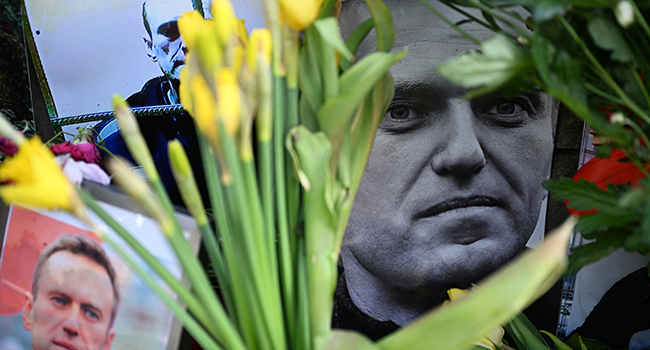
The funeral of late Russian opposition leader Alexei Navalny is scheduled to be held in Moscow on Friday, with mourners braving the risk of arrest to come and pay their respects.
The ceremony will take place two weeks after Navalny died in an Arctic prison, amid pressures denounced by his team who accuse Russian President Vladimir Putin of murdering his top critic.
Putin, who famously never said Navalny’s name in public, has not commented on the death, which sparked outrage among Western leaders and the Russian opposition.
The religious service will be held at the Mother of God Quench My Sorrows church in Maryino at 2:00 pm (1100 GMT) on the outskirts of Moscow.
In line with Orthodox practices, the body of Navalny — who had embraced Christianity — will be displayed in an open casket.
Two hours later, the burial is set to take place at the Borisovo cemetery, a short walk from the banks of the river Moskva.
Details of the funeral and how many mourners will be allowed to attend are still unclear.
Authorities have not commented on how they will handle the event, which could turn into an embarrassing show of support for Navalny.
Around a dozen police officers already patrolled the cemetery on the eve of the burial, which supporters fear may be disturbed by the Kremlin.
Hopes for peaceful ceremony
They have reasons for concern: 400 mourners have been detained at memorials for Navalny since his death, rights organisation OVD-Info said.
The dissident’s widow, Yulia Navalnaya, feared the funeral could be disrupted by further arrests.
“I’m not sure yet whether it will be peaceful or whether the police will arrest those who have come to say goodbye to my husband,” Navalnaya told the European Parliament.
She has directly blamed Putin for his death.
Putin’s spokesman, Dmitry Peskov, has criticised statements by Navalny’s wife and Western leaders blaming the Russian leader for the death as “vulgar”.
Navalny had shot to prominence through his anti-corruption campaigning, exposing what he said was rampant graft at the top of Putin’s administration.
He was arrested in January 2021 when he returned to Russia after being treated in Germany for a poisoning attack.
“Alexei was tortured for three years,” Navalnaya told lawmakers in Brussels.
“He was starved in a tiny stone cell, cut off from the outside world and denied visits, phone calls, and then even letters.”
“And then they killed him. Even after that, they abused his body,” she said.
‘Chance to say goodbye’
His body was held for eight days, which his team believed to be a bid to cover up responsibility for his death.
Navalny’s family and his team have also accused authorities of trying to prevent him from having a dignified public burial due to fears it could turn into a flashpoint for dissent.
The team alleged local investigators had threatened to bury him on the prison grounds if his mother did not agree to a “secret” funeral.
Once the body was released, allies struggled to find a funeral place that would agree to hold the ceremony.
And on Thursday they said hearse drivers were refusing to take the body from the morgue.
“What a disgrace. Now the hearse drivers refuse to take Alexei from the morgue,” said Ivan Zhdanov, an exiled ally who managed Navalny’s Anti-Corruption Foundation.
Navalny’s spokeswoman Kira Yarmysh said funeral directors had received threatening calls from “unknown people” warning them not to transport Navalny’s body anywhere.
And a civil ceremony allowing the general public to pay their respects to the body — common in Russia — has not been allowed.
Navalnaya said the family “did not want a special treatment — just to give people the chance to say goodbye”.
She has vowed to continue his life’s work.
“The most important thing we can do for Alexei and for ourselves is to continue to fight more desperately, more fiercely than before,” she said.
AFP
International
How Passengers Overpowered Flydubai Co-Pilot After Stabbing Pilot, To Crash Plane
Netanyahu praised the passengers and crew members who intervened as “heroes” and said he had directed Israel’s security establishment to prepare for possible additional threats.

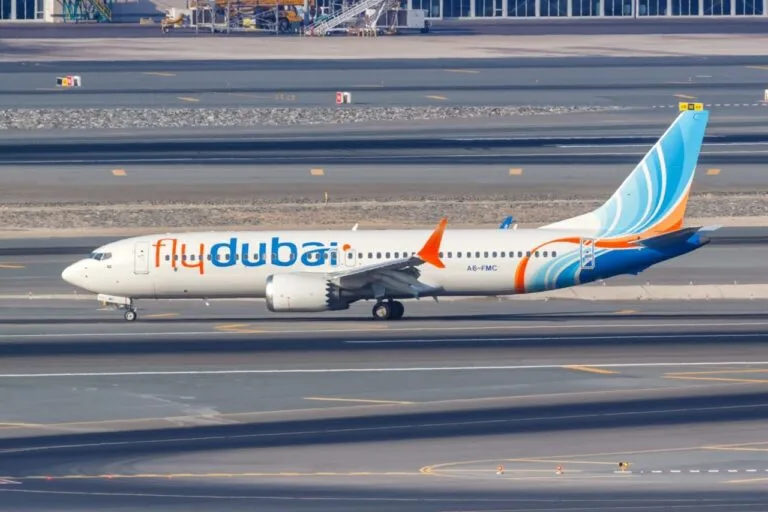
Israeli Prime Minister Benjamin Netanyahu has said the co-pilot of a Flydubai plane that made an emergency landing in Saudi Arabia on Wednesday stabbed the pilot and apparently tried to crash the aircraft.
Netanyahu made the claim in a video statement from his office on Wednesday afternoon, his first public comment on the incident.
He said the incident occurred as the plane approached Israel, adding that “all indications show that he tried to crash the plane” with everyone on board.
The prime minister said the co-pilot had been arrested and was being interrogated by Saudi authorities.
Israeli officials identified the suspect as the plane’s co-pilot.
Flight FZ1073, which was flying from Dubai to Tel Aviv with mostly Israeli passengers, was diverted to Tabuk in northwestern Saudi Arabia.
Reuters reported that 172 people were on board, including 169 Israeli citizens.
Netanyahu said an Israeli passenger told him the aircraft went into a spin and began to descend.
According to the Prime Minister, the passenger broke into the cockpit with a crew member and together they overpowered the suspect.
Another crew member then stabilised the plane.
Flightradar24 data showed the aircraft dropped nearly 14,000 feet within 30 seconds during the incident.
Netanyahu praised the passengers and crew members who intervened as “heroes” and said he had directed Israel’s security establishment to prepare for possible additional threats.
Flydubai said the aircraft was secured by on-duty crew members travelling on the flight and that all passengers and crew were safe and accounted for.

A commercial flight from Dubai to Tel Aviv was forced to make an emergency landing in Saudi Arabia on Wednesday after a physical fight broke out between its two pilots in the cockpit.
The FlyDubai Boeing 737, carrying about 174–180 passengers, plunged thousands of feet mid-flight and transmitted emergency signals, including one indicating possible unlawful interference. This briefly raised fears of a hijacking and prompted Israel to scramble fighter jets.
According to officials and passenger accounts, the altercation between the pilots turned violent, with reports of a knife being involved and blood seen in the cockpit. Passengers and crew intervened to subdue one of the pilots. The aircraft eventually landed safely in Tabuk, Saudi Arabia. All passengers were reported unharmed, though both pilots sustained injuries and were taken to hospital.
Authorities are investigating the incident.

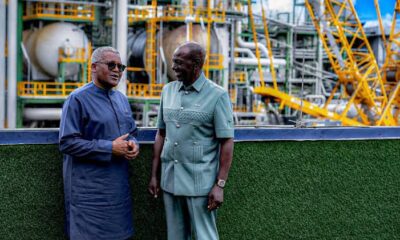
Africa’s richest man, Aliko Dangote, and Kenyan President William Ruto are currently breaking ground on a landmark $16 billion oil refinery in Lamu, on Kenya’s northern coast.
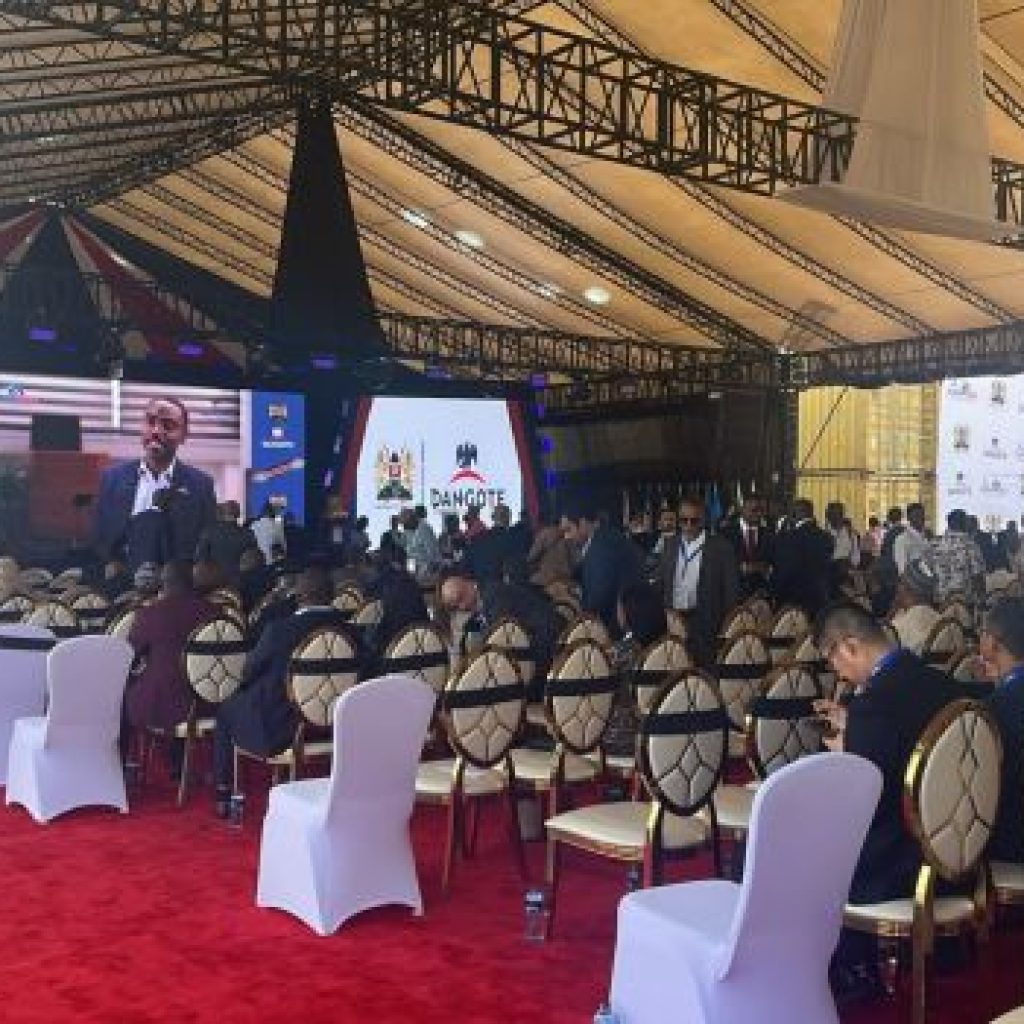
The ceremony, held on Wednesday, September 30, 2026, formally launches construction of the 700,000-barrel-per-day facility, which is set to become the largest refinery in East Africa and the second-largest on the continent after Dangote’s plant in Lekki, Nigeria. The project aims to replicate the success of the Nigerian refinery by processing crude for regional markets, reducing East Africa’s long-standing dependence on imported refined petroleum products, lowering fuel costs, and conserving scarce foreign exchange.
Several African leaders are attending the groundbreaking, including the presidents of Uganda and Ethiopia, along with other regional heads of state and former Nigerian President Olusegun Obasanjo. The event underscores growing continental efforts to process raw materials locally rather than exporting crude and importing finished fuels.
Once completed around 2030, the Lamu refinery is expected to supply Kenya and neighbouring countries such as Uganda, South Sudan, Rwanda, and others. Officials project it will create between 50,000 and 60,000 jobs and stimulate related industries, including petrochemicals and bitumen production. The complex will also feature a 1,000-megawatt power plant, with plans to sell a portion of the electricity to the Kenyan government.
Dangote has offered East African governments a combined 30% equity stake in the project. Financing is structured with roughly 70% debt and 30% equity. The facility is located near Lamu’s deep-water port, chosen for its strategic advantages in handling large-scale industrial operations.

While the project has faced some local land-related protests and a court order maintaining the status quo pending a hearing, the groundbreaking is proceeding as planned. Dangote has dismissed the challenges and reaffirmed that construction will move forward, with the plant targeted for completion in under four years.
The development is being hailed as one of Kenya’s biggest infrastructure investments since independence and a major step toward regional energy security and industrialisation.


Naira Rates To Dollar, Pound ,Euro… Friday, October 2

Obafemi Hamzat promises to end ‘unauthorised levies’ in Lagos if he is elected

President Tinubu, Other Political Leaders Watch MKO Documentary

Tech Expert, Zuckerberg trains with UFC champions, Adesanya, Alexander

Organ Trafficking: Ekweremadu bags 10 years in UK prison

SAINT OBI: Between his marriage and his death
-
 Business23 hours ago
Naira To Dollar, Pound, Euro… Rates Friday, October 1
-
 News23 hours ago
Nigeria @ 66: President Tinubu says next phase of reforms’ll cut cost of living
-
 News3 days ago
BREAKING: Court Order Threatens Dangote Kenya Refinery Launch
-

 News2 days ago
FG Declares October 1 Public Holiday to Mark Independence Day Anniversary
-

 News2 days ago
Atiku Demands Release of 5 Arrested Over ‘Tinubu Must Go’ T-Shirts
-

 Business23 hours ago
Court orders NMDPRA to continue issuing fuel import licences to Matrix Energy, AA Rano, AYM Shafa
-
 Business2 days ago
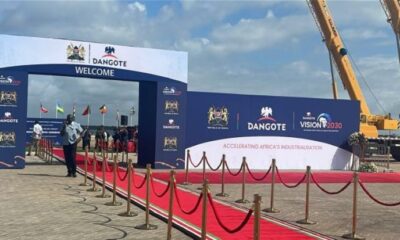
ON-GOING: Dangote $16 billion refinery groundbreaking holds in Kenya (Images)
-
 International2 days ago
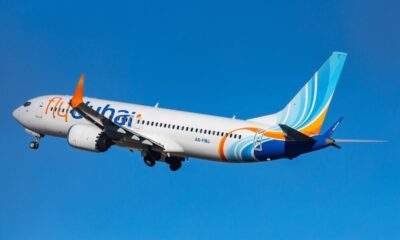
Plane Makes Emergency Landing After Pilots Fight in Cockpit