
Business
Moniepoint buys Orda to capture Africa’s $50bn restaurant economy
Founded in 2020, Orda built software designed for small and independent restaurants that previously operated without digital systems.


Photo: Tosin Eniolorunda, Moniepoint co-founder and group CEO
Nigerian fintech company Moniepoint Inc. has acquired restaurant management startup Orda Africa in a move aimed at expanding its reach into Africa’s fast-growing food service industry, a sector estimated to be worth about $50 billion across the continent.
BusinessDay reports that the deal integrates Orda’s cloud-based restaurant software into Moniepoint’s business management platform, Moniebook, allowing food vendors and restaurants to manage orders, payments, inventory and accounting from a single system.
The acquisition highlights a wider shift among African fintech firms that are moving beyond payments to offer operational tools and credit to small businesses, especially those in the informal economy.
Tosin Eniolorunda, Moniepoint co-founder and group CEO, said that the food sector represents one of the most active but underserved parts of Africa’s economy.
“The food industry is a major source of jobs and daily survival for many Africans,” Eniolorunda said, adding that many businesses still rely on manual processes and disconnected tools.
The move reflects a growing competition among financial technology firms to control the digital infrastructure behind small businesses, particularly restaurants, which generate frequent transactions and require working capital.
Africa’s food service market is expanding quickly as urban populations grow and more consumers eat outside the home.
Nigeria alone is projected to see its restaurant market reach about $19.3 billion by 2030, growing at an annual rate of more than 11 percent.
Founded in 2020, Orda built software designed for small and independent restaurants that previously operated without digital systems.
The company’s tools help businesses track orders, manage kitchen workflows and monitor stock levels.
Guy Futi, Orda CEO, said joining Moniepoint would allow the company to connect operational data from restaurants with financial services such as payments and credit.
“To truly transform the industry, we needed to connect that expertise with comprehensive financial infrastructure,” Futi said, adding that customers would continue to use the platform while gaining access to new services.
Business
CBN Pledges Policy Consistency Into 2027
The single-digit inflation target remains the anchor.

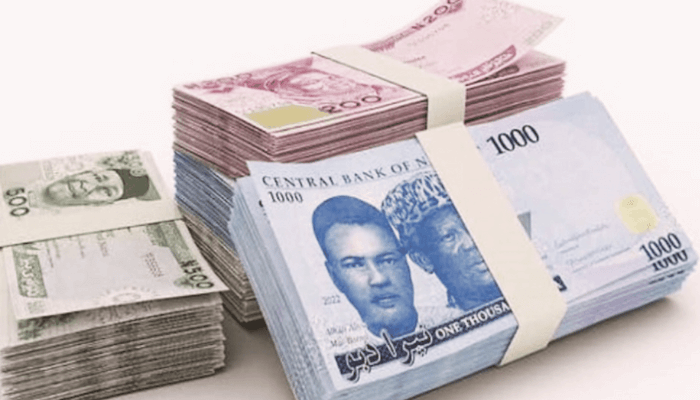
The Central Bank of Nigeria says that it will keep a consistent monetary policy direction in 2027, as it pursues the single-digit inflation target.
The stance puts policy continuity at the centre of the CBN’s inflation fight.
The bank is tying its inflation goal to consistency in monetary policy rather than a change in direction.
The single-digit inflation target remains the anchor.
The CBN’s message is that the target still stands and that policy will stay consistent in 2027.
₦1450 DOLLAR (USD)
₦1875POUND (GBP)
₦1575EURO (EUR)
₦950 CANADIAN DOLLAR (CAD)
₦70 SOUTH AFRICAN RAND (ZAR)
₦350 UAE DIRHAM (AED)
₦190 CHINESE YUAN (CNY)
₦100 GHANAIAN CEDI (GHS)
₦2240 WEST AFRICAN CFA F.(XOF)
₦2180 CENTRAL AFRICAN CFA F.(XAF)
₦820 AUSTRALIAN DOLLAR (AUD)
Business
MAN Seeks Tobacco Exclusion From NAFDAC Bills Over Regulatory Overlap
The association further maintained that the existing regulatory framework, administered through the Federal Ministry of Health and Social Welfare and the Federal Ministry of Industry, Trade and Investment, already provides for the regulation of the legal tobacco sector.
The Manufacturers Association of Nigeria (MAN) has called on the National Assembly for explicit tobacco products exclusion from two proposed bills seeking to repeal and reenact the laws establishing the National Agency for Food and Drug Administration and Control (NAFDAC), warning that their passage could create overlapping regulatory responsibilities and increase compliance costs for manufacturers.
The bills are the National Agency for Food and Drug Administration and Control (Repeal and Enactment) Bill, 2026 (SB. 940) and the Food, Medical Products and Related Products (Registration, Etc.) Bill, 2026 (SB. 952).
The Director-General of MAN, Segun Ajayi-Kadir, therefore urged the lawmakers to remove all references to tobacco from both bills, including relevant definitions, schedules and consequential provisions.
It also called for an explicit exclusion clause to prevent tobacco products from subsequently being brought under the proposed legislation through administrative instruments.
According to the association, such a provision would preserve clarity in institutional mandates and regulatory responsibilities while preventing unnecessary regulatory overlaps.
MAN maintained that regulatory reforms should strengthen public-health protection, address demonstrable regulatory gaps and improve compliance without creating additional administrative burdens for legitimate businesses.
It argued that clear institutional mandates, proportionate enforcement and effective inter-agency coordination were essential to achieving these objectives while supporting manufacturing, employment and investment.
The association further maintained that the existing regulatory framework, administered through the Federal Ministry of Health and Social Welfare and the Federal Ministry of Industry, Trade and Investment, already provides for the regulation of the legal tobacco sector.
MAN reaffirmed its readiness to engage constructively with the National Assembly and relevant government institutions, particularly the two federal ministries, to ensure that the proposed legislation delivers effective regulation without unnecessary duplication, conflicting institutional mandates or regulatory uncertainty.


CBN Pledges Policy Consistency Into 2027

Naira Exchange Rates, Thursday,26 Nov

MAN Seeks Tobacco Exclusion From NAFDAC Bills Over Regulatory Overlap

BREAKING: Lagos Govt Declares Today, Thursday Work-Free to Mark 2026 Ìṣẹ̀ṣe Day

Tech Expert, Zuckerberg trains with UFC champions, Adesanya, Alexander

Why we Increase the 2025 Budget by ₦700bn – Bichi
-

 Crime3 days ago
Police Uncovers Human Remains at Ogun ‘Yahoo Academy’
-

 News2 days ago
BREAKING: Court Sacks Omo-Agege as NDC Senatorial Candidate, Orders INEC to Delist Him
-

 Entertainment2 days ago
BREAKING: Veteran Nollywood Actor Chief Pete Edochie Dies at 79
-

 Business3 days ago
Naira Exchange Rates Tuesday 24 Nov 2026
-
 Politics3 days ago
Tinubu Takes Campaign To Igbos ” Vote For Me This Time”
-

 News2 days ago
Katsina Suspends Emir of Daura Over Sexual Allegations By Polish Tourist
-

 Business3 days ago
Naira falls 2.57% despite $1.30bn CBN intervention
-

 News2 days ago
Arise TV Obaigbena Denies Police Invitation, Calls Declaration ‘Smear Campaign’