
International
Leaders of AU, ECOWAS meet over Adamant Niger junta

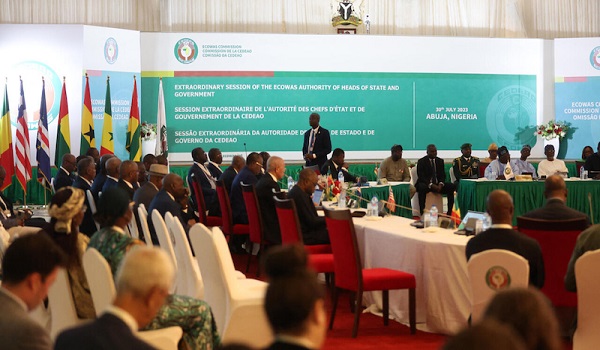
The Economic Community of West African States (ECOWAS) and African Union (AU) leaders were locked in a meeting yesterday as the deadline set by the regional bloc for the Niger junta to return President Mohamed Bazoum to power expired yesterday. The meeting was virtual.
Also, President Bola Ahmed Tinubu met with governors of states that share a boundary with the Niger Republic in Abuja.
The meeting was part of consultations by the President on the situation in Niger.
The communiqué of the meeting was not released as at 11pm press time.
In attendance were governors Ahmed Aliyu (Sokoto), Umar Namadi (Jigawa), Mai Malam Buni (Yobe), Idris Nasir (Kebbi) and Dr Dikko Radda (Katsina).
ECOWAS leaders will this week convene a meeting in Abuja after their virtual meeting to make a crucial decision on the ultimatum.
A source privy to the ECOWAS meeting said a communique will be issued afterwards.
Following a military coup against the democratically elected President of Niger Republic, the ECOWAS states had given a seven-day ultimatum against the junta to vacate office or face dire consequences.
The junta has remained defiant despite ECOWAS threatening to attack. The regional bloc had said the military had until yesterday to return power to the democratically elected president.
The junta has also asked for help from the Russian mercenary group, Wagner, according to an analyst.
The request came during a visit by a member of the Niger junta, General Salifou Mody, to neighbouring Mali, where he made contact with Wagner officers.
ECOWAS defence chiefs finalised an intervention plan on Friday after a mediation team was denied entry to Niger’s capital, Niamey, to meet with junta leader General Abdourahmane Tchiani.
But, Algeria has indicated that it was against any military intervention in Niger, according to its President, Abdelmadjid Tebboune.
“A military intervention could ignite the whole Sahel region, and Algeria will not use force with its neighbours,” Tabboune said in an interview with local media.
Along with the EU, Algeria called for unifying political and diplomatic pressures to ensure a return to the “constitutional order” in Niger.
The Alumni Association of the National Institute (AANI) of Policy and Strategic Studies, Kuru, Jos, Plateau State also rejected military action
Rising from an emergency meeting, members of AANI strongly condemned the military seizure of power in the Niger Republic but called for caution.
“It supports the efforts of ECOWAS’ towards restoring democracy in the West African country.
“However, in restoring democracy, ECOWAS should consider the immediate and long-term implications of its actions on the people of the Niger Republic and the wider West African sub-region,” the association said in a statement by its spokesman, Gen. Sani Usman Kukasheka (retd).
A peace-building think tank, Foundation for Peace Professionals (PeacePro), cautioned the ECOWAS against listening to the United States Institute of Peace (USIP) over what it called a mission of military intervention in Niger Republic.
PeacePro noted that USIP’s advocacy for military intervention in Niger betrayed any known peace-building techniques that could foster cooperation and ensure conflict transformation.
The group’s Executive Director, Abdulrazaq Hamzat, expressed his amazement over the statement credited to USIP country manager, Chris Kwaja, urging ECOWAS to use force and bite hard in handling the situation in Niger Republic.
Also, Peace and Conflict Studies expert, Prof. Isaac Albert, urged President Tinubu not to embark on military action against Niger.
Albert, of the Institute of Peace and Strategic Studies, University of Ibadan, told the News Agency of Nigeria (NAN) yesterday that the action might be more dangerous, as it was capable of leading to the springing up of more terrorist groups.
“Tinubu should seek the advice of security experts before leading ECOWAS on invading Niger, especially due to Nigeria’s current internal security challenge.
”Attacking Niger at this point is not the best option because it may give rise to more terrorist groups to connive and attack Nigeria.
”Yes, Nigeria and ECOWAS may be able to defeat Niger in the short run, but Nigeria may have Boko Haram, Russia-backed Wagner and other terrorist organisations to contend with in the long run.
“We must not forget that the Nigerian army is substantially helping Nigeria to curtail the activities of Boko Haram along its border.
“Moreover, most of the countries claiming to be supporting Nigeria today may be our enemies at the end of the day.
“Furthermore, where will Nigeria and ECOWAS get the required funds to pursue the invasion?
“Ghana, The Gambia, Benin Republic, Cote d’Ivoire Coast, Togo and other ECOWAS member-states, alongside Nigeria, are in economic crises and struggling to satisfy the yawning of their people,” he said.
A professor of Comparative Politics, Gbade Ojo, said that bad governance on the part of civilian leaders brought about recent military take-over in some African countries.
Ojo, of the Department of Political Science, University of Ilorin, pointed out that nothing good would come out of the impending military action against Niger if the citizens of the country had decided to accept the military junta.
According to him, many civilian leaders in Africa are encouraging coups because of their sit-tight leadership style.
ECOWAS, under the chairman of Tinubu, had recently given Niger’s coup leaders up till yesterday to step down and reinstate the democratically-elected president or face military action.









International
Child marriage in southern Germany: Over 350 cases recorded, some brides as young as 11
The most recent entries in the overview relate to 2026. They include, among other things, marriages of 16- and 17-year-old girls to adult men.


• Child marriage / UNICEF
In the southwestern German state of Baden-Württemberg, a total of 358 so-called child marriages have been officially recorded since 2012.
Euro News reported that only eight of these forced marriages have so far been legally annulled.
According to authorities, the other 350 cases were brought to an end in other ways.
This alarming finding comes from a response by the Baden-Württemberg state government to a minor inquiry submitted by AfD state parliament members Nikolaos Boutakoglou and Emely Knorr.
The Tübingen regional authority is responsible for recording the data, the answer came from the Ministry of the Interior.
The eight final annulments took place between 2018 and 2024. Among the documented cases was the marriage of an 11-year-old girl from Iraq to a 17-year-old Iraqi, which was annulled in 2020.
As early as 2018, the marriage of a 14-year-old Afghan girl to a 30-year-old man had been ended.
In 2024 two further annulments were added: they concerned a 16-year-old German girl and a 25-year-old Pakistani man and a 16-year-old Syrian girl and a 27-year-old man from the same country.State parliament member Nikolaos Boutakoglou wrote on Facebook that the issue was “really awful” but was being treated as a taboo.
According to its own account, the ministry deals exclusively with such marriages entered into abroad.
Since summer 2017, the Act to Combat Child Marriages has been in force in Germany.
In 2024, the Bundestag adopted new rules to protect minors in marriages concluded abroad.
Hundreds of cases without state intervention
The significantly higher number of cases concluded in other ways raises questions about how these marriages continued.
For the period from 2015 to 2026, the regional authority lists a total of 350 proceedings under the heading “other disposals.”But what became of the other child marriages?
The state government cites, among other things, the death of a spouse, reaching adulthood, a decision not to seek annulment or a new marriage concluded abroad.
In these cases, there was therefore no legally binding annulment.
For 2023, the records include the case of a 12-year-old Afghan girl who was married to a 21-year-old Afghan man. Girls aged 13 and 14 also appear several times in the statistics.
The most recent entries in the overview relate to 2026. They include, among other things, marriages of 16- and 17-year-old girls to adult men.
The statistics record the age of the spouses at the time of marriage and their respective nationalities.
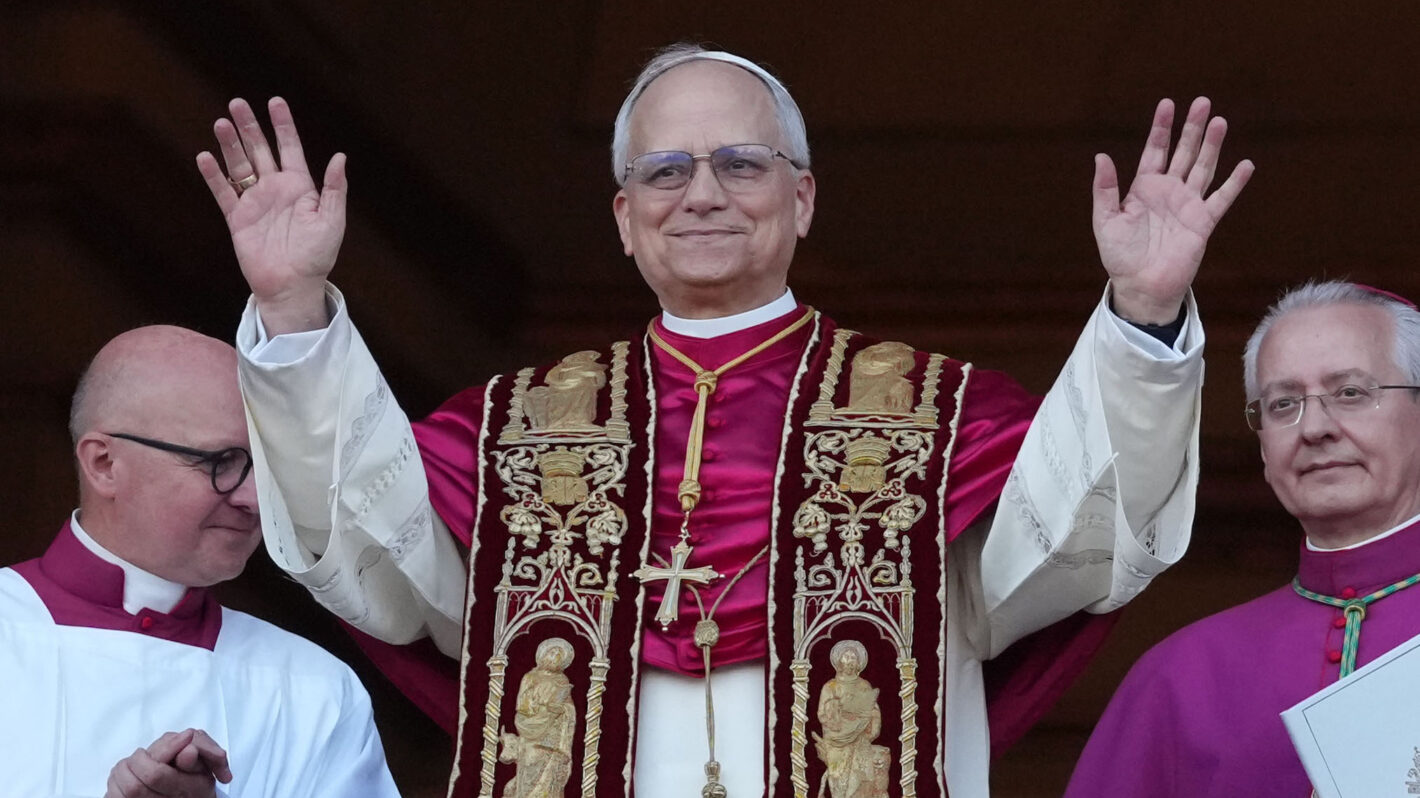
Pope Leo XIV has announced that he will undergo surgery in the coming days to remove a small, localized nodule found on his lung during a recent routine medical checkup.
The 71-year-old pontiff made the disclosure himself during his weekly Angelus prayer in St. Peter’s Square. “Doctors found a localized nodule in my lung,” he said. “It was detected at a very early stage and is well-contained.
The doctors believe it is advisable to intervene, so, following their advice, I have decided to undergo surgery to remove it.”
The Vatican confirmed the operation is scheduled for the first days of this week at Rome’s Gemelli Hospital, which has a dedicated papal suite. Holy See spokesman Matteo Bruni said the Pope is expected to need about a week to recover. On Monday, the Vatican added that Leo will be admitted Tuesday morning.
The nodule’s nature—whether benign or malignant—has not been specified. Medical experts note that most lung nodules are non-cancerous, and early detection generally carries a favorable outlook.
This marks the first significant health issue of Leo’s papacy since his election in May 2025. The American-born pope, known for remaining physically active, has continued his full schedule of audiences and is still expected to proceed with a planned trip to Latin America next month.
International
‘Up to our people’ to pick leader, Zelenskyy responds to Trump’s pledge for new elections in Ukraine
Russia and Ukraine are locked in a long-range aerial war while their armies remain largely deadlocked on the front line, more than four and a half years after Moscow’s full-scale invasion.

• Ukrainian President Volodymyr Zelenskyy
Ukrainian President Volodymyr Zelenskyy said Sunday his country could hold elections if Russia agreed to a 60-day total ceasefire, pushing back against US counterpart Donald Trump’s call for Ukraine to pick a new leader.
“First of all, with all respect to President Trump, it’s up to our society, up to our people to choose one or another leader”, Zelenskyy told ABC News in a televised interview, a day after Trump said Ukraine needed a new president who would agree to end the war.
Zelenskyy said he told Trump’s team that if they really wanted Ukraine to hold elections, “please tell Putin to give us two months, 60 days of total ceasefire, 60 days, and we will organise elections”.
“We want peace, we are ready for a ceasefire, we are ready to begin with any kind of steps of de-escalation”, Zelenskyy told ABC in a TV interview.
“And if the Russians want us not to attack their diesel, their refineries, etc., we are asking President Trump to give them a signal not to attack the energy infrastructure of Ukraine”.
Russia and Ukraine are locked in a long-range aerial war while their armies remain largely deadlocked on the front line, more than four and a half years after Moscow’s full-scale invasion.
Euro News


Exclusion of candidates from INEC list: CD cautions INEC against manipulation by politicians

Oyedele Chairs G-24 Call for Fairer Global Financial System, Affordable Development Financing

NAFDAC scolds fake manufacturers: “You are killing Nigerians in order to make money”

Tech Expert, Zuckerberg trains with UFC champions, Adesanya, Alexander

BREAKING: Lagos Govt Declares Today, Thursday Work-Free to Mark 2026 Ìṣẹ̀ṣe Day

Organ Trafficking: Ekweremadu bags 10 years in UK prison
-

 Business2 days ago
Nigeria’s ₦33bn Fruit Import Bill Exposes Missed Opportunities in Jos
-

 Business2 days ago
Naira To Dollar, Pound ,Euro …Rates For Monday, October 12
-
 International3 days ago
‘Up to our people’ to pick leader, Zelenskyy responds to Trump’s pledge for new elections in Ukraine
-
 Politics2 days ago
BEWARE: Fake 2027 Gov’ Candidates List Circulating Online — INEC Raises Alarm
-

 Opinions3 days ago
Human Capital Africa Statement For International Day of the Girl Child 2026
-

 Politics2 days ago
2027: 119 Women Jostle For State’s Governors
-

 Business1 day ago
Dangote Refinery IPO Attracts N8.61trn in Subscriptions, Four Times Offer
-

 News2 days ago
Forbes Scores GTBank Best Employers 2026