
News
JUST IN: President Tinubu lifts state of emergency in Rivers, as Fubara prepares to resume duty

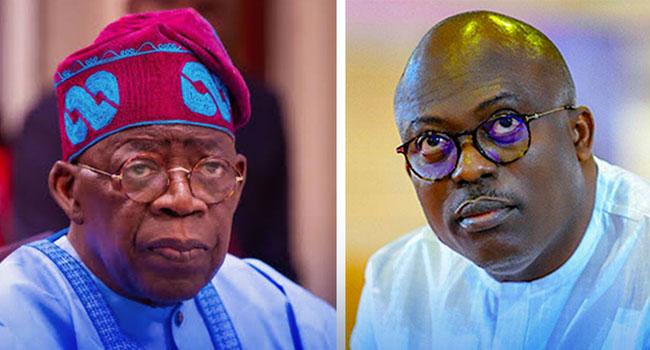
President Bola Ahmed Tinubu has lifted the state of emergency imposed on Rivers State, restoring full democratic governance six months after suspending the Governor, Deputy Governor and State House of Assembly members.
In a statement on Tuesday, President Tinubu said the emergency, declared on 18 March 2025, had become “painfully inevitable” after a constitutional crisis paralysed governance in the state. He recalled that disputes between Governor Siminalayi Fubara and the State House of Assembly had left critical economic assets vulnerable and halted budget approvals.
Tinubu said his intervention under Section 305 of the 1999 Constitution was to “arrest the drift towards anarchy” after mediation attempts failed. “Considered objectively, we had reached that situation of total breakdown of public order and public safety in Rivers State … it would have been a colossal failure on my part as President not to have made that proclamation,” he said.
The President thanked the National Assembly, traditional rulers and the people of Rivers State for their support throughout the emergency. He also acknowledged dissenters who challenged the declaration in court, saying such actions were “the way it should be in a democratic setting.”
Tinubu noted a “groundswell of a new spirit of understanding” among stakeholders in Rivers State and said the conditions that necessitated the emergency no longer existed.
“With effect from midnight today, the emergency in Rivers State shall end,” he announced. “Governor Siminalayi Fubara, Deputy Governor Ngozi Nma Odu, and members of the Rivers State House of Assembly, including Speaker Martins Amaewhule, will resume work in their offices from 18 September 2025.”
He urged governors and state legislatures nationwide to prioritise harmony and peaceful governance. “It is only in an atmosphere of peace, order and good government that we can deliver the dividends of democracy to our people,” he said.
STATEMENT BY HIS EXCELLENCY, BOLA AHMED TINUBU, PRESIDENT OF THE FEDERAL REPUBLIC OF NIGERIA, ON THE CESSATION OF THE STATE OF EMERGENCY IN RIVERS STATE
My Fellow countrymen and, in particular, the good people of Rivers State.
I am happy to address you today on the state of emergency declaration in Rivers State. You will recall that on 18th March, 2025, I proclaimed a state of emergency in the state. In my proclamation address, I highlighted the reasons for the declaration.
The summary of it for context is that there was a total paralysis of governance in Rivers State, which had led to the Governor of Rivers State and the House of Assembly being unable to work together.
Critical economic assets of the State, including oil pipelines, were being vandalised. The State House of Assembly was crisis-ridden, such that members of the House were divided into two groups. Four members worked with the Governor, while 27 members opposed the Governor.
The latter group supported the Speaker. As a result, the Governor could not present any Appropriation Bill to the House, to enable him to access funds to run Rivers State’s affairs. That serious constitutional impasse brought governance in the State to a standstill.
Even the Supreme Court, in one of its judgments in a series of cases filed by the Executive and the Legislative arms of Rivers State against each other, held that there was no government in Rivers State.
My intervention and that of other well-meaning Nigerians to resolve the conflict proved abortive as both sides stuck rigidly to their positions to the detriment of peace and development of the State.
It therefore became painfully inevitable that to arrest the drift towards anarchy in Rivers State, I was obligated to invoke the powers conferred on me by Section 305 of the 1999 Constitution, as amended, to proclaim the state of emergency.
The Offices of the Governor, Deputy Governor, and elected members of the State House of Assembly were suspended for six months in the first instance. The six months expire today, September 17th, 2025.
I thank the National Assembly, which, after critically evaluating the justification for the proclamation, took steps immediately, as required by the Constitution, to approve the declaration in the interest of peace and order in Rivers State.
I also thank our traditional rulers and the good people of Rivers State for their support from the date of the declaration of the state of emergency until now.
I am not unaware that there were a few voices of dissent against the proclamation, which led to their instituting over 40 cases in the courts in Abuja, Port Harcourt, and Yenagoa, to invalidate the declaration.
That is the way it should be in a democratic setting. Some cases are still pending in the courts as of today. But what needs to be said is that the power to declare a state of emergency is an inbuilt constitutional tool to address situations of actual or threatened breakdown of public order and public safety, which require extraordinary measures to return the State to peace, order and security.
Considered objectively, we had reached that situation of total breakdown of public order and public safety in Rivers State, as shown in the judgment of the Supreme Court on the disputes between the Executive and the Legislative arm of Rivers State. It would have been a colossal failure on my part as President not to have made that proclamation.
As a stakeholder in democratic governance, I believe that the need for a harmonious existence and relationship between the executive and the legislature is key to a successful government, whether at the state or national level.
The people who voted us into power expect to reap the fruits of democracy. However, that expectation will remain unrealizable in an atmosphere of violence, anarchy, and insecurity borne by misguided political activism and Machiavellian manipulations among the stakeholders.
I am happy today that, from the intelligence available to me, there is a groundswell of a new spirit of understanding, a robust readiness, and potent enthusiasm on the part of all the stakeholders in Rivers State for an immediate return to democratic governance.
This is undoubtedly a welcome development for me and a remarkable achievement for us. I therefore do not see why the state of emergency should exist a day longer than the six months I had pronounced at the beginning of it.
It therefore gives me great pleasure to declare that the emergency in Rivers State of Nigeria shall end with effect from midnight today. The Governor, His Excellency Siminalayi Fubara, the deputy governor, Her Excellency Ngozi Nma Odu, and members of the Rivers State House of Assembly and the speaker, Martins Amaewhule, will resume work in their offices from 18 September 2025.
I take this opportunity to remind the Governors and the Houses of Assembly of all the States of our country to continue to appreciate that it is only in an atmosphere of peace, order, and good government that we can deliver the dividends of democracy to our people. I implore all of you to let this realisation drive your actions at all times.
I thank you all.
Long live the Federal Republic of Nigeria.
Bola Ahmed Tinubu GCFR
President, Commander-in-Chief of the Armed Forces
Federal Republic of Nigeria
State House, Abuja
September 17, 2025





News
FG Unmasks 60 Persons and Corporates Behind Terrorism Financing, Order Banks To Freeze Their Accounts
The updated sanctions list is part of a crackdown on financial networks supporting extremist groups, particularly following investigations into Bureau De Change (BDC) operators and other entities.

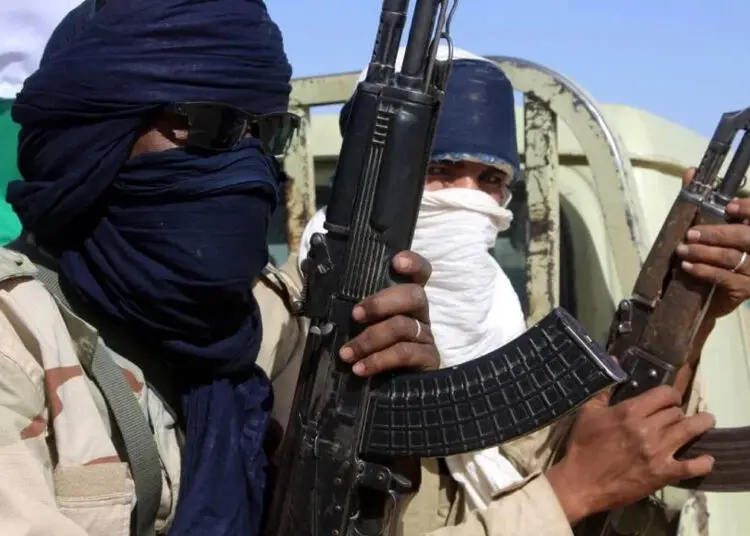
The Federal Government on Saturday released a list of 48 individuals and 12 corporate entities allegedly linked to terrorism financing in Nigeria, as part of ongoing efforts to curb the funding of extremist activities.
The Federal Government also directed financial institutions to freeze all accounts and assets associated with these individuals and firms.
The list, published on the website of the Nigeria Sanctions Committee (NIGSAC), disclosed the nationalities of those named, their specific roles, and the terrorist groups they were allegedly connected to.
The Nigeria Sanctions Committee (NIGSAC) operates under the authority of the Office of the National Security Adviser (ONSA), which coordinates its activities within the national security framework.
Its core mandates include the implementation of United Nations sanctions—particularly those targeting terrorism financing—ensuring compliance with international obligations, and facilitating coordination among agencies such as financial intelligence, defense, and foreign affairs.
Those named in the latest released include Abdulsamat Ohida, Mohammed Sani, Abdurrahman Abdurrahman, Fatima Ishaq, Tukur Mamu, Yusuf Ghazali, Muhammad Sani, Abubakar Muhammad, Sallamudeen Hassan, Adamu Ishak, Hassana Isah, Abdulkarim Musa, Umar Abdullahi, Abdurrahman Ado, Bashir Yusuf, Ibrahim Alhassan, Muhammad Isah, Salihu Adamu, Surajo
Mohammad, Fannami Bukar, Muhammed Musa, Sahabi Ismail, Mohammed Buba, Jama’atu Wal-Jihad, Ansarul Sudan (ANSARU), Islamic State West Africa Province (ISWAP), Indigenous People of Biafra (IPOB), Yan Group, Yan Group NLBDG, Adamu Hassan, Hassan Mohammed, Usman Abubakar, Kubara Salawu, Rabiu Suleiman, Simon Njoku, Godstime Iyare, Francis Mmadubuchi, John Onwumere, Chikwuka Eze, Edwin Chukwuedo, Chiwendu Owoh, Ginika Orji, Awo Uchechukwu, Mercy Ali, Ohagwu Juliana, Eze Okpoto, Nwaobi Chimezie, and Ogumu Kewe.
The entities listed include West and East Africa General Trading Co. Ltd, Settings Bureau De Change Ltd, G. Side General Enterprises, Desert Exchange Ventures Limited, Eagle Square General Trading Co. Ltd, Alfa Exchange BDC, Alin Yar Yaya General Enterprises, K. Are Nigeria Limited, Suhailah Bashir General Enterprises, Igwe Ka Ala Enterprises, Seficuvi Global Company, and Lakurawa Sect.
News
Breaking: INEC postpones voter revalidation exercise till after 2027 elections
The decision was announced in a statement issued and signed by Mohammed Haruna, the commission’s national commissioner and chairman of its information and voter education committee.
The Independent National Electoral Commission (INEC) on Friday postponed its planned nationwide voter revalidation exercise until after the 2027 general elections.
The decision was announced in a statement issued and signed by Mohammed Haruna, the commission’s national commissioner and chairman of its information and voter education committee.
Haruna said that the postponement followed deliberations at a meeting between the commission and resident electoral commissioners (RECs).
“Following deliberations, the commission resolved to postpone the exercise until after the 2027 General Election,” the statement read.
(VANGUARD)
News
Plateau Community Laments ‘ No Security To Repel Attackers’
Those confirmed dead include Elder Iliya Mangut Dakus, Mr. Luck Titus Dakus, Mr. Habila Istifanu Dakus, Mr. Hassan Istifanus Dakus, Mrs. Hassan Moses Dakus, Biggie Lucky Dakus, Sunday Gideon Dakus, and Mr. Innocent Barnabas Makwin.
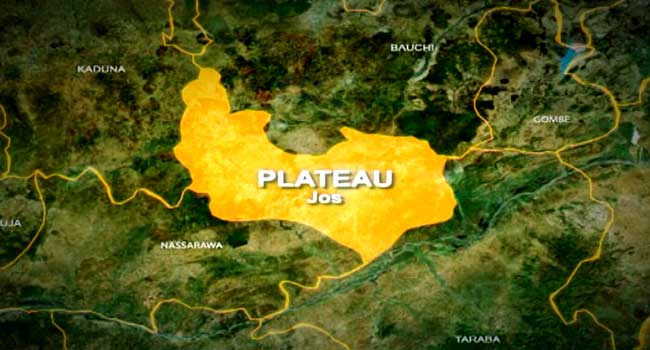
People of Mbwelle village, Bokkos Local Government Area of Plateau State lamented that the Thursday Late-night attack which left eight persons killed lasted for several hours with no visible security presence to repel the attackers.
The assailants reportedly stormed the community at about 11 p.m. on Thursday, and opened fire on residents in a sporadic shooting that lasted nearly an hour.
Seven of the victims were members of the same family, while at least three others sustained injuries and several persons are missing.
Those confirmed dead include Elder Iliya Mangut Dakus, Mr. Luck Titus Dakus, Mr. Habila Istifanu Dakus, Mr. Hassan Istifanus Dakus, Mrs. Hassan Moses Dakus, Biggie Lucky Dakus, Sunday Gideon Dakus, and Mr. Innocent Barnabas Makwin.
The Chairman of Bokkos Local Government Area, Samuel Amalau, confirmed the incident to Arise news during a phone interview, expressing concern over the recurring violence in the area.
The Chairman condemned what he described as a resurgence of unprovoked attacks in Bokkos, particularly the incident in Mbwelle community of Kwatas Ward.
The Chairman of the Community Peace Observers in Bokkos, Kefas Mallai, added that the attack has heightened tension in the area.
He extended condolences to the bereaved families, noting that the killings were “a direct assault on our collective humanity and peaceful coexistence,” while also wishing the injured a speedy recovery.
He also appealed to youths to exercise restraint and avoid actions that could escalate tensions, even as he reaffirmed the right to lawful self-defense.
Also confirming the attack, the Police Public Relations Officer, SP Alfred Alabo, said investigations are ongoing and assured that further details would be made available.


FG Unmasks 60 Persons and Corporates Behind Terrorism Financing, Order Banks To Freeze Their Accounts

Police reopens, handover PDP Hqtrs to Wike backed Faction

Gunmen Kill Traditional Ruler, Four Others in Imo State, Set Bodies Ablaze

Tech Expert, Zuckerberg trains with UFC champions, Adesanya, Alexander

Organ Trafficking: Ekweremadu bags 10 years in UK prison

SAINT OBI: Between his marriage and his death
-
 News2 days ago
CBN Debunks Viral Fake News of ₦5,000 Banknote Featuring President Tinubu’s Image
-
 Politics1 day ago
2027: Bode George warns INEC, Judiciary Drifting Nigeria Towards ” One Party Rule”
-
 News3 days ago
INEC releases updated voters registration figure nationwide
-
 Business2 days ago
DR Congo Central Bank Announces Ban on Foreign Currency Cash Transactions from 2027
-
 Crime2 days ago
Tinubu Mourns Soldiers Killed in Benisheikh Terror Attack
-
 News3 days ago
US Declares 23 Nigerian States High-Risk for Citizens
-

 Business1 day ago
Supreme Court Overturns Appellate’s Ruling on $2bn Debt Recovery Battles Nestoil /Neconde Energy vs FBNQuest Merchant Bank
-
 Politics1 day ago
NBA Cautions Lawyers Against Involvement in Political Party Disputes