
Business
Satchets Alcohol Manufacturers Cry Out to Tinubu to Overide “NAFDAC’s Ban
The Senate, in its own wisdom, did not hear from other parties before the present situation we find ourselves in. This is, therefore, not a regulation; this is calculated economic suffocation.


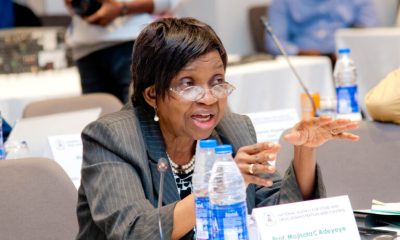
• Collage : NAFDAC DG, Prof Mojisola Adeyeye; FOBTOB President, Jimoh Oyibo.
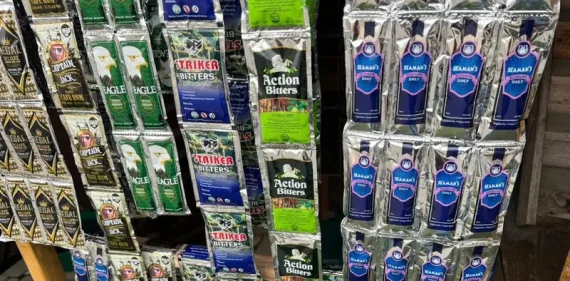
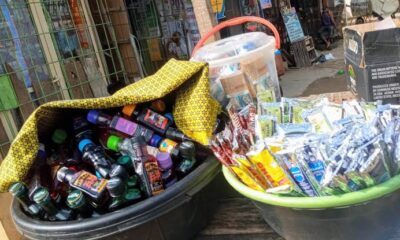
THE National Agency for Food and Drug Administration and Control (NAFDAC) ban on local production and distribution of sachets alcohol and 10cl PET bottles have started telling on the economy, according to the Food and Beverage Producers union- FOBTOB., prompting their calls for intervention by President Bola Ahmed Tinubu , his cabinet and other well meaning Nigerians, to :
“Let the factories be reopened.Let the warehouses be unsealed.Let the depots be reopened.Let regulation replace repression.Let dialogue replace destruction.Let policy replace punishment.”
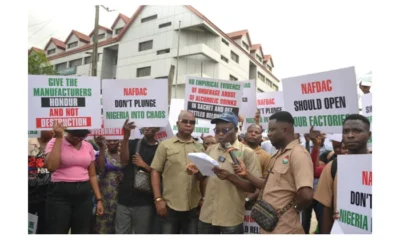
Jimoh Oyibo, President of FOBTOB, at a press conference in Lagos, paints the grim pictures of the ban , barley in its two months :
” Across the country, indigenous manufacturing companies, especially factories are being shut down. Depots are being closed. Warehouses are being locked including those that contain multiple other lawful products not connected to the targeted items.
“The consequences are already visible because workers are losing their jobs daily. Families have started to loose their income, businesses collapsing, supply chains breaking, tax revenues to the Federal Government reducing,” he said.
He emphasised that above all, local investment confidence is being destroyed, and that an economy cannot survive when industries are shut down instead of regulated.
Read Also: Are The Ministers of industry Leaving Manufacturers To Face Challenges?
The speech reads:
” Gentlemen and Ladies of the press and fellow Nigerians, we address you today February 26, 2026 with deep pain, growing fear, and a heavy sense of injustice over the ongoing actions of under the leadership of Professor Mojisola Adeyeye, the Director-General.
This approach is creating widespread confusion, fear, and economic paralysis and we are compelled to ask Professor Mojisola Adeyeye the following questions.
What is her real motive behind this method of enforcement?
Why are entire facilities being shut down instead of applying controlled, targeted regulation?
Why are lawful businesses, workers, transporters, retailers, and suppliers being collectively punished?
The fact is undeniable that all stakeholders met including the House committe on alcohol of the House of Representatives, Honorable Minister of Health, Professor Mojisola Adeyeye,
The Nigerian Police, Customs, Immigration, Federal Road safety corps, manufacturers, Road transport Unions and many other representatives where this issue of alcohol intake by underaged was discussed and the general resolution was access control, massive enlightenment and educational sensitisation drive amongst other resolutions and not total ban as been carried out by Professor Mojisola Adeyeye.
While a policy document which was to serve as a National guide was being awaited, Professor Mojisola Adeyeye rushed behind everyone to approach the Senate for total ban.
The Senate, in its own wisdom, did not hear from other parties before the present situation we find ourselves in. This is, therefore, not a regulation; this is calculated economic suffocation.
children whom she claimed to be protecting are being forced out of school and embracing uncontrolled vices including forced labor or prostitution, with signs of increase in poverty and without doubt, crime risks will rise and this can be a security problem to Nigeria.
We reject the idea that total bans and mass shutdowns are solutions.
Access control is better than total prohibition.
Regulation is better than destruction.
Enlightenment is better than force.
Structured policy is better than blanket punishment.Cutting off a head is not the cure for a headache.
Dialogue is always stronger than destruction.Reform is better than repression.
Control is better than collapse.Factories are not just buildings, they are ecosystems that revolve round – Transporters who are into haulage- Raw material suppliers- Distributors- Retailers- Market women- Artisans- Warehouse operators- Support services- Logistics workers All of them are now suffering because of this policy direction.
We are therefore making this national appeal:
To the Federal Government of Nigeria
To the conscience of leadership
To the defenders of democracy
To the guardians of the economy
Please intervene and prevail on Professor Mojisola Adeyeye for a rethink
Please speak to the conscience of leadership. Stop Professor Mojisola Adeyeye before she destroy Nigeria and Nigerians.
We have no other country to call ours. 2027 elections are fast approaching and this is not the time to loose jobs.We are not criminals.
We are not kidnappers.We are not robbers.We are not extremists.We are not enemies of the state.We are workers.
We are producers.We are parents.We are taxpayers.We are citizens.
We are Nigerians.The only work we know is factory work.
The only livelihood we have is production.The only dignity we have is honest labor.We therefore appeal strongly and respectfully: .
Total bans are not the way forward.Controlled access is the way forward.Education is the way forward.Regulation is the way forward.
Partnership is the way forward.We bring this message before the press, please help circulate our pleas.
We bring it before the nation, this is a security crisis in the making.We bring it before the world, Nigeria is too volatile for another crisis.
This is our appeal.
This is our cry.This is our plea.
This is our stand.Let our industries and factories live.
Let our people work and contribute to the growth of the Nigerian economy.
Let our economy breathe, not to suffocate.”





Business
12-years after, US clears Nigerian vessels to land at its ports
Oyetola said that removal of the restriction by the USCG followed years of effort by Nigeria to meet international maritime security standards, particularly through the Nigerian Maritime Administration and Safety Agency (NIMASA).
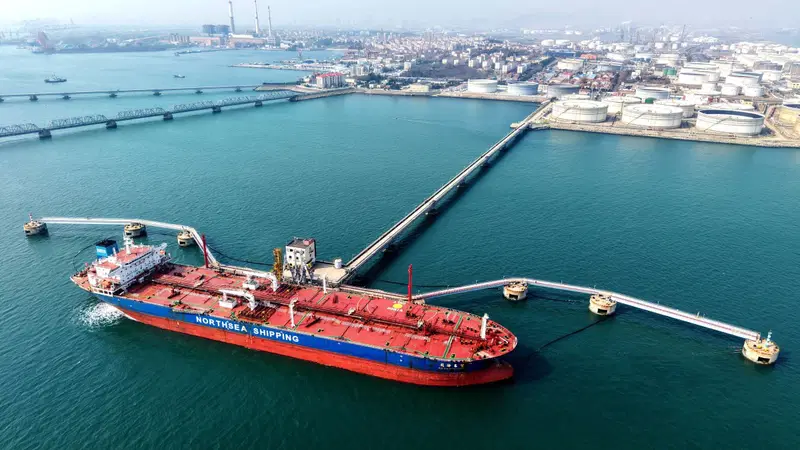
The Minister of Marine and Blue Economy, Adegboyega Oyetola, announced that the United States Coast Guard (USCG) has removed the Condition of Entry (CoE) imposed on Nigerian vessels from docking at its ports.
The CoE was first imposed in June 2014. Under the restriction, any vessel that had docked at designated Nigerian ports within its previous five port calls was required to meet additional security and documentation requirements before entering US waters.
Oyetola said that removal of the restriction by the USCG followed years of effort by Nigeria to meet international maritime security standards, particularly through the Nigerian Maritime Administration and Safety Agency (NIMASA).
The removal means those extra requirements no longer apply.Four USCG assessments between 2024 and 2026
He pointed to the country’s compliance with the International Ship and Port Facility Security (ISPS) Code as central to the case presented to US authorities.
The USCG carried out four separate assessments of Nigeria’s ports and maritime security framework between March 2024 and April 2026.
The inspections took place in March 2024, April 2024, March 2025 and April 2026. The government said each review recorded measurable progress.
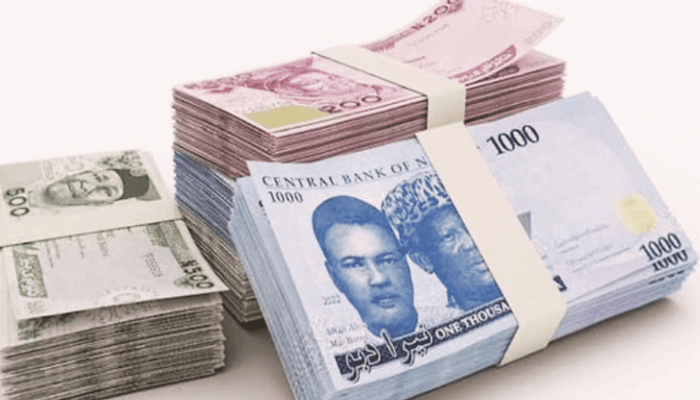
BLACK MARKET RATES
US Dollar (USD) Buy ₦1,404 Sell ₦1,410
Great British Pound (GBP) Buy ₦1,880 Sell: ₦1,900
EURO (EUR) Buy ₦1,585 Sell ₦1,605
Canadian Dollar (CAD) Buy ₦1,020 Sell ₦1,080
South African Rand (ZAR) Buy ₦75 Sell ₦90
Ghana Cedi (GHS) Buy ₦95 Sell ₦110
West African CFA Buy ₦2, 300 Sell ₦2, 400
CENTRAL AFRICAN CFA Buy ₦2,150 Sell 2,250
CBN Exchange Rates
US Dollar (USD) ₦1,350.41
Great British Pound (GBP) ₦1,839.13
EURO (EUR) ₦1,574.31
Swiss Franc (CHF) ₦1,681.92
Chinese Yuan (CNY) ₦200.61
West African CFA (XOF) ₦2. 37
West African Unit Account (WAUA) ₦1,836.21
Saudi Riyal (SAR) ₦359.65 South African Rand (ZAR) ₦83.71
Business
Oyede Tasks States To Look Beyond Federal Allocations For Economic Growth
Nigeria must move from an allocation dependent economy to one driven by production, investment and job creation,
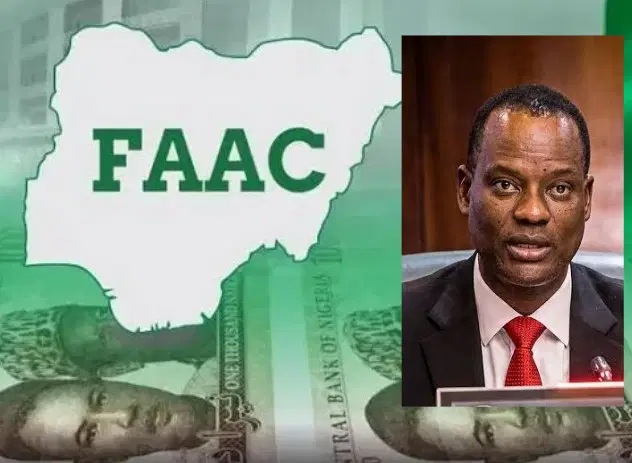
The Minister of Finance and Coordinating Minister of the Economy, Prof. Taiwo Oyedele, has said federal allocations alone cannot guarantee prosperity for states, urging them to develop sustainable sources of revenue and drive economic growth.
The Minister gave the advice during the 2026 National Council on Finance and Economic Development (NACOFED) conference in Owerri, Imo State, yesterday.
Oyedele emphasised the need for states to look beyond federal allocations and develop their productive capacities to achieve sustainable economic development.
He called for stronger fiscal federalism, improved revenue generation and economic diversification to strengthen Nigeria’s resilience to economic shocks.
“Nigeria must move from an allocation dependent economy to one driven by production, investment and job creation,” he stated.
According to him, recent economic reforms , including the removal of fuel subsidy and the unification of the foreign exchange market, have increased tremendously the revenue available for distribution through the federation account.
He said monthly federation account allocation, which was between N300 billion and N600 billion before 2023, is now above N2 trillion.


Atiku Vows to Restore Fuel Subsidy If Elected President in 2027

Boat Mishap Claims Lives in Goronyo (Photos)

Okorocha Sues Uzodinma Over Bid for Imo West Senatorial Seat

Tech Expert, Zuckerberg trains with UFC champions, Adesanya, Alexander

Organ Trafficking: Ekweremadu bags 10 years in UK prison

SAINT OBI: Between his marriage and his death
-

 Business3 days ago
CBN’s Sidi-Ali wins 2026 overall Spokesperson of the Year Award, courtesy of NSA
-

 News1 day ago
BREAKING: Tinubu Diverts EFCC Funds to NELFUND
-

 Business3 days ago
Naira Exchange Rates Tuesday,18 August
-

 Politics2 days ago
2Baba’s wife Natasha emerges Edo Assembly Minority Leader
-

 International2 days ago
Trump Annex Strait of Hormuz “New US Territory”
-

 Sports3 days ago
NFF Sacks Madugu over WAFCON crashed out
-
 Politics2 days ago
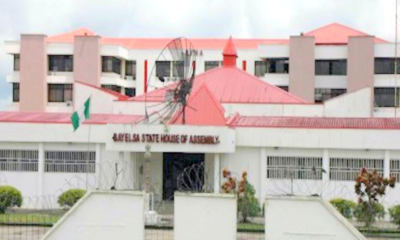
Bayelsa Assembly Approves Removal Of Sagbama Council Chairman, Vice
-

 Business3 days ago
TCN improves Power Supply to Apapa corridors by additional 208MW