News
Furore over ministers’ N8.6b four years budget

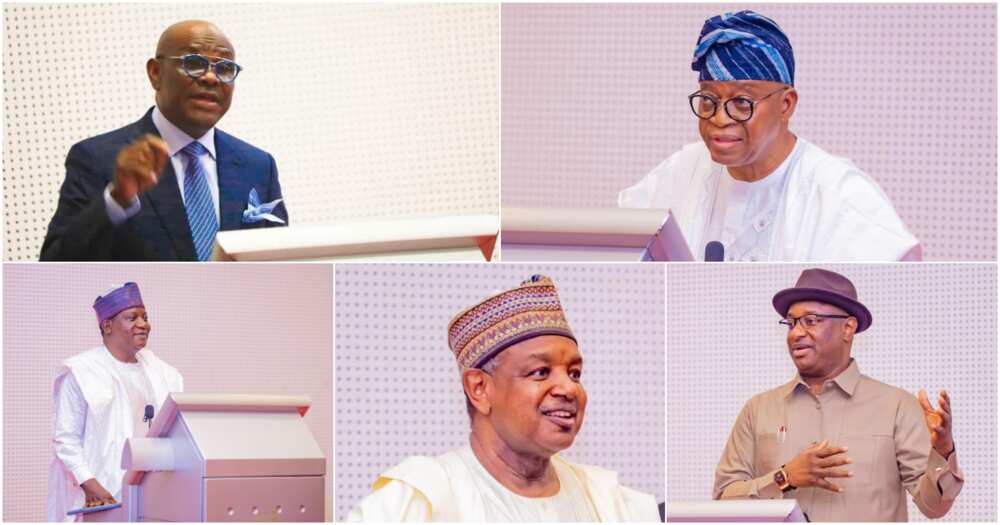
Nigerians are angry, worried and concerned about the report in the media that the newly appointed 48 ministers by President Bola Ahmed Tinubu would be smiling home with a whopping N8.6 billion in salaries and allowances in just four years.
Their worry stemmed from the information by the Revenue Mobilisation Allocation and Fiscal Commission (RMAFC) that the salaries and allowances of the ministers in four years would take N8.63 billion out of the nation’s lean resources.
There is also a growing concern that the money might increase over time, a development that has drawn the anger and condemnation of many Nigerians. The story of what the ministers would earn in salaries and allowances became public knowledge after the RMAFC concluded its recent review of public servants’ remuneration.
This has continued to generate caustic reactions among Nigerians, especially considering the promise of the current All Progressives Congress-led Federal Government that it would reduce the cost of governance and improve the living standard of the people.
Many wonder how the promise of reducing the cost of governance would be fulfilled with 48 ministers earning such a humongous amount of money in just four years.
Those pushing this narrative argued that Tinubu ought to have pruned down the number of ministers to as low as 33, just like former President Goodluck Jonathan did during his time.
This, they reasoned, would have freed a large chunk of money for the President to deploy to other sectors of the economy, considering the fiscal state of the country’s purse.
One of the proponents of this narrative, a lawyer, Mr. Marcellus Onah, said: “Tinubu’s cabinet of 48 ministers appears to be the largest since Nigeria returned to democratic governance in 1999. His immediate predecessor, Muhammadu Buhari had 42 ministers. Former President Olusegun Obasanjo also had 42 ministers throughout his eight years in office. Late President Umar Musa Yar’Adua had 39 ministers. Goodluck Jonathan had the least, 33 ministers, nine of whom were carried over from Yar’Adua’s administration. Jonathan later increased the number to 37 just before the 2015 general elections.
“But, Tinubu is here appointing 48 ministers at a time when the country’s fiscal challenges are nothing to write home about. He should be thinking of reducing the cost of governance as he promised, and not creating avenues for more expenses.”
However, faced with the reality of high cost of governance, as evidenced by the ministers’ pay in four years, many Nigerians are calling on Tinubu’s government to resuscitate the report on civil service reform by Stephen Oronsaye, which has been gathering dust in the presidential villa since 2011 when it was submitted.
Recall that Jonathan had, in 2011, set the Presidential Commission on Restructuring and Rationalisation of the Federal Government Parastatals, Commissions and Agencies, under the leadership of Oronsaye.
The report was eventually rejected because of its ‘objective’ content. Oronsaye had recommended the merger of some Ministries, Departments and Agencies (MDAs) for the government to reduce the cost of governance, and save money to attend to some other national problems.
The report recommended that 38 federal agencies should be abolished, 14 agencies should be fused into the ministries where they were created from, statutory agencies should be reduced from 263 to 161, and 52 institutions to be merged, among other recommendations. Regrettably, after the report was submitted, it was abandoned by Jonathan and neither former President Buhari nor the current president has given any attention to the report.
Experts are of the view that if the government can look into the report and prune down the MDAs to 161, the country would be saving well over N12 trillion. They are, therefore, urging the government to revisit the report and see the possibility of implementing it, even if not wholly but partly.
This, they argued, has become imperative, considering the current fiscal challenges facing the country, where the country keeps borrowing, without any strategic repayment plan other than servicing the mounting debts with more than half of the country’s annual budget.
The appointment of ministers is a constitutional issue, some may want to argue.
But, there is also a counter-argument in some quarters to the effect that much as the appointment of ministers is a constitutional matter, an argument the President would also want to push, he should remember that the same constitution says one minister per state, plus the Federal Capital Territory (FCT), Abuja, meaning a maximum of 37 ministers.
They also want the president to be reminded that former President Jonathan had only 33 ministers during his time and heaven did not fall.
The thinking in some quarters is that if Jonathan had 33 when the economy was booming, Tinubu has no reason not to reduce the number of his ministers now that the economy is in dire straits and the citizens are going through hell just to survive.
“Government borrowing is becoming a national embarrassment. The debt profile of the government is at its peak. Considering the current debt profile of the government and the biting hardship being experienced as a result of the fuel subsidy removal, one would expect the government that is mouthing renewed hope to emulate Jonathan or even stick to the constitutional requirement of one minister per state, at least for now. But, the government is carrying on as if all is well with the country’s economy.
“Obasanjo had 42 ministers at a time when the economy was viable. Yar’Adua had 39 ministers. Buhari had 42 ministers too. They were all presidents when there was subsidy on fuel and prices of essential commodities were within the reach of ordinary people, yet none of them exceeded 42 ministers. Today, there is no subsidy on petrol and its effect has touched on almost every aspect of the people’s life, making survival very difficult.
“Yet, the government that is preaching renewed hope is appointing 48 ministers, the highest number since the country returned to democracy in 1999. Where is the renewed hope when people are losing all hopes almost on a daily basis?
“Ordinarily, this government should have considered the economic situation and emulated Jonathan who did not have up to 36 ministers, or even done better than him by appointing less than 36 because the country does not have money; the government survives on borrowing. But, no, politicians must enjoy it at the expense of the masses,” a concerned Lagos resident, Mike Okaro said.
However, lending his voice to the growing concern over the development, the President of the Middle Belt Forum (MBF), Dr. Pogu Bitrus equally expressed displeasure and said appointing 48 ministers at this time was unwieldy.
“This is not the first time in Nigeria that it is happening that way. During the civilian regime, just to appease people, they appoint a lot of ministers beyond what the constitution says for whatever reason. It is not good for the economy.
“The constitution says a minister per state, which is supposed to be 36 plus one from the FCT, Abuja, but because the constitution does not restrict the numbers, you see presidents appointing more than that minimum number all the time.
“It is unwieldy; it is not good for the country but that is the situation of our democracy. And mind you that what we call democracy is just a political game in Nigeria, which is used just to satisfy the demands and needs of the political office holders and the constituencies which they represent.
“So I, particularly, don’t support this large and over-bloated cabinet structure. If you look at the United States of America in terms of size, it is larger than Nigeria but how many ministers do they have over there? There are not even up to 20 ministers in the US. So, the issue is that this cumbersome government which we have is not good for our society; it is not good for us and for governance.”
He also advocated that the National Assembly should look into the matter and see what can be done to reduce the number of ministers in Nigeria.
“It is necessary for the National Assembly to revisit this issue in the constitution so that we can have a better government that will not be taxing the taxpayers too much.
“Yes, Tinubu is not the first person to have done it, but what we are saying is that there is the need to legislate on such things, so that we can have a better government system which will not be consuming too much of our lean resources,” he said.
Pogu equally identified a serious drain on the economy as one of the implications of the large cabinet because each minister would have a lot of aides apart from the salaries they are going to draw from the system.
“Maybe for political reasons, the President is doing what he is doing rather than considering the economy and the capacity of the country to sustain such a structure.
“What we are saying is that the National Assembly needs to wake up and do the needful so that the presidential system of government will not continue to be as unwieldy as it is. This will also guarantee greater prudence.
“You see, I do not believe in the parliamentary system of government but it is less cumbersome and highly economical because the ministers, including the person who is going to lead the country will be somebody who is elected among them as a legislator.
“And instead of having double portfolios, the governance will be a bit less in terms of consumption of the resources and everything will also be debated in the House, so the executive and the legislature are the same.
“I don’t know whether we should develop a Nigerian specific type of governance, so that it will not be so unwieldy the way we have it now. It is unfortunate that in our economic situation, we are still battling with unnecessary appointments of ministers.
“But, we need to tell the National Assembly that it has powers to modify and add to the constitution, to do the needful so that such things can be curbed and stopped forthwith, and to look for a system of governance that will not be so costly, including what is happening in the National Assembly,” he said..
Also, the Executive Director, Centre for Fiscal Transparency and Integrity Watch (CefTIW), Umar Yakubu said it was wasteful for President Tinubu to have appointed 48 ministers, especially at a time when the government said it was trying to cut the cost of governance and generate revenue.
“The constitutional requirement for appointment says one minister from each state and the FCT, which is supposed to be 37. But now, the president has appointed 11 more ministers above the constitutional requirement, which will now add pressure to the cost of governance and recurrent expenditures.
“It is wasteful to have 48 ministers when other countries are merging. For instance, the US only has 15 ministries.
“Unfortunately, we are down here expanding and adding more burden to our fiscal crisis. Official vehicles would be bought for these ministers, and you can imagine the cost of fueling and maintaining the vehicles,” he said.
Again, an APC chieftain and former member of the Katsina State House of Assembly, Hon Yusuf Shehu described the development as quite unfortunate considering the hardship Nigerians are going through.
He lamented that only about 10 percent of the people who live in the northern states like Katsina, Kano, Jigawa, and Zamfara can afford three square meals per day, while the rest find it extremely difficult to even afford a meal.
“Some can’t even afford one meal per day. Families spend two, three days without food. So, for only 48 ministers to consume N8.6 billion is very unfortunate,” he said.
He decried the brand of politics being played in Nigeria, which according to him was responsible for the lack of development in the country.
He said: “Politics in Nigeria is so expensive that leaders don’t consider the situation of the common man. Some people will faint when they hear that this kind of huge amount would be spent on 48 ministers in four years only.
“Our hospitals are dilapidated, our schools have collapsed and our roads are bad, but the government is very comfortable spending such a huge amount of money on only 48 ministers in just four years.
“And this excludes other perquisites not known to the public. This is just the salaries and allowances only. How can Nigeria progress with this kind of spending on the leaders?”
He further stressed that with the current hardship in the country as a result of fuel subsidy removal, currency swap and naira change, the government should have reconsidered spending such a huge amount of money on the ministers.
“If the ministers are really working for the people, they should sit down and reduce their salaries and allowances because the money is too humongous. They should know that the people are suffering,” he said.



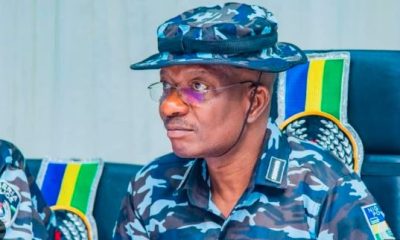


Former Delta State Governor Dr. Emmanuel Eweta Uduaghan is dead. He passed away on the morning of Monday, October 19, 2026, at the age of 71, after a period of illness.
A family statement announced his death, describing it as a devastating loss. Uduaghan, a medical doctor, served as Delta State Commissioner for Health (1999–2003) and Secretary to the State Government (2003–2007) before becoming governor from 2007 to 2015. He was known for contributions to infrastructure and human capital development in the state.
Delta State Governor Sheriff Oborevwori has expressed deep sadness over the passing. In a condolence message, he described Uduaghan as a detribalised leader whose service left a lasting mark on Delta State.
Oborevwori extended heartfelt condolences to Uduaghan’s wife, Roli, his children, the Uduaghan family, the Itsekiri nation, and the people of Delta State, praying for the peaceful repose of his soul.

An angry mob has set a Bus Rapid Transit (BRT) bus on fire after it reportedly crushed a commercial motorcyclist to death at Ogolonto Bus Stop along Ikorodu Road in Lagos State.
The incident occurred on Friday, October 16, 2026. Eyewitness accounts and social media reports indicate that the motorcyclist was riding alone along the restricted BRT lane when the collision happened. He died at the scene.
Enraged residents and youths then attacked the bus driver and set the vehicle ablaze. Police officers and officials of the Lagos Neighbourhood Safety Corps (LNSC), who were nearby, intervened promptly and rescued the driver unharmed.
The identity of the deceased motorcyclist and the exact circumstances of the crash had not been officially confirmed at the time of filing this report. It was also unclear whether any arrests had been made in connection with the burning of the bus.
News
ARISE News Wins Seven Honours At Nigerian Broadcasters Merit Awards
The awards recognised the network’s achievements in television journalism and programming, with ARISE News winning the Best TV Channel (Viewer’s Choice) category.


• ARISE News Anchor and host of What’s Trending Ojy Okpe was named Best Newscaster (TV – Female)
ARISE News has emerged as one of the major winners at the just ended Nigerian Broadcasters Merit Awards (NBMA).
ARISE News won seven honours across television broadcasting, news reporting, presentation and production during the ceremony.
The awards recognised the network’s achievements in television journalism and programming, with ARISE News winning the Best TV Channel (Viewer’s Choice) category.
The network’s flagship breakfast programme, The Morning Show, also won the Best TV Talk Show award, further strengthening its recognition in television broadcasting.
ARISE News Anchor and host of What’s Trending Ojy Okpe was named Best Newscaster (TV – Female).
Rufai Oseni was named Nigerian Broadcaster of the Year (Male), while Vimbai Mutinhiri-Ekpeyong received the Nigerian Broadcaster of the Year (Female) award.
The recognition extended to the network’s newsroom, with Ovieteme George winning Best TV News Reporter (Male) for his contributions to television news reporting.
Behind the camera, Sam Adeyemi received the Best Camera Operator/Cinematographer award, recognising his work in television production and visual storytelling.


BREAKING: Nigeria Confirms First Ebola Case

Mbappé wins Onze d’Or award for 2025/26 season

Ronaldo Gets 30-Day Suspension For Portugal Camp Walkout

BREAKING: Lagos Govt Declares Today, Thursday Work-Free to Mark 2026 Ìṣẹ̀ṣe Day

Tech Expert, Zuckerberg trains with UFC champions, Adesanya, Alexander