Business
FG vows to sanction airlines bringing passengers into Nigeria without valid visas

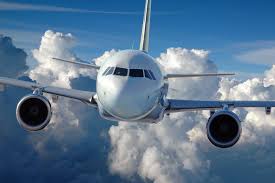
The Federal Government has threatened that any airline caught airlifting passengers into Nigeria without a valid entry visa, Landing, and Exit cards would be sanctioned.
The Minister of Interior, Olubunmi Tunji-Ojo, stated this during a stakeholders’ engagement programme on the implementation of the E-Visa, Landing and Exit Cards on Friday in Lagos.
The Minister, who was emphatic on the Federal Government’s resolutions, vehemently said that Nigeria is not a dumping ground and that no foreigner should be allowed entry without a visa.
He added that although Nigeria was making entry more accessible with the introduction of the E-Visa, but the country would not compromise on national security.
He urged the Nigeria Civil Aviation Authority on the enlightenment and enforcement of its oversight function as a regulator to ensure that airlines adhere to the 2025 Nigeria Visa Policy.
Tunji-Ojo further tasked airlines on national security, stating that the E-Visa was of national interest to improve border security, tourism, and sustainable economic growth.
He said, “I plead with the NCAA to regulate, that is why this meeting is a strategic collaborative effort of the ministry, the Nigeria Immigration Service, and the NCAA. I can see the DG of the NCAA on seat and that is what is called collaboration.
“For the airlines, I know you are here to do business but you also have a responsibility in terms of national interest and security. Before anybody comes to Nigeria, please see their Visas, not a proof of payment or their tickets.
“It is not acceptable in the UK, US, Canada, and other climes, and it will not be acceptable in Nigeria anymore,” he added.
Speaking on the ease of applying for the E-Visa and Landing and Exit cards, Tunji-Ojo said that it was necessary for the purpose of opening Nigeria’s frontiers to investors.
He disclosed that as of May 22nd, the NIS had received a total of 5,814 applications, approved 5,671, rejected 66, and queried 62 applications since the introduction of E-Visa on May 1.
According to him, the E-Visa process will improve the database of the NIS with information on travelers.
He explained the features of the E-Visa, the Landing and Exit cards with a barcode.
“That you applied for a Nigerian visa does not mean you will have the visa, you will need to meet certain criteria for the visa to be issued” he added.
The Director-General of the NCAA, Chris Najomo in his welcome address said that the introduction of the e-Visa and the associated Landing and Exit card systems was a milestone.
Najomo said that was a significant milestone in Nigeria’s journey towards enhancing air travel facilitation while ensuring the highest standards of aviation security and operational efficiency are maintained.
“The e-Visa showcases one of the practical ways we continually align with global best practices by complying with the ICAO provisions of Annex 9 to the Convention on International Civil Aviation – on Facilitation.
“It is, inherently designed to improve the experience of travelers, while strengthening our border control mechanisms.
“The importance of seamless inter-agency collaboration cannot be over-emphasized in a bid to ensure the effective implementation of these systems without compromising safety, security, or service delivery.
“The benefits derived from e-Visa applicants being able to complete visa applications entirely online, with processing time reduced to less than 48 hours, would have a multiplier effect.
It will showcase Nigeria as an investor- and tourist-friendly nation, invariably translating to economic growth.
”The Controller General of the NIS, Kemi Nandap in her closing remarks expressed her appreciation to the Minister of Aviation and Aerospace Development, the NCAA D-G, the Managing Director of the Federal Airports Authority, and the NIS team.
She called for more inter-agency collaborations to further strengthen the seamless implementation of the e-visa, Landing, and Exit cards innovation.
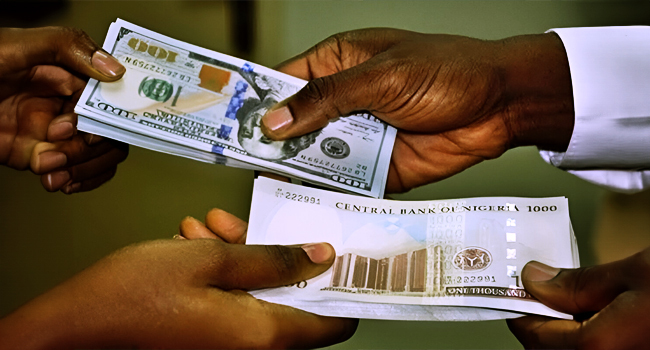
BLACK/ PARALLEL MARKET RATES
₦1370 DOLLAR (USD)
₦1800 POUND (GBP)
₦1510 EURO (EUR)
₦970 CANADIAN DOLLAR (CAD)
₦65 SOUTH AFRICAN RAND (ZAR)
₦350 UAE DIRHAM (AED)
₦190 CHINESE YUAN (CNY)
₦100 GHANAIAN CEDI (GHS)
₦2300 WEST AFRICAN CFA F.(XOF)
₦2200 CENTRAL AFRICAN CFA F.(XAF)
₦850 AUSTRALIAN DOLLAR AUSSIE (AUD)
CBN OFFICIAL RATES
DOLLAR (USD)₦1331.61
POUND (GBP)₦1764.26
EURO (EUR)₦1490.48
SWISS FRANC (CHF)₦1608.23
JAPANESE YEN (JPN)₦8.4
CFA FRANC (XOF)₦2.27
WEST AFRICAN UNIT OF ACCOUNT (WAUA)₦1802.33
CHINESE YUAN (CNY)₦199.01
SAUDI RIYAL (SAR)₦354.83
SOUTH AFRICAN RAND (ZAR)₦80.49
Business
WEF could appoint Lagarde as its next chair, sources say
The WEF’s Board of Trustees, which includes Lagarde herself, was due to meet on November 2 and could elect her as its next chair, said the people close to the organisation, who spoke on condition of anonymity due to the sensitivity of the matter.


•European Central Bank President Christine Lagarde
The World Economic Forum could appoint Christine Lagarde as its next chair as soon as next month, four people close to the organisation told Reuters, meaning she would step down early as European Central Bank chief and trigger a wider reshuffle at the top of the ECB.Lagarde’s ECB term is scheduled to end in October 2027.
Leaving early would give European Union leaders a chance to pick a new ECB President before France’s spring presidential election, which opinion polls suggest the far-right could win, and could pave the way for a deal involving two other senior ECB roles.
The WEF’s Board of Trustees, which includes Lagarde herself, was due to meet on November 2 and could elect her as its next chair, said the people close to the organisation, who spoke on condition of anonymity due to the sensitivity of the matter.
No final decision has been taken yet, they said.
A spokesperson for the WEF said the forum could not confirm when the next full Board of Trustees meeting would take place, but that the aim was to hold one before the end of the year.
Business
Germany plans tax on sugary drinks
The tax is expected to generate additional revenue for the federal government of €690 million in 2027 and €925 million in 2028.
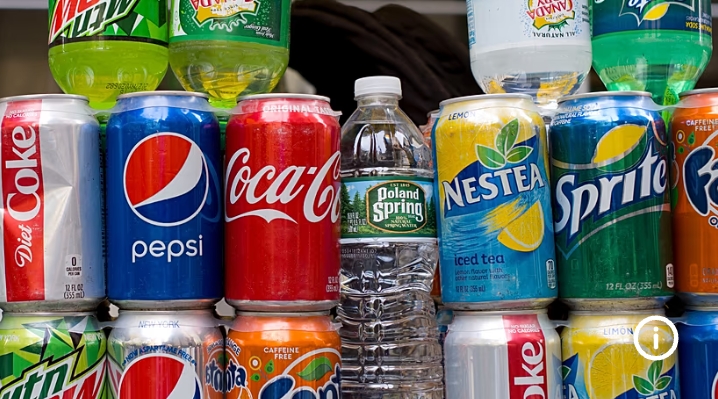
The German cabinet has approved draft legislation to tax sugary drinks in Europe’s biggest economy.
If passed by the German Bundestag, the tax will take effect on 1 July 2027.
The coalition aims to raise revenue for the federal budget while encouraging manufacturers to reduce sugar content and offer healthier products.
The levy is intended to ease pressure on the healthcare system, which faces costs of more than €2 billion every year linked to the high consumption of sugary drinks, which contributes to obesity, diabetes and tooth decay.
According to the federal government, Berlin is using the tax to implement “what associations from the fields of health, science, child protection, and consumer protection have long been demanding.”
The tax is expected to generate additional revenue for the federal government of €690 million in 2027 and €925 million in 2028.


BREAKING: Nigeria Confirms First Ebola Case

Mbappé wins Onze d’Or award for 2025/26 season

Ronaldo Gets 30-Day Suspension For Portugal Camp Walkout

BREAKING: Lagos Govt Declares Today, Thursday Work-Free to Mark 2026 Ìṣẹ̀ṣe Day

Tech Expert, Zuckerberg trains with UFC champions, Adesanya, Alexander