
International
Fear of coups: AU suspends Gabon as Cameroon, Rwanda retire generals, 1,000 soldiers

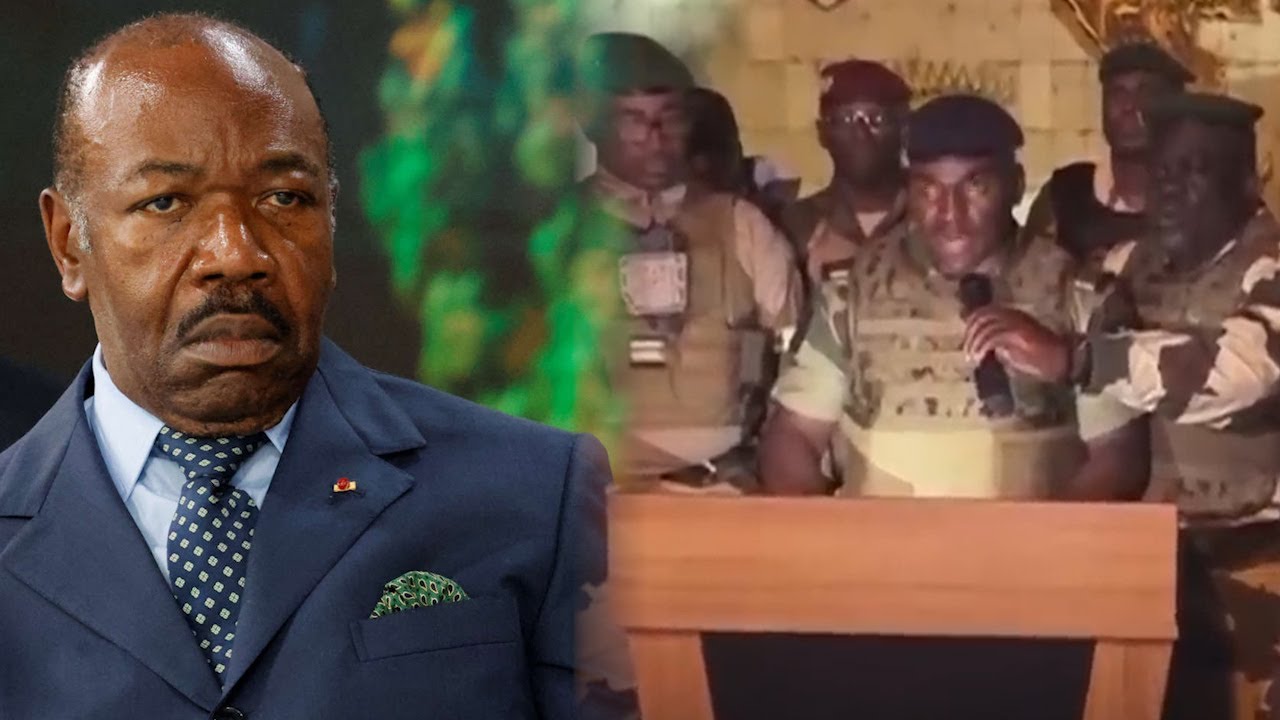
The African Union’s Peace and Security Council on Thursday suspended Gabon following the Wednesday overthrow of President Ondimba Ali Bongo by soldiers led by the head of the Republican guards, Gen Brice Nguema.
The continental body in a post on X, formerly Twitter, condemned the military takeover of power in the Central African country.
This came as Rwanda and Cameroon hurriedly retired 1, 029 senior officers in a surprise move against their respective militaries.
The Rwandan authorities approved the retirement of 12 generals, including two four-star generals, James Kabarebe and Fred Ibingira, two three-star generals, Charles Kayonga and Frank Mushyo Kamanzi, and several officers.
According to a Rwandan national newspaper, News Times, the government approved the retirement of 12 generals and many officers. The publication stated that the retirements were announced on Wednesday, in a statement issued by Rwanda Defence Force.
Among those retired are two four-star generals, James Kabarebe and Fred Ibingira, two three-star generals, Charles Kayonga and Frank Mushyo Kamanzi.
Kabarebe and Kayonga have previously served as Chief of Defence Staff of RDF, while the other two have been service chiefs previously
The statement partly reads, “The President has also approved the retirement of 83 senior officers, six junior officers and 86 senior non-commissioned officers, 678 whose contracts ended and 160 medical discharges.”
In Cameroon, President Paul Biya has also reshuffled the military with new appointments to the Controle Generale des Armees.
The new controllers are Capt Ajeagah Njei Félix Colonel and Colonel Nguema Ondo Bertin Bourger.
Appointments were also made to the positions of Technical Advisers, Bureau Commissariat, and Air Force Technical Inspector.
Disclosing its decision after a meeting of its Peace and Security Council, the AU said it “decides to immediately suspend the participation of Gabon in all activities of the AU, its organs and institutions.”
It said the meeting was chaired by the AU commissioner for political affairs, Bankole Adeoye of Nigeria, and the current holder of the council’s rotating chair, Burundi’s Willy Nyamitwe.
Nguema for inauguration
In a new development, the junta in Gabon has said Gen Nguema will be sworn in on Monday as the transitional president as the opposition called for its candidate to be recognised as the winner of weekend elections.
The military in a statement on Thursday sought to reassure international donors they would “respect all commitments” at home and abroad and “phase in” transitional institutions.
The spokesman for the new regime, Col Ulrich Manfoumbi, said on state television that the swearing-in of Nguema would take place at the constitutional court.
Gabon’s opposition Alternance 2023 alliance had remained silent since the coup, but on Thursday called on the military leaders to acknowledge its victory in the election.
The alliance “invited the defence and security forces to the discussion so as to work out the best solution,” following the vote.
Led by university professor Albert Ondo Ossa, Alternance had earlier accused President Ali Bongo of “fraud” and demanded he hand over power “without bloodshed”.
Ossa claimed the Bongo clan remained in control and there had not been a coup but a “palace revolution”. “Oligui Nguema is Ali Bongo’s cousin,” he told France’s TV5 Monde.
He stated, “The Bongos found that Ali Bongo had to be put aside to be able to properly pursue the Bongo system. Oligui Nguema is an underling. Behind him, it’s the Bongo clan keeping hold of power,” he said, urging international help to restore order.
Meanwhile, a serious humanitarian crisis is looming in Niger Republic as the vulnerable population, particularly, women and children, are facing hunger and other hardships in the aftermath of the sanctions imposed on the country by the Economic Community of West African States over the July 26 overthrow of President Mohamed Bazoum by the military.
This came to light as the Niger junta ordered the police to forcefully evict the French ambassador, Sylvain Itte, from the country.
Niger’s foreign ministry announced that Itte had 48 hours to leave, saying he had refused to meet with the new rulers and citing French government actions that were “contrary to the interests of Niger.”
The visas of the French ambassador to Niamey, Sylvain Itte, and his family had been cancelled and police were instructed to expel the envoy, the junta said in a statement dated Aug. 29 and confirmed as authentic on Thursday by its communications head, according to Reuters.
The latest communique sent by Niger’s Ministry of Foreign Affairs said Itte “no longer enjoys the privileges and immunities attached to his status as a member of the diplomatic staff of the embassy. The police have been instructed to carry out his expulsion.”
Humanitarian crisis
That said, the closure of the borders of Nigeria and other neighbouring countries has starved the francophone nation of food and other critical supplies, putting the beleaguered country on the edge of a humanitarian crisis.
To compel the junta led by Gen Tchiani Abdourahmane to restore the ousted president to power, the 15-member regional bloc imposed stringent sanctions on the Sahel nation and also threatened military intervention to restore constitutional order.
It suspended all commercial transactions with Niger, froze its assets in the regional central bank, including the assets of the state and state enterprises in commercial banks, and suspended all financial assistance with regional development banks.
A planned $51m bond issuance by Niger in the West African regional debt market was cancelled by the regional central bank following the imposition of sanctions. Niger had planned to raise $834 million from the regional debt market in 2023.
Nigeria also cut the power supply to the country on the 80mw Birnin-Kebbi line, while Ivory Coast suspended imports and exports of Nigerien goods.
West Africa’s regional central bank, the BCEAO, shut down its branches in Niger, citing risks to operations.
However, the Niger Country Director of the International Rescue Committee, Paolo Cernuschi, said these decisions were having disastrous humanitarian impacts on the most economically vulnerable people in the Niger Republic.
He disclosed in an opinion published by Euronews on Thursday that aid organisations cannot get critical supplies into the country.
The border closures, he noted, had further compounded the political crisis, preventing life-saving humanitarian supplies and essential aid from reaching the communities that needed them most, creating a barrier that separates people from the assistance they require to survive.
Cernuschi explained, “We have en route shipments of life-saving nutritional supplements for 2,300 children that we don’t know when we’ll receive. While we have contingency stocks in place, those will eventually run out.
“If border closures and sanctions persist, aid supplies running out will be all but a certainty, and the capacity of humanitarian actors to continue delivering will be jeopardised.
“By some estimates, supplies in the country at the time of the coup were sufficient for two to three months of humanitarian response. With supply chains requiring from a few weeks to a couple of months to replenish stocks, we are fast approaching the point where shortages will be inevitable.”
The country director said the sanctions had unintended adverse impacts on the lives of ordinary citizens who are already struggling to meet their basic needs.
He advised that humanitarian exemptions must be guaranteed to ensure continuity of humanitarian work in Niger.
He advised that “The international community and regional organisations must prioritise a ‘do no harm’ approach in dealing with this situation. Diplomatic efforts should focus on finding peaceful solutions that prioritise the well-being of all Nigerien citizens, regardless of their socio-economic status.
“The situation in Niger calls for a coordinated and compassionate response that upholds the principles of humanitarianism and ensures that no one is left behind. And the Nigerien people deserve that and a whole lot more.”
In response to the situation, the United Nations on Tuesday filed an exemption request for relief supplies to the Niger Republic to the ECOWAS.
The global organisation said sanctions on Niger were blocking vital humanitarian aid such as food and medicine.
The United Nations High Commissioner for Refugees representative for Niger, Emmanuel Gignac, stated this at a press briefing during a visit to Geneva.
Reuters reported that trucks with food and humanitarian aid have been piling up at Niger’s land borders since the military coup on July 26, driving up food prices, in a sign of the impact of the sanctions.
Gignac noted, “There is no way to bring humanitarian aid into the country. The immediate goods (affected) are going to be food and then it’s going to be access to medicine, to drugs.”
He added that a formal letter from UN aid chief Martin Griffiths had been addressed to ECOWAS for exemptions.
UN aid flights have also been reportedly grounded because they cannot get access to jet fuel because of the sanctions, complicating aid efforts in the country.
Food aid
Some agencies are using trucks, said World Food Programme regional spokesperson, Djaounsede Madjiangar, but that takes extra time.
Requests for special ECOWAS clearance for aid supplies have so far not been granted, he added.
A UNICEF spokesperson had told Reuters that the agency has about 50 containers with immunization, cold chain equipment, and therapeutic food stuck at different entry points, unable to get into the country, while more than a million doses of yellow fever and rotavirus vaccines cannot be flown in from Europe due to the airspace closure.
He added the agency was concerned about some 28 million vaccine doses stocked inside the country, with 95 percent of warehouses currently hit by power outages.
Gignac also voiced concerns about the security of Niger’s population, especially among its 700,000 forcibly displaced people, describing a sharp increase in protection incidents such as kidnapping and sexual violence since the coup.
The World Food Programme said the political development in the country has made the hunger crisis critical.
The acting WFP Regional Director for Western Africa, Margot van der Velden, in an editorial on the agency’s website stressed the imperative of getting aid to Niger’s vulnerable population.
“Our work is vital for the most vulnerable in Niger and needs to continue, particularly in the current circumstances. Whatever the political situation, continuing our humanitarian and resilience efforts is crucial at these times of crisis,” she added.
In the first week of August alone, WFP said its teams delivered life-saving food to 140,000 people across the country and vital malnutrition care to 74,000 children.
As concerns about the humanitarian situation mount, Nigerians residing in Niger have called on the Federal Government to resolve ECOWAS’ differences with the embattled country.
Ibrahim Afolabi, who spoke with our correspondent from Taawa, said that most Nigerians living in Niger Republic were apprehensive about the situation.
He said, “Although we cannot sleep with our two eyes closed, honestly, there is no form of harassment against us. The only problem we have now is the high cost of living compared to before the closure of borders at both ends.
“ECOWAS needs to soft-pedal on this issue; the majority of the people of Niger Republic here support the military junta and their style in the country, so why not ECOWAS look at that aspect and resolve this issue?”
Abubakar Namazo, who resides in Algadez, said the major problem they faced in Niger Republic is the high cost of foodstuffs and other items.
He said, “I think it’s better for the Federal Government of Nigeria to extend their palliatives to our side as well. Business has gone bad here since the two countries of Niger Republic and Nigerians close their borders.’’
In a bid to survive, motorists now ply illegal routes through Illela on the Nigerian side to beat the closure of the borders.
Mr Samaila Abdul, a motorcycle operator, explained that security operatives extorted motorists and motorcycle operators who plied the illegal bush route.
“We now use the bush (route) to get across to the other country from Nigeria. So, the expenses have been added to the cost of foodstuffs, especially those items we take to them from Nigeria and the one we buy over there (in Niger),’’ he revealed.
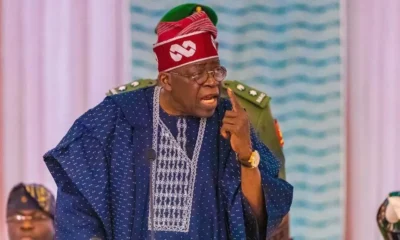
Meanwhile, President Bola Tinubu on Thursday said all diplomatic options will be exhausted with the military junta in Niger Republic before a resort to military intervention comes into the picture.
He insisted that any forceful removal of a democratic government remains “wholly unacceptable,” a statement by the State House said.
Receiving the Nigeria Supreme Council for Islamic Affairs, led by the Sultan of Sokoto, Muhammad Sa’ad Abubakar III, at the State House, Tinubu noted that the alternative of kinetic intervention in Niger Republic had not been jettisoned.
“I must thank you for your several visits to Niger Republic, Your Eminence, but you will still have to go back. My fear has been confirmed in Gabon that copycats will start doing the same thing until it is stopped.
‘’We are neighbours with the Niger Republic, and what has joined Nigerians together with their great people cannot be broken. Nobody is interested in a war. We have seen the devastation in Ukraine and Sudan. But if we don’t wield the big stick, we will all suffer the consequences together,” the President warned.
He noted that Nigeria under General Abdulsalami Abubakar instituted a nine-month transition programme in 1998, and it proved very successful, leading the country into a new era of democratic governance.
The President sees no reason why such cannot be replicated in Niger if the junta was sincere.
“Your Eminence, please don’t get tired, you will still go back there. The soldiers’ action is unacceptable. The earlier they make positive adjustments, the quicker we will dial back the sanctions to alleviate the sufferings we are seeing in Niger,” the President affirmed.






International
Child marriage in southern Germany: Over 350 cases recorded, some brides as young as 11
The most recent entries in the overview relate to 2026. They include, among other things, marriages of 16- and 17-year-old girls to adult men.


• Child marriage / UNICEF
In the southwestern German state of Baden-Württemberg, a total of 358 so-called child marriages have been officially recorded since 2012.
Euro News reported that only eight of these forced marriages have so far been legally annulled.
According to authorities, the other 350 cases were brought to an end in other ways.
This alarming finding comes from a response by the Baden-Württemberg state government to a minor inquiry submitted by AfD state parliament members Nikolaos Boutakoglou and Emely Knorr.
The Tübingen regional authority is responsible for recording the data, the answer came from the Ministry of the Interior.
The eight final annulments took place between 2018 and 2024. Among the documented cases was the marriage of an 11-year-old girl from Iraq to a 17-year-old Iraqi, which was annulled in 2020.
As early as 2018, the marriage of a 14-year-old Afghan girl to a 30-year-old man had been ended.
In 2024 two further annulments were added: they concerned a 16-year-old German girl and a 25-year-old Pakistani man and a 16-year-old Syrian girl and a 27-year-old man from the same country.State parliament member Nikolaos Boutakoglou wrote on Facebook that the issue was “really awful” but was being treated as a taboo.
According to its own account, the ministry deals exclusively with such marriages entered into abroad.
Since summer 2017, the Act to Combat Child Marriages has been in force in Germany.
In 2024, the Bundestag adopted new rules to protect minors in marriages concluded abroad.
Hundreds of cases without state intervention
The significantly higher number of cases concluded in other ways raises questions about how these marriages continued.
For the period from 2015 to 2026, the regional authority lists a total of 350 proceedings under the heading “other disposals.”But what became of the other child marriages?
The state government cites, among other things, the death of a spouse, reaching adulthood, a decision not to seek annulment or a new marriage concluded abroad.
In these cases, there was therefore no legally binding annulment.
For 2023, the records include the case of a 12-year-old Afghan girl who was married to a 21-year-old Afghan man. Girls aged 13 and 14 also appear several times in the statistics.
The most recent entries in the overview relate to 2026. They include, among other things, marriages of 16- and 17-year-old girls to adult men.
The statistics record the age of the spouses at the time of marriage and their respective nationalities.
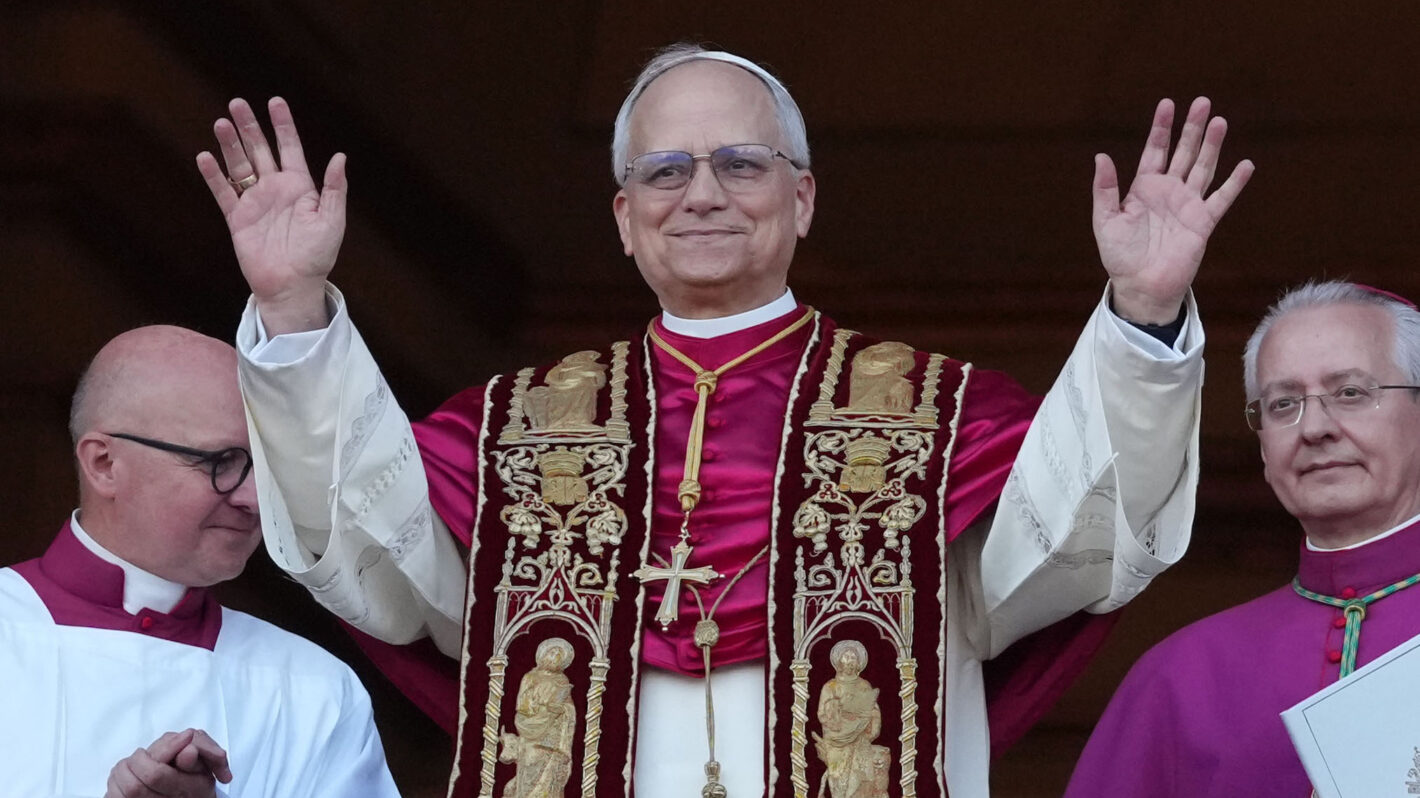
Pope Leo XIV has announced that he will undergo surgery in the coming days to remove a small, localized nodule found on his lung during a recent routine medical checkup.
The 71-year-old pontiff made the disclosure himself during his weekly Angelus prayer in St. Peter’s Square. “Doctors found a localized nodule in my lung,” he said. “It was detected at a very early stage and is well-contained.
The doctors believe it is advisable to intervene, so, following their advice, I have decided to undergo surgery to remove it.”
The Vatican confirmed the operation is scheduled for the first days of this week at Rome’s Gemelli Hospital, which has a dedicated papal suite. Holy See spokesman Matteo Bruni said the Pope is expected to need about a week to recover. On Monday, the Vatican added that Leo will be admitted Tuesday morning.
The nodule’s nature—whether benign or malignant—has not been specified. Medical experts note that most lung nodules are non-cancerous, and early detection generally carries a favorable outlook.
This marks the first significant health issue of Leo’s papacy since his election in May 2025. The American-born pope, known for remaining physically active, has continued his full schedule of audiences and is still expected to proceed with a planned trip to Latin America next month.
International
‘Up to our people’ to pick leader, Zelenskyy responds to Trump’s pledge for new elections in Ukraine
Russia and Ukraine are locked in a long-range aerial war while their armies remain largely deadlocked on the front line, more than four and a half years after Moscow’s full-scale invasion.

• Ukrainian President Volodymyr Zelenskyy
Ukrainian President Volodymyr Zelenskyy said Sunday his country could hold elections if Russia agreed to a 60-day total ceasefire, pushing back against US counterpart Donald Trump’s call for Ukraine to pick a new leader.
“First of all, with all respect to President Trump, it’s up to our society, up to our people to choose one or another leader”, Zelenskyy told ABC News in a televised interview, a day after Trump said Ukraine needed a new president who would agree to end the war.
Zelenskyy said he told Trump’s team that if they really wanted Ukraine to hold elections, “please tell Putin to give us two months, 60 days of total ceasefire, 60 days, and we will organise elections”.
“We want peace, we are ready for a ceasefire, we are ready to begin with any kind of steps of de-escalation”, Zelenskyy told ABC in a TV interview.
“And if the Russians want us not to attack their diesel, their refineries, etc., we are asking President Trump to give them a signal not to attack the energy infrastructure of Ukraine”.
Russia and Ukraine are locked in a long-range aerial war while their armies remain largely deadlocked on the front line, more than four and a half years after Moscow’s full-scale invasion.
Euro News


Exclusion of candidates from INEC list: CD cautions INEC against manipulation by politicians

Oyedele Chairs G-24 Call for Fairer Global Financial System, Affordable Development Financing

NAFDAC scolds fake manufacturers: “You are killing Nigerians in order to make money”

Tech Expert, Zuckerberg trains with UFC champions, Adesanya, Alexander

BREAKING: Lagos Govt Declares Today, Thursday Work-Free to Mark 2026 Ìṣẹ̀ṣe Day

Organ Trafficking: Ekweremadu bags 10 years in UK prison
-

 Business2 days ago
Nigeria’s ₦33bn Fruit Import Bill Exposes Missed Opportunities in Jos
-

 Business2 days ago
Naira To Dollar, Pound ,Euro …Rates For Monday, October 12
-
 International3 days ago
‘Up to our people’ to pick leader, Zelenskyy responds to Trump’s pledge for new elections in Ukraine
-
 Politics2 days ago
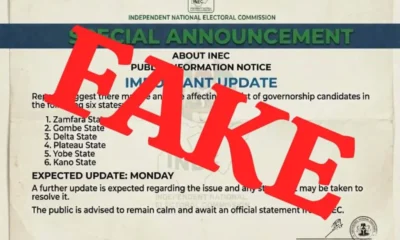
BEWARE: Fake 2027 Gov’ Candidates List Circulating Online — INEC Raises Alarm
-

 Politics2 days ago
2027: 119 Women Jostle For State’s Governors
-
 Opinions2 days ago
Human Capital Africa Statement For International Day of the Girl Child 2026
-

 News2 days ago
Forbes Scores GTBank Best Employers 2026
-

 Business1 day ago
Dangote Refinery IPO Attracts N8.61trn in Subscriptions, Four Times Offer