
International
FBI Files Reveals How Man Planned to Assassinate Queen Elizabeth in 1983


A new file detailing an assassination attempt on the late Queen Elizabeth II, during her visit to California in 1983 has been released by the United States’ Federal Bureau of Investigation.
According to report, the monarch was preparing to undertake an official visit to the United States with her late husband, Prince Philip, when the FBI got wind of the plot on February 4, 1983, a month before the visit.
According to the files which were made available on the Bureau’s information website, the Vault, the threats were made by a man who sought revenge for his daughter who was “killed in Northern Ireland by a rubber bullet”.
The documents were publicly released earlier in the week, after a Freedom of Information Act request was filed to the Bureau by US news media following the queen’s death last year.
The 102-paged document read in part, “He was going to attempt to harm Queen Elizabeth and would do this either by dropping some object off the Golden Gate Bridge onto the Royal Yacht Britannia when it sails underneath, or would attempt to kill Queen Elizabeth when she visited Yosemite National Park.”
In response, the Secret Service had planned to close the walkways on the Golden Gate Bridge when the yacht carrying the queen neared the spot. Despite the threat her Majesty made the visit without any recorded hitches.
Throughout her decades-long reign the Queen has faced several assassination attempts. Most recently in December 2021, a man named Jaswant Singh Chail, broke into Windsor Castle with a crossbow and told police he was there to kill the monarch.
Less than an hour before his arrest, Chail, who was 19 at the time, shared a TikTok video of himself stating his plans to take revenge for the colonial-era Amritsar massacre of 1919 in India.
The Queen passed away nine months after the incident, on September 8, 2022.
Chail was arraigned in February 2023, and pleaded guilty to charges of attempting to “injure the person of Her Majesty Queen Elizabeth II, making threats to kill, and possessing an offensive weapon.



International
Pope Leo reacts to Trump’s blasts “I have no intention to debate with Trump”
Trump said Leo is “Weak on Crime, Weak on Nuclear Weapons, does not sit well with me

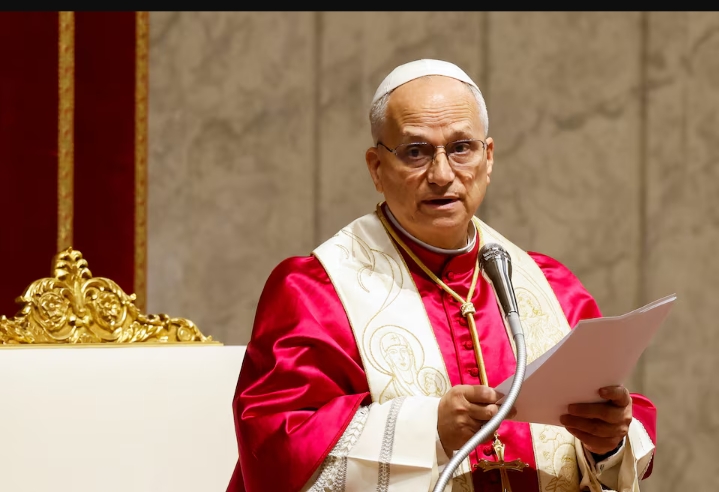
President Donald Trump on Sunday blasted Pope Leo XIV over the Roman Catholic pontiff’s criticism of the U.S. war with Iran.
In reaction Monday Pope Leo XIV on Monday said, ” I no intention to debate” with Donald Trump on the US-Iran war.
“I am not a politician,” the pope told reporters aboard the papal plane as they headed to Algeria for the pontiff’s first visit to Africa.
“I have no intention to debate with (Trump). The message is the same: to promote peace”, Pope emphasised.
President said in a Truth Social post he does not “want a Pope who criticizes the President of the United States because I’m doing exactly what I was elected, IN A LANDSLIDE, to do.”
Leo, the first U.S.-born pope, and other church leaders have also at times been sharply critical of Trump’s domestic immigration policies.
Trump linked the pope’s ascension to his return to office as president.“Leo should be thankful because, as everyone knows, he was a shocking surprise,” Trump said.
“He wasn’t on any list to be Pope, and was only put there by the Church because he was an American, and they thought that would be the best way to deal with President Donald J. Trump. If I wasn’t in the White House, Leo wouldn’t be in the Vatican.”
Trump said Leo is “Weak on Crime, Weak on Nuclear Weapons, does not sit well with me, nor does the fact that he meets with Obama Sympathizers like David Axelrod, a LOSER from the Left, who is one of those who wanted churchgoers and clerics to be arrested,” referring to a recent meeting between the pope and President Barack Obama’s former political aide.
International
Hungarian opposition wins election landslide
Results based on 81.5% of votes counted showed the center-right, pro-EU Tisza party of Peter Magyar winning 137 seats for a crucial two-thirds majority in the 199-member parliament, defeating Orban’s Fidesz party.
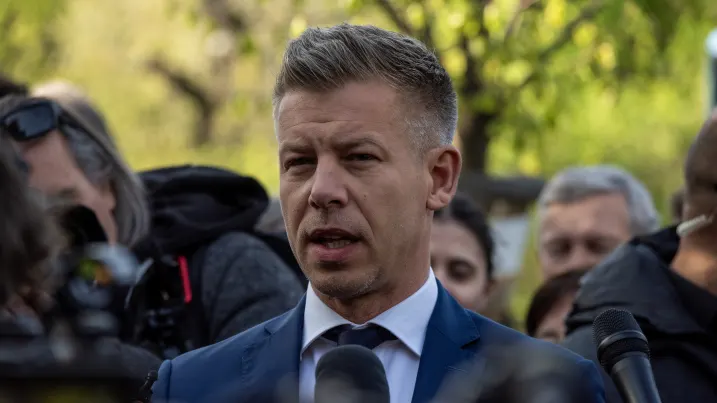
Photo: President of the Tisza Party, Peter Magyar / CNBC
Hungary’s veteran nationalist leader Viktor Orban conceded defeat on Sunday after a landslide election victory by the upstart opposition Tisza party, ending Orban’s 16-year rules.
Results based on 81.5% of votes counted showed the center-right, pro-EU Tisza party of Peter Magyar winning 137 seats for a crucial two-thirds majority in the 199-member parliament, defeating Orban’s Fidesz party.
“The election results are not final yet, but the situation is understandable and clear,” Orban, 62, said at the Fidesz campaign offices.
Some of his supporters who had gathered outside cried as they watched him speak on TV screens.
“The election result is painful for us, but clear.”Election officials estimated turnout at a record of 79% or more, in an election that many Hungarians saw as a watershed moment for their country.
Tisza’s Magyar, 45, had cast the vote as a choice between “East and West,” warning voters that Orban and his confrontational stance towards Brussels would take the country further away from the European mainstream.
International
Oil jumps 7% to above $100 ahead of US blockade of Strait of Hormuz
U.S. Central Command said U.S. forces would begin implementing the blockade of all maritime traffic entering and exiting Iranian ports at 10 a.m. ET (1400 GMT) on Monday.
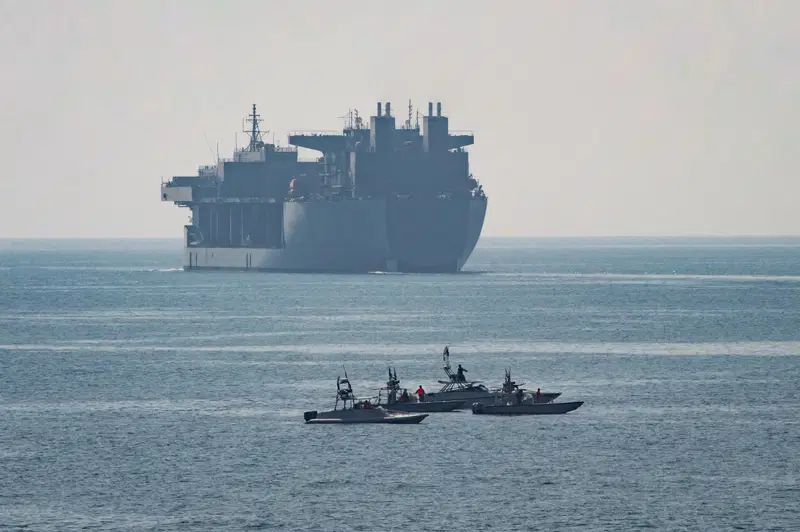
Oil prices jumped above $100 a barrel on Monday as the U.S. Navy prepared to block ships from reaching Iran via the Strait of Hormuz, a move that could restrict Iranian oil exports, after Washington and Tehran failed to reach a deal to end the war.
U.S. Central Command said U.S. forces would begin implementing the blockade of all maritime traffic entering and exiting Iranian ports at 10 a.m. ET (1400 GMT) on Monday.
Reuters reported that Brent crude futures rose $6.71, or 7.05%, to $101.91 a barrel by 0104 GMT after settling 0.75% lower on Friday.
U.S. West Texas Intermediate was at $104.16 a barrel, up $7.59, or 7.86%, following a 1.33% loss in the previous session.
“The market is now largely back to conditions before the ceasefire, except now the U.S. will block the remaining up to 2 million barrels per day Iranian linked flows through the Strait of Hormuz as well,” said Saul Kavonic, head of energy research at MST Marquee.
President Donald Trump said on Sunday the U.S. Navy would start blockading the Strait of Hormuz, raising the stakes after marathon talks with Iran failed to reach a deal to end the war, jeopardising a fragile two-week ceasefire.


Despite Court, El-Rufai Eyes on ADC Convention

Dangote Refinery Targets $5bn from IPO

Bundesliga: Marie-Louise Eta Emerges First Woman To Coach Men’s Team

Tech Expert, Zuckerberg trains with UFC champions, Adesanya, Alexander

Organ Trafficking: Ekweremadu bags 10 years in UK prison

SAINT OBI: Between his marriage and his death
-

 Business3 days ago
Supreme Court Overturns Appellate’s Ruling on $2bn Debt Recovery Battles Nestoil /Neconde Energy vs FBNQuest Merchant Bank
-

 Politics3 days ago
NBA Cautions Lawyers Against Involvement in Political Party Disputes
-
 News2 days ago
FG Unmasks 60 Persons and Corporates Behind Terrorism Financing, Order Banks To Freeze Their Accounts
-

 Entertainment11 hours ago
Tuface, Laolu Gbenjo, others set to electrify Vanguard Personality of the Year Award
-

 News10 hours ago
NUPENG Braces Up for Leaderships Change
-
 News3 days ago
Plateau Community Laments ‘ No Security To Repel Attackers’
-

 News10 hours ago
NAF Jilli Airstrike: Bomb Don’t Know Who’re Terrorists
-

 News3 days ago
Breaking: INEC postpones voter revalidation exercise till after 2027 elections