
International
Ethiopia Racing to join WTO Membership in 2026

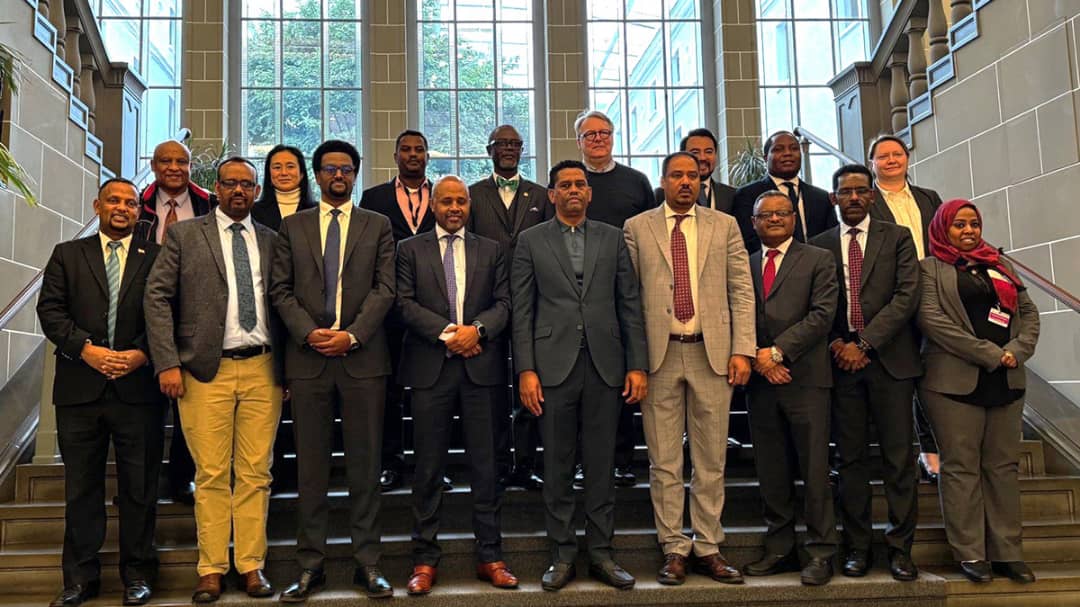
Ethiopia is actively engaging with the WTO to conclude its accession negotiations as early as 2026 and to implement its accession commitments.
In a statement, WTO confirms : “As Ethiopia prepares for its 5th Working Party meeting in 2025, the Steering Committee agreed on an accession roadmap which outlines steps and timelines for concluding the negotiations, currently envisaged for 2026.
” Ethiopia is not a member of the WTO though Ethiopia’s gradual accession to the WTO has been underway since 2003.
In August 2023, Ethiopian negotiators lined up a fifth working party meeting with WTO, tentatively set up for March or April 2024.
However, Ethiopia then paused the process for eight years, primarily over concerns about liberalising its banking and telecom sectors.
In June 2019, Ethiopia’s Prime Minister, Abiy Ahmed, reactivated the process and formed a national committee of ten members to resume the accession procedure.
A high-level delegation from Ethiopia led by Kassahun Gofe Balami, Minister of Trade and Regional Integration and Chief Negotiator for WTO Accession, visited the WTO on 5-11 December to prepare for the reactivation of the country’s accession Working Party in early 2025.
The visit marked Ethiopia’s strong re-engagement in the accession process five years after the last Working Party meeting in January 2020. The visit began with a meeting between Minister Kassahun Gofe Balami and WTO Deputy Director-General Xiangchen Zhang on 5 December 2024.
Minister Kassahun Gofe Balami reaffirmed Ethiopia’s strong commitment to restarting and accelerating its WTO accession.
He underscores the recent progress in Ethiopia’s domestic economic reforms. He further expressed gratitude for the technical support provided by the WTO Secretariat and emphasized his Government’s needs for continued capacity-building, as a least-developed country (LDC).
The Minister also participated in the 9th Working Party Meeting of Uzbekistan on 5–6 December 2024. In his intervention at the meeting, he highlighted that Ethiopia shares Uzbekistan’s steadfast commitment to joining the WTO and noted the contribution of WTO accession to the diversification and liberalization of acceding economies.
The visit included briefing sessions on WTO Accession, jointly delivered by the World Bank and the WTO Secretariat on 9–10 December 2024.
Members of Ethiopia’s Steering Committee addressed the economic impact of WTO membership, key provisions and obligations across WTO Agreements, and specific issues in Ethiopia’s multilateral and bilateral accession negotiations.
The delegation recognized the significant benefits of WTO accession, including increased trade predictability, access to WTO instruments, and increased attractiveness of Ethiopia’s economy for foreign direct investment.
Photo Caption: Members of the Steering Committee: Ambassador Mesganu Arga Moach, State Minister of Foreign Affairs and Deputy Chief Negotiator on WTO Accession; Yasmin Wohabrebbi Saeed, State Minister of Trade and Regional Integration; Eyob Tekalign Tolina, State Minister of Finance; Belayihun Yirga Kifile, State Minister of Justice; Debele Kabeta Hursa, Commissioner for Customs; Fikadu Digafie Huriso, Vice Governor of the National Bank of Ethiopia; and Zeleke Temesgen Boru, Commissioner for Investment.


International
Death toll in South Africa bar shooting rises to 18, police say
The motive for the attack was not clear but the area is reportedly gripped by rivalry between gangs involved in illicit mining for gold.

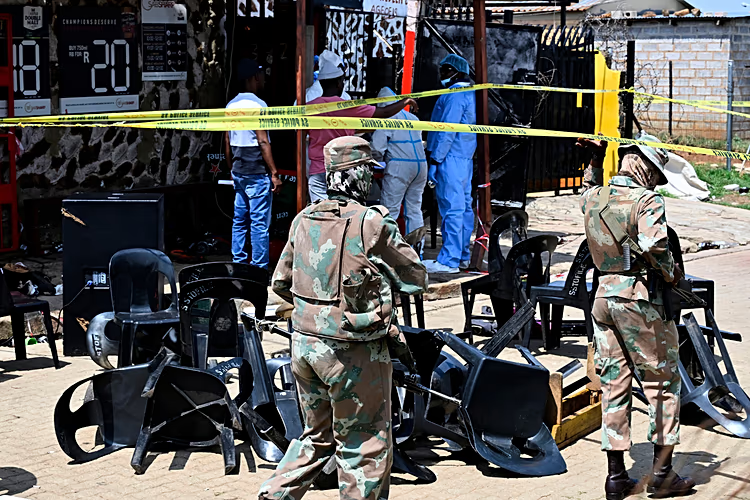
• Forensic officers and the army at the scene of a mass shooting at a bar in Wedela township, 27 September, 2026 AP Photo
The death toll from a mass shooting at a South African tavern has risen to 18 after one person died in hospital, police said on Monday, announcing at least two of the dead were Lesotho nationals.
The shooting west of Johannesburg late on Saturday was part of a bloody weekend in the crime-weary country, with 10 people killed in another mass shooting in Cape Town on Sunday.
Eight gunmen armed with assault rifles stormed the bar in the semi-rural township of Wedela, around 80 kilometres from central Johannesburg, and killed13 men and four women, police said.
“One more victim has died in hospital, bringing the total number of deceased to 18,” they said.
“Only four of the deceased have been identified, two South Africans and two Lesotho nationals.”
The motive for the attack was not clear but the area is reportedly gripped by rivalry between gangs involved in illicit mining for gold.
Thousands of unregistered miners operate in abandoned mining shafts in South Africa, many coming from across southern Africa, including the kingdom of Lesotho which is within South Africa.
International
Congo military plane crash kills 13, including three officers
“All those on board died; 12 were burned beyond recognition, while the pilot’s lifeless body was found outside the aircraft.”
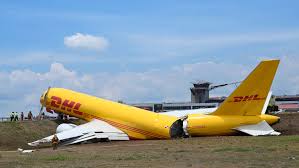
Thirteen people including three army officers were killed on Friday when a military plane crashed in Democratic Republic of Congo, an official said.
Reuters reported that the plane was travelling to the capital, Kinshasa, from the southwestern city of Kikwit when it experienced a technical problem and attempted to land in Kenge, in Kwango province, said Remy Saki Bokinda, the Kwango vice governor.
“With no landing strip available in Kenge, the plane crashed into a residential plot,” he said.
The passengers included General Likulia Bakumi, the army’s auditor general, as well as a major, a captain and other military personnel and civilians, Bokinda said.
“All those on board died; 12 were burned beyond recognition, while the pilot’s lifeless body was found outside the aircraft,” he said.
Congo’s aviation accident investigation authority is launching a probe of the crash, a government statement said.
Congo’s army suffered significant setbacks last year at the hands of Rwanda-backed AFC/M23 rebels who seized large swathes of the east.
International
At UN, 80 countries demand reopening of Hormuz, condemn Iran, Houthi attacks
“Iran’s actions in the Strait of Hormuz continue to threaten international security and navigational rights and freedoms,” said a joint statement read out by Bahrain’s Foreign Minister Abdullatif bin Rashid Al Zayani at the United Nations.

• UN General Assembly
Some 80 countries at the ongoing 81st United Nations General Assembly on Thursday demanded the urgent reopening of the Strait of Hormuz and condemned Iran and its Houthi allies for attacks in the region and disruption to international trade and energy security.
“Iran’s actions in the Strait of Hormuz continue to threaten international security and navigational rights and freedoms,” said a joint statement read out by Bahrain’s Foreign Minister Abdullatif bin Rashid Al Zayani at the United Nations.
“We also strongly condemn the Houthis’ decision to resume conflict in Yemen, their continuous strikes on Saudi Arabia, and their reckless attacks in the Red Sea,” the statement said.
The statement’s backers included Gulf Arab states and major Western powers.
It added that the Houthis’ advance towards Bab el-Mandeb Strait would also only heighten risks to international shipping, maritime security and global trade.
Both Iran and the Houthis frame their actions as defensive.
Credit: REUTERS


UPDATE: Malindi Court Declines to Halt Dangote Refinery Launch in Lamu

JUST IN: Tinubu Departs Paris for Nigeria After Extended Vacation

National Assembly Plans to Translate Laws into Igbo, Hausa, Yoruba

Tech Expert, Zuckerberg trains with UFC champions, Adesanya, Alexander

Organ Trafficking: Ekweremadu bags 10 years in UK prison

SAINT OBI: Between his marriage and his death
-

 Business2 days ago
SEC Highlights Focus of National Capital Market Conference 2026
-

 Business2 days ago
NGX Debuts Invest WhatsApp Channel
-

 Sports2 days ago
Flamingos win WAFU B U-17 women’s tournament
-

 Business2 days ago
Naira To Dollar, Pound, Euro …Today, September 28
-

 News2 days ago
Nigeria is 66, Thursday October 1
-

 Entertainment2 days ago
Madonna and Taylor Swift win big at the MTV VMAs
-
 News2 days ago
JUST IN: Fire Engulfs Lagos Customs Command Office
-

 Business2 days ago
Ghana Moves to Cut Domestic Airfares as Ticket Prices Stay High