
News
EFCC goes after dollar speculators, CBN slashes banks allocations

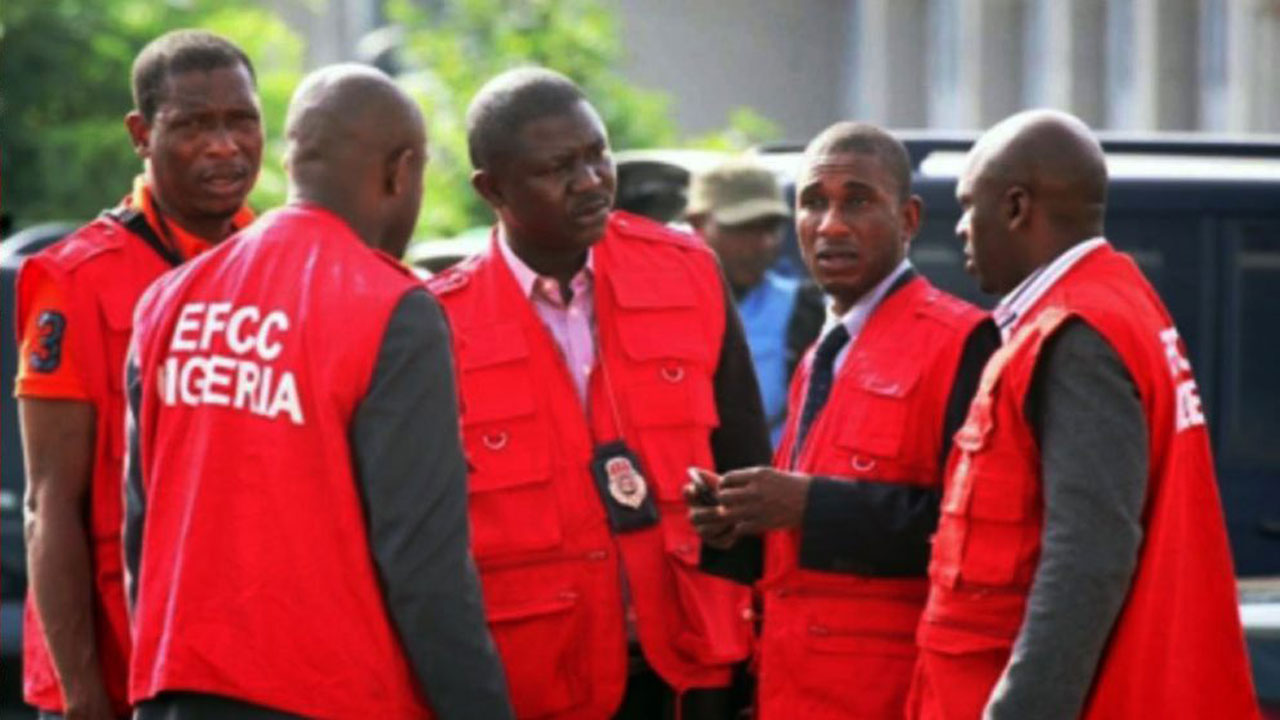
Deposit Money Banks are battling dollar shortage after the Central Bank of Nigeria slashed their foreign exchange allocations.
Multiple bank officials told one of our correspondents they have been unable to meet their customers’ forex demand for school fees, Personal Travel Allowance, among others.
The gap between demand and supply has become worsened. The CBN will intervene and supply more forex soon, “ a top official of a tier-1 bank.
“For some weeks now, we have not got allocation. Sometimes they delay in giving” another bank official said.
The CBN on Monday said it would introduce measures to curb the naira slide.
However, the naira gained at the parallel market on Tuesday, after the central bank said it would intervene in the continued depreciation of the local currency.
On Monday, while speaking after briefing President Bola Tinubu on what the bank was doing to halt the naira slide, the Acting Governor, CBN, Folashodun Shonubi, said the fluctuation in the parallel market was not solely driven by economic factors, but also speculative demand.
However, some Bureau de Change Operators said the naira which was earlier exchanged to the dollar at 956/$ on Monday, exchanged at 925/$ on Tuesday.
A BDC operator, Alh Alli Kareem, said, “Today, we bought and sold the naira at 915/$ and 925/$. They are saying they will pump more dollars into the economy but, we are still waiting.”
On the Investors & Exporters window, trading of the naira commenced at 785.89/$ and reached a high of 799.90/$ before closing at 774.77/$ on Tuesday; it closed at 764.68/$ on Monday.
A former President, Association of National Accountants of Nigeria, Dr Sam Nzekwe, said, the intervention announced by the CBN might be a short-term one, adding that might not be sustainable.
He said, “People don’t have confidence in naira again; when people have money, they go to the BDCs and buy the dollar and keep. The best intervention they can do is to see how they can get the economy to be productive, but now, we are importing a lot.
“If they are saying intervention, is it the dollar you have or the one you don’t have? I don’t worry that the CBN floated the naira, but it cannot defend it.”
It would be recalled that in July 2021, the CBN discontinued dollar allocation to the BDCs, but continued through the Deposit Money Banks.
Meanwhile, the Federal Government may in the coming weeks clamp down on Bureau De Change operators.
Sources close to the matter, hinted to our correspondent that the operatives of the Economic and Financial Crimes Commission might go after currency speculators whose activities have been putting pressure on the local currency.
“The Federal Government is planning to clamp down on operators of Bureau De Change across the country. Although they are businessmen, they are also part of the problem due to the rate at which they greedily hike rates to make profits. The current rates are not market driven but speculative, and that is why the government said they would intervene,” the source said.
EFCC could not verify the plan as of press time.









Boko Haram has strongly denied reports of a ceasefire agreement with the Federal Government and insisted that it will continue its campaign of attacks.
In a statement released by the group, the militants dismissed claims of any truce or negotiated pause in hostilities, describing such reports as false and misleading.
The group reaffirmed its commitment to ongoing operations against government forces and other targets, vowing that its attacks will persist without interruption.
The denial comes against the backdrop of persistent insecurity in the northeast and other affected regions, where the group has maintained a long-standing insurgency.
Security sources note that the latest statement appears aimed at clarifying the group’s position and rejecting any suggestion of dialogue or de-escalation with the authorities.
Military and government officials have not issued an immediate detailed response to the claim, though security operations against the militants remain active. Authorities continue to urge vigilance as the group signals its intention to sustain violence.
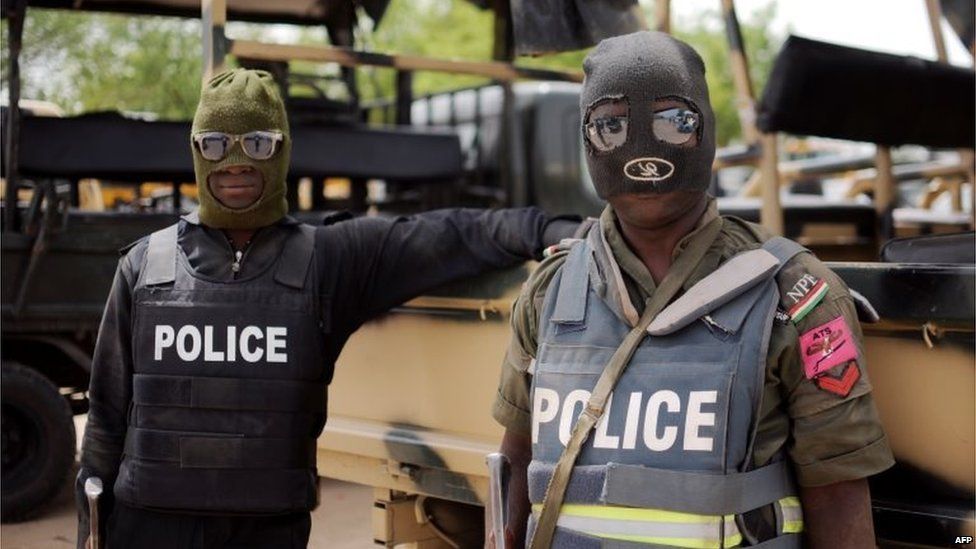
Police authorities have raised a serious alarm over intelligence indicating that terrorists and their informants are actively spying on schools and other sensitive targets across the country.
According to security sources, the surveillance activities form part of a broader effort by extremist groups to gather information on soft targets, with educational institutions identified as particularly vulnerable. Officials warn that such reconnaissance could be a precursor to planned attacks and have called for immediate heightened vigilance by school administrators, security personnel, and the general public.
The police statement urges institutions to strengthen access controls, report suspicious individuals or activities promptly, and cooperate fully with security agencies. “We are treating these reports with the utmost seriousness,” a senior police official said, noting that the involvement of local informants makes the threat more difficult to detect.
The military has responded by confirming that it is closely monitoring the situation. In a brief statement, military authorities said relevant formations have been placed on alert and are working in coordination with the police and other security agencies to track and disrupt any potential threats.
Security experts note that schools and public gathering places have increasingly featured in the operational planning of terrorist groups in recent years, making continuous intelligence sharing and community awareness critical to prevention. Authorities continue to appeal for calm while stressing that proactive measures are already underway.
News
Dangote Refinery IPO: SEC Warns Investors, ‘Don’t Pay Into Wrong Hands’
The warning effectively places investors on notice that interest in the IPO should not override basic due diligence, particularly in verifying where subscription applications are submitted and where payments are made.

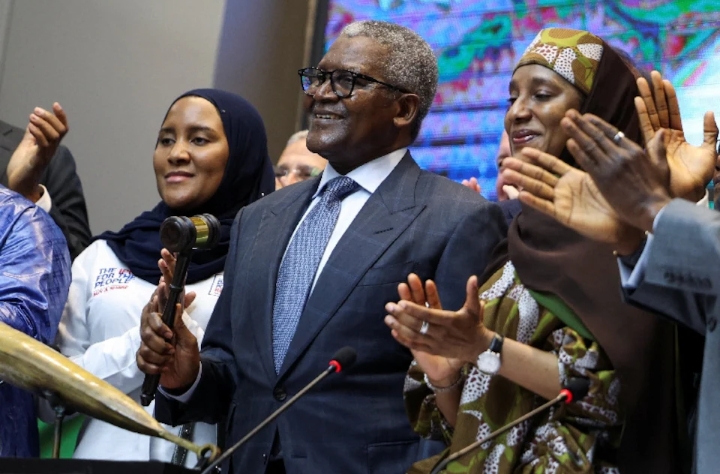
• Aliko Dangote , flanks by her daughters and capital market regulators, during the gong opening ceremony on the NGX, Monday September 14,2026
The Securities and Exchange Commission (SEC) has warned prospective investors in the Dangote Petroleum Refinery and Petrochemicals Initial Public Offering (IPO) against fraudsters and unauthorised platforms seeking to divert subscription funds.
The warning came as the refinery’s was quoted on the Nigerian Exchange Limited (NGX) on Monday, September 14, 2026, marking a major milestone in the company’s planned public offer.
With strong public interest expected around one of Nigeria’s largest capital-market offerings, the SEC urged investors to deal only with officially designated and approved receiving agents, subscription channels and platforms.
“The public is hereby advised to exercise caution and ensure that all applications and payments relating to the IPO are made only through the officially designated and approved receiving agents/subscription channels and platforms,” the Commission said.
The regulator’s alert highlights growing concerns over the possibility of fake investment websites, cloned platforms, fraudulent payment channels and individuals posing as authorised agents to exploit the huge interest generated by the Dangote Refinery offer.
The SEC therefore advised prospective investors to obtain information about the IPO only through the Commission’s official channels, the issuer’s official channels and other channels specifically established and approved for the offer.
The warning effectively places investors on notice that interest in the IPO should not override basic due diligence, particularly in verifying where subscription applications are submitted and where payments are made.


Olu Jacobs: His Life and Times
EXCLUSIVE: Veteran Nollywood Actor, Olu Jacobs Dies at 84

Naira Exchange Rates To Dollar, Pound, Euro…Wednesday, 16 September 2026

Tech Expert, Zuckerberg trains with UFC champions, Adesanya, Alexander

Organ Trafficking: Ekweremadu bags 10 years in UK prison

SAINT OBI: Between his marriage and his death
-

 Business3 days ago
Naira Exchange Rates To Dollar, Pound , Euro… September 14
-

 Politics2 days ago
Again, Desmond Elliot begs political mentor,Gbajabiamila , “I’m sorry, Daddy”
-

 News2 days ago
Boko Haram Denies Ceasefire with FG, Vows Continued Attacks
-
 Business3 days ago
Filling Stations Selling Petrol, Diesel Higher Driven By Global Crude Prices
-

 Business2 days ago
Dangote at IPO Listing, Charges Public,”I don’t want to be called richest man in Africa”
-
 Business3 days ago
Dangote Refinery’s IPO Officially Opens Today On NGX
-

 News2 days ago
Police Raise Alarm Over Terrorists and Informants Spying on Schools, Other Targets
-

 Crime2 days ago
Boko Haram Attacks Adamawa Community, Kills Residents