
Business
Economists Predict Positive Impact of Naira Appreciation on Inflation and Import Prices

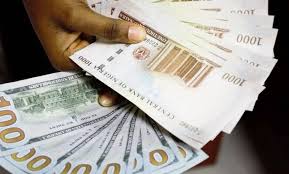
Nigerian economists are optimistic that the recent appreciation of the Naira against the U.S. dollar, if sustained, could significantly reduce the cost of imported goods and curb the country’s headline inflation, which stood at 33.88% in October 2024.
Gbolade Idakolo, Chief Executive Officer of SD & D Capital Management, and Prof. Godwin Oyedokun of Lead City University, Ibadan, shared these insights on Monday.
The Naira’s exchange rate improved to N1,538.50 per dollar on December 9, 2024, from N1,740 a month earlier. This represents a gain of N201.50 in the official market, despite slight fluctuations in rates at the start of the week.
This progress follows the Central Bank of Nigeria’s (CBN) introduction of the Electronic Foreign Exchange Matching System (EFEMS), aimed at fostering transparency and reducing market distortions. The platform has reportedly curbed speculative trading in the parallel market, bolstering confidence in the Naira’s stability.
Key Perspectives on the Naira’s Strengthening
Gbolade Idakolo described EFEMS as a “game changer” for its transparency and effectiveness in unifying forex bidding platforms. He emphasized that the system had diminished speculative activities in the parallel market, leading to a stronger Naira.
He highlighted the positive implications for importers, noting that the reduction in import duty exchange rates would decrease clearing costs, which are a significant factor in determining the prices of imported goods.
“The recent drop in exchange rates for import duties is a step in the right direction. Lower clearing charges will lead to reduced prices for imported goods, benefiting consumers,” Idakolo stated.
However, he urged the CBN to maintain strict regulatory oversight of banks, Bureau De Change operators, and other market players to ensure the sustainability of the gains.
Prof. Godwin Oyedokun attributed the Naira’s appreciation to increased FX inflows, reduced dollar demand, and strategic CBN interventions. He agreed that lower exchange rates for import duties could indirectly lower prices of imported goods, provided importers pass on the savings to consumers.
However, Oyedokun cautioned that several factors could limit the impact of the Naira’s appreciation on imported goods, including:
- Global supply chain disruptions that may inflate costs.
- Domestic economic conditions, such as inflation and government policies.
- Importer behavior, as some importers might prioritize profit margins over price reductions.
To sustain the Naira’s strength, he advised the CBN to continue promoting macroeconomic stability, attracting foreign investment, and addressing structural issues like corruption, insecurity, and inadequate infrastructure.
“While the recent Naira appreciation is encouraging, it may be temporary. Strategic and consistent interventions by the CBN will be crucial to sustaining this progress,” Oyedokun concluded.
Outlook
The economists agree that the Naira’s appreciation offers an opportunity to alleviate inflationary pressures, particularly in import-dependent sectors. However, sustained gains will require consistent policy measures and vigilance from the CBN to ensure long-term economic stability.
Business
CBN admits it opened domiciliary accounts for PFIPC agency
Represented by the Director of its Banking Services Department, Hamisu Ibrahim, the CBN said that the accounts are one in US dollars, the other in British pounds sterling, were opened following a mandate received from the Office of the Accountant-General of the Federation.


File photo : PFIPC agency DG, Adeniyi Adeyemi
The Central Bank of Nigeria had admitted that it opened two foreign-currency domiciliary accounts for the controversial Presidential Foreign Investment Promotion Council (PFIPC).
The apex bank made the confirmation, yesterday, during the public hearing convened at the National Assembly Complex by the House of Representatives Ad-hoc Committee investigating the existence and operations of the PFIPC, chaired by Yusuf Gagdi and inaugurated by Speaker Tajudeen Abbas.
Represented by the Director of its Banking Services Department, Hamisu Ibrahim, the CBN said that the accounts are one in US dollars, the other in British pounds sterling, were opened following a mandate received from the Office of the Accountant-General of the Federation.
He explained that on July 30, 2025, CBN received a mandate dated July 29, 2025 from the Office of the Accountant-General.
“We received the mandate to authorise two accounts, one a US dollar domiciliary account, the other a pound domiciliary account, for the Presidential Economic Advisory Council/Presidential Foreign Investment Promotion Council,” Ibrahim told the committee.
He explained the CBN’s verification process, “The process of opening an account requires a mandate from the Office of the Accountant-General of the Federation.
“Once we receive that mandate, we perform all the necessary verifications to confirm that this mandate is actually coming from that office.
The department that handles the mandate is different from the department that actually does the account opening,” he said.
Nevertheless, he noted that no one came to activate the accounts after they were opened.“We did not receive any correspondence, mandate, signature or mandate cards. We were not introduced to the authorising or approving officers.“Based on that, those accounts remain inactive, with zero balance. There have been no foreign exchange allocations.
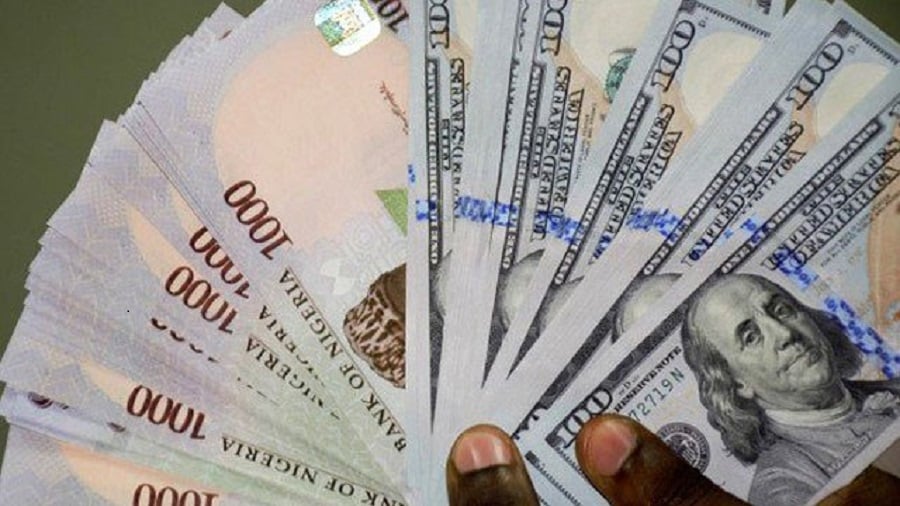
BLACK MARKET RATES
US DOLLAR (USD) Buy ₦1, 410 Sell ₦1,415
GREAT BRITISH POUND (GBP) Buy ₦1,890 Sell: ₦1,910
EURO (EUR) Buy ₦1,580 Sell ₦1,600
CANADIAN DOLLAR (CAD) Buy ₦1,020 Sell ₦1,080
SOUTH AFRICAN RAND (ZAR) Buy ₦75 Sell ₦90
UAE DIRHAM Buy ₦350 Sell ₦370 CHINESE YUAN Buy ₦190 Sell ₦205
GHANA CEDI (GHS) Buy ₦95 Sell ₦110
WEST AFRICAN CFA Buy ₦2, 300 Sell ₦2, 400
CENTRAL AFRICAN CFA Buy ₦2,150 Sell 2,250
AUSTRALIAN DOLLAR Buy ₦800 Sell ₦900
CBN OFFICIAL EXCHANGE RATES
US DOLLAR (USD) ₦1,380.11
GREAT BRITISH POUND (GBP) ₦1,857.35
EURO (EUR) ₦1,575.95
SWISS FRANC (CHF) ₦1,705. 31
JAPANESE YEN (JPN) ₦8.50
CHINESE YUAN (CNY) ₦203.94
WEST AFRICAN CFA (XOF) ₦2.40
WEST AFRICAN UNIT ACCOUNT (WAUA) ₦1,874. 32
SAUDI RIYAL (SAR) ₦367.49
SOUTH AFRICAN RAND (ZAR) ₦83.69
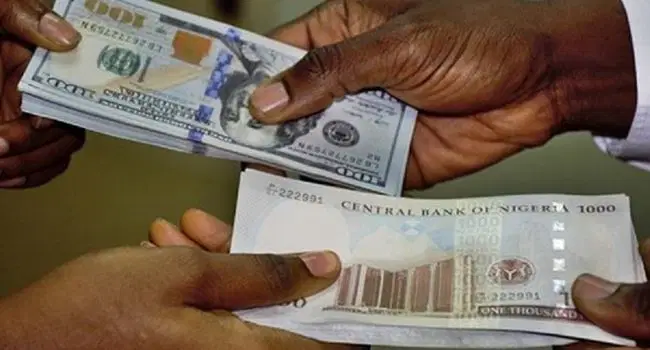
BLACK MARKET RATES
US DOLLAR (USD) Buy ₦1, 416 Sell ₦1,422
GREAT BRITISH POUND (GBP) Buy ₦1,895 Sell: ₦1,915
EURO (EUR) Buy ₦1,590 Sell ₦1,610
CANADIAN DOLLAR (CAD) Buy ₦1,020 Sell ₦1,080
SOUTH AFRICAN RAND (ZAR) Buy ₦75 Sell ₦90
UAE DIRHAM Buy ₦350 Sell ₦370 CHINESE YUAN Buy ₦190 Sell ₦205
GHANA CEDI (GHS) Buy ₦95 Sell ₦110
WEST AFRICAN CFA Buy ₦2, 300 Sell ₦2, 400
CENTRAL AFRICAN CFA Buy ₦2,150 Sell 2,250
AUSTRALIAN DOLLAR Buy ₦800 Sell ₦900
CBN OFFICIAL EXCHANGE RATES
US DOLLAR (USD) ₦1,380.18
GREAT BRITISH POUND (GBP) ₦1,854.42
EURO (EUR) ₦1,577.00
SWISS FRANC (CHF) ₦1,707.94
JAPANESE YEN (JPN) ₦8.50
CHINESE YUAN (CNY) ₦203.57
WEST AFRICAN CFA (XOF) ₦2.40
WEST AFRICAN UNIT ACCOUNT (WAUA) ₦1,874. 32
SAUDI RIYAL (SAR) ₦367.48
SOUTH AFRICAN RAND (ZAR) ₦83.29


CBN admits it opened domiciliary accounts for PFIPC agency

Naira Exchange Rates At The Parallel/ Official Market Tuesday, 21 July

Ayo Fayose Gets Presidential Portfolio As REA Board Chairman

Tech Expert, Zuckerberg trains with UFC champions, Adesanya, Alexander

Organ Trafficking: Ekweremadu bags 10 years in UK prison

SAINT OBI: Between his marriage and his death
-

 News1 day ago
BIJAMIC College Charges Class of 2026 Graduates to Embrace Resilience, Learn from Thomas Edison
-

 Sports2 days ago
Who made the FIFA World Cup trophy?
-

 News1 day ago
Senegal President, Faye elected new ECOWAS chairman
-

 Sports1 day ago
FIFA To Review Hydration Breaks After World Cup Final – Wenger
-

 Crime2 days ago
Students Killed as Troops Foil ISWAP Abduction Bid in Borno
-

 Sports1 day ago
Burna Boy shines in first-ever World Cup Halftime Show
-

 News2 days ago
Badejo-Okusanya Emerges NBA National President (2026-2028)
-
 News1 day ago
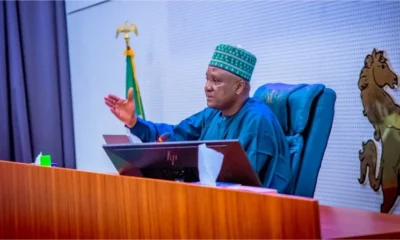
Abbas inaugurating today committee to investigate illegal PFIPC agency