
News
Changing Gears 2.0: Soludo’s Acceleration Budget For Anambra

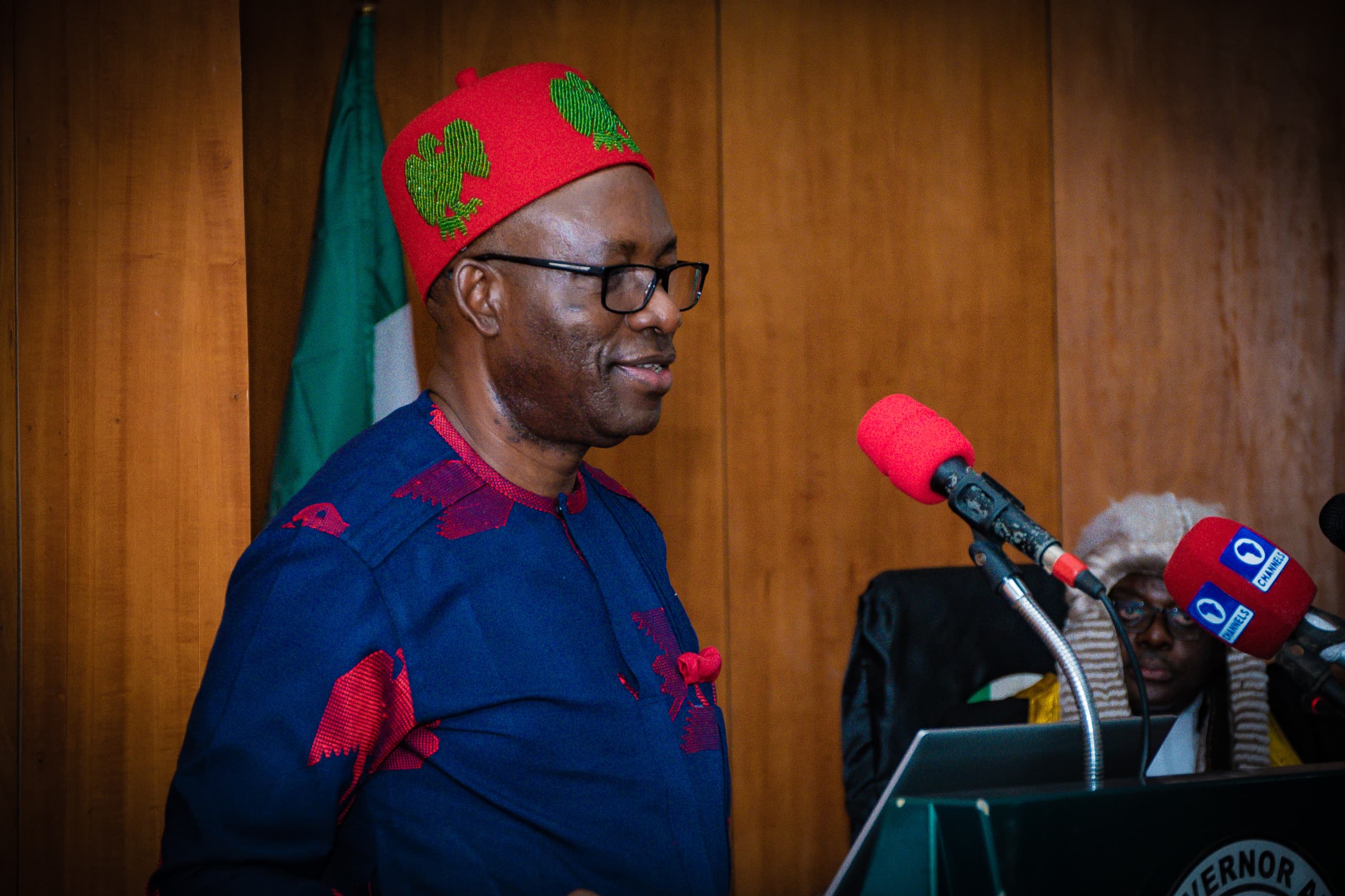
By Christian ABURIME In an era where Nigerian states often retreat behind the shield of “economic headwinds,” Anambra State is charting a remarkably different course.
This is evident in Governor Chukwuma Soludo’s presentation of the N607 billion 2025 budget. Aptly tagged “Changing Gears 2.0”, the budget tells a compelling story of fiscal ingenuity, one where ambitious development meets pragmatic restraint.
The numbers are striking, not for their size, but for their context. At $357 million, this budget is actually smaller in real terms than what the state spent in 2008 ($517 million) or 2013 ($1.1 billion). Yet, paradoxically, it promises to deliver even more.
This is not just political rhetoric; it is backed by a clear track record of execution. Consider the mathematics of adversity: cement prices have more than tripled to N10,000 per bag, fuel costs have skyrocketed tenfold to over N1,000 per litre, and inflation continues its relentless march.
Lesser administrations might have used these as ready-made excuses. Instead, Governor Soludo’s team has transformed these constraints into a catalyst for innovation. Instructively, the budget’s architecture reveals a government that understands the art of prioritisation.
A 77:23 ratio of capital to recurrent expenditure is beyond just a number; it is a significant shift in state-level governance.
Most Nigerian states struggle to keep their recurrent expenditure below 70%.
By driving it down to 23%, Anambra State under the leadership of Governor Soludo is effectively saying: we will run a lean government to build a rich state.
But perhaps the most intriguing aspect of this budget is its candid honesty about weaknesses.
The state’s IGR currently stands at N2.5 billion monthly, against a potential of N10-15 billion.
This admission is not just all about transparency; it is also a challenge to the status quo. It suggests a government willing to confront its shortcomings rather than hide them. What’s more, the execution strategy reads like a business plan rather than a typical government document.
From transforming 22 schools into “smart schools” to distributing millions of economic seedlings and trees, from building the “largest shopping mall in Africa” to creating three new cities, the ambition is breathtaking.
Yet it is tempered with fiscal responsibility: the administration won’t borrow unless the loans are concessionary and tied to self-liquidating projects.
What is particularly noteworthy is the state’s approach to human capital development.
The extension of free education through SS3, recruitment of 8,115 teachers, and the innovative “One Youth, Two Skills” programme suggests a government thinking beyond the next election.
This is governance with a generational perspective. However, the true genius of this budget lies not in what it promises to spend, but in how it plans to achieve more with less.
The emphasis on strategic partnerships, community involvement, and private sector engagement suggests a recognition that the government alone cannot drive development. Critics might argue that the budget’s ambitions exceed its means.
But therein lies its brilliance: by setting ambitious targets while maintaining fiscal discipline, it creates a productive tension between aspiration and reality.
This tension, if properly managed, could be the catalyst for innovation in governance.
As Nigeria contends with the aftermath of fuel subsidy removal and currency unification, Anambra’s approach offers a template for other states.
“One Youth, Two Skills” programme suggests a government thinking beyond the next election.
It demonstrates that the answer to economic challenges is not always more money; sometimes, it is smarter money. Now, the success of this budget will ultimately depend on execution.
But by maintaining a capital-heavy investment profile while keeping recurrent costs low, prioritising revenue generation while resisting reckless borrowing, and balancing ambitious development with fiscal restraint, Governor Soludo is showing that it is possible to dream big while spending smart.
In the end, this “Changing Gears 2.0” budget is more than another routine financial document replete with platitudes.
It is a masterclass in governance under constraint, audaciously extending the mantra of Doing More with Less and representing another major step towards realising Governor Soludo’s vision of transforming Anambra into a smart, livable and prosperous mega city.






News
ARISE News Wins Seven Honours At Nigerian Broadcasters Merit Awards
The awards recognised the network’s achievements in television journalism and programming, with ARISE News winning the Best TV Channel (Viewer’s Choice) category.

• ARISE News Anchor and host of What’s Trending Ojy Okpe was named Best Newscaster (TV – Female)
ARISE News has emerged as one of the major winners at the just ended Nigerian Broadcasters Merit Awards (NBMA).
ARISE News won seven honours across television broadcasting, news reporting, presentation and production during the ceremony.
The awards recognised the network’s achievements in television journalism and programming, with ARISE News winning the Best TV Channel (Viewer’s Choice) category.
The network’s flagship breakfast programme, The Morning Show, also won the Best TV Talk Show award, further strengthening its recognition in television broadcasting.
ARISE News Anchor and host of What’s Trending Ojy Okpe was named Best Newscaster (TV – Female).
Rufai Oseni was named Nigerian Broadcaster of the Year (Male), while Vimbai Mutinhiri-Ekpeyong received the Nigerian Broadcaster of the Year (Female) award.
The recognition extended to the network’s newsroom, with Ovieteme George winning Best TV News Reporter (Male) for his contributions to television news reporting.
Behind the camera, Sam Adeyemi received the Best Camera Operator/Cinematographer award, recognising his work in television production and visual storytelling.
News
Meta removes 3.7 million accounts in West Africa scam crackdown
The joint operation led to 28 arrests, identified more than 30 suspected scam centres and rescued 117 people allegedly trafficked and forced to work in scam compounds in Ghana.
Meta, the parent company of Facebook and Instagram, has removed more than 3.7 million Facebook and Instagram accounts, pages and groups linked to suspected scam networks operating in West Africa.
The joint operation led to 28 arrests, identified more than 30 suspected scam centres and rescued 117 people allegedly trafficked and forced to work in scam compounds in Ghana.
The company announced the crackdown in a statement on Tuesday, October 13, 2026. It involved 14 technology companies and law enforcement agencies from 10 countries.
The United Kingdom’s National Crime Agency coordinated the operation with the US Department of Justice, the Federal Bureau of Investigation and other agencies. Nigerian authorities were involved.
Other countries included Ghana, Australia, Canada, New Zealand and India.Tech companies that took part included Google, Microsoft, OpenAI, Coinbase, Starlink and Adobe.
Meta said the partnership let participants share intelligence across digital platforms, countries and financial systems to identify criminal networks.

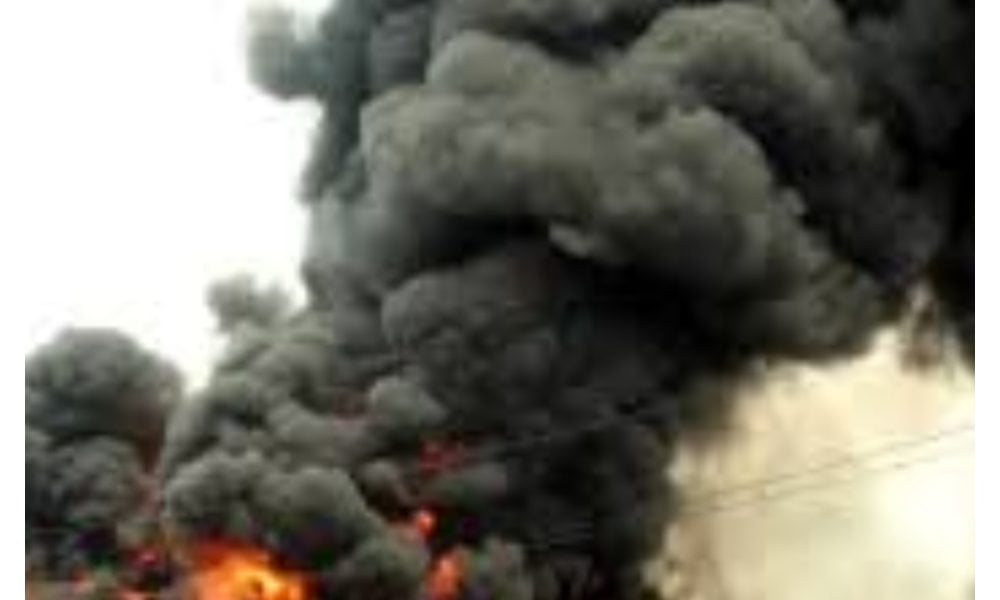
A gas pipeline explosion in Aleto community, Eleme Local Government Area of Rivers State, on Thursday evening has left at least 20 people injured, with about 50 houses destroyed by the resulting fire.
The blast occurred around 5 pm after a pipeline belonging to the Nigeria Gas Company ruptured along Old Bori Road. Several victims were rushed to hospitals. Stalls and a mechanic workshop with parked cars were also affected.
Residents said the pipeline had been leaking for about three weeks. Stanley, a local, stated that community leaders had alerted the company, but no effective action was taken. Most of those hurt were passers-by and people working in the area.
Daniel Chuma, Leader of the Eleme Legislative Council, visited the scene and confirmed the scale of the damage. He said he had earlier written to the company and petitioned NOSDRA and the Rivers State Ministry of Environment, copying the police, after a previous leak on another section of the same pipeline.
“Today, we were called to an explosion at the same Nigeria Gas Company pipeline that has destroyed over 50 houses and cars, with many casualties. People have been rushed to the hospital,” Chuma said. He added that no company representative had arrived at the scene, and community members had cordoned off the area with barrier tape to prevent further harm.
The Youths and Environmental Advocacy Centre (YEAC-Nigeria) also confirmed the incident. Its Executive Director, Dr Fyneface Dumnamene, said several people had been hospitalised and called on the Rivers State Government, the Ministry of Environment, NOSDRA, the Federal Government and other relevant agencies to support the affected residents of Aleto.
The fire was still burning at the time of early reports.


ARISE News Wins Seven Honours At Nigerian Broadcasters Merit Awards

Meta removes 3.7 million accounts in West Africa scam crackdown

Naira Exchange Rates Friday, October 16

BREAKING: Lagos Govt Declares Today, Thursday Work-Free to Mark 2026 Ìṣẹ̀ṣe Day

Tech Expert, Zuckerberg trains with UFC champions, Adesanya, Alexander

Organ Trafficking: Ekweremadu bags 10 years in UK prison
-
 News3 days ago
UNCTAD Warns Debt Burden Threatens Future of 3.7bn People
-

 Business3 days ago
FAO Names 22 African Women Agrifood Heroes, Nigeria Missing
-
 News3 days ago
NAF Crash: Residents Fear Disease as Body Parts Foul Community River
-

 Business2 days ago
NAFDAC scolds fake manufacturers: “You are killing Nigerians in order to make money”
-
 Business1 day ago
Naira Exchange Rates For Thursday, October 15
-
 Business2 days ago
Oyedele Chairs G-24 Call for Fairer Global Financial System, Affordable Development Financing
-

 Business3 days ago
BREAKING: Shell to Exit Nigeria’s Domestic Gas Distribution Business
-
 Sports1 day ago
CAF Increases Annual Funding for Member Federations to $700,000