
Business
Affordable Places to Live as a Remote Worker in Lagos by Dennis Isong


Lagos is not the cheapest city to live in, but with the right information, you can find an affordable place that suits your needs as a remote worker.
If you have ever tried working remotely in Lagos without proper planning, you already know how fast your data subscription disappears.
It’s like your WiFi is fasting and praying for deliverance! And let’s not even talk about the rent—some landlords think they are renting out properties in Banana Island when, in reality, it’s more like “Plantain Village.”
Lagos is a great city for remote workers, but choosing the right area to live in can make all the difference.
You need a place that is affordable, safe, and has stable electricity and internet access. Here are some top locations that fit these criteria without draining your bank account.
1. Ogudu
Ogudu is one of the hidden gems in Lagos. It offers a mix of affordability, security, and accessibility.
The cost of renting a mini-flat (self-contained apartment) in Ogudu ranges from ₦500,000 to ₦1,200,000 per year. The roads are relatively good, and you have easy access to the Third Mainland Bridge, making it easy to get to the Island if needed. Internet service is also strong, with providers like MTN, Airtel, and Spectranet delivering good speed.
2. Abule Egba
Abule Egba has improved significantly in recent years. With the new flyover bridge and better road networks, commuting to other parts of Lagos is much easier.
The area is budget-friendly, with mini-flats going for ₦300,000 to ₦700,000 per year.
There are supermarkets, restaurants, and co-working spaces nearby if you ever need to step out of your home office. Power supply is also fairly stable compared to some other places in Lagos.
3. Gbagada
Gbagada is a sweet spot for remote workers looking for a calm environment that is still close to the business districts.
The rent is slightly higher than in Abule Egba, with mini-flats ranging from ₦700,000 to ₦1,500,000 per year. But the extra cost comes with benefits—better security, less traffic stress, and more reliable power supply. Plus, you get quick access to Ikeja, Victoria Island, and Lekki if work ever demands physical meetings.
4. Ikorodu (Some Parts)
Ikorodu is not just for people who love long-distance travel. Some areas like Agric, Ogolonto, and Ebute are fast developing, with better road networks and growing commercial activities.
You can get a decent mini-flat for ₦250,000 to ₦600,000 per year. The internet connection is not bad if you go with reliable providers. The only downside? If you need to be on the Island regularly, the commute might test your patience.
5. Oshodi-Isolo
Oshodi has changed from the chaotic reputation it had in the past. The Isolo side, in particular, is a solid choice for remote workers. Rent prices are between ₦400,000 and ₦900,000 per year for a mini-flat. There’s good access to transport, markets, and a variety of restaurants. The area is also well-connected to Ikeja and Surulere, making movement easy.
6. Mowe & Ibafo (Bordering Lagos and Ogun State) If you don’t mind living slightly outside Lagos,
Mowe and Ibafo are excellent options. They are along the Lagos-Ibadan expressway, and many professionals are moving there due to lower rent and better housing options. You can get a decent apartment for ₦200,000 to ₦500,000 per year.
The internet connection is getting better, especially with fiber-optic expansion. If you are a remote worker who values peace and space, this might be the best place for you.
Things to Consider Before Choosing a Place
• Power Supply: Lagos has unpredictable electricity, so areas with better supply should be a priority. Places like Gbagada and Ogudu tend to have more stable power. • Internet Connection: Check which provider has the best network in the area.
• Transport & Accessibility: If you need to move around frequently, consider areas with good road networks and less traffic congestion.
• Budget: Don’t just look at rent; consider other costs like service charges, security levies, and water supply.
Lagos is not the cheapest city to live in, but with the right information, you can find an affordable place that suits your needs as a remote worker.
Whether you choose Ogudu for convenience, Abule Egba for affordability, or Mowe for peace and quiet, there is a perfect spot for you.
Just remember, wherever you settle, invest in an inverter or a backup power source—because even in the best areas, NEPA will always remind you that they are in charge!
Dennis Isong and team.
+2348164741041
+2348028667565
+2348164741041
Business
History of Naira Revaluation and Devaluation (1973–2026) (Part 1)
Why was the naira devalued?

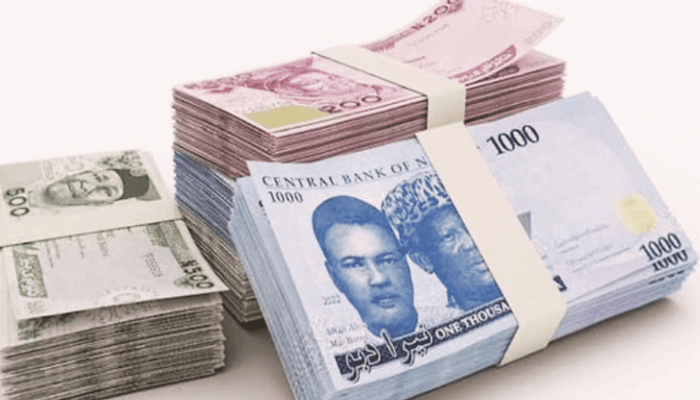
The history of the Nigerian naira is marked by two major developments: periods when the currency gained value or was officially strengthened, and prolonged periods when it lost value against major international currencies, particularly the US dollar.
Since its introduction in 1973, the naira has undergone several exchange-rate policy changes, including fixed exchange rates, currency devaluations, foreign-exchange market liberalisation, attempts to unify exchange rates and market-driven depreciation.
The Central Bank of Nigeria (CBN) has played a central role in managing these changes.
- Introduction of the Naira in 1973
Nigeria introduced the naira on January 1, 1973, replacing the Nigerian pound.
The conversion rate was:
£1 Nigerian pound = ₦2.
₦1 = 10 shillings under the old currency system.
₦1 = 100 kobo.
The new currency was introduced during a period of expanding oil revenues and economic growth.
Nigeria initially maintained a relatively strong, managed exchange rate, supported by foreign-exchange controls and the country’s oil earnings.
The introduction of the naira was a currency change, not a devaluation.- The 1970s: A Relatively Strong Naira
During the 1970s, rising oil revenues strengthened Nigeria’s foreign-exchange position.
The government maintained a controlled exchange-rate system, initially linking the naira to the US dollar before moving to a basket of currencies representing major trading partners in 1978.
The oil boom provided foreign exchange for imports, infrastructure and public expenditure.
However, Nigeria’s dependence on crude oil revenues left the economy vulnerable to fluctuations in international oil prices.
Key development: The naira benefited from a relatively strong external position, although its exchange rate was managed by the authorities rather than determined by an unrestricted market.- The Early 1980s: Mounting Pressure on the Naira
The economic situation deteriorated in the early 1980s as oil revenues weakened and foreign-exchange shortages intensified.
Nigeria faced several economic challenges:
• Declining oil receipts.
• Rising import bills.
• Pressure on foreign reserves.
• Growing external debt and trade arrears.
• Increasing demand for foreign currency.
The government maintained controls on foreign exchange, but the official rate became increasingly disconnected from the rate at which foreign currency could be obtained in the parallel market.
This created pressure for exchange-rate reform.
The crisis set the stage for the introduction of the Structural Adjustment Programme (SAP) in 1986.- 1986: Major Naira Devaluation Under SAP
September 26, 1986, marked a turning point in the history of the naira.
Under the military government of General Ibrahim Babangida, Nigeria introduced the Second-Tier Foreign Exchange Market (SFEM) as part of the Structural Adjustment Programme.
The objective was to allow market forces to play a greater role in determining the naira’s exchange rate.
According to an International Monetary Fund account, the naira’s value was discounted by approximately 66 per cent at the inaugural SFEM auction.
The exchange rate moved from about ₦1.60 per US dollar under the previous administered rate to approximately ₦4.60 per dollar at the initial auction.
Why was the naira devalued?
The policy was intended to:
•Reduce the overvaluation of the naira.
•Improve the allocation of scarce foreign exchange.
•Encourage non-oil exports.
•Improve the competitiveness of Nigerian products.
•Reduce distortions in the foreign-exchange market.
However, the weaker currency also increased the naira cost of imported goods and production inputs.
The 1986 reform began a prolonged period of exchange-rate adjustments.- …To be continued
Business
Obasanjo Accuses Tinubu : “You Made Every Nigerian Poor By 300% Naira Devaluation”
The former President also rejected the argument that Tinubu needed more time to complete his reforms, saying he did not see the economy improving.

Image: AI generated
Former President Olusegun Obasanjo has accused President Bola Tinubu of making every Nigerian poor by 300 per cent through the devaluation of the naira.
Obasanjo spoke on Wednesday during the Financial Times Africa Summit 2026 in London, United Kingdom.
He said that the naira lost its value overnight due to economic reforms undertaken by the Tinubu administration in 2023.
“We do not live in isolation as a country. We interact with the rest of the world. And overnight, you devalue the currency by 300 per cent. The naira went from N500 to a dollar to N1,500 to a dollar. What that meant was that every Nigerian is made poor by 300 per cent.”
Obasanjo said that had made Nigeria “the poverty capital of the world,” which he said meant the country had the largest number of poor people in the world.
“You cannot say to me that that is good for Nigeria. You cannot say to me that that is good for us in any sense,” he noted.
The former President also rejected the argument that Tinubu needed more time to complete his reforms, saying he did not see the economy improving.
Business
CBN Licences Abbey Bank to Start Full Commercial Banking in November 2026
Adewumi said: “The year 2026 represents a defining moment in the history of Abbey. Our approval to transition to commercial banking is a testament to the work invested in building this institution and the confidence placed in us by our regulators, shareholders, customers and employees.”

The Central Bank of Nigeria (CBN) has approved Abbey Bank Plc to begin operation as a regional commercial bank, effectively from November 2026.
The licence opens retail banking, small and medium-sized enterprise lending, trade finance and corporate banking to the lender.
Abbey Bank had operated as a mortgage bank for more than three decades.
The commercial banking licence was issued in June 2026 after the bank completed its capital-raising process.
Managing Director and Chief Executive Officer Mobolaji Adewumi said the bank began internal discussions on the transition in 2023 and submitted a formal application in 2024.
He said regulatory approval arrived in October 2024.
Adewumi said: “The year 2026 represents a defining moment in the history of Abbey. Our approval to transition to commercial banking is a testament to the work invested in building this institution and the confidence placed in us by our regulators, shareholders, customers and employees.”


JUST IN: Four Pilots Die After Mid-Air Collision of Military Planes in Philippine

JUST IN: Another Nollywood Actor, Dies After Brief Illness

Ebola patient in Abuja showing signs of recovery – FG

BREAKING: Lagos Govt Declares Today, Thursday Work-Free to Mark 2026 Ìṣẹ̀ṣe Day

Tech Expert, Zuckerberg trains with UFC champions, Adesanya, Alexander

Organ Trafficking: Ekweremadu bags 10 years in UK prison
-

 Business1 day ago
Naira To Dollar, Pound, Euro… Today October 23
-

 Health2 days ago
Ebola Outbreak: Don’t Panic, FG Assures Nigerians
-

 Health2 days ago
UPDATE: Identity of Woman Who Flew into Nigeria with Ebola Virus Revealed
-

 Business1 day ago
Obasanjo Accuses Tinubu : “You Made Every Nigerian Poor By 300% Naira Devaluation”
-
Business2 days ago
Dollar to Naira Exchange Rate – Thursday, October 22, 2026
-

 Entertainment1 day ago
JUST IN: Nollywood Veteran Francis Duru Dies at 57 After Brief Illness
-

 News2 days ago
UNILAG School Teachers Begin Work-to-Rule Over Unpaid Arrears
-

 News1 day ago
JUST IN: 1 Dead, 3 Rescued in Fadeyi Building Collapse, Lagos